The Evolution of Institutional Wayfinding and Brand Integration
Institutional wayfinding has shifted from hardware-heavy plaques and peel-and-stick arrows to integrated environmental graphics that live directly on the architecture. As campuses grow more complex, facilities teams want systems that combine navigation, safety, and brand storytelling without adding clutter to walls or corridors. This is where direct-to-wall printing and commercial interior branding converge—turning surfaces into durable communication layers that can evolve as programs change.
Unlike traditional decals and panels, direct to wall printing delivers seam-free, photoreal visuals at architectural scale on drywall, CMU, concrete, or brick. The result is a vinyl wall covering alternative that reads as part of the building, not an applied product. For facility managers, this approach reduces installation time, avoids adhesive failures, and improves lifecycle performance—critical when thousands of people move through corridors daily.
Modern institutional wayfinding solutions are expected to deliver:
- Speed and scale: multi-wall, multi-floor updates in days, not weeks
- Clarity and legibility: high-resolution type, iconography, and color zoning
- Durability: cleanable surfaces that withstand high-traffic wear
- Lifecycle efficiency: paint-over-ready finishes for future changes
- Sustainability: PVC-free methods that avoid waste and recurring replacements
- Consistency: identical execution across multiple buildings and locations
Consider a healthcare system reconfiguring a cardiac wing: corridor identifiers, door graphics, and safety cues can be printed on-site overnight, minimizing disruption to patient care. A university can zone residence halls and student services with color-coded, bilingual messaging before orientation weekend, replacing temporary signs with durable wall graphics that last. Museums can integrate exhibition narratives and maps directly onto back-of-house and public surfaces, keeping galleries free of extra hardware.
EastCoast MuralPros brings this evolution to life with next-generation direct-to-wall printing that installs in under five hours per area, maintains crisp detail for wayfinding hierarchies, and remains easy to clean. On-site workflows eliminate shipping delays and fabrication errors, and a subscription model supports seasonal or strategic refreshes across campuses and multi-location portfolios. For teams prioritizing sustainability alongside performance, the company’s approach offers sustainable, PVC-free signage solutions that outperform legacy vinyl without compromising speed or design intent.
Durability and Maintenance: Moving Beyond Peeling Vinyl and Adhesives
When institutional wayfinding solutions fail, it’s rarely the message—it’s the material. Vinyl and adhesive-backed graphics peel, bubble, and scuff at the seams, especially under custodial cleaning, humidity swings, and constant touchpoints. In hospitals, campuses, and multi-tenant facilities, that leads to unreadable arrows, curled edges, and recurring maintenance calls that erode trust and budgets.
Direct to wall printing eliminates the failure points. By jetting UV-curable inks directly onto drywall, CMU, concrete, or brick, you get a seam-free, bonded image without adhesives or panels—a true vinyl wall covering alternative that behaves like part of the architecture. The result is durable wall graphics with crisp, photoreal detail that resist edge lift, won’t trap grime at overlaps, and stand up to high-traffic environments.
Maintenance becomes simpler and more predictable. Surfaces are designed to be cleaned with standard, non-abrasive custodial products—including hospital-grade disinfectants—without whitening, ghosting, or delamination. When programs change, paint-over-ready finishes allow facilities teams to prime and repaint instead of stripping adhesives or refinishing damaged substrates, reducing downtime and total lifecycle cost.
- No seams to snag, fray, or collect dirt
- No adhesives to yellow, off-gas, or leave residue on demolition
- Cleanable, abrasion-resistant surfaces suited to daily custodial routines
- Low-disruption installs often completed in under five hours per area
- Consistent execution across campuses and multi-location portfolios
- Reduced material waste and transport, supporting sustainable signage solutions
For commercial interior branding and wayfinding at scale, this approach resolves the “looks great on day one” problem. A children’s hospital can print color-coded care paths directly onto corridor walls that withstand nightly disinfection. A school district can deploy room IDs, safety icons, and directional systems across dozens of buildings without juggle-prone vinyl panels, then refresh seasonally or by phase without tearing up walls.
EastCoast MuralPros brings this direct-to-wall printing technology on site, eliminating shipping delays and fabrication errors while keeping occupied buildings operational. Teams get durable wall graphics that align with facilities standards, scale reliably across national rollouts, and deliver measurable lifecycle efficiency. For institutional wayfinding solutions that stay legible, clean, and compliant, moving beyond peeling vinyl and adhesives isn’t a trend—it’s a performance upgrade.
Efficiency in Execution: Minimizing Operational Downtime During Installation
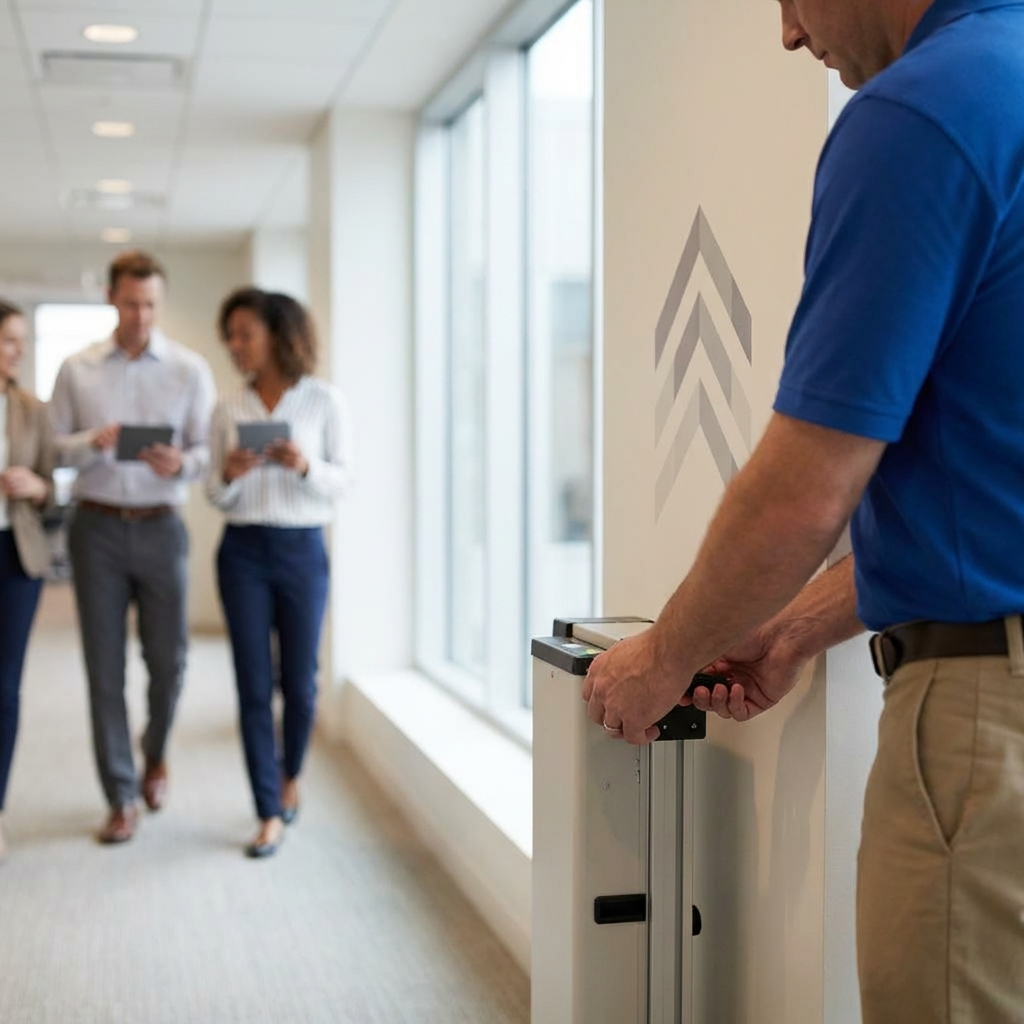
Facility managers measure success in hours, not weeks. With institutional wayfinding solutions, the difference between direct to wall printing and vinyl installations shows up on the schedule: on-site printing keeps corridors, lobbies, and patient areas open while upgrades happen. EastCoast MuralPros completes most installs in under five hours, so a wing, floor, or school hallway can be refreshed between shifts or overnight without detours, barricades, or extended closures.
The workflow itself removes common delays. On-site production means no waiting on shipments, no damaged panels to re-order, and no trimming or seaming of sheets in the field. Because the system prints directly onto finished or unfinished surfaces—drywall, CMU, concrete, brick—there’s no adhesive to cure and no panel alignment to troubleshoot, a key advantage over vinyl wall covering alternative solutions.
A typical low-disruption sequence looks like this:
- Pre-walk and artwork alignment to confirm placements and route flow
- Light surface prep (dusting/wipe-down) if needed; no adhesives or backers
- Compact printer setup with a narrow buffer zone, keeping egress paths open
- Continuous high-resolution printing passes for crisp, seam-free graphics
- Immediate turnover of the area after a brief clean-up
Real-world scenarios underscore the time savings. A hospital can update color-coded zone markers and room IDs across multiple wings over a weekend, maintaining access for staff and patients. K–12 districts can install durable wall graphics that support arrival routes and cafeteria flow after dismissal, ready by first bell. University facilities teams can push wayfinding and lab safety updates during intersession, while corporate workplaces handle brand and amenity signage between evening and morning shifts.
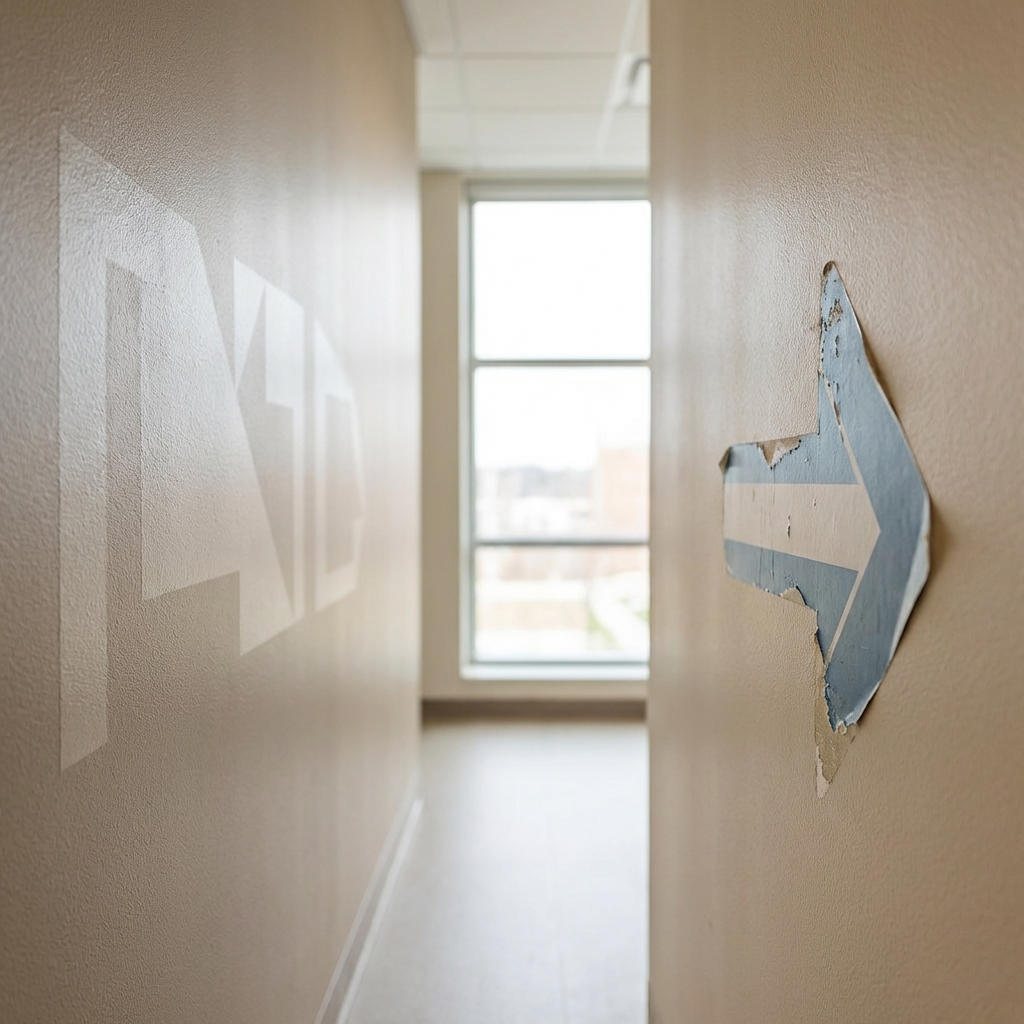
Operationally, fewer handoffs and less staging reduce risks and rework. EastCoast MuralPros’ approach delivers consistent execution across multi-location rollouts, streamlining procurement and schedule coordination. The printed finishes are durable and cleanable for high-traffic environments, hold crisp detail at architectural scale, and are paint-over-ready when programs or tenants change—removes the messy tear-downs common with vinyl.
For teams balancing commercial interior branding with building operations, direct to wall printing is a pragmatic, sustainable signage solution. It integrates wayfinding, safety, and instructional graphics without signage clutter, minimizes downtime in occupied buildings, and improves lifecycle efficiency by avoiding frequent replacements. As a performance-based alternative to wallpaper and vinyl, it lets facilities keep spaces moving while the information gets smarter.
High-Resolution Precision: Enhancing Visual Clarity for Complex Environments
Complex facilities depend on legible, at-a-glance information, and that demands image fidelity that holds up in every lighting condition and corridor. With direct-to-wall printing, messages aren’t interrupted by seams, panel edges, or adhesive failures that can distort maps and typography. The result is institutional wayfinding solutions that keep fine linework, small type, and intricate iconography crisp, even across long runs or irregular substrates.
High-resolution output preserves hierarchy and color accuracy, so zone colors, department brands, and emergency symbols render consistently from wall to wall. Photoreal imagery scales cleanly for landmark graphics that help people orient faster, while maintaining the durability required for high-traffic interiors. Because this approach is a vinyl wall covering alternative, there’s no plastic sheen or edge lift that can reduce contrast or readability over time.
Use cases that benefit from high-precision, durable wall graphics include:
- Hospitals: color-coded routes, procedure prep checklists, and room IDs that remain sharp on cleanable finishes.
- Universities: multilingual maps with QR codes for schedules and transit links, printed seamlessly across atrium walls.
- K–12: evacuation diagrams and instructional panels sized for student sightlines, with precise contrast ratios.
- Parking and back-of-house: large-format arrows and zone identifiers printed directly on CMU and sealed concrete.
- Museums and cultural spaces: photoreal timelines and captions rendered at gallery quality without visible seams.
On-site execution further improves accuracy and speed. By printing in place, EastCoast MuralPros aligns graphics to architectural grids, door frames, and datum lines, eliminating panel tolerances and shipping errors that can throw off a floor’s wayfinding logic. Installations are typically completed in under five hours with low disruption, and the cleanable, paint-over-ready finish simplifies lifecycle updates, supporting sustainable signage solutions without demolition or waste.
For teams managing multi-building portfolios, EastCoast MuralPros combines direct to wall printing with standardized color management and file workflows to replicate systems reliably across locations. The service supports commercial interior branding and integrated wayfinding, including full-campus deployments for schools and healthcare systems. Subscription refresh options let you update zones, departments, or seasonal messaging on a predictable schedule, ensuring your environment remains accurate, compliant, and easy to navigate.
Long-Term Value: Comparing Lifecycle Costs of Print vs. Traditional Wraps
Facility leaders weigh more than sticker price—they evaluate total cost of ownership over years of service. For institutional wayfinding solutions, the difference between adhesive vinyl and direct-to-wall printing shows up in labor hours, downtime, maintenance, rework, and end‑of‑life removal. Because direct-to-wall printing eliminates sheets, seams, and adhesives, it behaves like part of the architecture, not a layer on top of it.
Installation is one of the biggest cost drivers. Vinyl requires panel layout, seam alignment, trimming, and rolling—work that often stretches into off-hours and disrupts corridors. EastCoast MuralPros completes most on-site print sessions in under five hours, allowing healthcare wings, school hallways, and corporate floors to remain occupied while graphics are installed. A typical example: a 60‑foot corridor printed overnight, reopened by shift change, with no adhesive cure time.
Maintenance adds up quickly with traditional wraps. Seams catch cleaning tools, edges lift, and bubbles appear near HVAC registers—each triggering a service call and, in many cases, partial replacement. Direct-to-wall printing yields durable wall graphics with a smooth, cleanable surface and no panel edges to fail, reducing touch-ups in high-traffic environments. When programs or tenants change, paint-over-ready finishes avoid costly removal and landfill impact.
Consistency affects lifecycle cost across multi-location rollouts. Shipping and handling for panels introduce delays and fabrication errors that require reprints. EastCoast MuralPros prints on site from calibrated files, delivering consistent color, scale, and placement from campus to campus. Collaborative tools make it easy for brand and wayfinding teams to adapt layouts, so updates roll out predictably without redesign or re-measurement at each facility.
A simple cost model shows where direct to wall printing outperforms a vinyl wall covering alternative over 3–5 years:
- Downtime: fewer closures and after-hours premiums
- Labor: faster installs and no removal labor at refresh
- Rework: minimal waste from trimming, misprints, or damage in transit
- Maintenance: fewer service calls for seams, bubbles, and edge failures
- Refresh cycles: paint-over updates instead of full panel replacement
Sustainability further improves long-term value. Direct-to-wall printing reduces PVC use, adhesive waste, and crating, aligning with sustainable signage solutions and ESG goals. For commercial interior branding and wayfinding, EastCoast MuralPros delivers seam‑free, high‑resolution results at architectural scale across drywall, CMU, concrete, and brick—providing a predictable, lifecycle-efficient alternative to wallpaper and vinyl. Their subscription options add budget certainty for seasonal or systemwide refreshes.
Sustainability and Health: The Environmental Benefits of Direct-to-Wall Technology
For facility managers evaluating institutional wayfinding solutions, environmental health isn’t a side benefit—it’s a core requirement. Direct-to-wall printing removes the dependence on PVC films and aggressive adhesives, cutting plastic waste and reducing odor concerns that can linger after traditional installs. With imagery printed directly onto the substrate, you get integrated visuals that perform like architectural finishes, not temporary décor.
Eliminating vinyl means eliminating the backing liners, transfer tapes, panel seams, and adhesive residues that often end up in landfills. It also avoids the off-gassing and plasticizer odor typically associated with vinyl wall coverings, which can be disruptive in schools, clinics, and offices. The result is a cleaner, healthier baseline for occupied spaces with less post-install air scrubbing or downtime.
On-site production further reduces the carbon and waste footprint. Because direct to wall printing doesn’t require pre-fabrication, there are no pallets of rolls, rigid panels, or crates to ship, and far fewer remakes due to mis-measured panels. A university can re-label an entire academic building’s wayfinding during a teacher in-service window, often in under 5 hours, without construction dust or corridor closures.
Seam-free, durable wall graphics are also easier to sanitize. With no edges to lift or trap dirt, walls can be wiped down with routine cleaning protocols common to healthcare and high-traffic environments. Printing icons, color paths, and instructional text directly onto corridor walls reduces signage clutter and touchpoints, supporting clarity and hygiene in hospitals and large campuses.
Lifecycle efficiency is another sustainability win. When programs change, walls can be updated in place and finished to be paint-over-ready, avoiding tear-outs and landfill trips. This supports rolling updates—ideal for semester changes, tenant turnover, or phased brand refreshes—and helps procurement teams extend service life while controlling maintenance budgets.
Key environmental levers include:
- No PVC film, adhesive, or liner waste
- Fewer shipments and less packaging due to on-site printing
- Lower reprint/scrap rates from precise digital layouts
- Seam-free surfaces that clean easily and last longer
- Paint-over-ready decommissioning instead of demo and disposal
EastCoast MuralPros brings these sustainable signage solutions to scale for commercial interior branding and campus environments. As a vinyl wall covering alternative, their direct-to-wall printing delivers photoreal results, consistent execution across multi-location portfolios, and fast, low-disruption installs—helping teams upgrade institutional wayfinding solutions with performance and sustainability in one step.
Conclusion: Scaling Future-Proof Graphics for Modern Facilities
Facility managers are converging on direct to wall printing because it delivers institutional wayfinding solutions that are faster to deploy, easier to maintain, and more consistent at scale. By printing high-resolution graphics directly onto finished or unfinished substrates, teams eliminate adhesives, seams, and panels that fail under real-world use. The result is commercial interior branding and wayfinding that reads crisply at distance, holds up in high-traffic areas, and can be updated without construction.
Beyond speed, the lifecycle advantages are hard to ignore. Durable wall graphics that can be wiped down, disinfected, and later painted over reduce replacement cycles and end-of-life waste—an immediate upgrade over vinyl wall covering alternatives. On-site production also cuts shipping, crating, and installation variability, improving schedule certainty and shrinking risk. For institutions seeking sustainable signage solutions, fewer materials and no liners or offcuts provide a measurable environmental benefit.
Consider common scenarios. A hospital can re-code unit identifiers, safety reminders, and egress cues across multiple floors in off-hours, avoiding disruptions to patient care. A university can stand up temporary orientation routes and then transition to permanent academic wayfinding over a weekend. Museums can rotate exhibition graphics with photoreal, architectural-scale imagery that feels integrated into the space rather than applied on top of it.
To scale with confidence across buildings or campuses, align teams on a rollout framework:
- Audit surfaces (drywall, CMU, concrete, brick) and cleaning protocols for durability requirements.
- Establish color, typography, icon, and contrast standards for legibility and code compliance goals.
- Run a pilot in a high-traffic corridor to validate adhesion-free performance and cleaning frequency.
- Organize a shared asset library with version control for fast updates across locations.
- Schedule off-hours or phased printing windows; most walls complete in under five hours.
- Define a refresh cadence (seasonal, semester, or program-based) to keep information current.
- Document removal and paint-over procedures to support tenant or program changes.
- Capture before/after metrics on downtime, rework, and waste for procurement reporting.
EastCoast MuralPros brings this model to life with direct-to-wall printing that is seam-free at architectural scale, cleanable, and paint-over-ready. Their on-site teams deliver consistent execution for multi-location and national rollouts, integrate wayfinding, safety, and instructional graphics without signage clutter, and offer subscription options for planned refreshes.
For institutions prioritizing reliability, speed, and measurable lifecycle performance, this approach future-proofs wayfinding. It replaces fragile, material-heavy workflows with a resilient, adaptable system that keeps facilities clear, branded, and moving.
Call to Action
Contact us to learn more