Introduction: The Evolution of Commercial Interior Branding
Commercial interior branding has evolved from decorative add-ons to mission-critical infrastructure for wayfinding, safety, and tenant experience. Facility managers now weigh not just aesthetics, but lifecycle cost, disruption, and sustainability. In this context, the choice between direct-to-wall printing vs vinyl is no longer a stylistic debate—it’s an operational decision that impacts schedules, budgets, and building performance.
What’s driving the shift away from adhesive-based commercial wall graphics toward architectural scale printing that happens directly on finished or unfinished surfaces?
- Lifecycle performance: seam-free visuals that won’t peel, bubble, or trap grime
- Sustainability: no PVC, less upstream fabrication, and paint-over-ready end-of-life
- Speed and scale: on-site production eliminates shipping and reduces rework risk
- Occupant impact: low-disruption installs suitable for hospitals, schools, and offices
Modern direct-to-wall systems produce photoreal, high-resolution imagery on drywall, CMU, concrete, or brick—without vinyl or wallpaper. Surfaces are durable and cleanable, supporting infection-control protocols and high-traffic maintenance routines. Because graphics are printed in place, a corridor, lobby, or retail bay can be refreshed in under five hours, often outside operating hours, avoiding closures and dust-generating construction.
This approach aligns with facility management wall solutions that must roll out consistently across portfolios. A healthcare network can update wayfinding across multiple floors without signage clutter. A university can brand athletics facilities and residence halls over a weekend. Multi-location retailers can execute national refreshes with consistent color and quality, reducing variability from substrate panels and adhesives.
EastCoast MuralPros brings these advantages together with direct-to-wall technology, on-site production that avoids shipping delays, and a subscription model for seasonal or strategic refreshes. The team supports full-campus implementations and integrates safety and instructional graphics into the architecture. For teams comparing vinyl wall covering alternatives, their focus on sustainable interior branding alternatives and paint-over-ready finishes helps reduce lifecycle waste while preserving schedule certainty.
Understanding Direct-to-Wall Printing Technology
Direct-to-wall printing uses a mobile, digitally controlled print head to deposit ink directly onto finished or unfinished surfaces—no vinyl, adhesives, seams, or panels. The result is architectural scale printing with photoreal clarity that feels integrated into the wall, not applied to it. For commercial wall graphics and sustainable interior branding, this method eliminates the material bulk and failure points common to coverings.
The technology maps a high-resolution image to the wall’s dimensions, then cures the ink as it’s laid down for crisp edges, smooth gradients, and consistent color. It adapts to drywall, CMU, concrete, and brick, even when surfaces have light texture or are unfinished. With proper surface prep and profiling, you can execute branding, wayfinding, and instructional graphics that read clearly from corridor to lobby.
In the direct-to-wall printing vs vinyl comparison, facility teams gain speed and predictability without sacrificing durability. Installations are typically completed in under five hours with minimal disruption—no shipping delays, no panel alignment, no post-install off-gassing or bubbling to manage.
- Seam-free visuals that won’t peel at edges or joints
- Cleanable, high-traffic-ready finishes
- Paint-over-ready surfaces for future tenant or program changes
- On-site execution that reduces waste, freight, and fabrication errors
- Lifecycle efficiency by avoiding recurring replacement of vinyl wall covering alternatives
Consider a children’s hospital corridor that needs integrated wayfinding and safety cues: crews print during off-hours, reopen the corridor by morning, and housekeeping can clean the surface like painted walls. A university residence hall can refresh brand moments between terms without construction fencing or long closures. Retail programs roll out consistent imagery across dozens of stores, with on-site calibration delivering the same color and scale at every location.
EastCoast MuralPros brings this capability to complex campuses and multi-site portfolios, pairing fast, low-disruption installs with consistent outcomes. Their approach is purpose-built for facility management wall solutions, from pilot areas to national standards, and extends to in-studio printing for doors, tables, and standees when a project demands mixed media.
Traditional Vinyl Wall Coverings: The Industry Standard
For decades, commercial vinyl wall coverings have been the default for branded corridors, patient floors, classrooms, and lobbies. Supplied in 48–54 inch rolls and installed with adhesive, they offer predictable specs, code familiarity, and a large installer base. For facility managers, that predictability has made vinyl the standard reference point in any direct-to-wall printing vs vinyl evaluation.
Operationally, vinyl requires wall prep—priming, skim coating, and sanding—to minimize telegraphing and seam lift. Installations are scheduled around business hours and infection-control protocols, and long runs introduce seams every few feet that can bubble, misalign, or open under humidity and cleaning cycles. In hospitals and schools, carts and daily disinfection often stress edges and corners, leading to visible repairs that rarely blend.
Common vinyl pain points facility teams flag include:
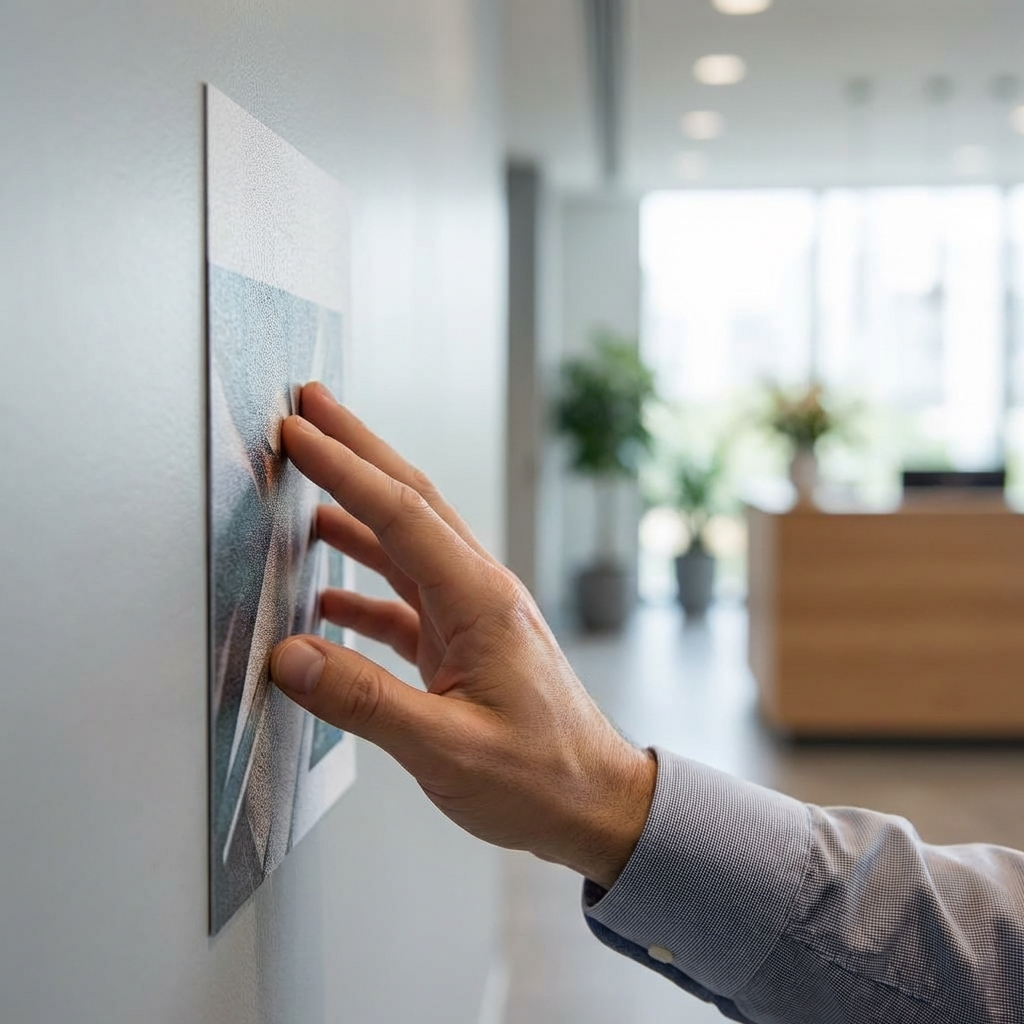
- Seams that collect dirt and fail under abrasion or moisture
- Adhesive odors and cure times that limit same-day space turnover
- Panel-to-panel color variance and image drift on large murals
- Lead times, shipping damage, and reprints for fabrication errors
- Removal labor, wall damage, and landfill waste at end of life
- Limited success on porous or unfinished substrates without heavy prep
From a lifecycle standpoint, vinyl is petroleum-based PVC with plasticizers and backing materials that rarely recycle, so refreshes generate significant waste. In high-traffic zones, practical replacement cycles can be shorter than spec sheets suggest, multiplying labor and disruption. Add multi-location rollouts, and small variances in substrate and crews can compound into inconsistent results.
Many teams exploring vinyl wall covering alternatives are now benchmarking against seam-free, architectural scale printing that prioritizes sustainable interior branding and faster turnaround. EastCoast MuralPros delivers on that brief with direct-to-wall printing that eliminates vinyl and adhesives, installs in under five hours, and produces photoreal, cleanable surfaces on drywall, CMU, concrete, or brick. On-site printing reduces shipping risk, supports consistent execution across campuses, and leaves a paint-over-ready finish for future tenant or program changes—an appealing facility management wall solution that streamlines refreshes and reduces lifecycle costs.
Durability and Lifecycle: Analyzing Long-Term Maintenance Costs
When evaluating direct-to-wall printing vs vinyl, the durability story is tied to failure points. Vinyl systems introduce seams, edges, and adhesives that age, lift, and collect dirt—especially in high-traffic corridors and areas with frequent cleaning. Direct-to-wall printing produces a seam-free, integrated surface at architectural scale, reducing vulnerabilities that trigger work orders and callbacks.
Maintenance is where lifecycle costs diverge. Vinyl repairs often mean replacing entire panels and wrestling with adhesive residue, wall repair, and color matching. Direct-to-wall graphics from EastCoast MuralPros are cleanable with standard non-abrasive protocols and are paint-over-ready when programs, tenants, or brand directions change—avoiding removal labor and landfill-bound material.
Key lifecycle cost drivers facility teams should model include:
- Downtime: vinyl installs and removals can span multiple nights; on-site direct-to-wall printing typically finishes a zone in under 5 hours.
- Failure points: seams and adhesive joints vs. a continuous, fused image layer.
- Refresh intervals: vinyl’s aesthetic decline and edge wear vs. high-resolution, durable commercial wall graphics that maintain a crisp look longer.
- Cleaning burden: grime along vinyl seams vs. smooth, uninterrupted surfaces that wipe down quickly.
- Change management: adhesive removal and wall rework vs. paint-over or rapid on-site reprints.
Consider a hospital corridor or K–12 commons. Vinyl may bubble in humidity, get nicked by carts, and require after-hours panel swaps that disrupt staff schedules. EastCoast MuralPros can reprint on-site, deliver consistent imagery in a single shift, and leave a surface that can be repainted at turnover—streamlining lifecycle maintenance for facility management wall solutions.
For multi-location portfolios, on-site printing eliminates shipping delays and fabrication errors, keeping rollouts on schedule and consistent from school to clinic to office. You gain a performance-based, sustainable interior branding approach that reduces replacement cycles and material waste—an effective vinyl wall covering alternative. The result is photoreal clarity and durability at architectural scale, without the hidden costs of seams and adhesives.
Environmental Impact: Assessing Waste and VOC Emissions
For facilities teams evaluating direct-to-wall printing vs vinyl, the core environmental questions are waste generation and indoor air impacts. Traditional commercial wall graphics rely on PVC films, release liners, and buckets of paste, while sustainable interior branding aims to minimize materials that end up in the dumpster. Direct-to-wall systems place high-resolution imagery directly on prepared substrates, avoiding the substrate and adhesive layers that drive most waste in legacy installs.
Vinyl wall coverings introduce multiple waste streams at install and removal: panel offcuts, liner paper, cardboard tubes, and adhesive containers—plus the vinyl itself at end of life, which is difficult to recycle. By contrast, direct-to-wall printing applies a thin ink film to the wall, with no seams or backing to discard, and the result is paint-over-ready for future tenant turnover. On-site production further reduces packaging and transport emissions, an advantage when projects span corridors, lobbies, or full-campus rollouts at architectural scale.
Direct-to-wall printing commonly eliminates:
- PVC film waste and seam offcuts
- Release liners and protective backers
- Buckets or cartridges of wallcovering adhesive
- Misaligned panel reprints and extra overage
- Cardboard cores, tubes, and excessive packing materials
- Tear-off demolition waste during refreshes (paint-over instead)
Volatile organic compounds are another differentiator. Vinyl installs often depend on mastics and primers that can off-gas, and some solvent inks and plasticizers add odors and IAQ concerns—especially challenging in occupied healthcare or education settings. Adhesive-free direct-to-wall approaches remove a large VOC source from the equation, and the shorter installation windows reduce exposure duration for occupants and staff. The result is a cleaner handover with less lingering odor and fewer IAQ complaints.
EastCoast MuralPros delivers these advantages at scale, providing vinyl wall covering alternatives that support sustainable interior branding without disrupting operations. Their adhesive-free, on-site process reduces waste, their durable, cleanable finishes extend lifecycle, and their paint-over-ready approach simplifies refreshes—making them a practical choice for facility management wall solutions and architectural scale printing across multi-location portfolios.
Speed and Operational Disruption: Comparing Installation Timelines
For facility managers, speed and disruption are as critical as image quality. In the context of direct-to-wall printing vs vinyl, the real schedule impact shows up across pre-production, mobilization, and how much of a space must be taken offline. Eliminating adhesives, panels, and seams materially shortens timelines and reduces risk.
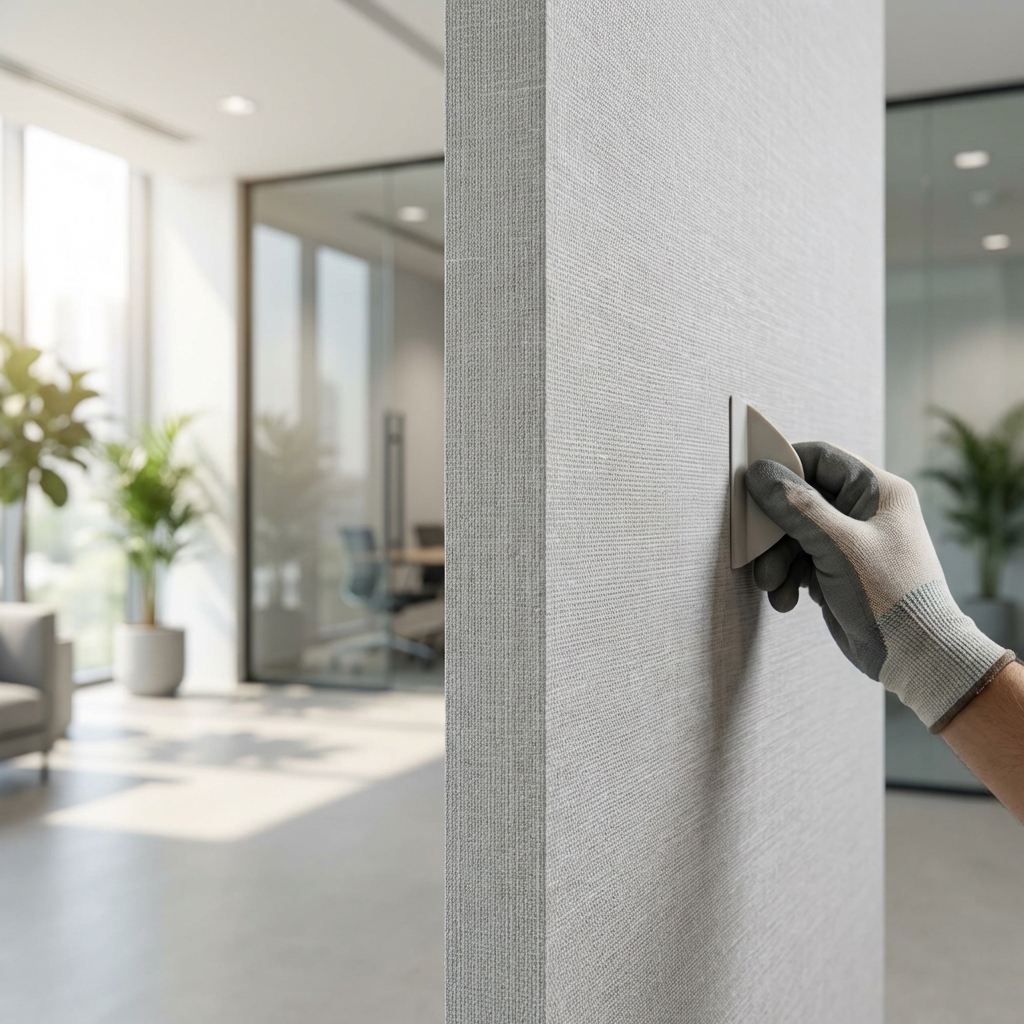
Traditional vinyl wall coverings typically require field measurements, panelization, color proofs, printing, shipping, staging, and then a multi-hour or multi-day install. On site, installers must align seams, trim around obstructions, and manage adhesive cure times—often cordoning off corridors or rooms due to odors and dust. Any misalignment or surface variability can trigger reprints and return visits. Across multiple walls or floors, that adds up to prolonged disruption.
Direct-to-wall systems print high-resolution, architectural scale printing directly on finished or unfinished surfaces in one mobilization. EastCoast MuralPros routinely completes large commercial wall graphics in under five hours per wall, using low-noise equipment and no adhesives, so areas can remain occupied or be scheduled for off-hours work. In practice, a K–12 hallway, hospital corridor, or office commons can be refreshed overnight without moving large fixtures or closing the floor.
Typical time deltas facility teams can expect:
- Pre-production: days, not weeks—no panelization, fewer proofs, no shipping.
- On-site install: hours instead of day(s) per wall; minimal masking and cleanup.
- Rework risk: reduced, since artwork is aligned in situ and printed once.
- Occupant impact: lower noise, no adhesive odors, less need for barriers and escorts.
For multi-location rollouts, the scheduling advantage compounds: consistent execution, fewer change orders, and predictable turnarounds. On-site printing also eliminates shipping delays and fabrication errors common with panel-based solutions. As a vinyl wall covering alternative for sustainable interior branding, EastCoast MuralPros delivers low-disruption, facility management wall solutions that keep operations running while spaces evolve.
Pros and Cons of Each Branding Methodology
For facilities teams weighing direct-to-wall printing vs vinyl, the trade-offs come down to disruption, durability, sustainability, and lifecycle cost. Adhesive-backed films can be familiar, but they introduce seams, shipping dependencies, and waste. Newer, on-site, architectural scale printing provides an integrated finish that supports sustainable interior branding goals without adding materials to the wall.
Direct-to-wall printing strengths center on speed, scale, and performance. The process deposits ink directly on finished or unfinished substrates—ideal for commercial wall graphics across drywall, CMU, brick, and concrete—while minimizing downtime and future maintenance.
- Seam-free imagery with crisp detail at architectural scale
- Fast, low-disruption installs often completed in under five hours
- No vinyl, adhesives, or liners to fail or discard
- Cleanable, durable surfaces that are paint-over-ready for changeouts
- On-site execution reduces shipping delays and fabrication errors
- Consistent results across multi-location rollouts and campuses
Vinyl’s advantages are primarily about familiarity and specialty finishes. Many vendors can supply textured or metallic films, and panels can be replaced if damaged; however, lifecycle and environmental costs add up.
- Panel seams, bubbles, and edge peel in high-traffic zones
- Adhesive residue and wall repair at removal; more frequent replacements
- Longer install windows for large areas; staging and shipping risks
- Difficult adhesion on rough masonry; added prep or primers
- More material waste vs. vinyl wall covering alternatives like direct printing
Use cases illustrate the difference. A hospital corridor needing overnight turnover benefits from on-site printing that avoids odors and adhesives, while a school district can push integrated wayfinding across multiple buildings without signage clutter. National retail updates gain schedule certainty by eliminating panel fabrication and freight. EastCoast MuralPros helps facility managers pilot, sample, and scale these facility management wall solutions—offering subscription refreshes, in-studio options for doors and standees, and a performance-based alternative that aligns with sustainability and budget objectives.
Final Verdict: Choosing the Right Solution for Your Facility
When you stack direct-to-wall printing vs vinyl against the priorities of facility management—speed, durability, sustainability, and scale—the adhesive-free approach wins in most commercial wall graphics scenarios. On-site, high-resolution printing delivers architectural scale printing without seams or panels, reducing failure points like bubbles and peeling. With minimal disruption and no shipping or fabrication delays, it’s better aligned to tight turnovers and occupied buildings.
Choose direct-to-wall printing when you need:
- Fast, low-disruption installs (often under 5 hours per zone) during off-hours or weekends
- Seam-free, photoreal visuals that feel integrated with the architecture
- Consistent execution across multi-location rollouts without material variance
- Durable, cleanable finishes for high-traffic corridors, classrooms, and patient areas
- Wayfinding, safety, and instructional graphics embedded on the wall—without signage clutter
- Lifecycle efficiency, with paint-over-ready surfaces that simplify program changes
- Compatibility with drywall, CMU, concrete, and brick, finished or unfinished
Vinyl can still fit highly temporary use cases or environments that mandate removable films—think short-term pop-ups, glass partitions requiring transparency, or situations where wall access is restricted by policy. For long-term interior branding, however, vinyl’s seams, adhesives, and replacement cycles create cost and waste that undercut sustainable interior branding goals. If you’re measuring total cost of ownership, direct-to-wall typically reduces labor, downtime, and landfill-bound material.
EastCoast MuralPros offers a performance-based alternative to vinyl wall covering alternatives with on-site devices that print crisp, high-resolution imagery at scale. Teams use it for campus-wide wayfinding in hospitals, K–12 wings that need room IDs and safety cues, and corporate refreshes across multiple floors—without pulling permits or closing spaces. The company’s subscription model supports seasonal or strategic refreshes, while collaborative tools help digital artists scale collections consistently. For facility management wall solutions that balance schedule certainty, durability, and sustainability, EastCoast MuralPros is a practical partner to pilot and standardize.
Call to Action
Contact us to learn more