Introduction: The Need for Rapid Corporate Office Branding
Corporate workplaces turn over faster than ever—new tenants, rebrands, mergers, and team reconfigurations all demand visible change without interrupting operations. Facilities, workplace, and brand teams are now expected to deliver zero-downtime office renovation, where upgrades happen between close of business and the next day’s stand-up. The most effective corporate office branding solutions treat the environment as a communication channel, aligning culture, wayfinding, and safety into one system; for a deeper look, see office branding as brand expression.
Traditional paths struggle to meet these demands. Paint and light construction consume schedules and can trigger permitting. Many teams default to commercial wall graphics using vinyl wall wraps, only to face peeling seams, adhesive failures on textured substrates, glare, and replacement cycles that balloon costs. Add shipping delays, reprints, and inconsistent installs across locations, and the risk profile grows for procurement and facilities.
Direct-to-wall wall printing technology changes the equation by printing high-resolution imagery and typography directly onto finished or unfinished surfaces—no vinyl, liners, or adhesives. Installations typically complete in under five hours per zone, even in occupied spaces, with minimal masking and no odor. The results are durable, cleanable, paint-over-ready, and consistent across drywall, CMU, concrete, and brick. Teams use it for floor-by-floor wayfinding, brand storytelling, safety and instructional graphics, and seasonal campaigns without signage clutter. EastCoast MuralPros brings this capability on site, eliminating shipping and fabrication errors while maintaining national rollout consistency.
For decision-makers evaluating office interior branding alternatives to vinyl, the operational benefits are tangible:
- Speed and schedule certainty with low disruption to staff
- Lifecycle efficiency versus frequent vinyl replacements
- Seam-free, photoreal results at architectural scale that feel integrated
- Scalable execution for multi-location portfolios with consistent outcomes
- More sustainable than wallpaper and vinyl, with paint-over-ready finishes
Overview of Direct-to-Wall Printing Technology
Direct-to-wall printing is a precision digital process that jets fast-curing inks directly onto your wall surface, producing photoreal, seam-free imagery without vinyl, adhesives, or panels. For teams comparing corporate office branding solutions, this approach removes common failure modes of vinyl wall wraps—no peeling, bubbling, or shrinkage—while achieving higher resolution and a finish that feels integrated with the architecture. It’s a performance alternative to wallpaper and film-based graphics, purpose-built for busy commercial interiors.
The workflow begins with site assessment and color-managed prepress, then a mobile print system maps and prints directly to surfaces such as finished drywall, CMU block, concrete, or brick—even when walls aren’t perfectly smooth. High-precision alignment ensures continuous, edge-to-edge coverage at architectural scale with crisp typography and image detail. Because the imagery is printed in place, there are no seams, overlaps, or substrate joints to mask or maintain.
This wall printing technology is optimized for speed and predictability, enabling zero-downtime office renovation for occupied spaces. On-site production eliminates shipping delays and fabrication errors, and most feature walls complete in under five hours. Example: a 30-foot reception statement wall printed overnight so the lobby reopens at 8 a.m.; or a three-floor wayfinding update executed floor-by-floor during business hours with minimal disruption to staff.
Common corporate applications include:
- Brand storytelling walls, executive briefing centers, and innovation labs
- Integrated wayfinding, safety, and instructional graphics without sign clutter
- Departmental zone markers, acoustical alcove visuals, and elevator lobbies
Direct-to-wall graphics create durable, cleanable surfaces and are paint-over-ready for future tenant or program changes—supporting lifecycle-efficient facilities management. For organizations prioritizing sustainability, the no-vinyl approach aligns with sustainable office wall murals. EastCoast MuralPros delivers these commercial wall graphics nationally with consistent color and execution across multi-location rollouts, plus subscription refresh options to keep office interior branding current with seasonal campaigns and organizational change.
Overview of Traditional Vinyl Wall Wraps and Wallpaper
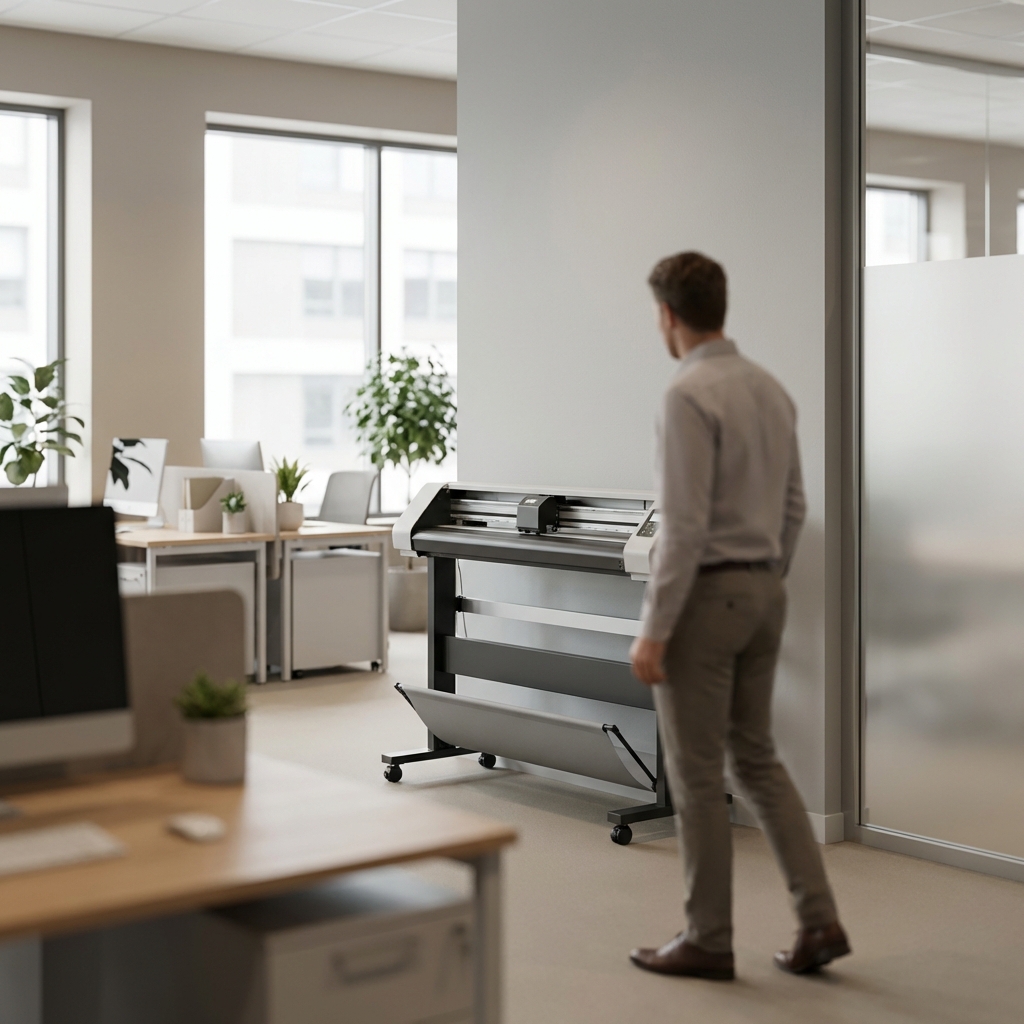
Traditional vinyl wall wraps and commercial-grade wallpaper have been the default corporate office branding solutions for decades. These systems use printed PVC or PVC-free films with pressure-sensitive adhesives, often laminated for durability, then tiled into panels with visible seams. They can deliver vibrant color and consistent brand standards across corridors, lobbies, conference rooms, and amenity spaces.
The typical workflow includes a site survey and measurements, off-site printing and lamination, shipping in tubes, wall preparation (priming, patching, sometimes skim coating), and on-site installation. Installers cut around outlets, strobes, and glazing trims, and heat-seal edges at corners or door frames. Lead times of 1–3 weeks are common, and larger floors may require night or weekend installs to avoid disruption—making true zero-downtime office renovation difficult.
In practice, performance varies by substrate, paint chemistry, and traffic. Seams can telegraph and edges may lift near HVAC returns, corners, or high-touch zones like elevator lobbies. Low-VOC paints and textured walls can reduce adhesion, leading to bubbling or failure without specialized primers. Facilities teams must also verify Class A fire ratings, cleanability, and compatibility with disinfectants to meet healthcare or workplace requirements.
Pros of vinyl and wallpaper:
- Mature supply chain and predictable color matching across locations
- Wide material catalog (textures, matte/gloss, PVC-free options)
- Removable films for short-term campaigns
- Familiar procurement and installer networks
Limitations to consider:
- Seams, edge lift, and potential bubbling on challenging substrates
- Longer schedules due to panel fabrication, shipping, and off-hours installs
- Removal can damage paint or drywall, adding patch-and-paint costs
- Waste from trimmings, liners, and frequent replacement cycles
For teams evaluating commercial wall graphics with tighter schedules and lifecycle goals, newer wall printing technology reduces many of these friction points. By printing directly to the wall with no adhesives or seams, providers like EastCoast MuralPros help brands execute office interior branding faster and more predictably—especially across textured surfaces, high-traffic zones, and multi-location rollouts.
Comparison: Installation Speed and Business Continuity
When evaluating corporate office branding solutions, the critical question is how quickly the work can be done without interrupting daily operations. Traditional vinyl wall wraps introduce multiple steps—panelization, printing, shipping, acclimation, and adhesive application—each adding time and risk. Even a straightforward corridor or conference suite can require staged closures for surface prep and seam-matching, which ripple across meeting schedules and employee flow.
Direct-to-wall wall printing technology streamlines that entire sequence. Because the graphics are printed on-site, there is no vinyl to fabricate, ship, or edge-trim, and no adhesive cure time. EastCoast MuralPros typically completes a standard feature wall in under five hours, often after hours, enabling zero-downtime office renovation for occupied spaces. Setup is contained to the immediate work zone, so teams can keep desks in place and maintain egress routes.
The difference shows up in day-to-day continuity. A multi-floor office interior branding refresh that might span several days per floor with vinyl can be executed overnight by printing room-by-room or zone-by-zone, returning spaces to service by morning. On-site verification also reduces rework—mis-measured panels or shipping damage that would stall a vinyl install are eliminated.
Operationally, direct-to-wall printing reduces the number of logistical touchpoints that disrupt facilities teams:
- No inventory staging, carton disposal, or panel acclimation
- Minimal masking and protection, with cleanable finishes delivered immediately
- Predictable schedules that align with security, elevator access, and quiet hours
- Consistent execution across multiple locations without site-to-site variability
For corporate facilities, procurement, and workplace teams comparing commercial wall graphics, the practical outcome is faster activation with fewer closures and fewer variables to manage. EastCoast MuralPros pairs speed with high-resolution, seam-free results and a paint-over-ready finish, allowing future brand or tenant updates without demolition or extensive downtime. The result is a performance-based alternative to vinyl wall wraps that protects schedules as well as budgets.
Comparison: Durability and Maintenance in High-Traffic Zones
High-traffic corridors, elevator lobbies, cafés, and collaboration zones put any graphic to the test. Vinyl wall wraps tend to fail at seams and edges under constant abrasion from rolling carts and chair backs, and adhesives can fatigue with heat and humidity cycles. For corporate office branding solutions that have to look sharp through daily wear, these small failures turn into frequent service calls and visible degradation.
Direct-to-wall printing avoids these failure points by eliminating film and glue entirely. The imagery is printed in place, creating a seam-free surface that reads as part of the architecture and resists edge-lift, bubbling, and seam separation. It’s designed for routine cleaning and disinfecting, an essential requirement for commercial wall graphics in shared spaces and amenities.
What that means for maintenance teams in practice:
- Cleaning: No seams to trap dust or grime; wipe-downs are fast and consistent across large runs.
- Repairs: Localized scuffs can be spot-treated or selectively reprinted on-site; vinyl typically requires panel replacement and color-batch matching.
- Environmental stability: No adhesive creep or shrinkage in temperature and humidity swings common near exterior walls and mechanical rooms.
- Surface compatibility: Performs reliably on finished and unfinished substrates (drywall, CMU, concrete, brick) where vinyl adhesion is inconsistent.
- Lifecycle: Longer intervals between refreshes and fewer emergency call-backs reduce total cost of ownership.
For office interior branding, that reliability translates to fewer disruptions and a cleaner look over time. EastCoast MuralPros prints directly onto the wall to deliver durable, cleanable finishes that hold up in high-traffic environments while remaining paint-over-ready for future tenant or program changes. Their wall printing technology is installed quickly—often in under five hours—making it a practical fit for zero-downtime office renovation and multi-location rollouts where consistency and schedule certainty matter.
Comparison: Environmental Impact and Long-Term Sustainability
When comparing environmental impact, the material footprint is the biggest divider. Vinyl wall wraps depend on PVC films, pressure-sensitive adhesives, liners, and lamination—multiple petroleum-based inputs that generate landfill waste at install and again at removal. Direct-to-wall wall printing technology images straight onto drywall, CMU, concrete, or brick with no adhesive layer and no seams, so material throughput is largely limited to ink and minimal masking. For corporate office branding solutions that span many floors, this shift cuts plastic use and packaging waste dramatically.
Sustainability also plays out over the lifecycle. Vinyl frequently needs early replacement for edge lift, seam creep, or abrasion in high-traffic corridors; removal often damages paper-faced drywall and requires chemical cleaners, skim coating, and repainting. Direct-to-wall prints deliver durable, cleanable surfaces and remain paint-over-ready, enabling a future rebrand with a simple repaint rather than a full tear-out. That means fewer changeouts, less landfill, and reduced embodied carbon in repairs.
Indoor air quality and disruption matter for occupied workplaces. Adhesive installs and removals can introduce odors, solvents, dust, and heat-gun use—challenging in active offices. In contrast, on-site direct printing cures rapidly and is low odor, supporting zero-downtime office renovation during off-hours with spaces remaining usable. This aligns with risk-averse facilities teams that need predictable, low-impact office interior branding.
Logistics are another sustainability lever. Shipping preprinted panels across a national program adds crates, tubes, pallets, and reprints for transit damage, plus more truck miles. On-site printing eliminates most packaging, reduces fabrication errors, and improves consistency across multi-location commercial wall graphics, lowering transport emissions and waste.
Key sustainability advantages of direct-to-wall printing over vinyl:
- No PVC films, liners, or lamination waste
- Less wall repair at end-of-life (paint-over vs adhesive removal)
- Fewer replacements thanks to durable, cleanable finishes
- Lower transport and packaging impacts via on-site production
EastCoast MuralPros brings these benefits to scale, offering seam-free, high-resolution results, consistent execution for national rollouts, and subscription refresh options that minimize material churn—an efficient alternative to vinyl wall wraps for long-term sustainability.
Pros and Cons of Each Branding Method
Choosing between direct-to-wall printing and vinyl wall wraps comes down to how you balance speed, finish quality, and lifecycle performance in your corporate office branding solutions. For multi-floor or multi-site commercial wall graphics, predictability and minimal disruption often drive the decision. Here’s how each method stacks up under real facility conditions.
Direct-to-wall printing is optimized for speed and scale. Key advantages include:
- Same-day, on-site production—often under five hours per floor—supporting zero-downtime office renovation.
- Seam-free, photoreal results at architectural scale; crisp logos, wayfinding, and safety cues that read from distance.
- Adhesive-free, paint-over-ready finish that simplifies tenant turnover and future rebrands.
- Compatibility with drywall, CMU, sealed concrete, and brick, plus durable, cleanable surfaces for high-traffic zones.
- Fewer variables: no shipping, panel splices, or alignment issues during national rollouts.
Potential trade-offs to consider with direct-to-wall:
- Requires clear wall access, power, and a stable substrate; crumbling, saturated, or highly uneven surfaces may need prep.
- Specialty effects (metallics, reflective, heavy emboss) aren’t achievable like they are with some films.
- “Removal” is a paint-over rather than a peel, which may influence short-term campaign planning.
Vinyl wall wraps remain familiar and versatile in office interior branding. Their strengths include:
- Broad material options, textures, and specialty finishes (e.g., metallic or reflective films).
- Off-site fabrication when on-site production is impractical or restricted.
- Peel-away removal for short-term campaigns—assuming proper wall prep and primer.
Limitations with vinyl to weigh:
- Seams and paneling telegraph on long runs; peeling or bubbling can occur, especially in humidity or over textured substrates.
- Longer lead times for printing, shipping, and punch-listing can extend downtime.
- Adhesives, liners, and disposal create waste; frequent replacements inflate lifecycle cost.
For teams prioritizing predictable schedules, clean aesthetics, and scalable execution, EastCoast MuralPros delivers wall printing technology that plugs into procurement and facilities workflows. Their on-site model minimizes disruption, while subscription refresh options help keep brand, wayfinding, and instructional content current across portfolios. It’s a performance-driven alternative to wallpaper and vinyl for durable, high-resolution commercial wall graphics.
Conclusion: Choosing the Right Solution for Your Facility
Selecting the right corporate office branding solutions comes down to schedule, disruption tolerance, image quality, and lifecycle cost. For most office interior branding programs, teams compare traditional vinyl wall wraps with modern wall printing technology. Both create high-impact commercial wall graphics, but they diverge in speed, durability, seams, and long-term maintenance.
Vinyl wraps and decals are useful for short campaigns, quick price-card changes, or removable logos on glass and doors. They’re familiar to procurement and can follow moderate curves, yet seams and edges invite wear, and adhesive fatigue leads to peeling or bubbling in high-traffic corridors. Plan for adhesive removal, wall repairs, and recurring downtime during replacements.
Direct-to-wall printing is ideal when you need seam-free, photoreal imagery at architectural scale with minimal disruption. Crews can complete entire corridors or conference suites in hours during off‑hours, enabling zero-downtime office renovation. The result is durable, cleanable, and paint-over-ready, and integrates wayfinding, safety, and instructional graphics without signage clutter across drywall, CMU, concrete, or brick.
Use this quick decision checklist:
- Timeline and allowable downtime
- Surface type and finish condition
- Expected lifespan and cleaning regimen
- Scale: multi-floor or multi-site consistency
- Sustainability targets and waste avoidance
- Need for paint-over-ready changeability
EastCoast MuralPros offers wall printing technology purpose-built for fast, predictable corporate office branding solutions. Typical installations finish in under five hours, with on-site printing that eliminates shipping delays and fabrication errors while delivering consistent results across multi-location rollouts. Surfaces from finished drywall to CMU and brick are supported, producing durable, cleanable, paint-over-ready graphics; optional subscriptions enable seasonal refreshes, and in-studio capabilities extend branding to doors, tables, and standees while collaborative tools help digital artists scale assets. For teams evaluating alternatives to vinyl wall coverings and wallpaper, a focused pilot with EastCoast MuralPros can validate finish quality, cleaning protocols, and throughput before scaling.
Call to Action
Contact us to learn more