Introduction: Selection Criteria for High-Impact Direct Surface Printing
Direct surface printing produces integrated visuals that feel built into the space, but impact starts with choosing surfaces that support clarity, durability, and speed. In commercial interior branding, the best candidates are stable, clean, and accessible substrates where high-resolution imagery will read crisply at the intended viewing distance. EastCoast MuralPros’ on-site process excels on both finished and unfinished walls, enabling seam-free, architectural scale printing without adhesives or panels.
Substrate texture and porosity drive image quality. Drywall, primed CMU, sealed concrete, smooth brick, metal panels, and finished wood can all deliver high-resolution branding solutions when properly prepared. Smoother surfaces yield photoreal results; deeper textures (e.g., raw brick) favor bold graphics and higher contrast. For custom door graphics and direct-to-surface furniture branding, in-studio printing on doors, tabletops, and standees provides precise control and consistent finishes before installation.
Durability requirements should match the environment. Healthcare corridors, school lobbies, and retail entries demand cleanable, abrasion-resistant outputs that withstand frequent sanitization. Paint-over-ready finishes help facilities teams adapt spaces during tenant turnover or program changes without demolition or residue removal.
Scale, legibility, and content matter just as much as material. At long viewing distances, vector artwork, large typographic systems, and high-contrast palettes maintain readability for wayfinding and safety messaging. For galleries and brand moments, calibrated color management and high-res source files protect fidelity across multi-wall features and multi-location rollouts.
Operational constraints influence what “best” looks like. Low-disruption installation in occupied buildings, access to the wall plane, and predictable schedules all reduce risk. EastCoast MuralPros typically completes rooms in under five hours, prints on-site to eliminate shipping delays and fabrication errors, and supports campus-wide or national programs with consistent execution and subscription refreshes.
A quick selection checklist:
- Verify surface integrity: sound substrate, no active moisture, flaking paint, or efflorescence.
- Align texture with intent: smooth for photoreal; textured for bold, graphic treatments.
- Plan prep: patch, prime/seal as needed; confirm cure times and pH on concrete/CMU.
- Confirm cleanability: match finish to cleaning protocols and traffic levels.
- Validate artwork: native-resolution imagery, color proofs, and ADA/contrast targets for wayfinding.
- Assess logistics: access, protection of adjacent finishes, and downtime windows.
Sustainability and lifecycle performance should be decisive. Adhesive-free, on-site printing minimizes material waste, avoids PVC, and reduces replacement cycles—key advantages over vinyl and wallpaper. Learn more about EastCoast MuralPros’ sustainable alternatives to vinyl and how they support procurement-driven evaluations.
Best for High-Traffic Entryways: Custom Printed Solid-Core Doors
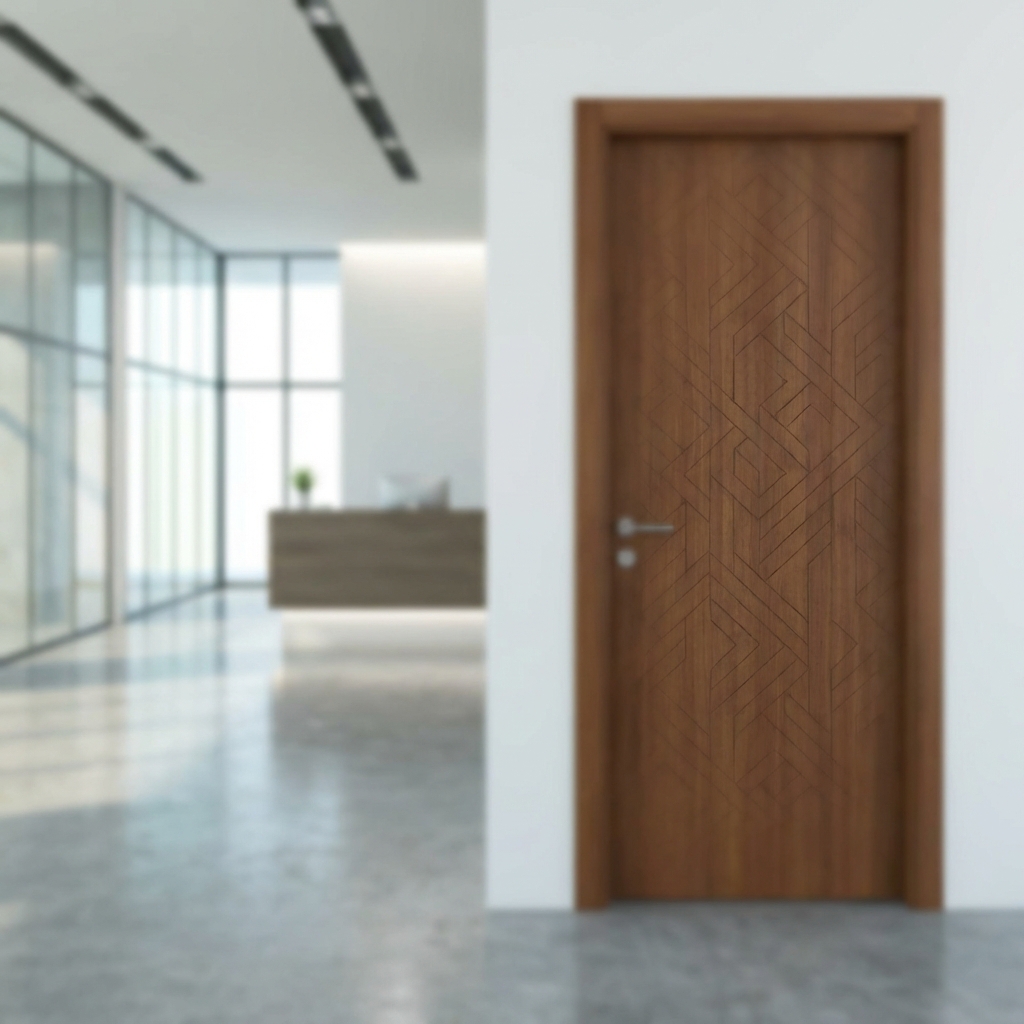
Solid-core doors are one of the most effective canvases for direct surface printing in busy entries, lobbies, and elevator cores. The dense core resists warping and impact, while smooth HPL, veneer, or primed faces accept ink evenly for crisp, high-resolution branding solutions. Because there are no vinyl seams or edges to catch, graphics stand up to constant hand traffic, carts, and frequent cleaning.
For commercial interior branding, the door becomes both a threshold and a brand touchpoint. Custom door graphics can carry wayfinding color systems, ADA-friendly contrast icons, room IDs, and brand patterns without adding plaques or clutter. In healthcare, education, and hospitality, printed privacy gradients on vision lites and tone-on-tone motifs help soften noise and signal destination without obstructing safety markings.
EastCoast MuralPros offers in-studio direct-to-object printing for doors, delivering photoreal results and durable, cleanable finishes engineered for high-traffic environments. Projects are scheduled to minimize downtime—doors can be swapped in phases or processed before occupancy for fast turnarounds. The same tech that delivers architectural scale printing on walls powers precise, edge-to-edge coverage on doors.
Compared with vinyl wraps, direct surface printing eliminates failure points like lifted corners and adhesive residue. Surfaces are paint-over-ready for tenant changes, reducing lifecycle costs and avoiding repeated tear-outs. It’s also a more sustainable approach than PVC-based films, with fewer materials, less waste, and consistent results across multi-location rollouts.
Smart use cases include hospital emergency entries with color-banded routing, university admissions doors featuring a mosaic of student life, and hotel lobby doors with refined, brand-forward patterns. Retailers use it to transform service corridors into on-brand experiences, and museums apply captions or directional cues directly to gallery access doors. These applications pair well with direct-to-surface furniture branding on reception desks or check-in counters for a cohesive entry moment.
Key considerations for solid-core door projects:
- Substrate: HPL, wood veneer, or properly primed faces yield best adhesion and image quality.
- Prep: Degrease, light scuff, fill divots; mask hardware and maintain fire labels and required clearances.
- Durability: Specify a scuff-resistant, cleanable topcoat compatible with hospital-grade disinfectants.
- Compliance: Maintain vision-lite visibility, tactile signage requirements, and contrasting push/pull cues.
When doors are treated as intentional brand assets, they extend the narrative of branding through physical space. EastCoast MuralPros helps facilities and brand teams standardize specifications and execute at scale, ensuring fast installs, predictable outcomes, and a high-performance alternative to vinyl.
Best for Collaborative Spaces: Branding Integrated Laminate and Wood Tables
Collaborative spaces live on their tables. That’s where ideas get sketched, agendas stay visible, and brand personality shows up in every meeting photo. With direct surface printing, laminate and wood tabletops become durable canvases for commercial interior branding—delivering high-resolution branding solutions without adhesives, vinyl, or overlays that peel under daily wear.
Use tables to carry subtle brand patterns in huddle rooms, zone labels in agile work areas, or micro-messaging at the edge where hands rest. In higher-education makerspaces, print rulers, grid systems, or tool checklists directly on workbenches. Healthcare family lounges benefit from printed wayfinding icons and multilingual etiquette cues that reduce freestanding signage. Hospitality and museum cafés can feature collection imagery, QR-linked programming, or sponsor recognition integrated seamlessly into the furniture.
Spec clarity matters to get a flawless result at eye-and-hand distance. For direct-to-surface furniture branding on tables, consider:
- Substrates: HPL/laminate, melamine, sealed veneer, and sealed solid wood perform best; open-grain or raw wood should be sealed smooth before printing.
- Finish: Low-glare matte top finishes minimize reflections on video calls and reduce visual fatigue; gloss accents can be spot-applied for hierarchy.
- Edges and hardware: Account for edge-banding radii, chamfers, cable grommets, and flip-tops; define print margins or edge-wrapping where appropriate.
- Durability: Specify cleanability compatible with common commercial cleaners; confirm abrasion, coffee/marker resistance, and colorfastness for high-traffic use.
- Layout: Provide vector art and scaled templates for multi-part conference tables so artwork aligns across seams and leaves clearance for microphones or power modules.
- Accessibility: Use contrast ratios that keep instructional graphics readable in varied lighting.
Process flexibility reduces downtime. EastCoast MuralPros can print tabletops in-studio for loose furniture or perform on-site direct surface printing for fixed tables—often completing a room refresh in under five hours with masking and protection that keeps adjacent areas operational. Compared to vinyl table wraps, the result is seam-free, cleanable, and won’t lift at corners, making it a lifecycle-efficient alternative that supports multi-location consistency and procurement standards.
For cohesive environments, integrate tabletop graphics with architectural scale printing on adjacent walls and custom door graphics at room entries. EastCoast MuralPros coordinates color, resolution, and placement across surfaces, giving brand, facilities, and design teams a predictable path from concept to rollout. The outcome is a refined, durable system that elevates collaboration zones and scales reliably across campuses and national portfolios.
Best for Flexible Communication: Direct-to-Surface Rigid Standees and Dividers
Rigid standees and mobile dividers are the most adaptable tools for timely messaging in busy environments. With direct surface printing, they carry photoreal visuals and brand systems without the seams, glare, or edge-lift that come with vinyl. Double-sided layouts maximize impact in corridors and open offices, while the ability to reposition or store units makes them ideal for seasonal campaigns, pop-ups, and pilot programs.
These pieces handle daily use when built on substrates like PVC, polycarbonate, acrylic, birch ply, or aluminum composite. Direct surface printing delivers edge-to-edge color, crisp typography, and fine detail that remains cleanable under typical facilities protocols. Because graphics are embedded in the surface—no films or adhesives—there’s less risk of bubbling, fraying, or failure at high-touch edges. Custom shapes and cutouts can reinforce brand cues or sightline needs without resorting to bulky hardware.
Practical applications span departments and property types:
- Healthcare: queue markers, privacy screens with room IDs and intake steps, rotating health campaigns.
- Education: orientation wayfinding, recruiting fair backdrops, lab and studio divider walls with safety icons.
- Workplace: movable collaboration zones, policy reminders, brand storytelling in lobbies and cafes.
- Retail and hospitality: product drops, menu or amenity highlights, sponsor displays, photo-op standees.
- Museums and cultural venues: exhibit panels, donor recognition, bilingual labels without signage clutter.
Design for legibility at distance and eye level, using high-contrast palettes and disciplined hierarchy. Consider double-sided messages for flow-through traffic and add QR codes for deeper content without overcrowding the panel. Choose matte finishes to control glare under LEDs and daylight, and size dividers to preserve sightlines for security and staff supervision. Add casters or base-weighting where frequent reconfiguration is expected.
EastCoast MuralPros supports these use cases with high-resolution branding solutions produced in-studio for standees, tables, and custom door graphics, and coordinated architectural scale printing on adjacent walls. Teams can pilot new communications with small batches, then scale across locations with consistent color and materials. A subscription refresh model keeps seasonal or strategic messages current, while durable, adhesive-free output reduces lifecycle replacement compared to vinyl. For commercial interior branding that flexes with your program—and installs with minimal disruption—direct surface printing from EastCoast MuralPros brings museum-grade clarity to the most mobile elements in your space.

Comparison Summary: Direct Printing vs. Adhesive Vinyl and Laminates
Direct surface printing applies UV-cured ink directly to walls, doors, and fixtures—no vinyl, adhesive, or laminates required. For commercial interior branding, this eliminates seams, bubbles, and edge failures that undermine long-term appearance and hygiene. It also compresses schedules by removing design-to-fabrication-to-install handoffs that slow traditional graphics programs.
- Installation and downtime: On-site printing is often completed in under 5 hours per zone, with minimal masking and no off-gassing. Vinyl and laminates require panel fabrication, shipping, and longer installs, which disrupt occupied spaces.
- Image quality and scale: Architectural scale printing delivers photoreal, high-resolution branding solutions without panel seams or laminate glare. Vinyl panels can telegraph overlaps and color shifts across long runs.
- Substrate compatibility: Print directly to drywall, CMU, sealed concrete, and brick—finished or unfinished. Adhesive films struggle on textured, porous, and curved surfaces, leading to early failures.
- Durability and maintenance: UV-cured prints are scuff-resistant and cleanable for high-traffic environments. Laminates can shrink at edges, collect grime at seams, and require periodic replacement.
- Lifecycle and change management: Paint-over-ready finishes simplify tenant turnover and seasonal updates. Vinyl removal often damages paint, requires solvents, and extends turn times.
- Sustainability and risk: Eliminates PVC, adhesives, liner waste, and re-crating. On-site calibration avoids shipping damage and fabrication errors, improving color consistency across multi-location rollouts.
In practice, direct-to-wall wayfinding on CMU corridors outperforms adhesive decals that lift at grout lines. Custom door graphics print cleanly to wood or metal slabs, ideal for patient rooms, classrooms, and meeting suites. Direct-to-surface furniture branding on cafe tables or collaboration benches integrates logos and instructional graphics without edge tape or film seams.
For hospitals and schools operating 24/7, low-disruption installation keeps egress clear and avoids odors or dust from removal and re-application cycles. Corporate lobbies benefit from edge-to-edge brand walls and large-format art where vinyl would show joints every few feet. Galleries and museums leverage high-fidelity, architectural scale printing for exhibits that demand crisp typography and tonal detail.
EastCoast MuralPros brings this model to scale: on-site direct printing, seam-free results, and durable, cleanable finishes that are paint-over-ready for future changes. The team supports national programs with consistent execution, subscription refreshes, and in-studio production for doors, tables, and standees. For organizations replacing vinyl wall coverings and laminates, it offers a performance-based, schedule-certain pathway to high-resolution branding solutions.
Selection Guide: Choosing the Right Surface for Long-Term Interior Branding
The ideal surface starts with stability. For direct surface printing to perform over the long term, prioritize substrates that are clean, dry, and structurally sound. Avoid flaking paint, excessive moisture, or friable surfaces; these undermine adhesion-free inks and shorten lifecycle value in commercial interior branding.
Texture dictates the level of detail you can confidently specify. Smooth drywall and sealed concrete deliver crisp, high-resolution branding solutions and fine typography. Light orange peel or skim-coated CMU prints well for graphics and photography at architectural scale printing, while heavily raked brick or rough block is better suited to bold fields of color, large icons, or wayfinding arrows.
Finish and porosity also matter. Low-sheen painted walls (eggshell to satin) and sealed mineral substrates balance durability with cleanability, especially in corridors and clinical spaces. If a surface is chalky or dusting, seal it first to prevent image dulling. Address active moisture or efflorescence before scheduling to protect image fidelity and speed of install.
Selection quick-check by substrate:
- Painted drywall: Best-in-class choice for detail, brand walls, and integrated wayfinding.
- CMU/block: Compatible when sealed; specify larger imagery for even read at distance.
- Concrete and sealed masonry: Excellent for large-format statements in lobbies and atriums.
- Brick: Works for bold graphics; expect natural texture to show through by design.
- Metal or wood doors: Great for custom door graphics in hotels, campuses, and clinics; confirm finish is intact and cleanable.
- Laminates, finished wood, or acrylic tables and fixtures: Ideal for direct-to-surface furniture branding on reception desks, cafe tables, and check-in counters.
- Portable panels and standees: In-studio prints support campaigns and events without adding signage clutter to walls.
Match substrate to use-case to reduce lifecycle cost. Hospitals often select sealed painted walls for integrated safety cues that wipe clean daily. Universities leverage sealed CMU in residence halls and corridors for durable mascots and donor recognition, while hospitality brands use custom door graphics and table surfaces to extend identity with zero adhesives and minimal downtime.
EastCoast MuralPros helps teams vet surfaces quickly, running on-site assessments and test swatches to confirm color, durability, and cleanability before rollouts. Their direct-to-wall and in-studio capabilities deliver seam-free results, paint-over-ready finishes, and consistent execution across multi-location programs—without vinyl, shipping delays, or disruption to occupied buildings. When speed and predictability matter, they provide a reliable path from pilot to national deployment.
Call to Action
Contact us to learn more