Introduction: Evolving Standards in Commercial Wall Graphics
Facilities managers are facing higher expectations for speed, quality, and resilience in wall graphics—without the headaches of adhesives, seams, or lengthy shutdowns. Evaluating direct-to-wall printing costs against traditional materials now requires a lifecycle lens that captures downtime, rework, and decommissioning—not just the initial quote. A thoughtful vinyl wall wrap comparison should weigh risk and schedule certainty alongside design fidelity and sustainability.
The real cost drivers typically include:
- Pre-production and proofing: color matching, file prep, and reprints for panelized vinyl when seams misalign.
- Installation and downtime: night work premiums, cure times, and closures versus on-site printing that can finish a zone in under five hours.
- Surface prep: vinyl’s need for smooth substrates and skim coating on CMU/brick, versus printing directly on drywall, concrete, or block.
- Maintenance of wall graphics: seam repairs and panel replacements versus cleanable, integrated ink layers with consistent sheen.
- Failures and rework: peeling, bubbling, and edge-lift in humid or high-traffic corridors; patching panels rarely matches perfectly.
- Replacement and decommissioning: adhesive removal, wall repair, and landfill waste versus paint-over-ready finishes that speed tenant turnover.
- Logistics and scale: shipping mistakes, panel labeling, and installer variance across sites versus standardized, on-site execution.
Modern wall printing technology addresses these gaps by eliminating adhesives and seams while enabling photoreal, architectural-scale imagery. For example, a hospital can refresh a 120-foot corridor overnight without odors or trip hazards, and a retail chain can roll out consistent brand walls across dozens of stores without waiting on fabricated panels. The result is predictable timelines, fewer punch-list items, and durable visuals that hold up to cleaning protocols.
Sustainability and compliance are also moving to the forefront. Adhesives and PVC introduce off-gassing, waste, and end-of-life complications, while adhesive-free, paint-over-ready systems reduce materials and labor over multiple cycles. For teams prioritizing sustainable wall decor, see EastCoast Mural Pros’ sustainable adhesive-free technology.
EastCoast MuralPros brings these advantages to commercial interior branding at scale, with direct-to-wall printing that’s fast, seam-free, and compatible with both finished and unfinished surfaces. Their on-site process minimizes disruption in occupied buildings, and a subscription model supports seasonal or strategic refreshes without restarting procurement. For multi-location portfolios, the ability to deliver consistent, high-resolution results—without vinyl or shipping delays—translates into measurable lifecycle savings and fewer operational surprises.
Installation Efficiency: Reducing Business Downtime and Labor Costs
Installation efficiency is one of the biggest drivers of direct-to-wall printing costs over the lifecycle of your program. Every hour a corridor, lobby, or patient unit is offline compounds labor, security, and after-hours premiums. With on-site wall printing technology, crews arrive, register artwork, and print in place—eliminating most of the time sinks embedded in panel-based vinyl workflows.
Where vinyl adds steps, direct print removes them. Typical labor you avoid includes:
- Pre-fabrication, panel seaming plans, and proofs/re-proofs to fix scale or crop errors
- Shipping, receiving, and staging large rolls or rigid panels
- Wall skim-coating to hide texture for seams, and adhesive-specific priming
- Panel alignment, trimming, heat-gunning, and seam rolling to prevent bubbles
- Rework for damaged panels, misprints, or on-site dimension mismatches
Consider a 60-foot hospital corridor. EastCoast MuralPros commonly completes high-resolution, seam-free graphics in under five hours during normal business hours with minimal containment. A comparable vinyl wall wrap often needs two installers for 1–2 nights to avoid traffic, plus infection-control barriers and adhesives cure time—adding overtime rates and disruption. In a union facility or clinical environment, those multipliers can eclipse material savings.
The same calculus scales across multi-location brand programs. On-site printing eliminates shipping delays, lost packages, and last-minute re-fabrication, so schedules hold and crews move wall-to-wall consistently. That predictability shortens punch lists and reduces project management overhead—a key advantage in any vinyl wall wrap comparison for national rollouts.
Surface compatibility also streamlines labor. Direct print adheres cleanly to painted drywall, CMU, concrete, and brick without the smoothing and seam-hiding steps vinyl often requires on textured substrates. Fewer prep hours mean fewer lift rentals, fewer corridor closures, and a tighter critical path for commercial interior branding.
Maintenance of wall graphics is faster, too. Printed surfaces are durable and cleanable for high-traffic areas, and when it’s time to refresh, teams can paint over—no adhesive residue removal, wall repair, or landfill-bound PVC. The result is more sustainable wall decor and faster tenant turnarounds that help modernize buildings without cap-ex.
For facilities leaders balancing schedule certainty with cost, EastCoast MuralPros’ direct-to-wall printing costs are driven by fewer steps, fewer specialists, and less downtime—powered by precise, in-place wall printing technology that keeps your spaces open and your program on track.
Durability Comparison: Resilience Against Peeling and High-Traffic Wear
Durability drives lifecycle value in commercial interior branding, and the biggest variable is how the graphic bonds to the surface. Vinyl relies on adhesives and seams that are vulnerable to peel, curl, and edge damage, especially along corridors, elevator lobbies, and retail queuing lines. Direct-to-wall wall printing technology lays down cured inks directly onto the substrate, creating a seam-free image that doesn’t lift or telegraph seams under abrasion.
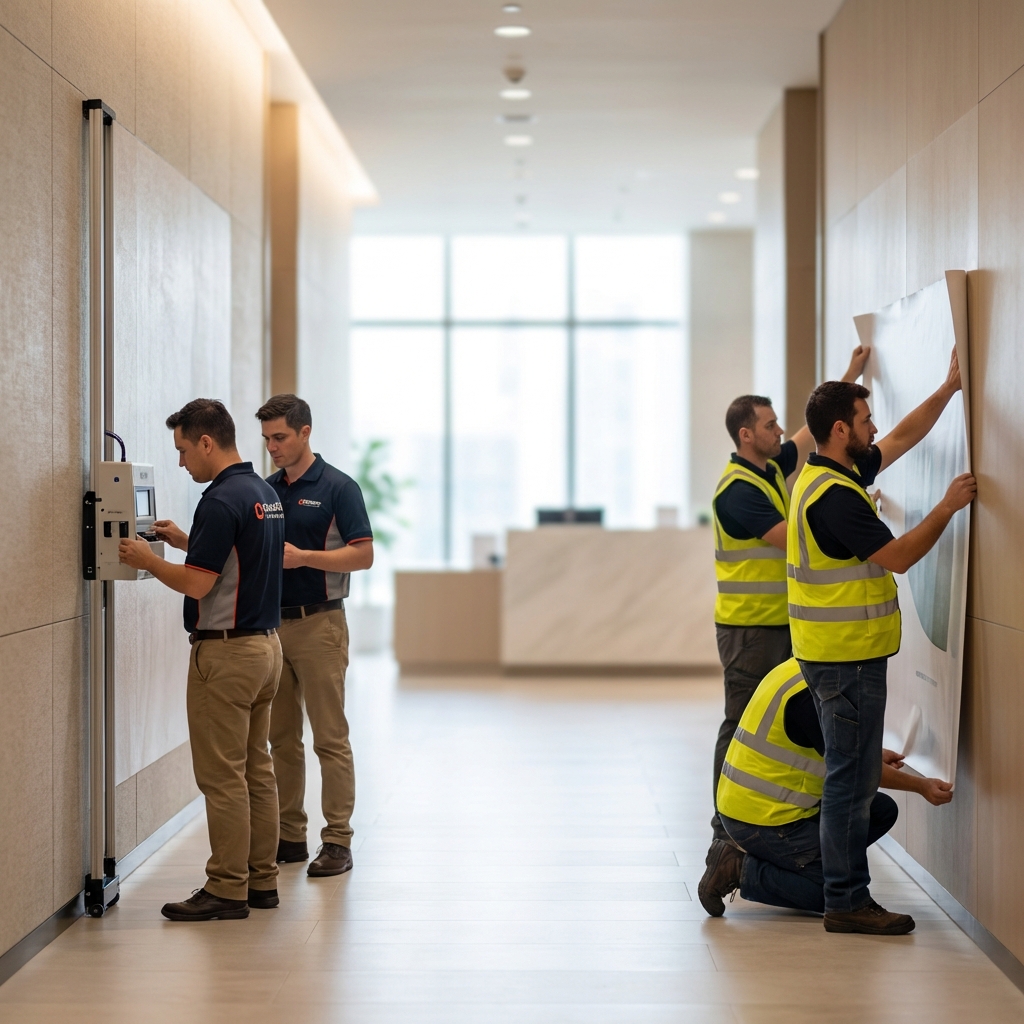
In a vinyl wall wrap comparison, the most common wear points are corners, baseboard transitions, and any area that gets bumped by carts or cleaned daily. Humidity, thermal swings, and frequent disinfecting degrade adhesives over time, leading to bubbles or delamination. Seam-free direct-to-wall systems eliminate those failure modes, maintaining crisp edges and photoreal detail even on high-touch walls.
Typical stressors and how each method performs:
- Impact and abrasion: Vinyl edges catch and scuff; repairs leave visible patches. Direct-to-wall prints have no edges to catch, and scuffs can be cleaned or spot-sealed.
- Moisture and temperature: Adhesives soften or harden, causing peel. Cured inks remain stable on drywall, CMU, concrete, or brick without adhesive creep.
- Cleaning and chemicals: Aggressive cleaners cloud or lift vinyl. Direct-to-wall finishes from EastCoast MuralPros are cleanable and formulated for daily wipe-downs in healthcare and education.
- Texture and substrate: Vinyl struggles on rough CMU and brick, creating air pockets. Direct-to-wall conforms to unfinished surfaces, preserving detail without seams.
Maintenance of wall graphics is equally decisive. Vinyl often requires seam rolling, heat reactivation, or full-panel replacement once edges fail, creating downtime and visible inconsistencies. Direct-to-wall prints need simple cleaning; when programs change, paint-over-ready finishes allow a fast refresh without scraping adhesives or landfilling PVC, supporting more sustainable wall decor.
For facilities managers evaluating direct-to-wall printing costs, durability translates to fewer service calls, less disruption, and longer refresh cycles. EastCoast MuralPros prints on site in under five hours per area, avoiding shipping delays and ensuring consistent execution across multi-location rollouts. In hospitals, schools, and retail networks where walls see carts, backpacks, and daily sanitizing, the seam-free, integrated approach maintains appearance quality and performance at architectural scale—without the lifecycle penalties common to vinyl wall coverings.
Maintenance and Long-Term Lifecycle Cost Assessment
When you look beyond install price, direct-to-wall printing costs tend to win on total cost of ownership because maintenance is simpler, faster, and less wasteful. In a vinyl wall wrap comparison, most of the spend happens after day one: cleaning, repairs, reprints, and downtime. Facilities teams evaluating wall printing technology should model these recurring line items to understand the full lifecycle.
Key cost drivers over three to seven years typically include:
- Routine cleaning frequency and effort
- Edge failures, bubbling, and seam repairs
- Graphics updates for brand, compliance, or wayfinding
- End-of-life removal and surface restoration
- Downtime and lost access to occupied areas
For maintenance of wall graphics in high-traffic corridors, direct-to-wall prints have no seams or edges to lift, so custodial teams can clean with standard non-abrasive methods without trapping dirt. Vinyl often degrades at seams from humidity and cleaning cycles, leading to touch-ups or partial rewraps. Adhesive edges collect grime, and once they lift, the failure accelerates—especially near HVAC returns, corners, and hand-contact zones.
When content changes, direct-to-wall is paint-over-ready: a light scuff and primer, then reprint only the areas that need updating. Vinyl removal adds labor for heat/chemical release, adhesive residue remediation, patching pulled paper or drywall, and disposal fees—all before reinstallation. On-site printing also eliminates shipping, panel mismatches, and re-fabrication delays, cutting both cost and schedule. In practice, a 200-foot hospital corridor can be refreshed overnight rather than phased over multiple closures.
At scale, consistency reduces rework. Direct-to-wall systems are color-calibrated on site, helping multi-location commercial interior branding teams hit brand-critical hues across campuses. EastCoast MuralPros standardizes profiles and processes nationally, and their subscription model evens out budgets for seasonal campaigns, wayfinding updates, and compliance graphics without the spike of periodic full rewraps.
Taken together, fewer failure points, faster updates, and simple end-of-life steps drive lower direct-to-wall printing costs and a more sustainable wall decor strategy. EastCoast MuralPros pairs durable, cleanable finishes with low-disruption installs, giving facilities managers a lifecycle-efficient alternative to wallpaper and vinyl that protects schedules and OPEX year after year.
Sustainability and Environmental Benefits of Adhesive-Free Technology
For facilities teams weighing direct-to-wall printing costs, sustainability is inseparable from lifecycle performance. In a vinyl wall wrap comparison, the biggest environmental burden is often the PVC substrate, release liners, and solvent-based adhesives that wind up in a dumpster at end-of-life. Adhesive-free wall printing removes those materials from the equation, delivering high-resolution graphics without the plastic and glue that complicate disposal and can impact indoor air strategies.
On-site wall printing technology also trims the hidden carbon in logistics. Because images are produced directly on prepared surfaces, you avoid shipping rolls, crating large panels, and the reprints that happen when off-site fabrication doesn’t match field conditions. Fewer shipments and fewer fabrication errors translate to lower embodied emissions and steadier schedules.
End-of-life is where the environmental and operational math really improves. Paint-over-ready finishes allow spaces to be refreshed without chemical adhesive removers, heat guns, or patching pulled drywall paper—reducing labor, material waste, and downtime. For the maintenance of wall graphics in high-traffic corridors, cleanable surfaces that hold up longer mean fewer full replacements over a typical lease term, reducing both landfill and budget churn.
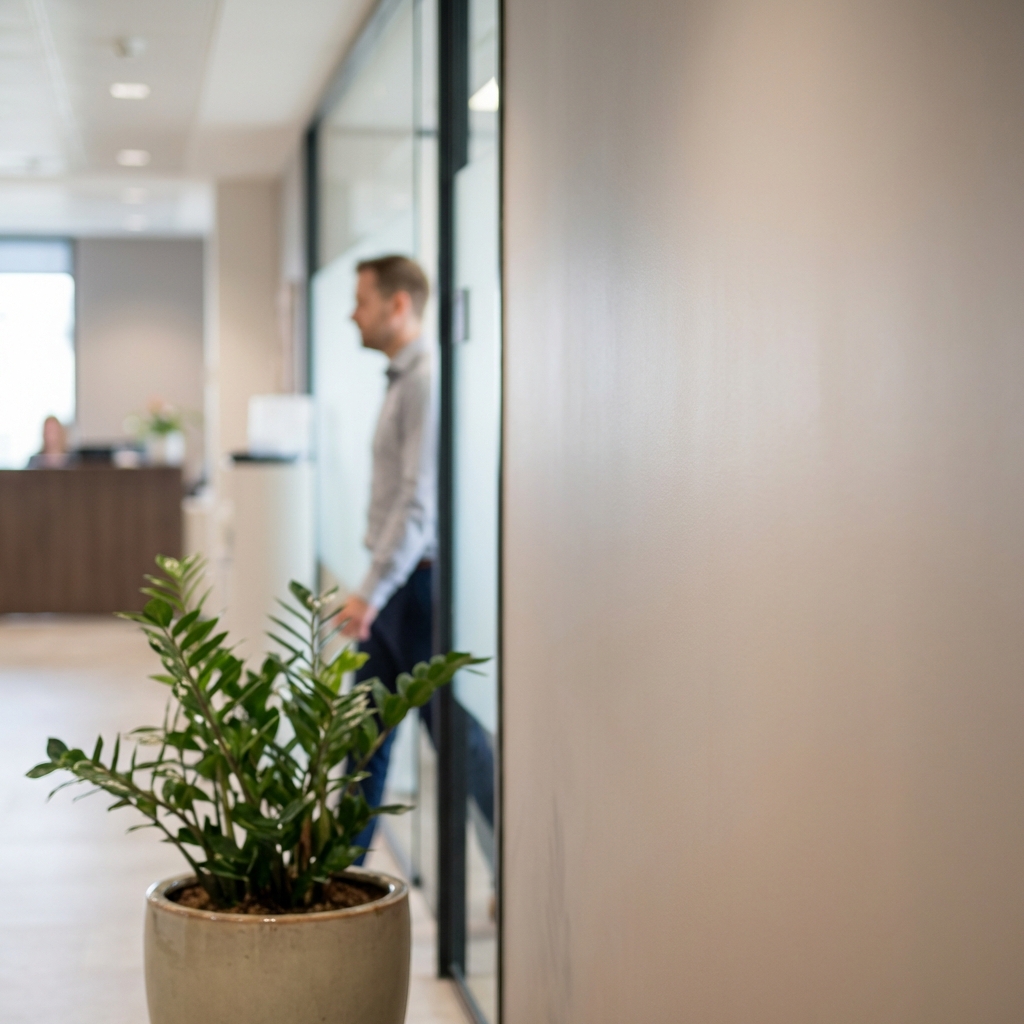
Material streams you avoid with adhesive-free execution include:
- PVC films and backing liners
- Pressure-sensitive adhesives and chemical removers
- Scrap from trimming seams and overlaps
- Crating, packaging, and freight for panels and rolls
- Rework from bubbles, lifting edges, or misfit panels
In practice, a hospital or university standardizing wayfinding across multiple buildings can integrate safety icons, room IDs, and brand elements without proliferating acrylic plaques or vinyl layers. EastCoast MuralPros prints on drywall, CMU, concrete, and brick in occupied buildings, minimizing disruption while enabling commercial interior branding at campus scale. Their subscription option supports seasonal or strategic refreshes as sustainable wall decor—scheduled, predictable updates that are painted over when programs change, not peeled and landfilled. The result is lower material consumption across the program and more predictable direct-to-wall printing costs over the full lifecycle.
Operational Flexibility: Simplifying Tenant Turnover and Design Refreshes
Tenant turnover and brand refreshes live or die on schedule. In a lifecycle view, direct-to-wall printing costs are driven as much by downtime and coordination as by square-foot rates. Because the graphics are produced on-site with no vinyl or adhesives, you can rebrand floors, wings, and corridors between close of business and opening the next morning, minimizing revenue loss and changeover friction.
In a vinyl wall wrap comparison, the workflow typically includes site measurement, off-site printing and lamination, shipping and crating, on-site staging, and multi-hour installation with panel seams. At turnover, removal adds adhesive cleanup, wall repair, and repainting before you can install the next system. Each step introduces risk—mis-measurements, shipment delays, and panel alignment issues—that ripple into schedules and budgets.
With on-site wall printing technology, many time sinks and hidden costs disappear:
- No panel tiling, seam alignment, or heat-gunning in occupied areas
- No shipping logistics, crating fees, or waiting on reprints for damage in transit
- No adhesive residue removal or wall remediation at end of life
- Minimal facility disruption; work can be scheduled nights or weekends
- Paint-over-ready finishes that support quick tenant make-readies
- Consistent color and execution across multi-location rollouts
EastCoast MuralPros operationalizes this approach for commercial interior branding at scale. Typical installs finish in under 5 hours per zone, even on unfinished surfaces like CMU or brick, and the result is a seam-free, high-resolution graphic that’s durable and cleanable for the maintenance of wall graphics in high-traffic environments. When it’s time to change, you paint over or reprint on-site—no removal crews, no fumes, and far less waste, supporting more sustainable wall decor.
Consider three common scenarios. A corporate office flips a 20,000-square-foot floor over a weekend: wayfinding, brand walls, and tenant-specific messaging are printed overnight, avoiding a multi-day vinyl removal and reinstall. A hospital updates corridor wayfinding between shifts, integrating safety and instructional graphics without adding signage clutter. A retailer refreshes 50 stores seasonally via a subscription model—EastCoast MuralPros schedules regional overnight prints, eliminating weeks of fabrication lead time and reducing changeout costs tied to shipping and disposal.
Conclusion: Strategic Advantages of Direct-to-Wall Printing Systems
When you evaluate total cost of ownership—not just the install price—direct-to-wall printing costs trend lower across multi-year cycles. Vinyl wraps carry hidden expenses: wall prep, adhesive failures, seam repairs, replacement at refresh, and end-of-life removal that disrupts operations. By contrast, seam-free wall printing technology eliminates adhesive layers and panels, reducing failure points and labor. In a vinyl wall wrap comparison, predictable schedules and fewer touchpoints translate into fewer work orders and lower carrying costs for facilities teams.
Consider a campus corridor refresh or wayfinding update spanning 8–12 zones. Vinyl typically requires staggered install days, overnight curing, and future removal for each cycle; direct-to-wall printing can complete each zone in under five hours with paint-over-ready finishes for the next tenant or program change. That directly reduces downtime, after-hours labor premiums, and soft costs tied to closures. Maintenance of wall graphics also becomes straightforward: cleanable, integrated surfaces withstand high-traffic conditions without edge lifting or bubbling.
The biggest strategic savings show up in these cost drivers:
- Material and logistics: On-site printing removes shipping, crating, and re-fabrication delays.
- Labor and disruption: Faster installs shorten outages and simplify phasing in occupied spaces.
- Repairs and lifecycle: No seams or adhesives to fail; surfaces are durable and easy to clean.
- Scalability: Consistent color and execution across locations minimize rework and punch lists.
- Sustainability: No PVC or adhesive waste, and paint-over at end-of-life supports sustainable wall decor practices.
For procurement and capital planning, standardize on metrics that expose true lifecycle value: cost per square foot per year, hours of operational downtime avoided, average time-to-refresh, and percentage of graphics requiring repair within 24 months. This reframes commercial interior branding from a one-time purchase to a performance-based system you can scale. It also simplifies compliance with brand and wayfinding updates across hospitals, schools, and multi-location portfolios.
EastCoast MuralPros brings these advantages together with direct-to-wall printing, full-campus rollouts, and a subscription model for seasonal or strategic refreshes. Their teams print on finished and unfinished surfaces, deliver high-resolution imagery at architectural scale, and offer in-studio options for doors, tables, and standees. For facilities leaders seeking a proven alternative to wallpaper and vinyl, piloting a single corridor or lobby with EastCoast MuralPros is a fast, low-disruption path to validating long-term savings.
Call to Action
Contact us to learn more