Introduction to Surface Refinishing Criteria for Modern Institutions
Modern facilities teams need surface refinishing technologies that do more than look good—they must perform, scale, and minimize disruption. Whether you’re refreshing a lobby, rebranding a clinic, or updating campus wayfinding, the right approach should serve both design and operations. Many institutions are moving past vinyl wrap alternatives that peel, bubble, or fail under cleaning protocols, toward integrated solutions that feel part of the architecture.
When building a short list, evaluate methods against measurable criteria tied to risk, schedule, and lifecycle cost. The goal is to deliver architectural wall graphics and furniture branding solutions that withstand daily use, support brand systems, and can be upgraded without construction.
- Performance in high-traffic areas: resistance to scuffs, cleaning agents, and frequent wipe-downs.
- Installation speed and disruption: ability to complete work in occupied buildings, often within a single shift.
- Substrate compatibility: reliable results on drywall, CMU, concrete, brick, and lightly textured surfaces without extensive prep.
- Visual fidelity: photoreal clarity, seam-free expanses, precise color for brand standards, and readable wayfinding at long viewing distances.
- Lifecycle efficiency: reduced maintenance and simplified refresh—ideally paint-over-ready rather than adhesive removal.
- Sustainability: less material waste than wallpaper or vinyl, and fewer replacement cycles across multi-site portfolios.
- Scalability and consistency: repeatable outcomes across locations with minimal variance and limited on-site surprises.
- Integration: safety and instructional graphics deployed without additional signage clutter.
Consider practical scenarios. A hospital corridor needs cleanable, non-delaminating graphics to communicate wayfinding without protruding signs. A university may require seasonal content—athletics, admissions, or donor stories—swapped on a predictable cadence. Corporate teams pursuing the office as a living brand benefit from digital printing finishes that can refresh zones quickly while holding strict color accuracy.
For commercial interior upgrades that meet these criteria, direct-to-wall printing provides a strong baseline: no vinyl or adhesives, fast installs, and crisp detail at architectural scale. EastCoast MuralPros delivers on-site printing typically in under five hours, producing durable, cleanable surfaces that are paint-over-ready for future tenant or program changes. The team also supports in-studio printing on doors, tables, and standees to extend brand systems across furniture and fixtures, and offers subscription refresh models to align updates with campaign or academic calendars. For multi-location rollouts, on-site production reduces shipping risk while ensuring consistent execution nationally.
Direct-to-Wall Printing: The High-Definition Alternative for Fixed Furniture
When fixed furniture and built-ins need a fresh, brand-forward look, direct-to-wall printing offers a precise, high-definition path that outperforms many traditional surface refinishing technologies. Instead of laminates, paint, or wraps, the graphics are printed in place on architectural surfaces, delivering a seam-free result that feels integrated rather than applied. It’s an ideal vinyl wrap alternative for complex conditions where edges, reveals, and hardware make overlays prone to failure.
Because there are no adhesives or panels, installation is fast and low-disruption—often completed in under five hours—with little odor and minimal masking. The print head lays down photoreal, high-resolution architectural wall graphics that align perfectly across adjacent planes, so millwork faces, soffits, and wall sections read as one continuous composition. For occupied workplaces and healthcare environments, the speed and schedule certainty can be more valuable than any cosmetic fix.
Common fixed-furniture and fixture applications include:
- Reception desks, transaction counters, and nurse stations (fascia and returns)
- Elevator surrounds, columns, and CMU or concrete feature walls
- Library stack ends, lockers, and built-in casework ends
- Retail fixture backs, café banquettes, and museum plinths or kiosks
- Complementary in-studio pieces like solid-core doors and tabletops for coordinated sets
From a performance standpoint, these digital printing finishes are durable, cleanable, and designed for high-traffic environments. Graphics are paint-over-ready, making future tenant turnover or program changes straightforward without demolition or re-skinning. They also excel at integrated wayfinding and instructional content, reducing signage clutter while preserving a design-forward look across commercial interior upgrades.
Lifecycle costs improve because there’s no film to peel, no seams to telegraph, and fewer callbacks for edge repairs. On-site printing eliminates shipping and fabrication errors while keeping existing substrates in place, which reduces waste compared to wallpaper and vinyl. For teams pursuing greener specifications, the no-adhesive process aligns with sustainable interior branding methods and procurement goals.
EastCoast MuralPros brings this capability to scale for campuses, hospitals, and multi-location brands that need consistent execution and predictable outcomes. The team can print on finished and unfinished surfaces like drywall, CMU, concrete, and brick, coordinate with facilities for off-hours work, and maintain color standards across national rollouts. Subscription options allow seasonal or strategic refreshes, turning furniture branding solutions into a managed, repeatable program rather than a one-off project.
M DI-NOC Architectural Finishes: Traditional Film-Based Resurfacing
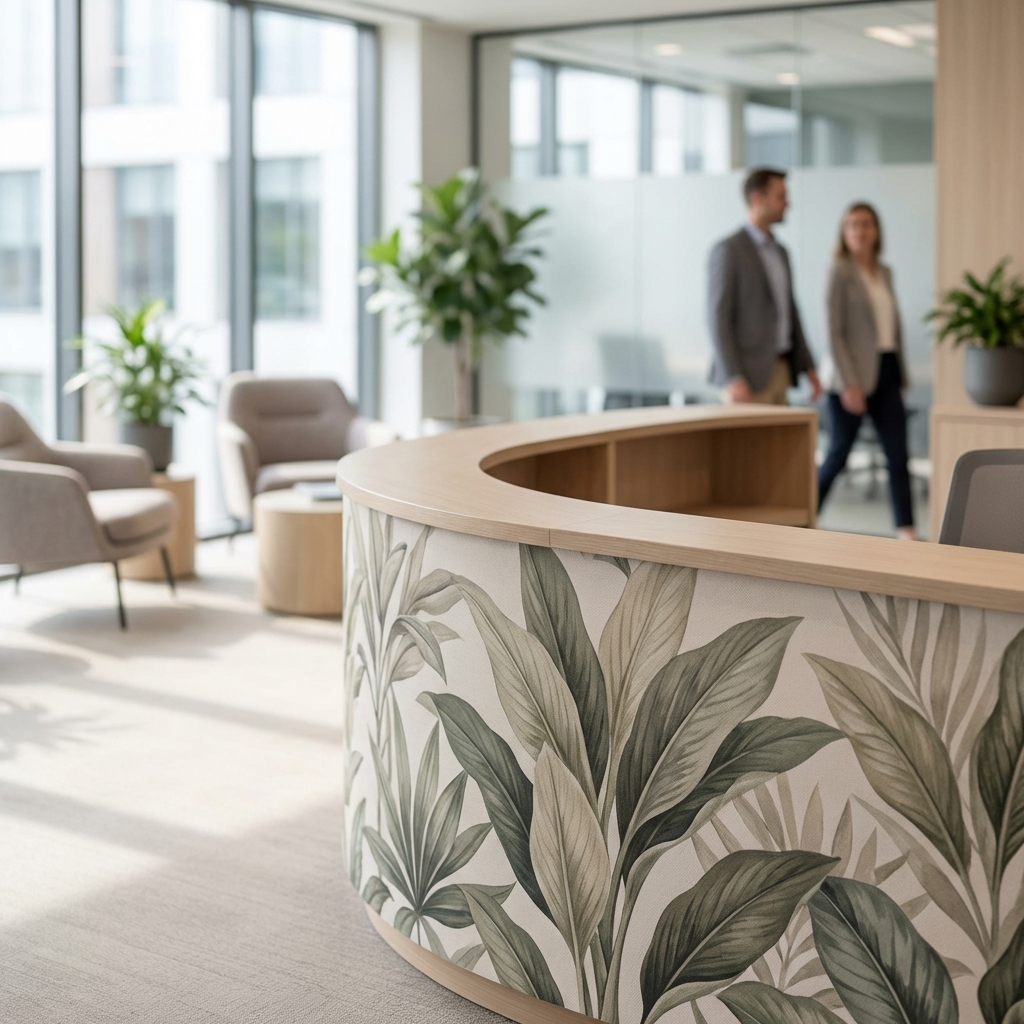
Among surface refinishing technologies, 3M DI-NOC Architectural Finishes are a long-standing, film-based method for refreshing existing substrates without demolition. These self-adhesive vinyl laminates mimic wood, metal, stone, fabric, and abstract textures, allowing teams to modernize surfaces at a fraction of the time of millwork replacement. While many owners now evaluate vinyl wrap alternatives, DI-NOC remains a proven option when the design intent is to simulate premium materials rather than display brand imagery.
DI-NOC excels on doors, millwork, elevator cabs, columns, and reception desks—areas where tactile realism and abrasion resistance matter. Installation is relatively quiet and clean, and trained installers can heat-form the film around edges and light curves. For commercial interior upgrades under tight schedules, it can extend the life of existing assets and reduce waste from tear-outs.
Best-fit use cases
- High-touch millwork and casework where a wood, metal, or stone look is desired.
- Elevator cab interiors, columns, and cores requiring uniform finishes without fabrication.
- Quick refreshes of furniture components, transaction counters, and doors across multiple locations.
- Spaces with cleaning protocols that favor durable, wipeable surfaces.
Key considerations and tradeoffs
- Roll widths (often around 48 inches) introduce visible seams on large feature walls.
- Substrate prep is critical; porous, uneven, or raw masonry (CMU, brick, concrete) typically needs smoothing and priming, or a backer panel.
- Adhesive edges can lift in high-moisture or high-abuse zones; corners, hardware cutouts, and inside returns are common failure points.
- Pattern libraries are extensive but not intended for photoreal branding or precise Pantone-matched architectural wall graphics.
- Removal can leave adhesive residue and may require surface repair; confirm lifecycle plans and replacement protocols.
- Fire and performance ratings vary by series; verify Class A and local code compliance per application.
When brand storytelling, wayfinding, or photoreal imagery are primary, digital printing finishes offer more freedom. EastCoast MuralPros uses direct-to-wall technology to deliver seamless, adhesive-free architectural wall graphics at high resolution on drywall, CMU, concrete, and brick. Installations typically complete in under five hours with low disruption, and the paint-over-ready finish simplifies future tenant or program changes—ideal for multi-site rollouts and vinyl wrap alternatives.
A hybrid approach often delivers the best outcome. Use DI-NOC where you need material realism on furniture and millwork, and pair it with EastCoast MuralPros for large-scale brand walls, integrated wayfinding, and seasonal refreshes via subscription. For example, a workplace lobby can wrap the reception desk in a woodgrain finish while printing a seam-free feature wall and directional graphics that stay cleanable and consistent across campuses.
Performance Comparison: Durability, Installation Speed, and Maintenance
When you compare surface refinishing technologies for corporate furniture and commercial interior upgrades, three factors drive outcomes: durability, installation speed, and maintenance. The right choice depends on substrate, traffic, and branding goals, but the cost of downtime and the ease of future changes often matter as much as the initial look. Teams also weigh sustainability and whether the solution scales for architectural wall graphics and multi-site rollouts.
On durability, UV-cured direct-to-wall digital printing creates a hard, cleanable film that resists scuffs and abrasion in corridors, lobbies, and classrooms. Because imagery is printed seam-free directly on drywall, CMU, concrete, or brick, there are no edges to lift—an advantage over vinyl wall coverings and wallpapers that can peel, bubble, or telegraph substrate texture over time. Hand-painted murals can be robust but vary by painter and coating system, and they are slower to replicate consistently across multiple locations.
Installation speed is where on-site digital printing finishes stand out. Vinyl and wallpaper require templating, fabrication, shipping, and multi-step alignment; paint-based solutions need masking and cure windows; powder coating or laminate resurfacing requires removing furniture from service. EastCoast MuralPros can execute high-resolution, full-height walls in under five hours per zone, even in occupied buildings, because on-site printing eliminates shipping delays and reduces staging and rework.
Maintenance and lifecycle costs favor solutions that are cleanable and easy to refresh without repair-intensive removals. Seam-free prints wipe down like painted walls and, when needs change, can be painted over—avoiding adhesive residue and wall repair common with vinyl wrap alternatives. For furniture branding solutions, in-studio UV printing on doors, tables, and standees can be paired with protective topcoats for daily cleaning, while avoiding edge failure typical of films on tabletops.
Quick reference performance comparison across common methods:
- Direct-to-wall digital printing (EastCoast MuralPros): High durability, fast installs, low disruption; cleanable, paint-over-ready; consistent across campuses and national rollouts
- Vinyl wall coverings/architectural films: Moderate durability; seams and edges can fail; removal adds labor and waste; sensitive to substrate prep
- Hand-painted murals: Good durability; artisan-dependent; multi-day installs; touch-ups required for damage
- Wallpaper: Similar to vinyl; visible seams; longer installs; challenging removal
- HPL/laminate resurfacing for furniture: Very durable; fabrication and downtime required; good for hard-wearing counters
- Powder coating for metal furniture: Excellent durability; off-site processing; best when full disassembly is acceptable
For high-resolution architectural wall graphics, integrated wayfinding, and rapid commercial interior upgrades, EastCoast MuralPros offers a predictable, scalable path with digital printing finishes that outperform adhesives and minimize maintenance over the lifecycle.
Sustainability and Environmental Impact of Interior Branding Methods
Sustainability should be a first-class criterion when comparing interior branding methods and surface refinishing technologies. Beyond aesthetics, teams need to understand the materials, energy, and end‑of‑life impacts behind wall graphics and furniture refreshes. The goal is simple: achieve brand and wayfinding outcomes with less waste, fewer chemicals, and longer service life.
Key environmental considerations include:
- Material composition and PVC content (e.g., vinyl vs. ink-on-substrate approaches)
- Adhesives and primers that add chemicals, off‑gassing, and disposal complexity
- Packaging, shipping, and fabrication waste from off‑site production
- Installation waste, jobsite disruption, and damage to existing finishes
- Durability, cleanability, and frequency of replacement
- End‑of‑life removal, recyclability, and paint-over readiness
Traditional vinyl wall coverings introduce PVC films, pressure-sensitive adhesives, and seams that can fail in high-traffic areas, accelerating replacement cycles. Removal often damages drywall, sending contaminated material to landfill and requiring patching and repainting. The net effect is a higher material footprint over the lifecycle, especially during multi-location rollouts.
Direct-to-wall digital printing has emerged as one of the most effective vinyl wrap alternatives for architectural wall graphics. By depositing high-resolution imagery directly onto finished or unfinished surfaces, it eliminates vinyl, liners, and adhesive layers while slashing packaging and freight. Paint-over-ready finishes allow future tenant changes without demolition or panel removal, reducing both waste and downtime.
EastCoast MuralPros leverages on-site printing to minimize shipping emissions and fabrication errors, while delivering seam-free results at architectural scale. For commercial interior upgrades, this approach yields durable, cleanable wall surfaces that stand up to healthcare corridors, school hallways, and busy lobbies. Integrated wayfinding, safety, and instructional graphics can be printed as part of the wall, reducing signage clutter and additional substrates.
Sustainability extends to furniture branding solutions as well. Instead of replacing or wrapping fixtures, in-studio digital printing finishes on doors, tables, and standees can modernize assets and extend their service life. A hotel needing a brand refresh, for example, can reprint tabletops and guest-room doors rather than discard and replace them—cutting embodied carbon, freight, and landfill.
For institutions planning campus-wide updates, EastCoast MuralPros’ consistent execution across locations reduces rework and replacement waste. Their subscription model supports scheduled refreshes that align with academic terms or retail seasons, enabling strategic updates with less material turnover and minimal disruption.
Selection Guide: Choosing the Right Finish for Your Facility Needs
Selecting among today’s surface refinishing technologies starts with your facility’s realities: substrate type, traffic loads, downtime tolerance, and how often you plan to refresh branding. The right choice should reduce lifecycle costs while improving design impact, not just solve a short-term cosmetic problem. For multi-site portfolios, standardizing on finishes and methods also streamlines procurement and quality control for commercial interior upgrades.
Use these criteria to narrow options:
- Substrate and condition: drywall, CMU, concrete, brick, sealed wood, laminate, metal, or mixed surfaces—and whether patching is needed.
- Durability and hygiene: cleanability standards, abrasion resistance, and chemical tolerance for healthcare and education.
- Schedule and disruption: can work happen in occupied areas, at night, and be completed in hours vs. days.
- Aesthetic intent: photoreal architectural wall graphics vs. solid-color refinishing, textures, or wayfinding.
- Refresh cadence: permanent, multi-year finish vs. seasonal or campaign-based content.
- Sustainability: adhesives, VOCs, waste, and ease of end-of-life removal.
When speed, scale, and imagery quality drive the decision, consider direct-to-wall digital printing finishes as a high-performing vinyl wrap alternative. EastCoast MuralPros prints high-resolution, seam-free graphics directly on finished or unfinished walls (drywall, CMU, concrete, brick) in occupied buildings—often in under five hours per area. The result is a durable, cleanable, paint-over-ready surface that integrates wayfinding and brand storytelling without signage clutter or adhesive failures. On-site production also eliminates shipping delays and panel fabrication errors, enabling consistent execution across multi-location rollouts.
For furniture branding solutions and touchable surfaces, match finish to use case. Direct UV print with a protective topcoat works well for branded doors, tables, and standees produced in-studio, delivering crisp detail and fast turnarounds. High-solids 2K polyurethane or catalyzed coatings excel on millwork and casework that demand chemical resistance and daily cleaning. Powder coating is the go-to for metal frames and bases; it’s tough, color-stable, and cost-effective for batches.
Example selections that balance performance and schedule:
- Hospital corridor: direct-to-wall wayfinding graphics with cleanable overprint varnish; paint-over-ready for future program changes.
- University commons: photoreal murals on CMU plus UV-printed café tables sealed with 2K topcoat.
- Corporate lobby: large-scale brand wall printed on-site; metal seating frames powder-coated to refresh color palette.
- Retail rollout: standardized mural packages printed on-site across locations to maintain brand color fidelity and installation speed.
If you need a predictable, low-disruption path from pilot to portfolio, EastCoast MuralPros supports campus-wide and national programs with consistent methods, a subscription model for seasonal refreshes, and coordination tools for designers and digital artists. This ensures your chosen finish performs as specified—on day one and through the lifecycle.
Call to Action
Contact us to learn more