
Introduction: The Evolution of Large-Scale Commercial Wall Graphics
Large-format wall graphics have shifted from hand-painted murals and vinyl wraps to shop-fabricated printed wall panels—and now to on-site direct to wall printing. As commercial interior branding has become more data-driven and time-sensitive, teams in healthcare, higher education, workplace, and retail need durable mural solutions that install fast, survive cleaning, and scale across multiple locations without construction.
Printed wall panels still have a role. They offer rigidity and edge protection, can carry specific fire ratings, and perform well in areas prone to impact. But panels introduce seams and alignment tolerances, require adhesives or mechanical fasteners, and add logistics risk—shipping, handling, and field modification—along with longer installation windows and waste.
Direct to wall printing uses custom wall printing technology to deliver high-resolution architectural wall graphics directly on drywall, CMU, concrete, and even brick—without vinyl or adhesives. EastCoast MuralPros executes this on site in occupied buildings, typically completing a large feature wall in under five hours with cleanable, paint-over-ready finishes. The process is seam-free at architectural scale, minimizes disruption, and eliminates shipping delays and fabrication errors common with off-site panels.
Choosing between systems usually comes down to constraints and priorities:
- Substrate and environment: stable painted drywall or sealed masonry favors on-wall printing; high-impact corridors may still benefit from protective panel systems.
- Schedule and access: tight turnarounds, after-hours windows, and occupied spaces align well with on-site printing.
- Lifecycle and maintenance: if periodic rebranding is expected, paint-over-friendly graphics reduce future cost and downtime; if permanent protection is paramount, panels can layer durability with visuals.
- Scale and consistency: multi-location rollouts need predictable color and execution—on-wall printing reduces variance by removing panel suppliers and shipment variables.
- Sustainability: teams seeking sustainable mural solutions can avoid PVC and reduce replacement cycles with adhesive-free workflows.
For organizations evaluating performance-based alternatives to vinyl and wallpaper, EastCoast MuralPros provides a predictable path to photoreal, high-resolution results—whether enhancing a pediatric corridor, clarifying wayfinding across a campus, or refreshing a retail rollout—with the speed and repeatability facilities and procurement teams require.
Understanding Direct-to-Wall Printing: Seamless UV Integration on Existing Substrates
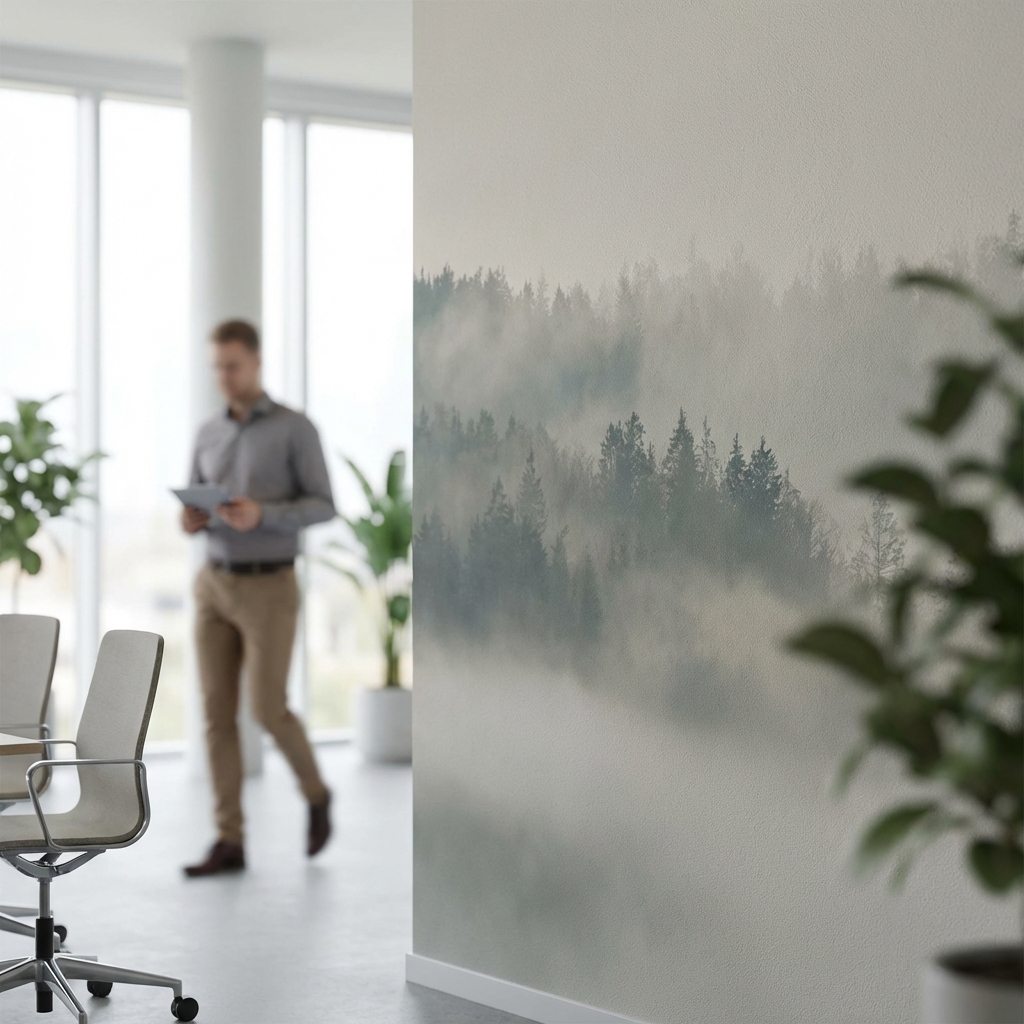
Direct to wall printing uses UV-curable inks to produce seamless, high-resolution graphics directly on existing substrates—no vinyl, adhesives, or panel seams. Unlike printed wall panels that must be fabricated, shipped, and mounted, the image is created in place, conforming to the architecture for a true built-in look. The result is photoreal architectural wall graphics that support commercial interior branding without adding layers to the wall assembly.
This custom wall printing technology employs a mobile, rail-guided system that traverses the surface while UV-LED lamps cure each droplet instantly, forming a thin, durable film. Because curing happens on contact, colors stay crisp and legible at close range, even on textured walls, with no risk of trapped bubbles. Technicians align and color-manage the artwork to the space, enabling precise registration to doorways, reveals, and datum lines. For multi-site rollouts, the same workflow delivers consistent brand color across locations.
Surface readiness matters more than perfection. Most finished and unfinished walls only require light dusting, masking, and a quick porosity test; primers are used selectively to lock down friable surfaces. EastCoast MuralPros verifies adhesion with a test swatch before committing, reducing surprises during installation.
- Painted drywall (eggshell or higher), new or existing
- Sealed CMU and block walls
- Smooth and broom-finished concrete
- Interior brick and masonry
- Level 4–5 gypsum board, columns, and soffits
- Select sealed woods and laminates for feature walls
For high-traffic corridors, cafeterias, and lobbies, the cured print is abrasion-resistant and cleanable with routine facilities protocols, removing the edge failures common to wallpaper and vinyl. Seam-free imagery means no panel joints to pry, and integrated wayfinding or safety cues can be placed exactly where they’re needed. Because printing is on-site, large installations often complete in under five hours per zone with minimal disruption to occupied buildings.
Operationally, the finish is paint-over-ready, so a future tenant improvement or program change is as simple as scuff, prime, and paint—no demolition or landfill from failed coverings. EastCoast MuralPros couples direct-to-wall printing with calibrated color, field QA, and a subscription option for seasonal or strategic refreshes across campuses and portfolios. When used as part of a larger environmental strategy, these durable mural solutions can reinforce culture, compliance, and navigation—see the impact of environmental graphics for examples.
The Mechanics of In-Studio Printed Panels: Conventional Branding and Its Limitations
In-studio printed wall panels are produced by printing artwork onto rigid or flexible substrates—often with UV-curable inks—then trimming, laminating, and finishing edges before transport. The shop controls color, sheen, and protective coatings, and can route for outlets or fixtures based on measured drawings. Panels arrive as a kit of parts that installers align and fasten on site to build larger architectural wall graphics.
Common materials and mounting approaches include:
- Substrates: aluminum composite (ACM), PVC, acrylic, HPL, and fabric-wrapped boards for commercial interior branding
- Finishes: matte or satin laminates for abrasion and cleaning; anti-graffiti topcoats where needed
- Fire/safety: ratings and backing choices to meet corridor or healthcare requirements
- Mounting: Z-clips, French cleats, tape-and-adhesive systems, or exposed standoffs
Field conditions drive the final fit and finish. Out-of-plumb walls, bowed drywall, or uneven CMU introduce alignment challenges, so seams and reveals are used to absorb tolerances. Thermal movement and substrate expansion can open joints or telegraph over time; a 60-foot corridor panelized into 4-by-8 sheets may introduce 15–20 seams that collect dust and visually break continuous imagery.
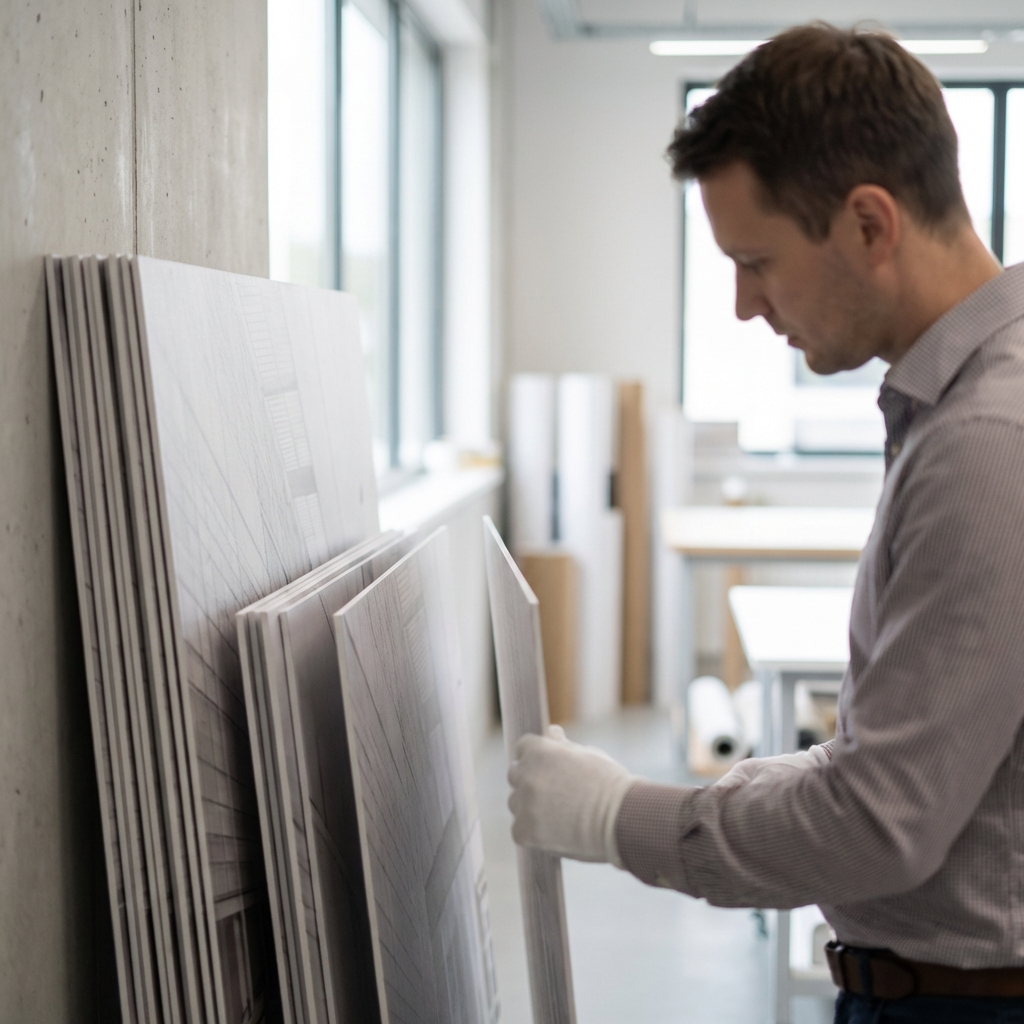
The panel workflow also adds logistics. Accurate site surveys, shop drawings, color proofs, and panelization maps are required before fabrication—then crating, shipping, and staging on site. Damage-in-transit, mislabeled parts, or late design changes can force reprints, extending schedules for multi-location rollouts and raising total cost of ownership.
Durability hinges on edge integrity and laminate performance. High-traffic impacts chip corners; cleaning agents can haze lower-grade laminates; and seams can harbor grime in healthcare or food-service settings. When content changes—such as an updated wayfinding icon—you often replace an entire panel section, not just the graphic element.
Panels still make sense for removable displays, dimensional standoffs, or where substrate isolation is required. However, for large, continuous brand walls and durable mural solutions, direct to wall printing reduces seams, shipping risk, adhesives, and wall penetrations. EastCoast MuralPros uses custom wall printing technology to produce photoreal, cleanable, paint-over-ready graphics on drywall, CMU, brick, and concrete with low disruption—an efficient alternative to printed wall panels for scalable, consistent results.
Comparative Durability: Performance in High-Traffic Healthcare and Educational Settings
Healthcare corridors and K–12 hallways are unforgiving: carts scuff, backpacks drag, and custodial teams sanitize daily. In this environment, direct to wall printing avoids the weak points that often shorten the life of graphics. Instead of relying on adhesive films or mechanical fasteners, imagery bonds to the existing substrate, delivering continuous architectural wall graphics without seams that can lift, chip, or trap grime.
On CMU block, drywall, or sealed concrete, the printed layer behaves like a performance coating—thin, tough, and conformal. There are no panel joints to catch a gurney wheel or chair rail, and no edge trims to yellow or delaminate. The result is consistent appearance in the zones that see the most wear, from nurse stations to elementary school entries.
Cleaning and infection control drive many material choices in hospitals and schools. Direct to wall printing stands up to routine disinfectants (quats, diluted bleach, and peroxide-based cleaners commonly used by EVS teams) without bubbling or seam creep because there is no adhesive interface to fail. EastCoast MuralPros delivers durable mural solutions with smooth, cleanable surfaces and paint-over-ready finishes, so program changes don’t require demolition or panel replacement.
By comparison, printed wall panels concentrate risk at their edges and fasteners. Impacts can chip corners, moisture can intrude at seams in restrooms and cafeterias, and replacing a damaged area often means swapping an entire panel and matching a production batch. In busy wings or stair cores, trim pieces also create tactile ridges that attract scuffs and soil, increasing maintenance time.
What this means for facilities and operations:
- Lower lifecycle load: spot touch-ups or full paint-overs instead of panel swaps and reorders.
- Faster recovery after damage: reprint in place without waiting on freight or fabrication.
- Fewer hygiene concerns: no joints that harbor dust or require caulk lines.
- Predictable appearance standards: uniform color and resolution across long runs and multiple floors.
For multi-location systems that prioritize commercial interior branding and wayfinding, consistency is equally critical. EastCoast MuralPros uses custom wall printing technology on-site to standardize outcomes across campuses, eliminating shipping delays and fit-up errors that accompany printed wall panels. Installations are typically completed in under five hours with low disruption in occupied buildings, making direct to wall printing a practical, long-horizon choice for healthcare and education.
Installation Efficiency: Analyzing Project Timelines and Facility Downtime
Facility downtime often hinges on how many steps it takes to get graphics from approval to the wall. With direct to wall printing, production happens on-site, compressing staging, logistics, and install into a single, tightly managed window. Printed wall panels, by contrast, carry a longer chain of dependencies—fabrication, shipping, field alignment, and corrective rework—that can extend closures and introduce schedule risk.
Where time is won or lost during installation:
- Upstream workflow: Printed wall panels often require shop drawings, panelization, substrate selection, and color approvals. Direct-to-wall printing relies on digital proofs and a brief site survey, then moves straight to production.
- Logistics: Panels must be crated, shipped, received, inspected, and staged—any delay halts the schedule. On-site custom wall printing technology eliminates shipping and fabrication errors, keeping the timetable intact.
- Wall prep: Panels may need blocking, rails, or adhesive cure windows, depending on the system. Direct-to-wall printing runs on finished or unfinished surfaces (drywall, CMU, concrete, brick) with minimal masking.
- Field fit: Panel installs involve seam alignment, fastener layout, and field cuts that add time and disruption. Direct-to-wall printing produces seam-free architectural wall graphics in a calibrated pass.
- Occupancy impact: Panel work can introduce drilling, dust, and corridor closures. Direct-to-wall printing is low-disruption and suited to occupied buildings.
Real-world scheduling advantages show up in high-traffic corridors, lobbies, and patient areas. A feature wall or wayfinding zone can typically be printed in under five hours, often during off-hours, so spaces reopen by morning rounds or start-of-day foot traffic. Multi-floor rollouts benefit from the same repeatable setup each night without waiting on shipments or clearing large staging areas.
Risk is another timetable driver. If a crate arrives damaged or a panel color misses target, re-fabrication can push a project by days. With on-site direct-to-wall printing, EastCoast MuralPros removes those variables and delivers consistent execution across multi-location and national programs—critical for commercial interior branding where timing and brand control are non-negotiable.
There are scenarios where panels make sense—extreme impact zones or removable signage systems—but for durable mural solutions at architectural scale, direct-to-wall printing minimizes downtime while maximizing visual quality. EastCoast MuralPros also offers paint-over-ready finishes and a subscription model, enabling seasonal or strategic refreshes to be scheduled into operations without added construction, replacement cycles, or waste.
Sustainability and Maintenance: Assessing Environmental Impact and Lifecycle Costs
Sustainability in high-traffic spaces starts with what you don’t bring to the jobsite. Direct to wall printing avoids vinyl, adhesives, and plastic substrates altogether, reducing embodied materials and packaging. Printed wall panels often rely on PVC or aluminum composite sheets plus tapes or mastics, which add waste, introduce seams, and require crating and shipping that can multiply the project’s carbon footprint.
On maintenance, fewer layers mean fewer failure points. Seam-free architectural wall graphics are less likely to peel, gap, or trap dirt, and there’s nothing to delaminate at edges—common pain points with printed wall panels in humid corridors, stairwells, or near mechanical rooms. Because direct to wall printing happens on the finished surface, teams can refresh content later with another pass or simply paint over, avoiding demo and landfill fees.
Cleaning protocols are equally important in hospitals, schools, and retail. Durable mural solutions produced via custom wall printing technology are designed to be cleanable with routine janitorial products, supporting infection control and day-to-day scuff removal. By contrast, panel seams and exposed edges can harbor grime, and aggressive cleaning can accelerate adhesive breakdown, forcing early replacement.
When evaluating lifecycle costs, compare these factors over a 3–7 year horizon:
- Installation impact: on-site direct to wall printing typically finishes in hours with minimal disruption; panels may need staging, wall prep for flatness, and after-hours mounting.
- Failure and repair: localized touch-ups or reprints without tear-out vs. full-panel replacements and patch painting around fasteners.
- Refresh and changeover: paint-over-ready updates vs. removal, wall repair, and new fabrication.
- Logistics and waste: no crates, liners, or offcuts vs. shipping, packaging disposal, and field trimming.
- Multi-site consistency: in-place calibration and color control vs. batch variability across panel runs.
For commercial interior branding at scale, these differences compound. A campus hospital can update wayfinding overnight in under five hours per zone and keep corridors open; a landlord can rebrand between tenants without dumpsters or prolonged downtime. EastCoast MuralPros delivers direct to wall printing that is cleanable, seam-free, and lifecycle-efficient, with on-site execution that reduces shipping, mistakes, and waste—an environmental and operational win compared to printed wall panels.
Conclusion: Determining the Optimal Graphic Solution for Your Facility Architecture
Choosing the right method comes down to what your walls must endure, how fast you need to activate space, and how often graphics will change. For most finished interior walls in corridors, lobbies, classrooms, and patient areas, direct to wall printing delivers seam‑free architectural wall graphics with speed and minimal disruption. The result is high‑resolution, durable mural solutions that are cleanable, paint‑over‑ready, and installed in occupied buildings in hours—not days—across drywall, CMU, concrete, and even brick.
Printed wall panels still have a place when the substrate is severely damaged, when you need added impact resistance, or when integrated acoustics or 3D elements are part of the brief. Panels also suit exterior or wet zones where a sealed, replaceable module is advantageous. The trade‑offs are seams, attachment hardware, potential glare, longer lead times, and fabrication risks that direct printing avoids.
Many facilities win with a hybrid approach: use custom wall printing technology for large‑field branding, wayfinding, and environmental storytelling, and reserve panels for protective wainscots, donor features, or interactive components. A hospital, for example, might direct‑print photographic landmarks and directional cues along CMU corridors, then add panelized bump guards at nurse stations. A retail chain can roll out national seasonal campaigns via direct prints, while keeping a few panelized, backlit hero elements flexible at flagships.
Use this quick decision filter to align method with architecture and operations:
- Wall condition and texture (finished vs. rough, cracks, patchwork)
- Occupancy and downtime tolerance (hours vs. days, night work)
- Cleaning regimen and durability expectations in high-traffic areas
- Refresh cadence (seasonal messaging vs. long-term installations)
- Scale and consistency across multi-location rollouts
- Sustainability goals and aversion to adhesives and vinyl waste
- Permitting, fire ratings, and attachment hardware considerations
- Integration with ADA signage, safety, and instructional graphics
- Risk tolerance for shipping, fabrication, and punch‑list errors
EastCoast MuralPros helps teams make that call with on‑site assessments, test prints, and pilot corridors, then executes at scale with consistent quality. Their direct to wall printing pairs speed and reliability with photoreal commercial interior branding, while in‑studio capabilities extend graphics to doors, tables, and standees. For facilities juggling tight schedules, high traffic, and evolving programs, they provide a performance‑based alternative to vinyl wall coverings and wallpaper that reduces lifecycle cost without sacrificing design intent.
Call to Action
Contact us to learn more