Introduction: The Challenge of Maintaining Wall Graphics in High-Traffic Environments
Durable High-Traffic Wall Art Solutions for Commercial Spaces and Institutions
Foot traffic, rolling carts, routine cleanings, and constant operational demands make walls work as hard as floors in busy facilities. From hospital corridors to university student centers and multi-tenant lobbies, graphics are asked to communicate, direct, and inspire—without slowing down the daily flow. The problem: most graphic systems weren’t designed to perform in those conditions.
Durable high-traffic wall art isn’t just a design choice; it’s a facilities strategy. Organizations need graphics that stand up to abrasion, fingerprints, and disinfectants while looking sharp over time. They also need solutions that install quickly, avoid adhesives that can fail or off-gas, and scale predictably across multiple locations.
EastCoast MuralPros focuses on these operational realities. The company’s direct-to-wall printing delivers seam-free, high-resolution graphics that install with minimal disruption—often in under five hours per area—while avoiding the pitfalls of traditional vinyl and wallpaper. For teams operating on tight schedules, with limited downtime and clear performance targets, that difference is meaningful.
Why Traditional Vinyl and Wallpaper Fall Short in Busy Spaces
Vinyl wall coverings and wallpaper were built for aesthetics first and performance second. In high-traffic corridors, cafeterias, waiting rooms, and retail aisles, the weaknesses show up quickly.
- Seams, bubbles, and edge failures develop under cleaning pressure and temperature swings. Corridor corners and door returns are common failure points.
- Adhesives complicate maintenance. Once they fail, they take paint and gypsum with them, leaving a prep-and-repair project before any reinstallation can occur.
- Cleaning becomes a liability. Strong disinfectants and routine wipe-downs accelerate surface wear, degrade adhesives, and scuff printed inks.
- Logistics introduce risk. Measuring, fabricating, shipping, and staging vinyl panels add lead time and opportunities for error. A single mis-measure or damaged roll can delay an entire installation.
- Replacement cycles are costly. When panels fail, the fix often means full-wall replacement to maintain visual consistency—and repeated downtime for the space.
For large organizations and institutional owners, these drawbacks aren’t cosmetic; they’re operational. Frequent refreshes, warranty wrangling, and touch-up schedules don’t align with lean facilities teams or predictable budgeting. That’s why many are exploring high-performance wall printing alternatives to vinyl that prioritize lifecycle value, speed, and reliability.
Key Characteristics of Durable High-Traffic Wall Art
When evaluating commercial wall graphics for busy environments, performance criteria should lead the conversation. The goal is not simply to get a graphic onto a wall, but to deploy a system that holds up across hundreds of interactions and cleanings.
Look for solutions with:
- Seam-free execution at architectural scale to eliminate failure-prone edges and panel joints.
- Direct-to-surface application without adhesives or panels to reduce detachment risks and future remediation.
- High-resolution, photoreal output that remains crisp at long viewing distances and withstands close inspection.
- Cleanable, abrasion-resistant finishes suitable for healthcare, education, and hospitality protocols.
- Compatibility with common substrates—finished and unfinished drywall, CMU, concrete, and brick—reducing prep and enabling consistent results across building stocks.
- Paint-over-ready surfaces that support program changes, tenant turnover, and brand refreshes without demolition or landfill waste.
- Low-disruption installation that works around occupied schedules, off-hours windows, and infection-control constraints.
- Proven scalability for multi-wall, multi-floor, or multi-property rollouts with consistent color and brand accuracy.
Durable high-traffic wall art should function like integral architecture: part of the building, not a decorative layer that needs constant policing. The more it behaves like a high-performance coating—and the less it acts like an applied product—the better it will perform over time.
Direct-to-Wall Printing Technology: A Performance-Based Alternative
Direct-to-wall printing changes the equation by placing ink directly on the built surface—no vinyl, no wallpaper, no adhesive layer to fail. Using precision-guided print systems and UV-cured inks, the image bonds to the wall and delivers consistent, seamless results at scale.
Key performance advantages include:
- Seam-free output across long corridors and large feature walls, eliminating panel alignment issues and edge failures.
- High-fidelity color and detail, with photoreal imagery that reads clearly from any distance and holds up under close viewing.
- On-site print calibration and scaling, enabling precise positioning around obstacles, door frames, and MEP penetrations without re-fabrication.
- Fewer steps, fewer variables. With no panel production or shipping, teams avoid fabrication errors and damaged goods.
EastCoast MuralPros deploys this approach as a performance-based alternative to wallpapers and coverings. The company’s process supports both finished and unfinished substrates—drywall, CMU, concrete, and brick—making it a strong fit for modern campuses and mixed-portfolio landlords. For a deeper dive into the technical benefits of this method in demanding spaces, see their overview of direct-to-wall benefits.
Installation Speed and Minimal Disruption Benefits
In occupied buildings, installation speed and predictability often determine whether a solution is feasible. Direct-to-wall printing minimizes the moving pieces—no crates to unload, no adhesives to mix, no off-site fabrication schedules to coordinate—and turns a complex project into an on-site service.
- Typical installations complete in under five hours per wall or area, making off-hours refreshes feasible between shifts.
- Low-noise, low-odor printing avoids disruptive chemical smells and multi-day downtime common with adhesives and wet-applied coverings.
- On-site agility allows last-minute adjustments. If a device location has moved or a doorway has changed, the artwork can be scaled and repositioned without reprinting panels.
- Fewer trades on-site. Without panel installation and trimming, there’s less overlap with other contractors and fewer interdependencies to manage.
For healthcare, schools, and hospitality environments, reduced disruption increases the window of opportunity. EastCoast MuralPros routinely works within live facilities—coordinating around visiting hours, bell schedules, or guest turnover—and completes corridors, lobbies, and communal spaces without closing floors or rerouting traffic for days at a time.
The same speed benefits apply to time-sensitive initiatives: new tenant activations, seasonal campaigns, donor recognitions, or compliance updates. Because printing happens on the wall, teams avoid the latency and risk of shipping and fabrication, and spaces return to normal operation quickly.
Durability, Cleanability, and Lifecycle Cost Advantages
Performance in high-traffic zones is measured over months and years, not just during a grand opening. A durable surface that’s easy to maintain lowers total cost of ownership and reduces noise in facilities workflows.
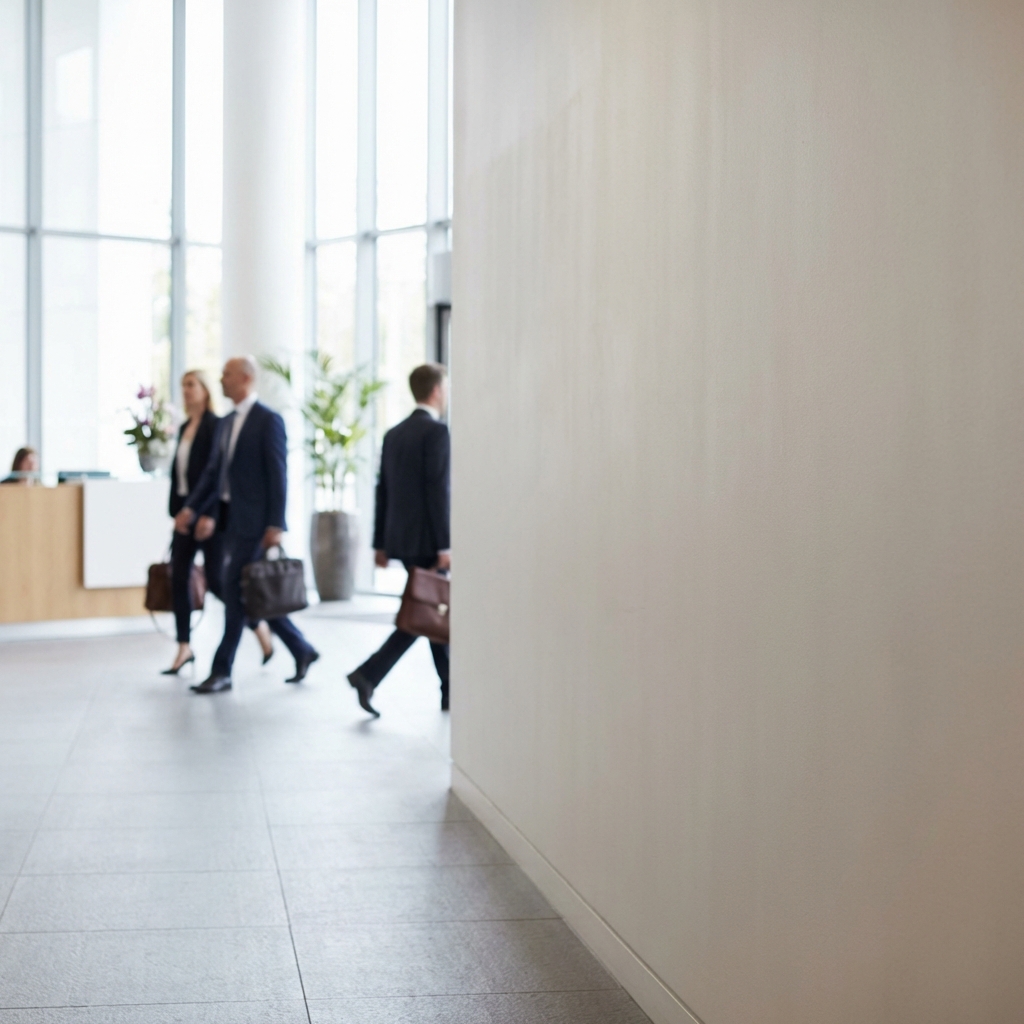
- Cleanability: UV-cured inks and protective finishes are engineered to resist routine cleaning and disinfectants common in healthcare and education. Graphics remain legible and vibrant after repeated wipe-downs.
- Abrasion resistance: Direct-to-wall outputs avoid the edge and seam vulnerabilities that attract peeling and scuffing, especially near corners, handrails, and elevator lobbies.
- Paint-over-ready: When branding or programs change, walls can be patched and painted like standard finishes. There’s no adhesive residue to scrape or panels to landfill.
- Lower replacement risk: With no material to delaminate, failures are rare and localized touch-ups are straightforward. That reduces emergency work orders and keeps long runs of corridors looking consistent.
Lifecycle math favors solutions that reduce failure points and replacement cycles. Compared to panel-based systems, direct-to-wall graphics eliminate recurring labor for panel pulls and re-installs, trim alignment fixes, and substrate remediation after adhesive damage. For procurement teams, that translates to predictable spend, fewer surprises, and a graphic system that behaves like a long-wearing architectural finish.
Applications Across Commercial and Institutional Settings
The versatility of direct-to-wall graphics makes it an asset across varied portfolios. Wherever people move, pause, and navigate, durable high-traffic wall art can carry information and identity without adding clutter.
- Healthcare systems and medical facilities: Integrate wayfinding lines and icons into corridor walls, add zone identifiers at nurse stations, and reinforce calming imagery in waiting rooms—all with cleanable, abrasion-resistant surfaces.
- Colleges, universities, and K–12: Brand student unions, libraries, athletic facilities, and residence halls; integrate classroom or lab instructions directly on masonry walls; unify wayfinding across campus. EastCoast MuralPros also delivers full-campus solutions that standardize graphics while allowing building-specific customization.
- Corporate real estate and workplaces: Refresh lobbies, collaboration zones, training suites, and meeting rooms without construction downtime; support change communication and safety messaging inside active offices.
- Hospitality and hotel operators: Bring brand storytelling to elevator cores, corridors, and amenity spaces without seams that catch luggage and serve carts; execute seasonal themes efficiently with a subscription model for planned refreshes.
- Retail chains and multi-location brands: Roll out nationally consistent, store-specific feature walls and promotional messaging; keep back-of-house safety and instructional graphics visible and durable.
- Commercial landlords and asset managers: Support lease-ups and repositioning with quick-turn identity, amenity, and wayfinding packages. Paint-over-ready finishes keep turnover costs and schedules predictable.
- Museums and cultural institutions: Install photoreal, high-resolution imagery ideal for galleries and exhibits, including large captioning, donor walls, and experiential backdrops that read cleanly at architectural scale.
- Public-sector and institutional owners: Use integrated wayfinding, safety, and instructional graphics to reduce signage clutter and eliminate wall penetrations in historic or high-maintenance buildings.
Beyond walls, EastCoast MuralPros also offers in-studio printing for doors, tables, and standees to extend campaigns into furnishings and pop-up activations. That mix supports cohesive experiences without a patchwork of materials and adhesives.
Design and Customization Flexibility at Architectural Scale
Durable high-traffic wall art should expand—not limit—design intent. Direct-to-wall printing supports nuanced branding, complex artwork, and precise alignment with architectural elements.
- Photoreal clarity at scale: From high-resolution photography to intricate vector patterns, imagery remains crisp on long runs and large features. Designers can confidently spec detailed textures, gradients, and archival imagery.
- Seam-free surfaces: Removing panel breaks allows for uninterrupted visuals across transitions and around obstacles, making corridors, atriums, and stair towers feel continuous and intentional.
- Substrate flexibility: The ability to print on drywall, CMU, concrete, and brick means a single design system can span new construction and existing stock without costly substrate changes.
- Adaptive layouts: On-site scaling and smart tiling accommodate last-minute field conditions—a new device location, relocated fire strobe, or unexpected handrail—without sending artwork back to fabrication.
- Integrated wayfinding: Color zones, iconography, and type can be embedded directly into walls to declutter sign programs, reduce penetrations, and minimize vandalism or accidental removal.
EastCoast MuralPros also supports design teams and digital artists with collaborative tools built to scale content across multiple walls and locations. That includes color management for brand accuracy, proofing workflows aligned with procurement milestones, and templated systems that allow location-specific variations while maintaining standards. For large rollouts, the result is architectural storytelling that is consistent, site-specific, and operationally practical.
Sustainability and Environmental Impact Compared to Alternatives
Sustainability in wall graphics is not just about inks and substrates—it’s about the whole lifecycle. Direct-to-wall printing reduces material, transport, and waste loads that come with panel-based systems.
- No vinyl, no PVC: Eliminating vinyl and adhesive backers avoids difficult-to-recycle materials and cuts down on plastic entering the waste stream.
- Less shipping, less packaging: On-site printing eliminates crating and long-haul transport of large panels, reducing associated emissions and damage risk.
- Minimal demolition on refresh: Paint-over-ready finishes mean program changes don’t require panel pulls, adhesive removal, or substrate repair—reducing time, waste, and landfill loads.
- Longer service life: Durable, cleanable surfaces reduce premature replacement cycles, a major driver of embodied carbon in finishes.
Organizations pursuing responsible procurement and healthier interiors will find these gains align with broader corporate and campus goals. For an in-depth comparison of environmental impacts between direct-to-wall and panel-based approaches, EastCoast MuralPros discusses the topic here: Direct-to-wall printing vs traditional vinyl: sustainability and environmental waste. The operational upside—less downtime, fewer materials, and more resilient finishes—pairs naturally with sustainability outcomes.
Multi-Location Rollouts and Consistent Brand Execution
Multi-property owners and institutional systems need more than a novel technique; they need execution that scales. Direct-to-wall printing supports standardized brand deployment while allowing tailored content by site, floor, or department.
- Consistency at scale: Calibrated color profiles and shared templates keep logos, palettes, and typography accurate across buildings and geographies.
- Predictable schedules: With on-site printing teams and minimal dependencies, facilities can plan refreshes in tight windows, coordinated around peak use times.
- Reduced failure risk: Fewer handoffs—no panel shops, no long shipping legs—translate into fewer points of error or delay. If a field condition changes, the artwork adapts on-site.
- Data-driven planning: Pilot-program performance can inform campus-wide or national standards, enabling procurement to move from one-off projects to known line items with proven results.
- Operational alignment: Install protocols, infection control, security coordination, and after-hours work plans can be standardized once and reused across locations.
EastCoast MuralPros is structured for rollouts across offices, schools, hospitals, and retail networks. The company’s teams deliver consistent execution nationally, so brand, facilities, and capital projects managers can expect uniform outcomes without reinventing process and quality controls at each site. For interior branding for multi-location facilities, that predictability is central to success.
Conclusion: Investing in Long-Term Wall Graphics Solutions
Walls are no longer passive surfaces. In today’s facilities, they carry wayfinding, safety messaging, brand identity, and experience design—often in the most demanding parts of a building. Choosing durable high-traffic wall art is ultimately a decision about reliability, lifecycle cost, and occupant experience.
Traditional vinyl and wallpaper struggle under the realities of busy environments: seams fail, adhesives complicate maintenance, and replacement cycles add cost and disruption. Direct-to-wall printing offers a performance-based alternative—seam-free, adhesive-free, fast to install, cleanable, and paint-over-ready—that aligns with operational goals across healthcare, education, hospitality, retail, workplaces, and public-sector campuses.
EastCoast MuralPros brings that approach to life with:
- On-site direct-to-wall printing that avoids shipping delays and fabrication errors
- High-resolution, photoreal results at architectural scale, ideal for galleries, corridors, and feature walls
- Durable, cleanable finishes designed for high-traffic environments
- Compatibility with finished and unfinished surfaces, including drywall, CMU, concrete, and brick
- Low-disruption installations, often completed in under five hours
- Full-campus and multi-location rollout capabilities with consistent brand execution
- Integrated wayfinding, safety, and instructional graphics without signage clutter
- A subscription model for seasonal or strategic refreshes, plus in-studio printing for doors, tables, and standees
- Collaborative tools that help digital artists and design teams scale content confidently
For organizations seeking sustainable wall graphics solutions that perform, the path forward is clear: invest in systems designed for how buildings actually operate. When graphics function like durable architectural finishes—and install with the speed and certainty facilities depend on—spaces become easier to maintain, faster to update, and better aligned with the brand and mission they serve.
Contact us to learn more