
Introduction: The Evolution of Office Wall Solutions
Direct-to-Wall Printing vs. Vinyl Wall Wraps for Commercial Office Spaces
Office interiors have moved beyond paint chips and framed posters. Today’s workplaces ask walls to do more: communicate brand values, guide people through spaces, support recruiting and retention, and adapt quickly as teams grow or programs change. Facilities and workplace leaders want that change without downtime, excess waste, or a revolving door of vendors.
For years, vinyl wall wraps and wallpaper were the go-to for office wall graphics. They brought color and imagery at scale, but they also brought seams, adhesives, and the risk of peeling, bubbling, or dated visuals that are costly to replace. Now, a performance-based alternative is reshaping the category: direct-to-wall printing.
Direct-to-wall printing allows teams to apply high-resolution graphics directly to finished or unfinished walls without adhesives or vinyl. The result is architectural, seamless imagery that installs quickly, stands up to everyday wear, and can be painted over when strategies or tenants evolve. EastCoast MuralPros has specialized in this approach for commercial and institutional environments, helping workplace and facilities teams move faster with less disruption and a lower lifecycle burden.
This article compares direct-to-wall printing and vinyl wall wraps for commercial office spaces—from installation speed and durability to sustainability, maintenance, and scale—so decision-makers can choose with confidence.
Overview of Direct-to-Wall Printing Technology
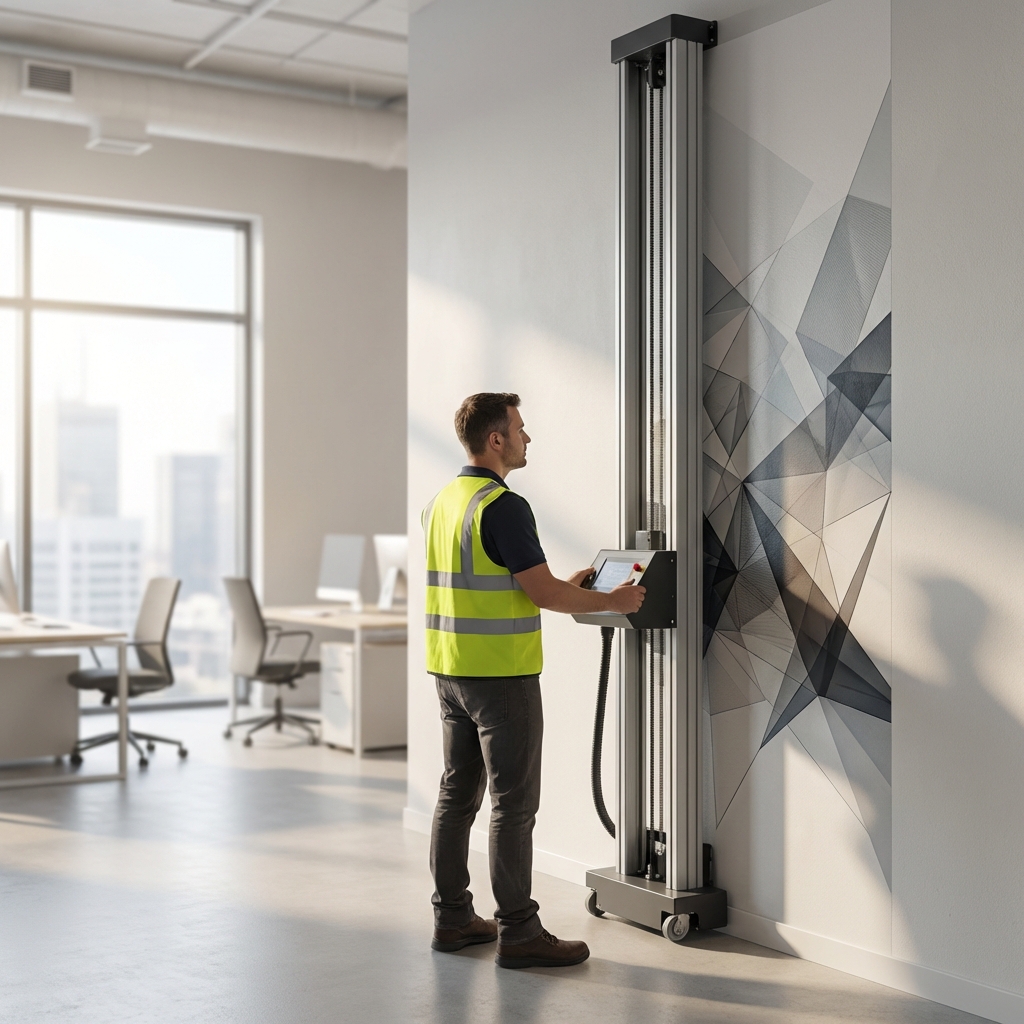
Direct-to-wall printing uses advanced large-format print heads that travel along the wall and place UV-cured ink directly onto the surface. There’s no film, no lamination, and no adhesives. The equipment sets up on-site, and once alignment and color calibration are complete, imagery is produced in crisp, photoreal detail at architectural scale.
What defines the approach:
- Adhesive-free: Graphics integrate with the wall plane rather than sitting on top of it.
- Seam-free: Continuous visuals span large areas without panel breaks or overlaps.
- High-resolution output: Small text, fine linework, and photography reproduce cleanly.
- Surface versatility: Compatible with finished and unfinished drywall, CMU, sealed concrete, and even properly prepared brick.
- Low disruption: Quiet, low-odor operation suitable for occupied buildings and after-hours schedules.
- Paint-over-ready: When programs, tenants, or campaigns change, walls can be repainted instead of stripped.
Because production happens on-site, direct-to-wall printing eliminates shipping delays and reduces fabrication risks. In commercial offices, that translates into fewer schedule surprises and easier coordination with occupants. EastCoast MuralPros typically completes installations in under five hours per wall zone, helping teams upgrade spaces between peak activity windows.
Beyond walls, in-studio printing expands brand systems onto doors, tables, and standees for reception areas or event-ready signage. For digital artists and internal design teams, collaborative proofing tools streamline approvals and help scale assets across floors or campuses with consistent color and typography.
Overview of Vinyl Wall Wraps and Traditional Methods
Vinyl wall wraps are printed films—often PVC-based—backed with pressure-sensitive adhesives. Graphics are produced off-site, panelized, laminated for protection, shipped to the job site, and then installed in vertical strips with overlapped seams. Vinyl can conform to mild textures and curves, but strong textures, porous masonry, and raw substrates can complicate adhesion and long-term performance.
Typical steps include:
- Measurement and site survey
- Off-site printing and lamination
- Panel trimming and packaging
- Shipping to the site
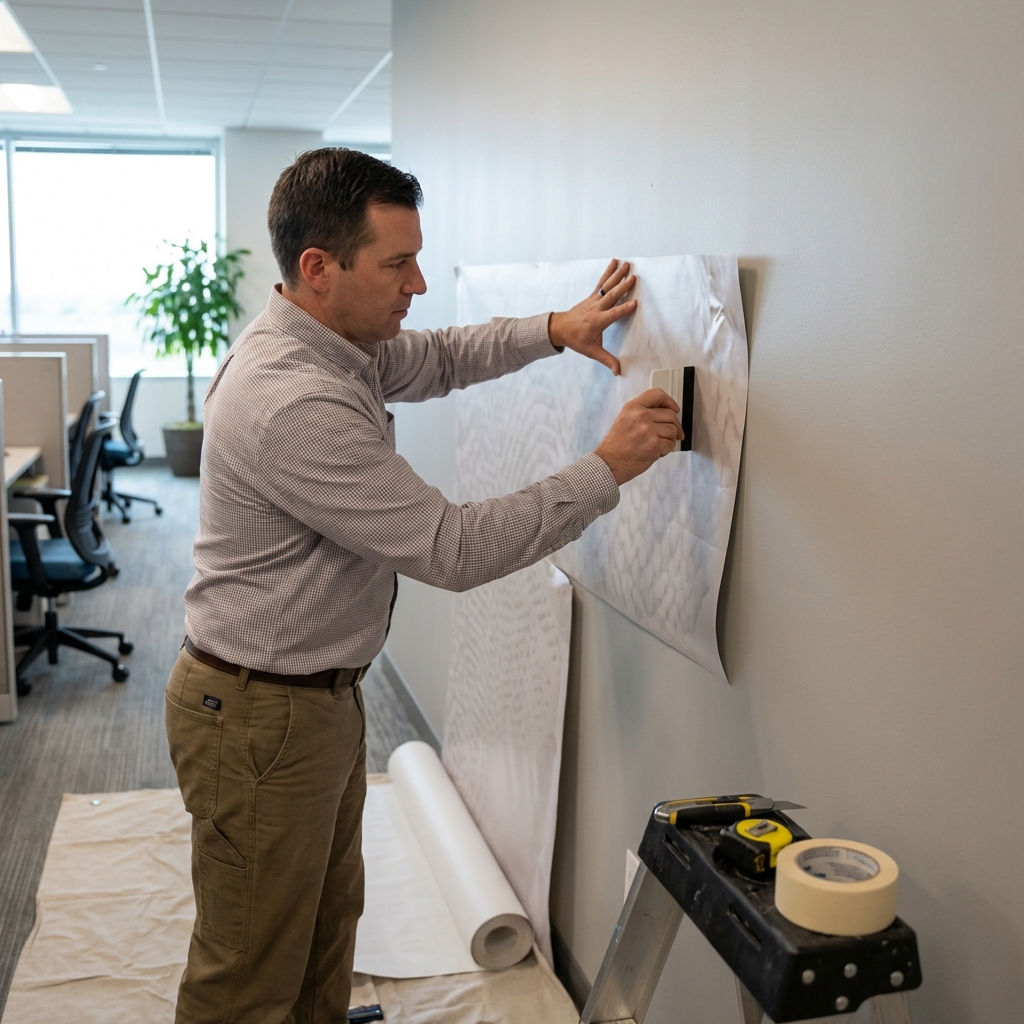
- On-site installation with heat guns and rollers
- Trimming around fixtures, outlets, and reveals
Vinyl’s familiar playbook has advantages when needs are short-term, when a landlord prefers removable films, or when a project team already has a supply chain built around vinyl graphics. However, facilities teams frequently report issues over time—edge lift, seams collecting grime, wall damage upon removal, or bubbling in high-traffic corridors and conference areas that see frequent cleaning.
Traditional wallpaper and mural papers share a similar installation arc, using pastes or adhesives, and also introduce seams. While modern wallpapers offer strong design options, they can extend schedule time, add wet trades to occupied spaces, and require careful removal to avoid wall damage during refresh cycles.
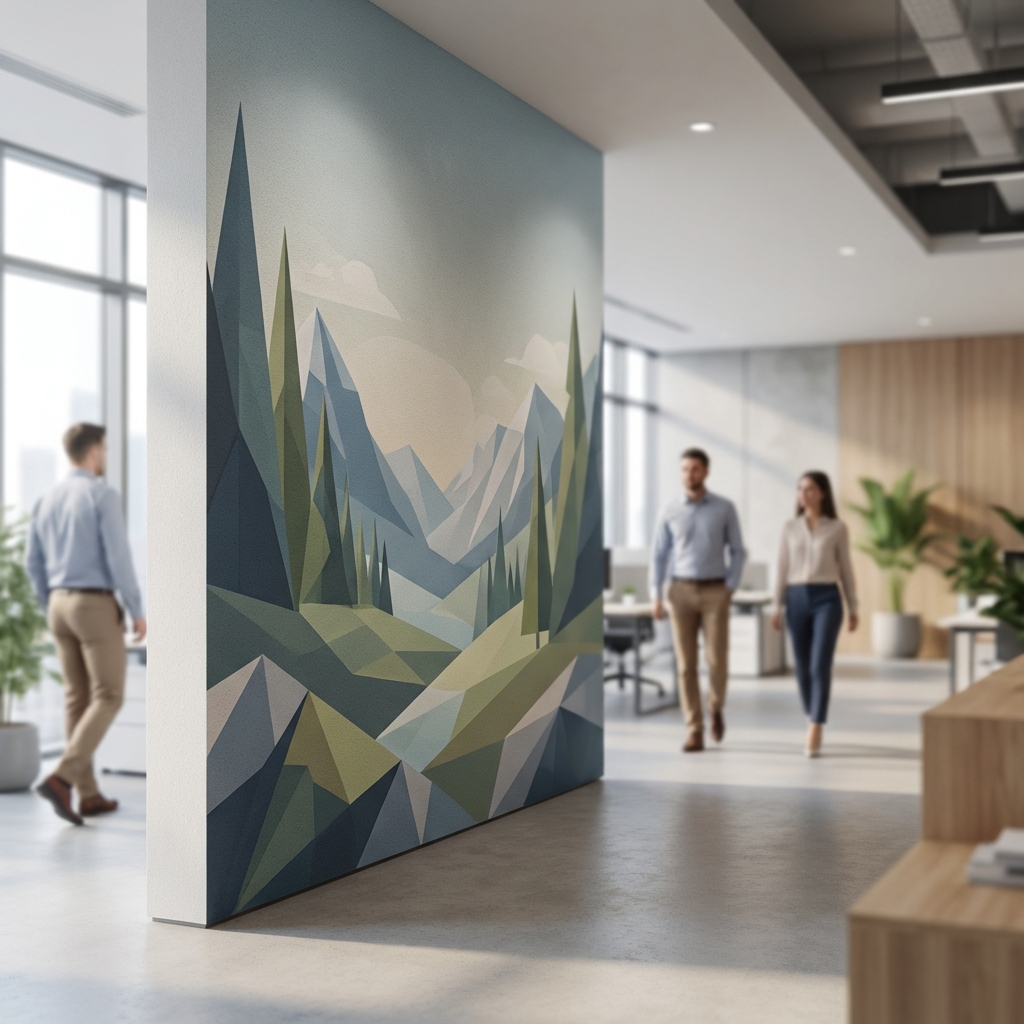
Installation Speed and Downtime Comparison
Commercial offices live on predictable schedules. When spaces can’t shut down, the window to transform a wall is measured in hours, not days. That’s where the installation processes differ.
Direct-to-wall printing emphasizes on-site efficiency:
- Pre-production focuses on design, color targets, and surface readiness rather than panelization and shipping logistics.
- Equipment rolls in, aligns to the wall, and prints high-resolution imagery in place.
- No adhesives, no lamination, and no panel seams mean fewer failure points and faster completion.
- Installations commonly complete in under five hours per zone, and after-hours work can ensure zero disruption to meetings and operations.
Vinyl wall wraps typically require:
- Panelization and lamination time off-site, adding days to weeks depending on the queue.
- Shipping and staging at the facility.
- Longer installation windows, especially for large or complex walls, with heat-assisted application, seam management, and precision trimming around features.
- Facility impacts from material handling, ladders or lifts, and adhesive odor in sensitive areas.
When multiplied across multiple walls, floors, or locations, these differences compound. On-site direct-to-wall printing reduces handoffs and errors by producing exactly where the graphic lives. For facilities teams, that can mean fewer schedule changes, simpler security coordination, and less back-and-forth with tenants or floor managers.
Durability and Longevity: Which Lasts Longer?
Durability in office environments is about more than a scratch test. It’s about how a graphic holds up against rolling chairs, shoulder brushes in narrow corridors, periodic cleanings, and sunlight.
Direct-to-wall printing forms a thin, UV-cured layer that bonds to the prepared wall surface. Because there’s no edge or panel seam to lift, the system resists the most common failure mode seen in vinyl: corners and seams that catch or peel. On textured or porous substrates—sealed brick or CMU, for example—direct-to-wall printing integrates with the surface rather than relying on adhesive to span pores and texture peaks.
Key durability advantages for direct-to-wall printing:
- Seam-free surfaces don’t trap dirt or get nicked at panel joins.
- UV-cured inks are engineered to be durable and cleanable for high-traffic environments.
- Optional protective topcoats can be added for extra abrasion resistance in tough corridors or collaboration zones.
- Paint-over readiness simplifies churn; when the brand changes, you refresh the paint system rather than removing a film.
Vinyl wall wraps can perform well in controlled environments, particularly on smooth, sealed drywall. However, adhesives age, edges see handling stress, and aggressive cleaning protocols can cloud laminates over time. Sunlit areas may experience differential aging between panels, and removal to meet a brand refresh often risks tearing, residue, or paint delamination—followed by wall repair and repaint.
In practice, well-installed vinyl can last for several years in an office; yet many facilities directors find the seam-free, integrated nature of direct-to-wall graphics reduces both touch-ups and premature replacement, extending the effective service life.
Cost Analysis: Initial Investment and Lifecycle Expenses
At first glance, vinyl wall wraps can appear less expensive on a per-square-foot materials line. But the total cost of ownership for office wall graphics includes more than roll media. It encompasses production logistics, shipping, installation labor, repairs, replacement cycles, and end-of-life removal.
Where direct-to-wall printing often lowers cost:
- Fabrication steps disappear: no lamination, panel trimming, or packaging.
- Shipping is eliminated, along with related delays and damages.
- Installation labor compresses into a single on-site event with fewer failure points.
- Seam-free results reduce remedial visits to fix panel lift or gaps.
- Refresh cycles are faster and cheaper—simply repaint over graphics when needed.
Where vinyl can appear favorable:
- Very short-term campaigns in pop-up or event contexts where removability is valued above longevity.
- Procurement ecosystems already standardized around vinyl, with negotiated pricing that shifts cost visibility into other budget lines (e.g., preexisting installation crews).
Lifecycle view considerations for office environments:
- Removal and wall repair costs add materially to vinyl’s end-of-life. For multi-tenant spaces, that’s a repeated expense during churn.
- Seam failures drive service calls. Even a few hours of technician time and a site revisit can erase initial material savings.
- For multi-location rollouts, fabrication errors or color variances can be costly to reprint and reship—risks avoided with on-site direct-to-wall production.
Every project is unique. In many office programs, teams see lifecycle savings with direct-to-wall printing in the 10–30% range due to fewer handoffs, lower maintenance, and paint-over refreshes replacing removals. A pilot on one floor or a high-traffic corridor often reveals the real numbers for your facility.
Design Quality and Visual Performance
When graphics function as part of the architecture, quality shows in the details: crisp small typography in huddle rooms, photographic murals at reception, and legible wayfinding where seconds matter.
Direct-to-wall printing delivers:
- Photoreal, high-resolution imagery that retains fine detail at large scale.
- True continuous fields of color without panel breaks or light-catching seams.
- Integrated alignment with reveals, columns, and corners to maintain visual flow across complex geometry.
- Substrate-aware results—graphics follow the subtle tooth of painted drywall or sealed masonry for an intentional, “built-in” look.
Color management is also more predictable when production happens at the wall. Test swatches and on-wall proofs help teams confirm brand colors under the actual lighting conditions of the space. For national programs, consistent settings and managed digital assets ensure the same look across locations.
Vinyl wall wraps can achieve strong color and detail, especially on smooth walls. Yet lamination glare, panel joints, and the challenge of perfect seam registration across images can detract from the effect, particularly under raking office lighting. In high-design floors—executive areas, client-facing zones, or galleries within workplace museums—direct-to-wall printing creates the continuous, museum-grade finish brand leaders expect.
For creative teams, EastCoast MuralPros supports collaborative workflows that speed approvals and scale assets. That makes moving from a single lobby feature wall to a full-floor program—graphics in meeting rooms, corridors, and wellness areas—more efficient without compromising consistency.
Environmental Impact and Sustainability
Sustainability targets increasingly shape procurement and design decisions. The environmental difference between direct-to-wall printing and vinyl wall wraps is clear: adhesives and PVC introduce waste and complexity throughout the lifecycle.
Sustainability advantages of direct-to-wall printing:
- No vinyl or PVC—significant reduction in plastics entering the waste stream.
- No adhesives—avoids off-gassing concerns and adhesive residue on removal.
- On-site production—cuts shipping materials, fuel, and packaging waste.
- Lifecycle efficiency—paint-over refresh eliminates removal and disposal of large-format films.
Vinyl requires film, laminate, liners, and packaging—materials that typically head to landfill during installation trimming and at end-of-life removal. While some specialty films claim recyclability, practical recycling channels for used vinyl remain limited in many regions.
For teams exploring material policies and procurement benchmarks, see EastCoast MuralPros’ commitment to no vinyl or PVC. For a deeper dive into lifecycle impact and waste streams across approaches, this resource on direct-to-wall vs vinyl outlines the comparative sustainability picture in commercial design.
Maintenance and Cleanability Across Both Solutions
Office graphics must stand up to daily cleaning, whether it’s routine dusting in open office areas or more frequent wipe-downs in shared spaces, pantry zones, and wellness rooms.
Direct-to-wall printing is engineered for cleanability:
- UV-cured inks create a durable surface compatible with common non-abrasive cleaners.
- Seam-free graphics prevent grime buildup at panel joins.
- Protective clear coats can be specified for high-touch zones to improve stain resistance.
- Localized refreshes are straightforward—spot overprint or paint-over and reprint a section if a wall sustains damage unrelated to the graphic.
Vinyl wall wraps come with specific cleaning do’s and don’ts. Aggressive chemicals can haze laminates, and seams can collect dust lines that reappear quickly. Replacing a damaged section of a large mural can be challenging: matching color lots and re-aligning panels to avoid visible transitions often requires reprinting more area than the damage itself.
Maintenance teams appreciate the predictability of direct-to-wall surfaces. Cleaning protocols mirror painted walls more than specialty films, reducing the training burden for night crews and limiting the risk of accidental damage from the wrong cleaner.
Scalability for Multi-Location Rollouts
Scaling from one pilot wall to dozens of floors—or from a headquarters to regional offices—puts pressure on schedule, consistency, and budget controls. Variability at any step shows up as missed deadlines, brand drift, or unexpected rework.
Direct-to-wall printing supports scale through:
- On-site production that eliminates shipping dependencies and reduces breakage or panel mismatch.
- Consistent execution across multi-location and national rollouts, driven by standardized profiles and controlled color targets.
- Low-disruption installs that fit into typical office rhythms, including after-hours or phased-by-zone work to keep floors open.
- Full-campus capabilities for corporate parks, education settings, or healthcare systems that require wayfinding, safety, and instructional graphics integrated across buildings.
EastCoast MuralPros also offers a subscription model for seasonal or strategic refreshes—useful for rolling campaigns, recruiting cycles, or culture initiatives—so graphics can evolve without reinventing procurement each time. In-studio printing for doors, tabletops, and standees supports brand kits for lobbies, training centers, and event spaces, extending identity beyond walls.
Collaborative digital tools help internal design teams and agency partners manage version control and approvals, then replicate the program to new sites with confidence in the outcome.
When to Choose Direct-to-Wall Printing vs. Vinyl Wraps
Both approaches have a place. The right choice depends on objectives, site conditions, and program horizon. Use the following criteria to guide decisions for office wall graphics:
Choose direct-to-wall printing when:
- You need seam-free, architectural-grade visuals that read as part of the building.
- Schedules are tight, and you can’t afford multi-week lead times or extended installs.
- Surfaces vary across floors—finished drywall one level, sealed CMU on another—and you want consistent performance across them.
- The space is occupied, and low-disruption installation is a must.
- Durability and cleanability under routine maintenance are requirements.
- You plan periodic brand or tenant refreshes and want a paint-over-ready solution rather than film removal.
- Sustainability goals prioritize reducing PVC, adhesives, and packaging waste.
- The rollout spans multiple locations and demands uniform color and execution.
Consider vinyl wall wraps when:
- The campaign is truly short-term, and removability without repainting is the top priority.
- Landlord provisions explicitly restrict any alteration beyond temporary films.
- Existing procurement mandates a specific film program and your facility already manages frequent panel replacements as part of operations.
- The wall surface is pristine, smooth, and indoors with minimal direct sunlight and low-touch exposure, and your team accepts the presence of seams.
Context matters. For textured masonry walls, high-traffic corridors, or workplaces with rigorous cleaning, direct-to-wall printing’s integrated finish is typically more reliable. For a two-month event inside a tenant suite, vinyl could be the expedient option—so long as removal risks to paint and drywall are addressed upfront.
Conclusion and Recommendation for Office Environments
For most commercial office spaces, direct-to-wall printing delivers superior performance where it counts: faster installs with minimal disruption, seam-free visuals that read as architecture, durable and cleanable surfaces for daily use, and lifecycle advantages that reduce both cost and waste. The ability to print on finished and unfinished surfaces, integrate wayfinding without signage clutter, and simply paint over graphics when strategies evolve makes it a practical, future-ready choice.
Vinyl wall wraps still serve niche needs—especially very short-term campaigns or sites constrained by landlord rules—but their seams, adhesives, and removal burdens make them less aligned with the speed, sustainability, and predictability that facilities teams increasingly demand.
If you’re evaluating wall covering alternatives for office wall graphics, consider piloting direct-to-wall printing on a representative floor or corridor to pressure-test schedule, quality, and maintenance in your environment. EastCoast MuralPros supports commercial real estate teams, workplace leaders, and institutional facilities with high-resolution office murals, commercial mural printing at scale, and a delivery model built for occupied buildings. For organizations seeking reliability without the lifecycle penalties of vinyl, direct-to-wall printing is a confident, modern standard.
Contact us to learn more