Introduction: The Growing Need for Large-Scale Interior Murals in Commercial Spaces
Direct-to-Wall Printing vs. Vinyl Wall Wraps: Which Interior Mural Solution Scales Best?
Organizations are rethinking walls as strategic assets. From hospitals that need intuitive wayfinding to multi-campus universities implementing new brand standards, large-scale interior murals have become a fast, construction-light way to transform the feel and function of a space. Corporate real estate teams, landlords, and operators are pressing for solutions that can upgrade interiors quickly—without extended downtime, permitting complexities, or maintenance headaches.
This shift coincides with dissatisfaction around traditional wall coverings. Vinyl wall wraps can peel at edges, bubble over time, and create seams that read as defects in high-visibility corridors. Hand-painted murals offer artistry but rarely fit the speed, scale, or repeatability required for multi-location rollouts. Teams need a solution that looks integrated, performs in high-traffic environments, and can be refreshed without wasteful tear-outs.
Against this backdrop, a new category of institutional wall printing technology has matured. Direct-to-wall printing enables high-resolution imagery to be produced on site, without adhesives or panels, across a range of substrates. Providers like EastCoast MuralPros are pairing this capability with process rigor—preflight checks, surface compatibility, color management, and subscription refresh cycles—to give facilities and procurement teams a predictable, scalable alternative to vinyl and wallpaper.
If you are evaluating direct-to-wall printing vs vinyl, this guide lays out the differences that matter for schedule, durability, lifecycle cost, scalability, and sustainability—so you can select the right commercial wall graphics solution for your portfolio.
What is Direct-to-Wall Printing Technology?
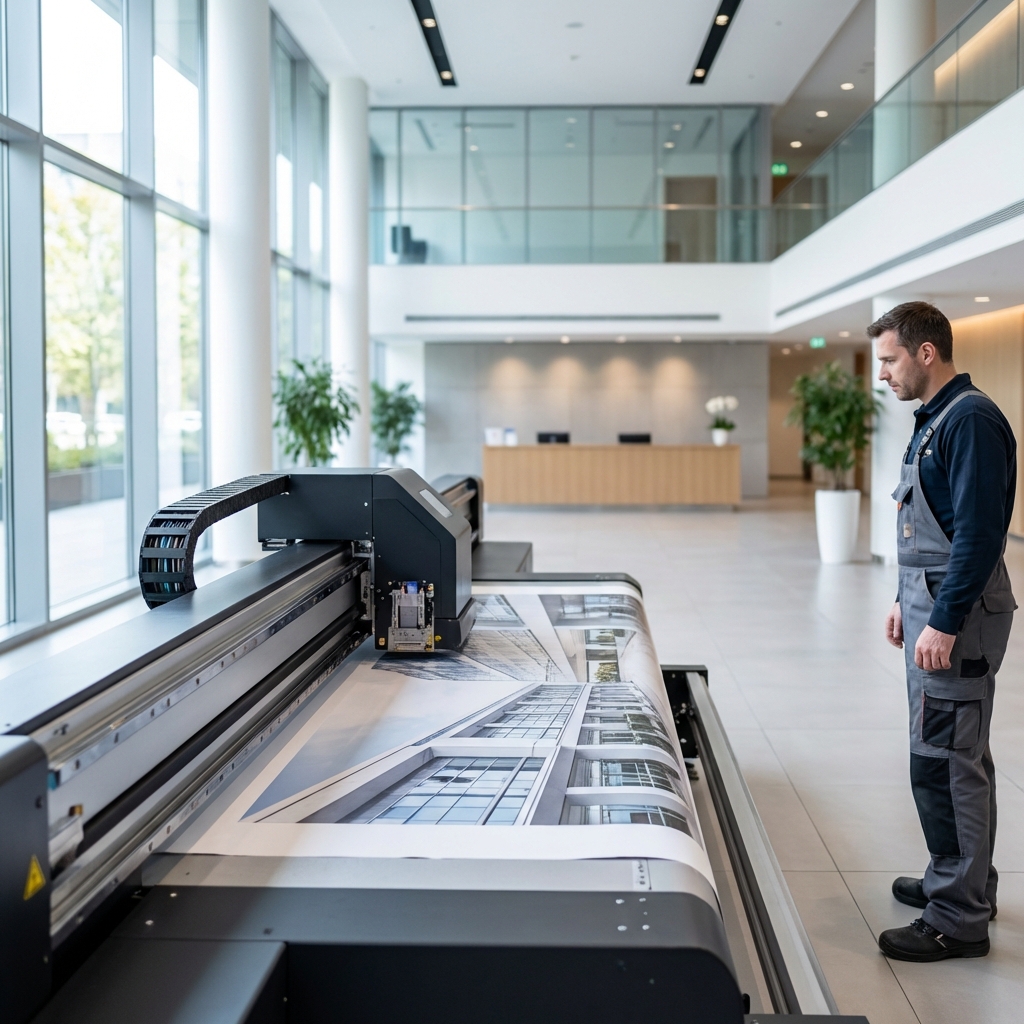
Direct-to-wall printing is an on-site digital process that reproduces high-resolution graphics directly onto finished or unfinished building surfaces—no vinyl, adhesives, or rigid panels required. Using advanced, mobile inkjet systems with precision gantries, technicians print murals, wayfinding, and branded elements at architectural scale with crisp detail and seamless coverage. UV-curable inks are typically cured instantly, producing a durable, cleanable finish that is ready for use as soon as the team powers down the equipment.
Unlike off-site fabrication methods, direct-to-wall installations take place at the point of use. That eliminates shipping delays, panel misalignments, and measurement-to-fabrication errors that often derail traditional wall wraps. Because the graphics are printed in situ, installers can fine-tune color on the wall, run test swatches, and ensure that imagery scales correctly to architectural features, doors, and reveals.
Compatibility is a hallmark. Quality providers print on drywall (painted or primed), CMU, sealed concrete, brick, and other common interior surfaces. The resulting surface remains seam-free and “reads” as part of the architecture rather than as a layer applied on top. When programs change, the finish is paint-over-ready—no adhesive residue to remediate, no panels to remove.
Direct-to-wall technology also scales beyond vertical planes. In-studio, the same print heads can be used to produce coordinated graphics on doors, tabletops, standees, and fixtures, allowing a single artwork package to drive a comprehensive environment—from arrival corridors to reception furniture.
What Are Vinyl Wall Wraps and Traditional Murals?
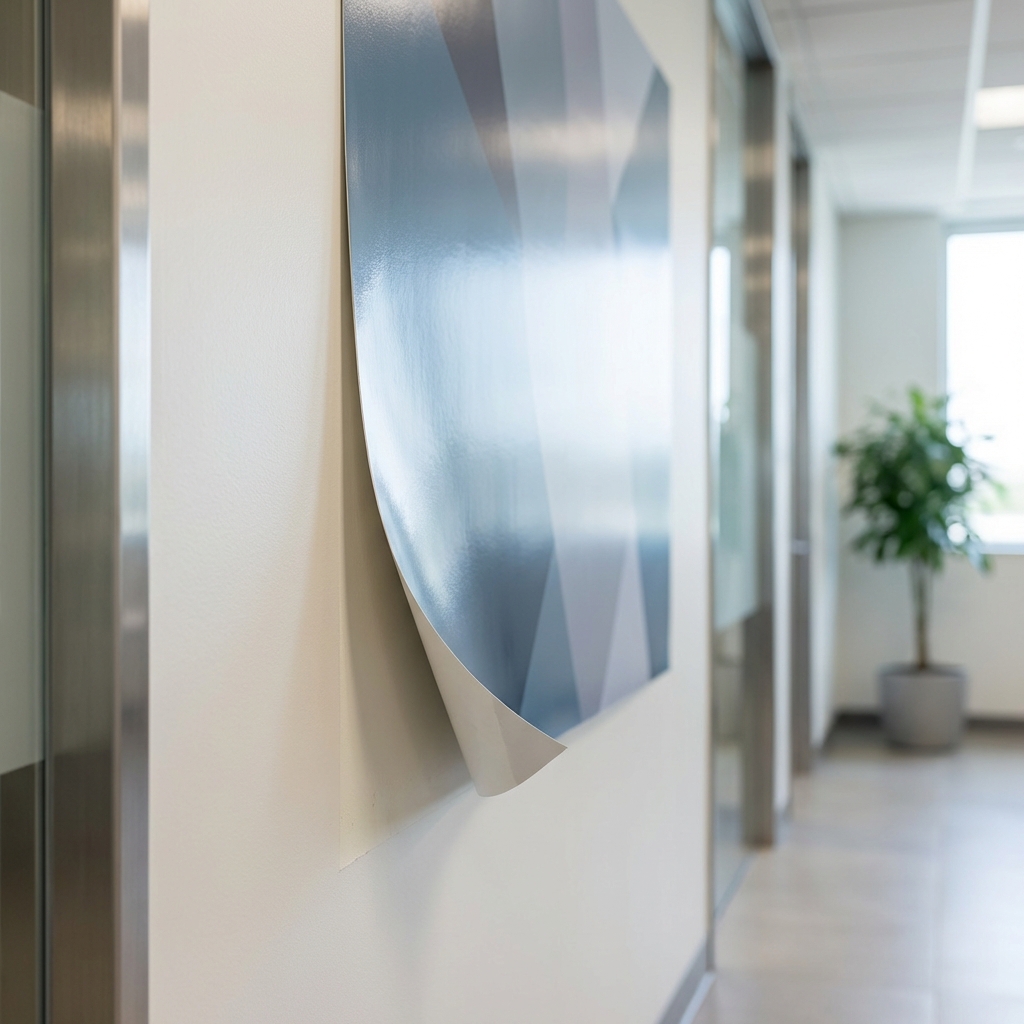
Vinyl wall wraps are printed adhesive films applied to walls in sections (tiles or panels). Installers align seams, squeegee out air, and heat-set edges where needed. Quality varies with vinyl type, wall texture, installer skill, and environmental conditions. Over time, common issues include seam separation, edge curl, bubbles from off-gassing or trapped air, and adhesive residue at removal.
Wallpaper is similar in concept, using paste-applied or pre-pasted materials instead of pressure-sensitive adhesives. While many premium wallpapers look excellent initially, both categories introduce seams at regular intervals, which can be visually distracting on long sightlines and in highly lit public spaces.
Traditional murals are painted by hand, sometimes with stencils or projection guides. When executed by skilled artists, they can be one-of-a-kind statements. Yet for institutions and corporate portfolios, the variability in schedule, repeatability, and maintenance—plus the need for extended wall access—makes hand-painted work difficult to standardize across multiple locations or phases.
In short: vinyl excels when short-term branding is needed on smooth walls and rapid off-site fabrication suits the schedule. Hand-painted murals suit bespoke, artisanal moments. Direct-to-wall printing competes where organizations demand speed, consistency, seam-free execution, and lifecycle performance across many walls or sites.
Installation Speed and Disruption: Comparing Timeline and Downtime
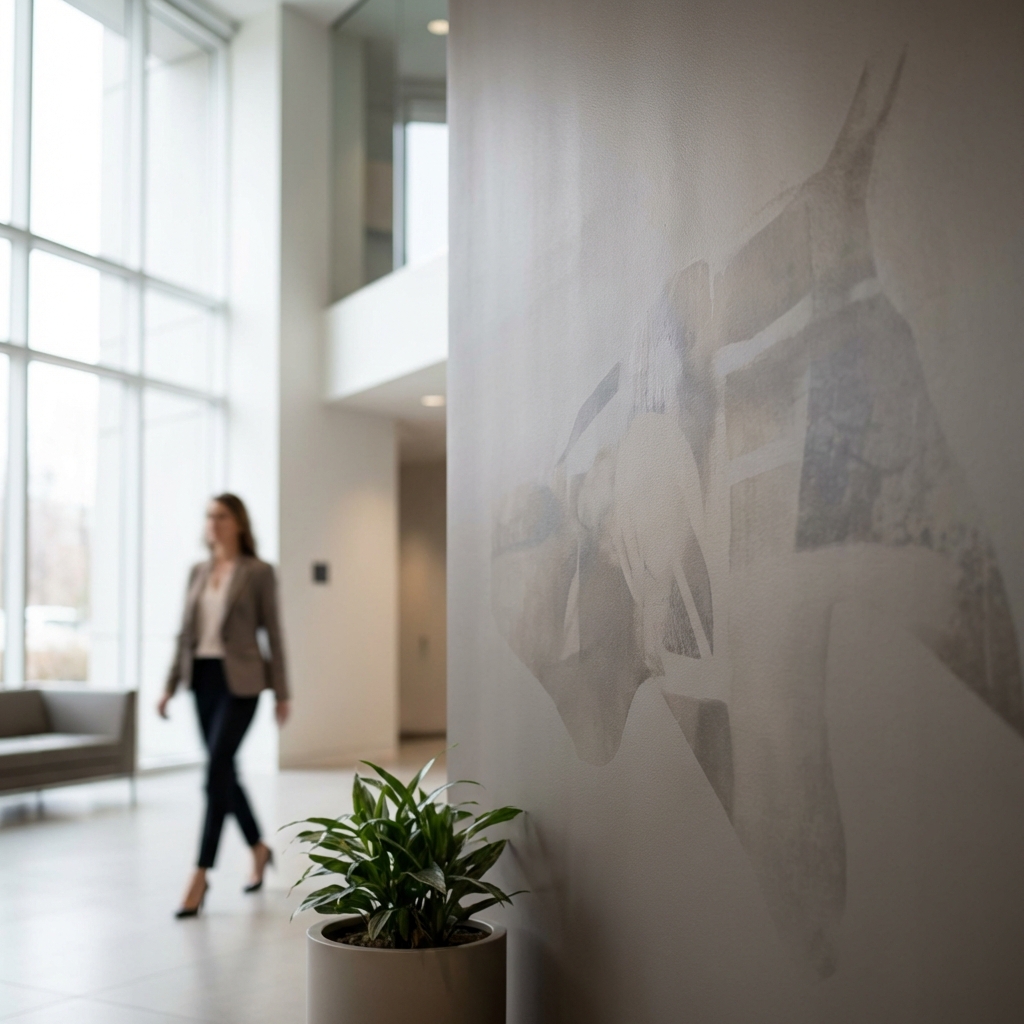
Downtime drives many decisions. A methodology that keeps doors open and corridors safe is more valuable than one that produces a perfect finish but requires multi-day shutdowns.
Direct-to-wall printing is designed for speed and predictability:
- One site visit per wall is the norm. After a brief surface check and layout verification, teams print, cure, and clean up in a single mobilization.
- Many projects complete in under five hours per zone, depending on wall size, artwork complexity, and access.
- No adhesives or panels means no long acclimation times, no liner waste management, and no curing windows before re-opening a corridor.
- Installation occurs with minimal obstruction—equipment sits close to the wall, and noise/odor are typically low, making it suitable for occupied buildings, night shifts, or rolling floor closures.
Vinyl and traditional wraps introduce more steps:
- Measure and survey, artwork tiling, off-site fabrication, shipping, staging, and then multi-hour to multi-day installation.
- Schedules can slip due to misprints, shipping damage, or field surprises (out-of-plumb walls, unexpected textures) that require re-fabrication.
- Adhesive application often requires more clearance, ladder or lift paths for panel alignment, and post-install time to ensure bonds set properly.
Hand-painted murals usually require multiple days of wall access, drying time, and protection against dust or traffic. That’s rarely feasible in high-traffic healthcare, higher-education, or corporate environments with tight operational windows.
For teams under pressure to launch brand refreshes, tenant make-readies, or wayfinding updates between business days, direct-to-wall printing frequently offers the lowest-disruption path to a finished result.
Durability and Maintenance: Longevity Across High-Traffic Environments
Durability in real-world settings—lobbies, elevator banks, nurse stations, student unions—comes down to resistance to scuffing, cleaning, and edge failure. Direct-to-wall printing eliminates the primary failure point of wraps: seams and edges. The graphic is printed as a continuous image on the wall itself, so there’s nothing to catch, snag, or peel.
UV-cured ink systems produce a hard, cleanable surface. Routine maintenance typically means wiping with non-abrasive cleaners commonly approved for painted surfaces. In hospitals and education buildings, where custodial protocols demand frequent cleaning, this is a meaningful advantage over films that can lift under repeated abrasion or chemical exposure.
By contrast, vinyl’s issues tend to accumulate at the edges and seams. Typical field failures include:
- Edge lifting at corners, door frames, and high-touch zones
- Bubbles forming post-install due to off-gassing or surface irregularities
- Seam creep or misalignment over time, especially across temperature/humidity swings
- Adhesive residue or wall damage upon removal, leading to patching and repainting
Hand-painted murals can be durable with the right topcoat, but they remain vulnerable to scuffs and chips. Touch-ups must match color exactly, and the visual texture of paint can vary after maintenance.
For a deeper dive on performance in high-traffic settings, EastCoast MuralPros outlines testing considerations and field results in their guide to direct-to-wall durability.
Cost Comparison: Upfront Investment and Lifecycle Expenses
The right benchmark isn’t just the bid price; it’s the total lifecycle. When comparing direct-to-wall printing vs vinyl, consider cost at four stages: pre-production, installation, operations, and end-of-life.
Cost drivers for direct-to-wall printing:
- Surface readiness: Is the wall painted or primed? Highly porous or rough surfaces may need a quick sealer coat.
- Access and scale: Ceiling heights, lift requirements, and run length influence crew time.
- Artwork complexity: Color management, on-wall test swatches, and alignment with architectural features.
- Geography and phasing: Night shifts or segmented floors can add mobilizations but preserve building operations.
Where direct-to-wall often gains an advantage:
- No fabrication or shipping costs; no panel or liner waste.
- Single-visit installation reduces labor hours and coordination overhead.
- Fewer failure points means less rework and fewer service calls.
- Paint-over-ready end-of-life avoids demolition labor, adhesive removal, and wall restoration.
Vinyl wraps shift more spend earlier into fabrication and later into removal:
- Material, printing, and lamination, plus freight and staging.
- Field risk adds contingency: a mis-measured panel or damaged shipment can reset the clock.
- Removal can be labor-intensive, particularly if adhesives bond aggressively or walls were not properly sealed.
- Residue cleanup, patching, and repainting are frequent end-of-life costs.
Hand-painted murals are labor-forward. Skilled artists require days to weeks, and future modifications or removals may involve full repainting. That can make sense for a single flagship feature wall, but not for multi-floor deployments that need tight control over schedule and cost.
For multi-site portfolios, small percentage differences in installation time, maintenance visits, or removal labor compound quickly. Organizations increasingly adopt refresh subscriptions with providers like EastCoast MuralPros to lock in predictable cycles and budget visibility, especially when seasonal campaigns or program updates are planned. With a subscription, each refresh becomes a straightforward, material-light visit rather than a new fabrication project.
Design Quality and Visual Performance at Architectural Scale
Seams and gloss variability are the two biggest detractors of large-scale visual impact. Direct-to-wall printing delivers a single, continuous composition—no tiled panel breaks that telegraph lines down long corridors or across atrium walls. Because the ink sits directly on the substrate, the final look reads as part of the building rather than an applied film, which aligns with design-forward expectations in corporate, healthcare, and higher-education interiors.
High-resolution, photoreal output is achievable at large sizes. Fine typography for integrated wayfinding, safety icons, or instructional graphics remains crisp at viewing distance, which reduces reliance on separate plaques or sign clutter. Color management can be tuned on site to account for lighting conditions, finishes, and adjacent materials.
Vinyl prints can be very sharp, but seams interrupt visual continuity, and reflective sheens can vary between panels or under grazing light. Over broad surfaces, even tiny alignment errors can become visible. In galleries and museums—where photographic detail and color accuracy are paramount—direct-to-wall printing often produces a cleaner, more unified viewing experience at scale.
Traditional murals excel in craft and texture, but reproducing exact brand colors, complex gradients, or detailed photography is a challenge. When consistency across dozens of rooms or multiple campuses is a specification, digital precision and repeatability win.
Scalability Across Multi-Location Rollouts and National Deployments
A deployment is only as strong as its weakest location. Scaling wall graphics to multiple sites introduces coordination risk: variable substrates, lighting, trades in the area, and compressed schedules. Direct-to-wall processes minimize those variables by pushing execution to the last responsible moment—on the wall, with color-controlled output and trained crews following the same method statement.
Teams like EastCoast MuralPros bring preflight tools and templating that help brand, facilities, and procurement stakeholders collaborate efficiently. Consistency benefits include:
- Centralized artwork libraries and version control for campuses and national programs
- On-site color calibration to match brand standards across different paints and primers
- Seam-free mural installation across mixed substrates (drywall, CMU, concrete, brick) without switching materials
- Standard safety and access procedures to minimize disruption in occupied buildings
Vinyl introduces logistics that multiply across sites: varied wall textures that may need different film types, shipping schedules and potential damages, and different installers’ seam-handling techniques. If one site’s panels arrive late, your rollout cadence slips.
Hand-painted murals depend on artist availability and skill matching. That makes uniform results across dozens of locations difficult, and timeline predictability suffers.
For enterprises, direct-to-wall printing aligns to the playbook of reliable, repeatable execution—especially where multi-phase upgrades, lease-up preparations, or system-wide wayfinding changes must land on a fixed date.
Sustainability and Environmental Impact
Sustainability is a practical concern as much as a values statement. Waste, removals, and replacements all carry labor, disposal, and disruption costs. Direct-to-wall printing dramatically reduces material throughput by producing the graphic on the wall itself—no vinyl, no adhesive, no paper liners, and minimal packaging.
Lifecycle matters. Adhesive films frequently end up in landfills after removal, and liner waste is discarded on day one. If a refresh is planned every 18–36 months, those cycles generate recurring waste and labor. Paint-over-ready, direct-to-wall surfaces allow a reset with a simple coat when programs change, extending the useful life of the wall without demolition or residue remediation.
Other sustainability advantages include:
- Fewer shipments and re-shipments, minimizing transport emissions and damage-related reprints
- Durable, cleanable surfaces that reduce premature replacement
- Integrated wayfinding and instructional graphics that can eliminate separate signs, substrates, and hardware
For a closer look at waste reduction and material efficiency, see EastCoast MuralPros’ comparison of direct-to-wall vs vinyl from a sustainability perspective.
Pros and Cons Summary: Direct-to-Wall vs. Vinyl Wraps
Direct-to-Wall Printing: Pros
- Seam-free mural installation that reads as part of the architecture
- Fast, low-disruption on-site process; many installs complete under five hours
- No adhesives or panels; paint-over-ready at end-of-life
- Durable, cleanable finish suited for high-traffic settings
- Fewer failure points; reduced maintenance and service calls
- Scales reliably across campuses and multi-location rollouts
- Material-light approach with meaningful waste reduction
Direct-to-Wall Printing: Cons
- Requires access clearance near the wall for equipment
- Extremely rough or crumbling substrates may need sealing or prep
- On-site color approval is advised, adding brief setup time
Vinyl Wall Wraps: Pros
- Off-site fabrication can be scheduled ahead of field access
- Wide availability of materials and installer networks
- Useful for short-term campaigns on smooth, well-prepared walls
Vinyl Wall Wraps: Cons
- Seams and edges can fail; bubbles and curl are common over time
- Adhesive residue and wall damage risk at removal
- Additional waste from liners, backing, and obsolete panels
- Visual seams disrupt long sightlines and architectural-scale imagery
How to Choose the Right Solution for Your Organization
The best choice depends on your portfolio, timeline, and operational constraints. Use these criteria to structure a side-by-side evaluation of direct-to-wall printing vs vinyl:
- Schedule and Downtime: Can your area be turned over in hours, or will multi-day closures create operational risk? Consider whether occupied-building installation is required.
- Substrates and Conditions: Are walls painted drywall, CMU, sealed concrete, or brick? Direct-to-wall excels across mixed surfaces without swapping materials.
- Visual Requirements: Do you need photoreal imagery, fine text, or integrated wayfinding at scale with no seams?
- Lifecycle and Refresh Cadence: Will content change seasonally or annually? Paint-over-ready finishes avoid removal labor and waste.
- Maintenance Reality: What cleaning protocols and traffic levels will the surface endure? Edge-free surfaces resist abrasion and custodial wear.
- Budget Model: Do you need predictable costs across multiple sites? Subscriptions and standardized scopes help procurement plan total lifecycle spend.
- Risk Appetite: Are you seeking a performance-based alternative to wallpaper and vinyl that reduces field failure modes?
In some scenarios, vinyl can still be the pragmatic choice:
- Very short-term activations on smooth, temporary partitions
- Highly contoured or complex surfaces where a film is specifically engineered for conformity
- Exterior applications where specialty films are specified
If you’re uncertain, run a pilot. A single corridor or floor with a mix of wall types can validate installation speed, finish quality, cleaning response, and occupant feedback in your environment.
Pilot structure recommendations:
- Select representative locations (high-traffic and standard traffic; different substrates).
- Define success metrics: install time, disruption, visual outcomes, cleaning tests, and occupant satisfaction.
- Preflight artwork and run small test swatches on site to confirm color under real lighting.
- Track maintenance tickets for 60–90 days to measure edge failures or cleaning issues.
- Document end-of-life options with a paint-over test section vs. a vinyl removal test section.
Collaboration matters. Facilities, brand/experience teams, and procurement should align early on goals, refresh cadence, and performance criteria. Vendors with a track record in healthcare, education, and corporate settings—like EastCoast MuralPros—bring field-proven methods for full-campus solutions, national rollouts, and subscription-based refreshes that keep programs current without operational drag.
Conclusion: Future-Proofing Your Interior Branding Strategy
Interior environments are living systems. Messages evolve, tenants turn over, and wayfinding must keep pace with new programs and safety requirements. The question isn’t whether to update walls, but how to do so with speed, quality, and fiscal discipline—again and again.
Direct-to-wall printing has emerged as a performance-driven alternative to vinyl wall coverings, wallpaper, and labor-heavy hand-painting. It offers seam-free visuals, rapid installation in occupied buildings, durable and cleanable finishes, and a paint-over-ready end-of-life—all of which reduce lifecycle cost and risk at scale. For organizations managing complex portfolios, those advantages compound across floors, buildings, and regions.
If you’re evaluating your next large scale interior murals program, consider a pilot that measures what matters: downtime, visual impact, maintenance behavior, and refresh agility. Teams like EastCoast MuralPros can help you design a rollout strategy that delivers consistent execution across multiple locations—bringing your brand, wayfinding, and environmental graphics to life with speed and certainty.
Contact us to learn more