
Introduction: The Challenge of Guest Room Wall Durability in Hospitality
Guest rooms work harder than almost any other space in a hotel. They must look flawless for every arrival, hold up to rolling luggage and furniture bumps, resist repeated cleanings, and still convey a brand story that justifies rate and loyalty. Walls bear the brunt: headboard scuffs, suitcase impacts, vacuums and housekeeping carts grazing corners, and frequent wipe-downs with disinfectants. Too often, finishes show fatigue within months, not years.
As operators standardize room types and compress turn times, the finish you choose for graphics and art isn’t just aesthetic—it’s an operational decision. Durable hotel wall graphics must deliver consistent quality, predictable maintenance, and quick replacement when programs evolve. That’s where direct-to-wall, high-definition printing changes the calculus for hospitality teams, offering a seam-free, adhesive-free alternative to vinyl wall coverings and wallpaper without the risk profile of hand-painted murals.
Why Traditional Vinyl and Wallpaper Fall Short in Hotel Environments
Vinyl and wallpaper were never designed for the realities of everyday hotel operations. They introduce seams and edges that invite picking, peeling, and moisture intrusion—especially near HVAC returns, windows, or humid bath-adjacent walls. Adhesives can fail under temperature swings, and in coastal or high-humidity markets, lifted corners turn into rapid, visible degradation.
Operationally, those failures are expensive. A single damaged drop of vinyl means pulling a room out of service, ordering a replacement panel, waiting on shipping, and hoping color from a new lot matches the old. Paste residue can stain or damage drywall during removal, leading to a patch-and-paint cycle before you reinstall. Wallpaper patterns demand precise alignment, which elongates installation windows and raises labor costs—both of which collide with compressed renovation schedules.
Even when installed perfectly, vinyl introduces finish concerns: glare from camera flashes or daylight can cheapen the look, seams betray the illusion of an integrated surface, and textural inconsistencies are obvious at the headboard zone where guests interact closely with the wall. For modern brand standards that prioritize a seamless, architectural finish and low-gloss fidelity, vinyl and wallpaper often miss the mark.
Understanding Direct-to-Wall Printing Technology for Hospitality
Direct-to-wall printing is a production-grade method that brings a mobile, high-definition printer into the room and prints the artwork directly onto the prepared wall surface. Using precision rails and UV-LED curing, it lays down crisp, photoreal imagery with excellent edge definition—without adhesives, panels, or seams. The ink cures instantly, creating a durable, cleanable finish that feels integrated with the substrate.
From an architectural standpoint, the result is different from a wrap. There’s no film thickness to catch or lift at edges. The finish reads as part of the wall, with a matte profile that minimizes glare and looks premium in daylight and artificial light. Direct-to-wall solutions handle common hospitality substrates—finished drywall in guest rooms, CMU in back-of-house corridors, concrete or brick in industrial-themed properties—without introducing backer boards or extended prep steps.
For design and brand teams, direct-to-wall printing unlocks a standardized color pipeline. Calibrated profiles and on-site proofing help maintain color consistency across room types and properties, minimizing the “one looks greener than the sample” problem. And because artwork lives in a digital library, it’s easy to align suites, corridors, and meeting rooms around a cohesive visual system while retaining flexibility for local flair.
East Coast Mural Pros (EastCoast MuralPros) deploys this technology as a service model geared for occupied buildings. Beyond in-room work, the same printing approach extends to studio-printed doors, tabletops, and standees for special events, plus collaborative tools that help commissioned digital artists scale their work across multiple properties without compromising intent.
Key Durability Features: Scuff-Resistance and Cleanability at Scale
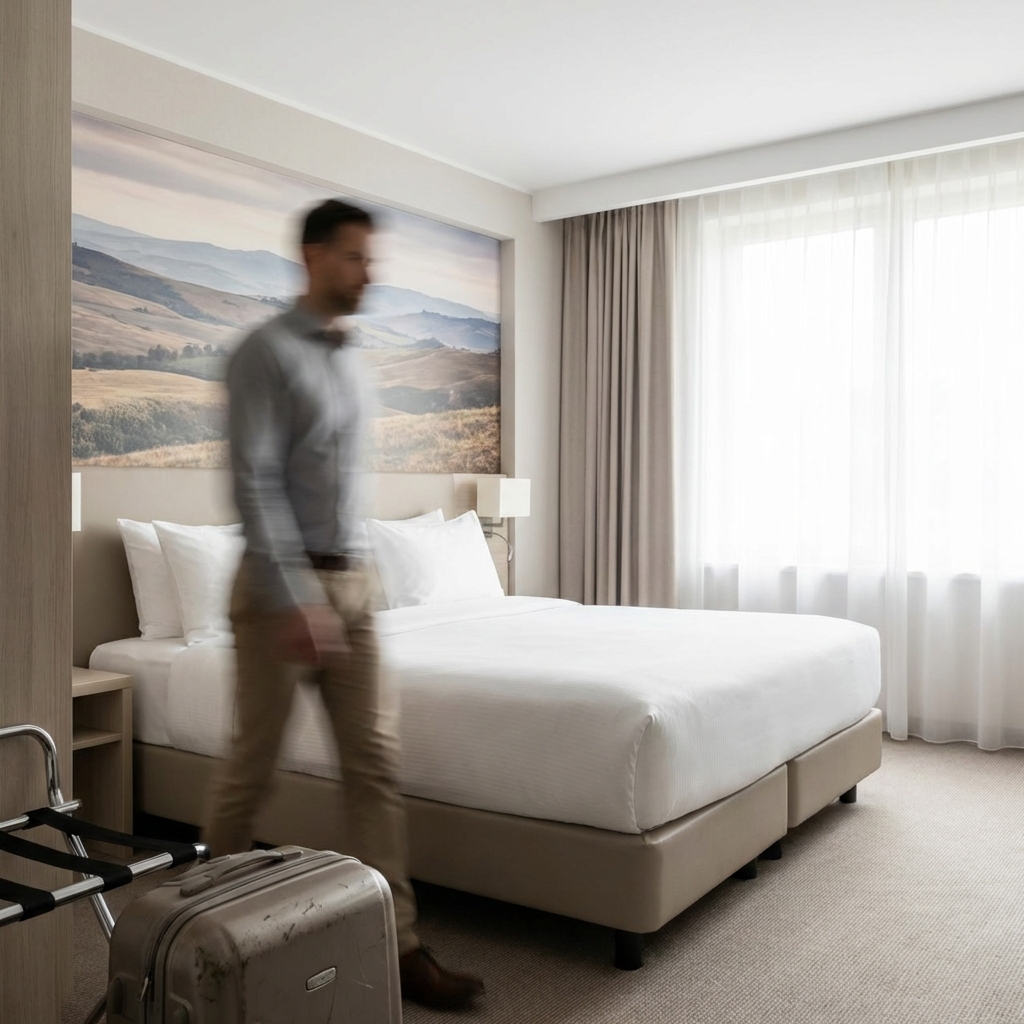
Durability is where direct-to-wall printing earns its keep in hotels. The cured surface stands up to the routine friction that degrades finishes in guest rooms—rolling luggage, chair backs, and the subtle day-by-day abrasions at the headboard line. Because there are no seams, there’s nothing to catch on; and without adhesive film, you avoid the puckering or bubbling that magnifies small dings into costly repairs.
Hotels also need finishes that tolerate cleaning. The printed surface is designed to handle common housekeeping protocols, including regular wipe-downs with mild detergents and approved disinfectants. In practice, that means precise imagery that retains edge acuity and color depth after repeated cleaning cycles. Matte and satin finish options further disguise incidental marks while retaining photo clarity.
For multi-property brands and asset managers, scale matters. Standardized durability across room types ensures predictable maintenance budgeting and fewer service calls. Typical field advantages include:
- Resistance to black scuffs from luggage wheels and cart bumpers
- Cleanability with non-abrasive cloths and widely used hotel cleaners
- Reduced gloss change from spot-scrubbing compared to painted feature walls
- Minimal color shift under sun exposure near windows
If you’re evaluating technologies for high-traffic performance, it’s helpful to understand how direct print finishes behave under abrasion and cleaning stress. For a deeper look at durability considerations in busy environments, EastCoast MuralPros covers the topic in this overview: Direct-to-wall printing benefits.
Design Flexibility: Creating Branded, Photoreal Guest Experiences
Guest rooms are not galleries, but guests increasingly expect a gallery-grade image quality. High-definition wall printing for hospitality delivers crisp type, seamless gradients, and photoreal detail at architectural scale—without visible tiling or warping at the edges. That precision supports a broader range of storytelling than wallpaper patterns or framed prints can achieve.
Common hospitality use cases include:
- Localized photography that changes by market, giving each property a sense of place
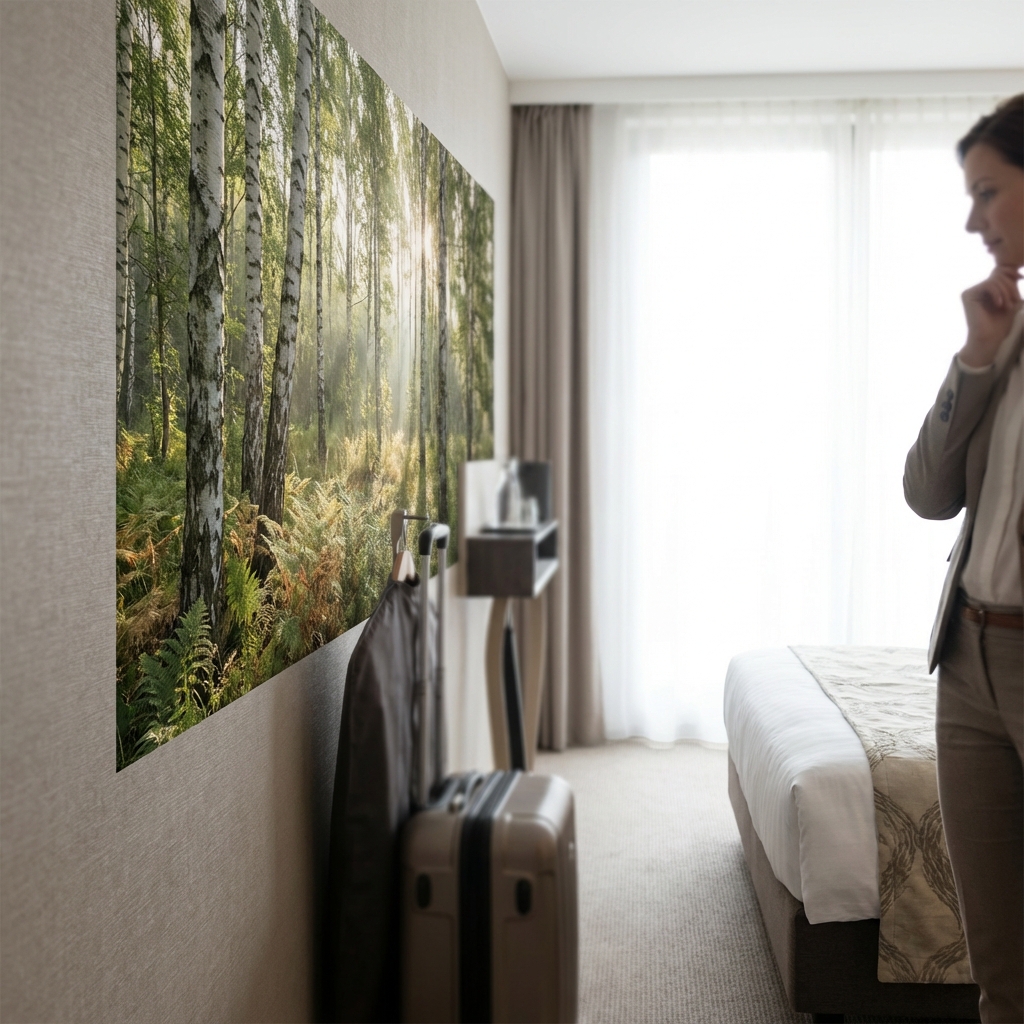
- Biophilic imagery with realistic depth and low-glare finishes that feel calming at the bedside
- Subtle branded patterns or tone-on-tone textures that enrich the room without shouting
- Feature walls behind headboards, desk backdrops that integrate power/USB panels, and entry vestibule moments
- Corridor and elevator lobby graphics that extend the guest storyline and coordinate with room art
Because artwork is digital, brand teams can build a scalable asset library: a set of approved images and visual systems that adapt to room types, property footprints, and regional narratives. With direct-to-wall printing, there’s no penalty for variety—changing an image between king and double rooms is a production setting, not a new set of materials to inventory. For boutique and lifestyle brands that commission artists, EastCoast MuralPros’ collaborative tools help translate original digital works into multiple sizes and substrates while preserving color intent, white-ink layers, and fine detail.
Finally, integration extends beyond aesthetics. Wayfinding and instructional elements—such as discreet in-room device tips, QR codes for digital compendiums, or ADA-friendly icons—can be embedded into the wall graphics where appropriate, reducing sign clutter and reinforcing a cleaner design language.
Installation Speed and Minimal Disruption During Occupancy
Hotels make money when rooms are available. Direct-to-wall printing is engineered for speed, with most guest room feature walls installed in under five hours—from equipment roll-in and calibration to print and final cure. There’s no adhesive cure time, paste cleanup, or seam finagling. Rooms often return to service the same day, enabling rolling updates floor-by-floor with minimal impact to occupancy.
Operational advantages include:
- On-site printing eliminates shipping delays and material lot issues
- Low-odor, low-disruption installation suitable for occupied buildings
- Predictable daily throughput for scheduling with housekeeping and engineering
- No need for staging large rolls of materials or storing extras for future repairs
Crews trained for hospitality projects coordinate with property teams to stage rooms, cover furnishings as needed, and work off-peak hours to reduce guest interaction. Printers are compact enough for standard corridors and elevators, and setup is well-contained. For multi-property rollouts, EastCoast MuralPros brings consistent crews and procedures so each property experiences the same streamlined process and predictable daily room counts.
Cost Efficiency and Lifecycle Advantages Over Vinyl and Wallpaper
The value proposition isn’t just the initial install; it’s the full lifecycle. Direct-to-wall printing reduces total cost of ownership by minimizing labor hours, eliminating adhesive materials, and shrinking the time rooms are out of service. Without seams or films, you avoid common failure points that lead to repair calls. When programs or tenants change, paint-over-ready finishes simplify transitions without demolition or landfill-bound rolls of vinyl.
Lifecycle efficiencies show up in several ways:
- Faster turnarounds cut soft costs tied to reduced room availability
- No replacement panels to stock or reorder when minor damage occurs
- Less specialized labor for maintenance—light touch-ups and cleaning protocols suffice
- Predictable quality across properties reduces project management friction
- Fewer fabrication and shipping events lower incidental fees and delays
In procurement evaluations, it’s helpful to model scenarios over a five- to seven-year horizon. Even when line-item costs may appear similar to quality wallpaper on day one, direct-to-wall typically wins on cumulative savings: fewer outages, fewer remobilizations, and less rework when brand guidelines evolve. For owners and operators balancing capex and opex, those compounding gains matter more than a nominal per-room delta up front.
Case Study: Multi-Location Hotel Brand Rollout Success
A select-service hotel brand with properties across the Mid-Atlantic and Southeast sought a refresh that localized guest rooms without introducing complicated inventory or long outages. The concept called for city-specific photography behind headboards, coordinated corridor moments, and discrete in-room QR codes tied to digital concierge content. The team evaluated framed art, wallpaper, and vinyl murals but rejected them for seam exposure, glare, and slow install times.
Scope and approach
- 12 properties over six weeks, focusing on standard king and double-queen room types
- Three curated image families per market (coastal, historic, and nature-forward) with minor property-by-property variations
- Direct-to-wall feature walls in guest rooms and corridor vignettes near elevator lobbies
- Centralized digital asset library to manage approvals and color consistency
Execution
- Four mobile crews printing in parallel, each averaging 18–22 rooms per day depending on room size and site logistics
- Same-day return to service for 98% of rooms; remaining 2% delayed due to unrelated maintenance
- On-site color checks in the first 10 rooms of each property, then locked profiles to ensure uniformity
Outcomes after 18 months
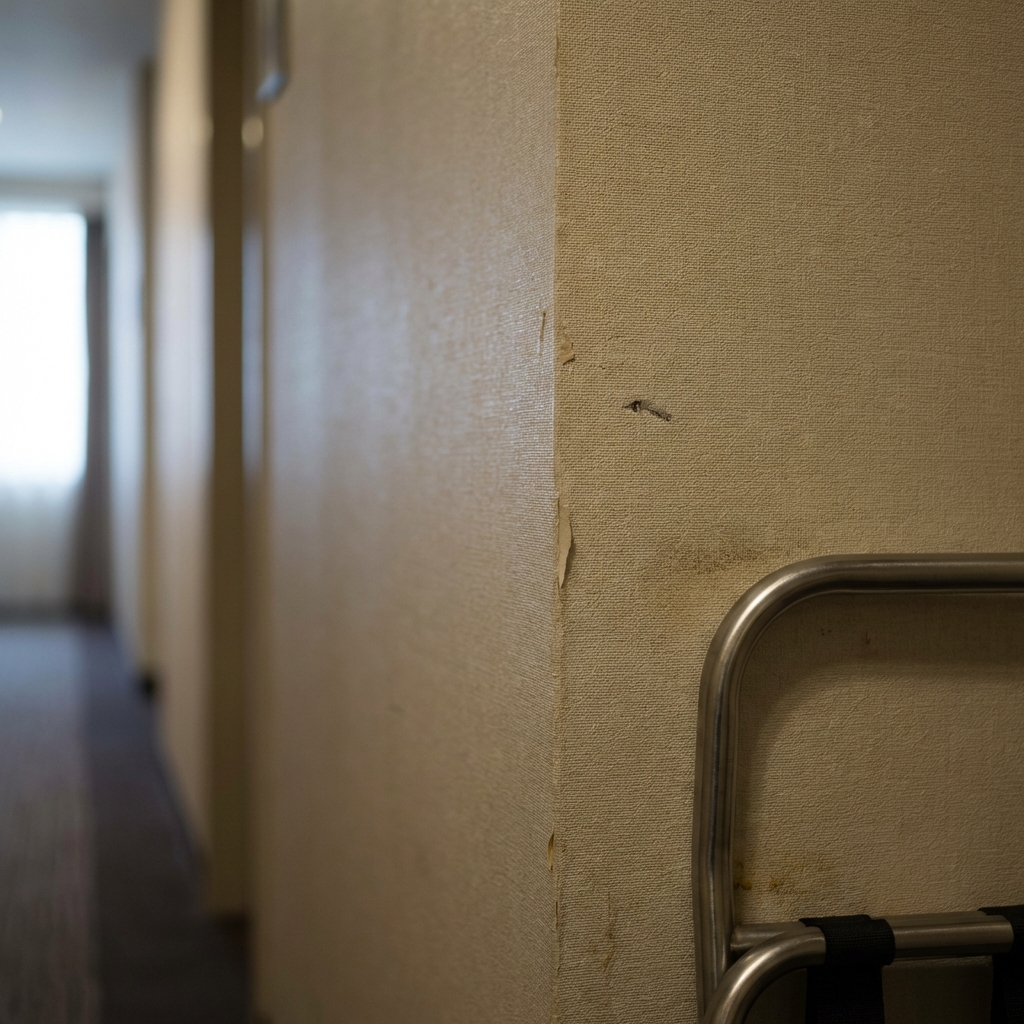
- Less than 1% of rooms required spot touch-ups, primarily small abrasion marks near luggage stands; all resolved without removing rooms from service
- Zero seam failures—because there are no seams
- Guest satisfaction comments mentioning “local photography” increased by 27% year-over-year in post-stay surveys
- Maintenance tickets associated with wall graphics decreased by 65% compared to prior vinyl-based program
- A modeled five-year lifecycle projected 22% lower total cost compared with vinyl murals, primarily due to reduced repairs and near-zero reprint logistics
The brand has since used a subscription refresh in seasonal markets, swapping imagery in select rooms annually to align with local events and shoulder-season promotions—again without capital tied up in stored rolls or long scheduling windows.
Sustainability Benefits of Direct-to-Wall Printing for Hotels
Sustainability goals are increasingly embedded in hospitality brand standards and RFP criteria. Direct-to-wall printing supports those objectives by eliminating PVC-based vinyl, reducing adhesive and liner waste, and dramatically cutting shipping events. There are no offcuts headed to landfill from each room, and there’s no removal of sticky film years later—when you’re ready for a change, you simply prep and repaint.
Key environmental advantages for hotels include:
- Material reduction: no vinyl, liners, or paste; only ink is added to the wall
- Less freight: on-site production reduces packaging and transport-related emissions
- Lower demo waste during refreshes: paint-over-ready surfaces avoid tear-down cycles
- Longer lifecycles through cleanability, which reduces replacement frequency
For procurement teams comparing materials, the contrast with traditional vinyl wall coverings is stark on both waste and lifecycle efficiency. EastCoast MuralPros details the environmental differences here: Direct-to-wall printing vs vinyl. While every property and spec is unique, most hotels see tangible waste avoidance and fewer logistical emissions when they eliminate palettes of rolled materials, plastic cores, and adhesive buckets from the process.
Maintenance and Long-Term Performance in High-Traffic Spaces
Sustaining a high-quality finish in guest rooms is less about intensive upkeep and more about clear, simple protocols. Direct-to-wall finishes fit into standard housekeeping SOPs:
- Dust with a soft, dry microfiber cloth
- Spot-clean with a damp, non-abrasive cloth and mild detergent
- For stubborn marks, use a melamine foam sponge lightly, followed by a wipe with clean water
- Avoid abrasive pads, scouring powders, or strong solvents that could dull the finish
Routine inspections can be folded into existing room PM schedules. Look for concentrated abrasion at luggage stand height or around desk chairs; most marks wipe away. In the rare case of deeper surface damage from an impact, touch-ups are localized and quick. Since the graphic is integrated with the paint layer, there’s no lifted edge to trim or replace. If a wall requires patching for dents or nail holes during a renovation, the surface can be prepped and reprinted in place with the approved artwork—no guessing whether a replacement drop will align.
A few practical tips for property teams:
- Establish a simple cleaner reference list so housekeeping knows what’s approved
- Mount headboards with bumpers or spacers to reduce hard contact on the wall
- Use desk chairs with softer edge casters in tight rooms to minimize edge scuffs
- When rearranging furniture, place temporary guards to avoid corner impacts
For corridors and elevator lobbies—spaces with even higher traffic—direct-to-wall printing performs equally well. Here, integrated wayfinding and safety icons can be printed directly onto CMU or drywall, minimizing plaque clutter and adhesive residue from removed signage. And if brand standards change, the space is ready for repaint and reprint without demolition.
Conclusion: Transforming Guest Rooms with Reliable, High-Quality Wall Graphics
Durable hotel wall graphics should elevate guest perception while simplifying operations. Direct-to-wall printing delivers that balance: a seam-free, photoreal finish that withstands daily use, cleans easily, installs fast, and scales across portfolios with color consistency. It’s a performance-based alternative to vinyl and wallpaper that respects schedules, budgets, and brand storytelling.
For hospitality brands and property teams, the path forward is pragmatic. Replace fragile films and complicated paste-ups with an integrated surface that reads as architecture, not appliqué. Use digital art libraries to coordinate multi-market rollouts, and lean on fast, on-site production to keep rooms in rotation. When needs shift, repaint and refresh—no demolition, no wasteful removals, no long waits for replacement drops.
East Coast Mural Pros specializes in high-definition wall printing for hospitality, from single-property pilots to national programs. If you’re exploring hotel interior branding solutions that are cleaner, faster, and easier to maintain, consider how direct-to-wall printing can streamline your next renovation while elevating the guest experience.
Contact us to learn more