Introduction: The Evolution of Commercial Interior Branding
Facility wall branding has moved far beyond posters and peel-and-stick graphics. In today’s commercial and institutional environments, leaders are asked to communicate brand, wayfinding, safety, and culture—often across hundreds of walls and multiple locations—without disrupting daily operations. Traditional options like wallpaper and vinyl can’t keep up with the need for speed, scale, durability, and sustainability. That’s why a new class of commercial interior graphics—direct-to-wall printing technology—is reshaping how facility teams plan, install, and maintain their visual environments.
This approach prints high-resolution artwork directly onto finished or unfinished surfaces, producing architectural-scale results without adhesives, seams, or long lead times. Providers like EastCoast MuralPros have engineered the process for occupied facilities, executing durable wall graphics installations that are completed in hours, not days, while delivering consistent quality across multi-location brand rollouts.
Whether you manage a corporate campus, healthcare network, university system, or national retail footprint, the strategic potential is the same: create integrated, high-impact spaces faster, with less risk and a better lifecycle cost profile than traditional wall coverings.
Why Traditional Vinyl and Wallpaper Fall Short in Professional Facilities
Vinyl wall coverings and wallpaper earned their place in the last era of interiors, but their limitations become clear when scaled across facilities.
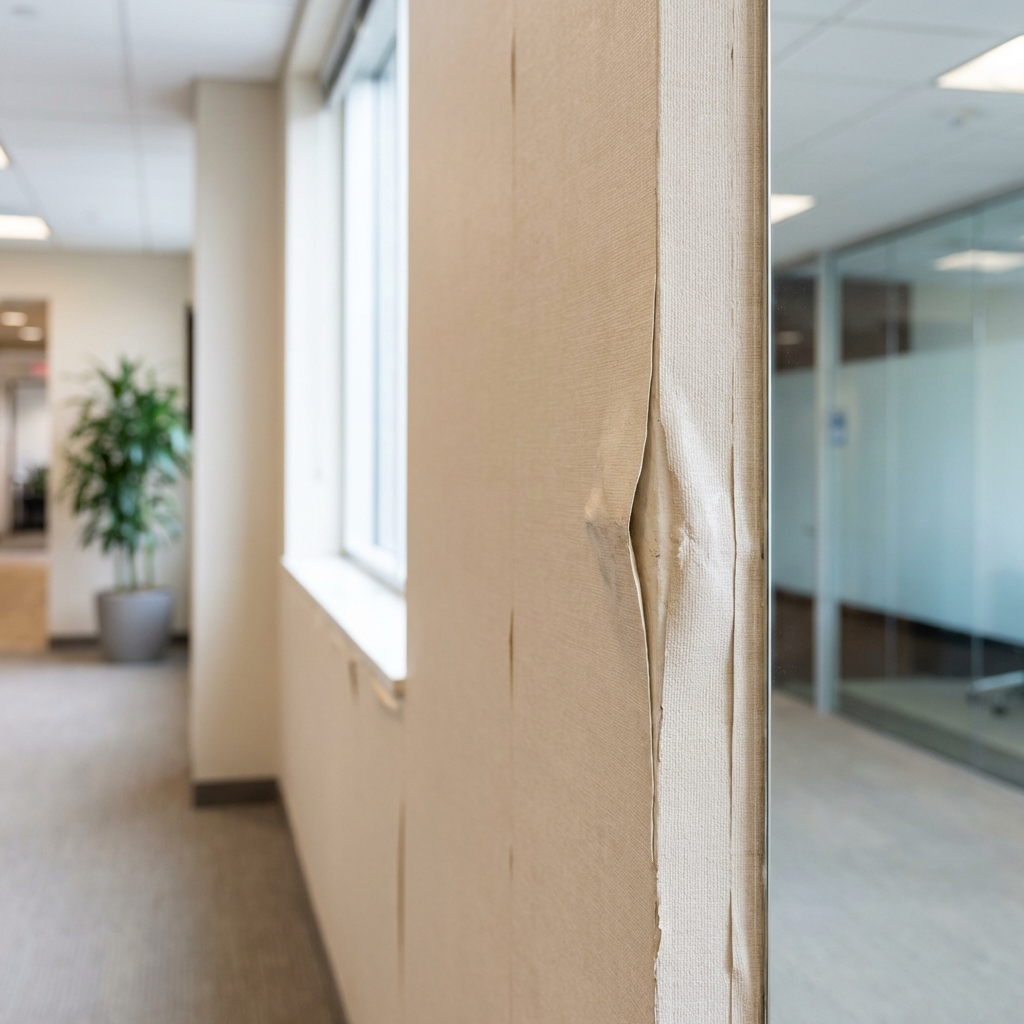
- Seams and failure points: Every seam is a point of vulnerability—especially in high-traffic corridors, stairwells, and damp environments. Over time, seams telegraph, edges lift, and panels misalign.
- Adhesive dependency: Adhesive performance varies with substrate porosity, surface prep, humidity, and temperature. When adhesives fail, graphics bubble, peel, or slip.
- Poor lifecycle economics: Removal and replacement is labor-intensive, often damaging paint and drywall. Repeated cycles compound costs and create downtime your teams want to avoid.
- Limited substrate compatibility: Vinyl struggles on rough or unfinished surfaces like CMU, brick, or unsealed concrete, restricting design intent to only the “perfect” walls.
- Longer timelines with more risk: Panel fabrication, shipping, field cutting, and rework introduce delays. Any onsite change can result in waste and remakes.
- Aesthetic compromises: Even well-installed vinyl can look like an overlay rather than part of the architecture. In professional settings, this can read as temporary or decorative rather than integrated and permanent.
- Sustainability concerns: Vinyl and wallpaper generate offcuts, release liners, and discarded panels at end-of-life. Procurement teams increasingly require more sustainable wall covering solutions.
Facilities directors, procurement teams, and designers see the cumulative effect across portfolios: inconsistent results, unpredictable schedules, and an ongoing maintenance burden. For organizations that value reliability, durability, and speed, a different approach is needed.
How Direct-to-Wall Printing Technology Works
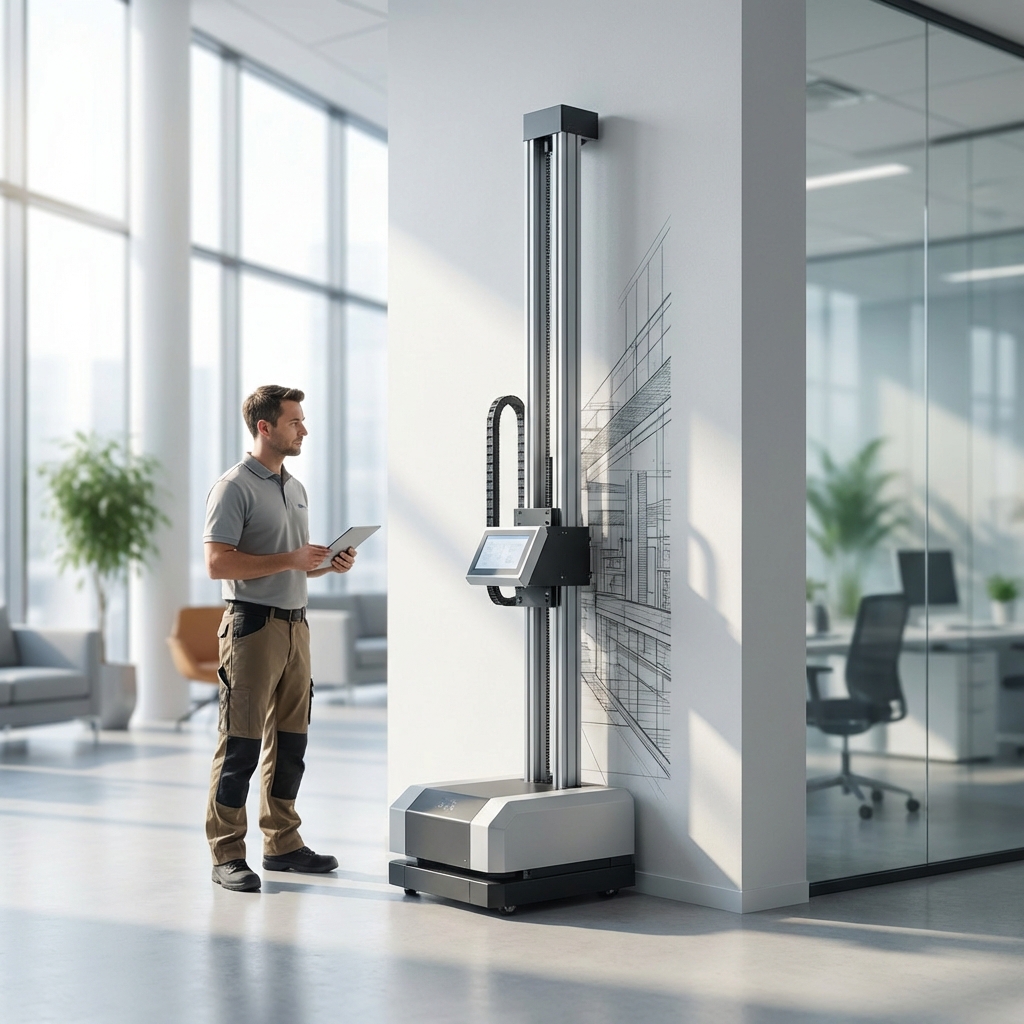
Direct-to-wall printing technology brings the print engine to your walls. Instead of fabricating panels offsite, a mobile, high-precision printer is positioned at the wall and indexes vertically and horizontally to lay down high-resolution imagery directly onto the surface.
The workflow typically includes:
- Site assessment: A technician evaluates substrates (drywall, CMU, concrete, brick), lighting, access, and power. Any necessary prep—patching, cleaning, or priming—is identified.
- Digital prepress: Artwork is preflighted for resolution, color management, and scale. Layouts are adjusted to align to architectural datums, corners, and baseboards for a seamless, intentional fit.
- Onsite calibration: The printer is leveled and mapped to the wall. Test swatches confirm color and adhesion before production begins.
- On-demand imaging: UV-cured or similarly robust inks are applied directly to the surface, producing crisp details and even tonal gradations at architectural scale without seams or adhesives.
- Fast cure and turnover: Prints cure rapidly and can often be touched soon after printing, minimizing downtime in occupied environments.
Because printing happens onsite, teams can resolve surprises in real time—no waiting for remakes or new shipments. For facility wall branding programs, this means a more predictable schedule, fewer dependencies, and less waste.

Key Advantages for Corporate and Institutional Environments
Direct-to-wall printing has matured into a performance-based alternative to vinyl and wallpaper, addressing the core priorities of commercial and institutional teams.
- Speed and schedule certainty: Many single-wall projects are completed in under five hours, fitting easily into evening or weekend windows for low-disruption installation.
- Seam-free, architectural integration: Without panel seams or adhesive build-up, murals read as part of the wall, elevating the overall finish quality of the space.
- Durable and cleanable: Surfaces are designed for high-traffic environments and can be maintained with standard cleaning protocols appropriate to the substrate and ink system.
- Broad substrate compatibility: Print directly on painted drywall, primed or unprimed CMU, sealed concrete, and certain brick conditions. This opens up wayfinding and branding in stairwells, tunnels, and back-of-house areas where vinyl would struggle.
- Onsite printing eliminates shipping delays: With fabrication errors off the table, installers can react to actual field conditions and keep projects on schedule.
- Consistency across multi-location brand rollouts: Centralized file standards and calibrated print systems deliver repeatable results from location to location.
- Lower disruption in occupied buildings: Minimal masking and quick cure times allow normal operations to resume faster, supporting critical spaces in hospitals, classrooms, and offices.
- More sustainable outcomes: By eliminating liner waste, panel offcuts, and frequent replacements, direct-to-wall programs reduce material waste and transport-related carbon over the lifecycle. For a deeper dive, see Direct-to-wall printing.
Organizations also value the long view. Facility wall branding is rarely a one-and-done decision—spaces evolve. Direct-to-wall printing supports paint-over-ready finishes for future tenant changes or program shifts, reducing the costs and complications associated with removals.
Design and Customization Capabilities at Architectural Scale
Creativity drives results, but design must scale successfully to the built environment. Direct-to-wall printing expands what is possible for brand teams, architects, and digital artists.
- Photoreal detail at size: Render high-resolution photography, illustration, and gradients with crisp edges and smooth transitions, even on long corridors and double-height spaces.
- Seamless patterns and fields of color: Large-format patterns read as continuous surfaces, avoiding the paneling effects and repeats that often betray vinyl installations.
- Data-driven localization: Create a core visual system and localize content by building, department, or campus—colors, languages, iconography—without changing the production method.
- Wayfinding integration: Embed floor codes, directional arrows, and instructional graphics directly into walls, reducing the clutter of applied signage while improving legibility and compliance with internal standards for institutional wayfinding systems.
- Artist collaboration at scale: Collaborative tools allow digital artists to scale their work to architectural dimensions, tile intelligently across complex walls, and maintain fidelity throughout production.
- Environmental storytelling: Use murals to express mission, highlight donors, celebrate community, and connect visitors to place—without introducing additional fixtures or hardware.
- Mixed-program support: Combine branding, safety, and instructional information into a cohesive visual hierarchy that reads clearly for diverse audiences across healthcare, education, and workplace settings.
Beyond walls, in-studio printing services extend the system to doors, tables, and free-standing standees. This allows design teams to create coordinated brand moments and temporary activations without resorting to adhesives or rigid panels.
Implementation Strategy for Multi-Location and Campus-Wide Rollouts
Scaling facility wall branding requires more than a single successful install. It benefits from a structured playbook that balances creative ambition with operational discipline. A proven implementation framework typically includes:
1) Discovery and pilot
- Identify target spaces and goals: brand consistency, wayfinding clarity, employee experience, patient satisfaction, or tenant appeal.
- Execute a pilot on representative substrates—painted drywall and CMU, for example—to validate color, durability, and schedule assumptions in live conditions.
2) Standards and asset readiness
- Establish a brand kit for environmental graphics: color values, type hierarchies, accessibility guidelines, and substrate allowances.
- Build a preflight checklist: resolution minimums, acceptable file formats, safe zones for baseboards and corners, and archiving conventions for rapid reorders.
3) Substrate assessment and site surveys
- Document wall conditions, finish types, and environmental factors (cleaning chemistry, traffic, daypart use).
- Coordinate patch/paint touch-ups in advance where needed; define the line between facilities prep and the printing contractor’s scope.
4) Scheduling and phasing
- Lock in low-disruption installation windows—nights, weekends, or shoulder hours—around clinical rounds, class schedules, or peak customer traffic.
- Sequence areas to maintain egress and operations; coordinate electrical access and staging zones for printers and materials.
5) Color management and QA
- Use calibrations and on-wall test swatches to align expectations before the full run.
- Implement a sign-off process with photographs, measurements, and as-builts for portfolio-wide consistency.
6) Communications and change management
- Provide occupants with clear notices, floor plans, and visuals of what to expect.
- Close the loop post-install with maintenance guidance and contacts for quick refreshes or additions.
7) Scale-up governance
- Centralize an asset library mapped to specific building types and wall conditions.
- Create a request system for local teams to order approved designs while preserving brand control at the enterprise level.
For education and healthcare systems planning full-campus solutions, these steps are essential to avoid project sprawl and rework. For a practical perspective on campus-wide execution, see Campus branding with wall printing.
Providers like EastCoast MuralPros also offer subscription models for seasonal or strategic refreshes. This transforms branding from a one-time capital project into a nimble, budgetable program that stays aligned with evolving messaging, wayfinding changes, and tenant needs.
Durability, Maintenance, and Lifecycle Cost Advantages
Facility managers and procurement teams measure success over years, not days. Direct-to-wall printing supports that horizon with durable, cleanable finishes and lifecycle-efficient economics.
- Designed for high-traffic: The printed surface, bonded directly to the wall, resists abrasion better than overlay films with exposed edges.
- Cleanable by design: Maintenance teams can use recommended cleaning agents suited to the substrate and ink system without fear of edge lift or moisture intrusion behind films.
- Fewer failure modes: With no adhesives, panels, or seams to fail, the primary maintenance driver becomes the underlying wall condition, which is already within facilities’ skill sets to manage.
- Efficient refresh cycles: For tenant turnover or program changes, walls can be spot-updated or fully repainted and reprinted—no adhesive removal, panel disposal, or wall repair from aggressive take-downs.
- Reduced material waste: Onsite printing means no liner waste or misfit panels. Over a multi-year program, material reductions can be significant compared to vinyl-based alternatives.
From a cost-of-ownership standpoint, these attributes translate to fewer emergency calls, faster turnaround when content must change, and less downtime overall. Finance teams also appreciate the predictability: with a subscription or phased refresh plan, costs can be forecast against clear intervals, and updates can be scheduled during low-occupancy periods to minimize service impacts.
Real-World Applications Across Industries
The best way to understand the potential of facility wall branding is through practical use cases. Commercial and institutional teams are applying direct-to-wall printing to solve operational and experiential challenges at scale.
Corporate workplaces
- Brand immersion: Lobby features, values walls, and culture corridors that feel permanent and refined rather than applied.
- Neighborhood markers: Color fields and identifiers that help staff and visitors orient across large floors without adding sign clutter.
- Agile refreshes: Quarterly or semi-annual storytelling tied to business milestones through a subscription model.
Healthcare systems and medical facilities
- Institutional wayfinding systems: Color-coded wings, numbering systems, and directional cues integrated into walls for clear navigation.
- Patient experience: Calming imagery in infusion bays, pediatrics-friendly scenes, and micro-destinations in long corridors to reduce perceived wait times.
- Operations support: Instructional graphics—hand hygiene reminders, room prep sequences—embedded where they are most needed.
Colleges, universities, and K–12 districts
- Campus identity: Mascots, mottos, and history walls across athletics, student life, and academic buildings with consistent color accuracy.
- Zone orientation: Building-by-building identifiers and pathfinding that reduce reliance on removable signage.
- Renovation-lite upgrades: Summer blitz projects that transform outdated corridors without construction or new finishes.
Hospitality brands and hotel operators
- Multi-location brand rollouts: Consistent lobby features, elevator banks, and guest corridor accent walls across properties.
- Seasonal activations: On-brand holiday or event overlays timed to occupancy cycles, executed quickly without adding fixtures.
- Back-of-house guidance: Durable, readable visuals in service corridors and kitchens that support training and safety.
Retail chains and multi-location brands
- Store zoning: Product category identifiers, promotional graphics, and queue management cues applied directly to perimeter and back walls.
- Speed to market: Store refreshes completed overnight, preventing lost trading hours associated with panel fabrication and installation.
- Maintenance simplicity: Easy updates as promotions or brand guidelines change, without removal and reapplication cycles.
Museums and cultural institutions
- Exhibition storytelling: Photoreal murals that extend curatorial narratives without introducing panel edges that distract the eye.
- Temporary exhibits: Paint-over-ready installations that preserve wall integrity and support fast exhibition turnovers.
- Education zones: Clear, integrated instructional graphics for workshops and family areas.
Public-sector and institutional owners
- Durable guidance: Wayfinding and safety information in transit hubs, libraries, and community centers that withstand heavy public use.
- Budget-conscious refreshes: Systematic improvements to dated interiors without major capital projects.
- Multilingual communication: Integrated messaging that reflects community languages without increasing sign clutter.
In all settings, on-site printing and seam-free finishes produce a cohesive, high-quality impression that supports brand credibility while making spaces easier to navigate and maintain.
Selecting the Right Partner for Facility Wall Branding
Choosing a provider is as much about operational competence as creative capability. Use the following criteria to evaluate partners for a durable wall graphics installation program that can scale.
- Portfolio and references in your sector: Healthcare, education, corporate, and retail each have unique operational rhythms and compliance considerations. Look for casework that matches your environment.
- Occupied-building expertise: Confirm experience with night and weekend installs, infection-control practices where relevant, and coordination around life-safety egress.
- Substrate and condition assessment: Partner should assess CMU, concrete, drywall, and brick conditions, recommend any prep, and own the interface between wall readiness and print performance.
- Color management rigor: Ask about calibration, on-wall proofing, and how they achieve consistent color across multi-location brand rollouts.
- Prepress and design support: Partners should offer templates, resolution checks, safe zones, and collaborative tools to help digital artists scale work to architectural dimensions without loss of fidelity.
- Scheduling and logistics: Understand how they minimize disruption, handle equipment staging, and mitigate delays without relying on offsite fabrication and shipping.
- Quality assurance and documentation: Expect as-builts, photography, and a clear approval workflow to keep stakeholders aligned across projects and campuses.
- Maintenance and refresh planning: Request care guidelines and options for subscription-based refreshes to keep environments current without new procurement cycles.
- Safety and insurance: Verify appropriate coverages, training, and site protocols, particularly in healthcare and education.
EastCoast MuralPros exemplifies these capabilities, bringing next-generation direct-to-wall printing technology to corporate and institutional clients with speed, predictability, and architectural-quality results. Their teams deliver seam-free wall graphics at scale, coordinate across campuses and national portfolios, and provide in-studio printing on doors, tables, and standees to extend brand systems beyond walls. Crucially for procurement and facilities leaders, on-site printing eliminates shipping delays and fabrication errors—a key risk reducer in tight schedules.
Conclusion: Future-Proofing Your Interior Branding Strategy
Facility wall branding is no longer a niche design exercise. It’s an operational strategy for communicating brand, wayfinding, safety, and culture across complex environments—quickly, durably, and at scale. The shift from vinyl and wallpaper to direct-to-wall printing technology is driven by practical advantages: faster installation with less disruption, integrated aesthetics without seams or adhesives, compatibility with a broader range of substrates, and lifecycle-efficient maintenance that supports frequent refreshes.
For organizations managing multi-location brand rollouts or campus-wide programs, this approach creates a predictable, sustainable foundation for commercial interior graphics—one that stands up to daily traffic, rigorous cleaning, and the pace of institutional change. By standardizing a playbook, aligning design assets to architectural realities, and partnering with a provider experienced in occupied environments, teams can accelerate projects, control risk, and deliver higher-quality results.
As your spaces evolve, consider how subscription-based refreshes, integrated wayfinding systems, and coordinated storytelling across walls and fixtures can keep environments relevant and high performing—all without the waste and complexity of adhesive-based coverings. EastCoast MuralPros and similar specialists are helping facilities, procurement, and design leaders turn this vision into a repeatable practice: fast, reliable, and built for the long term.
Contact us to learn more