Introduction: The Challenge of Institutional Branding at Scale
Branding an institution is no longer about a single lobby mural or a set of logo plaques. Universities are updating entire residence halls and athletics corridors. Hospital systems are unifying dozens of clinics and wayfinding environments. Corporate workplaces are rethinking collaboration zones across national portfolios. Each initiative depends on institutional wall graphics that install quickly, look consistent at every site, and keep maintenance predictable over years—not months.
Traditional approaches like vinyl wall coverings, wallpaper, and hand-painted murals can achieve a design objective in one location. The challenge emerges at scale: uneven timelines, lengthy approvals, seams that invite failure, adhesives that complicate maintenance, and waste that clashes with sustainability mandates. Meanwhile, facilities and procurement teams are under pressure to minimize disruption and demonstrate lifecycle value.
Direct-to-wall printing has matured into a credible, performance-based alternative. Providers such as EastCoast MuralPros leverage high-resolution, mobile printing systems that image graphics directly onto finished and unfinished surfaces without vinyl or adhesives. For institutions comparing commercial interior branding methods, the choice increasingly hinges on speed, durability, sustainability, and long-term cost—and on how the graphic system integrates with operations across an entire campus or portfolio.
Overview of Direct-to-Wall Printing Technology
Direct-to-wall printing images graphics directly onto the architectural surface—drywall, CMU, sealed concrete, brick, and other substrates—using precision-guided print heads and fast-curing inks. Instead of producing panels off-site and adhering them in the field, a compact printer is positioned on-site and aligned to the wall. The image is then built up in fine droplets that cure immediately, creating a durable, seam-free finish that reads as part of the wall rather than an applied product.
Key attributes of modern systems include:
- Adhesive-free application: No vinyl, glue, or mounting hardware. This reduces failure points and eases end-of-life transitions.
- High-definition output: Photoreal graphics and crisp typography at architectural scale with consistent color management.
- On-site production: Eliminates shipping delays and fabrication retries. Adjustments can be made during installation.
- Cleanable, durable surface: The cured ink film resists scuffing and supports routine cleaning in high-traffic environments.
- Broad surface compatibility: Finished and unfinished walls, drywall, CMU, concrete, and brick are common candidates.
- Low-disruption procedure: Minimal masking and equipment footprint; suitable for occupied buildings.
EastCoast MuralPros applies this approach to institutional wall graphics with a process calibrated for facilities workflows: fast installs typically completed in under five hours per wall, paint-over-ready finishes for tenant or program changes, and continuous-scale graphics free of panel seams. The same technology extends to in-studio printing for doors, tables, and standees when off-wall assets are part of a program. For institutions collaborating with digital artists, the team’s production tools help scale art packages consistently across multiple sites.
Overview of Vinyl Wall Coverings and Traditional Methods
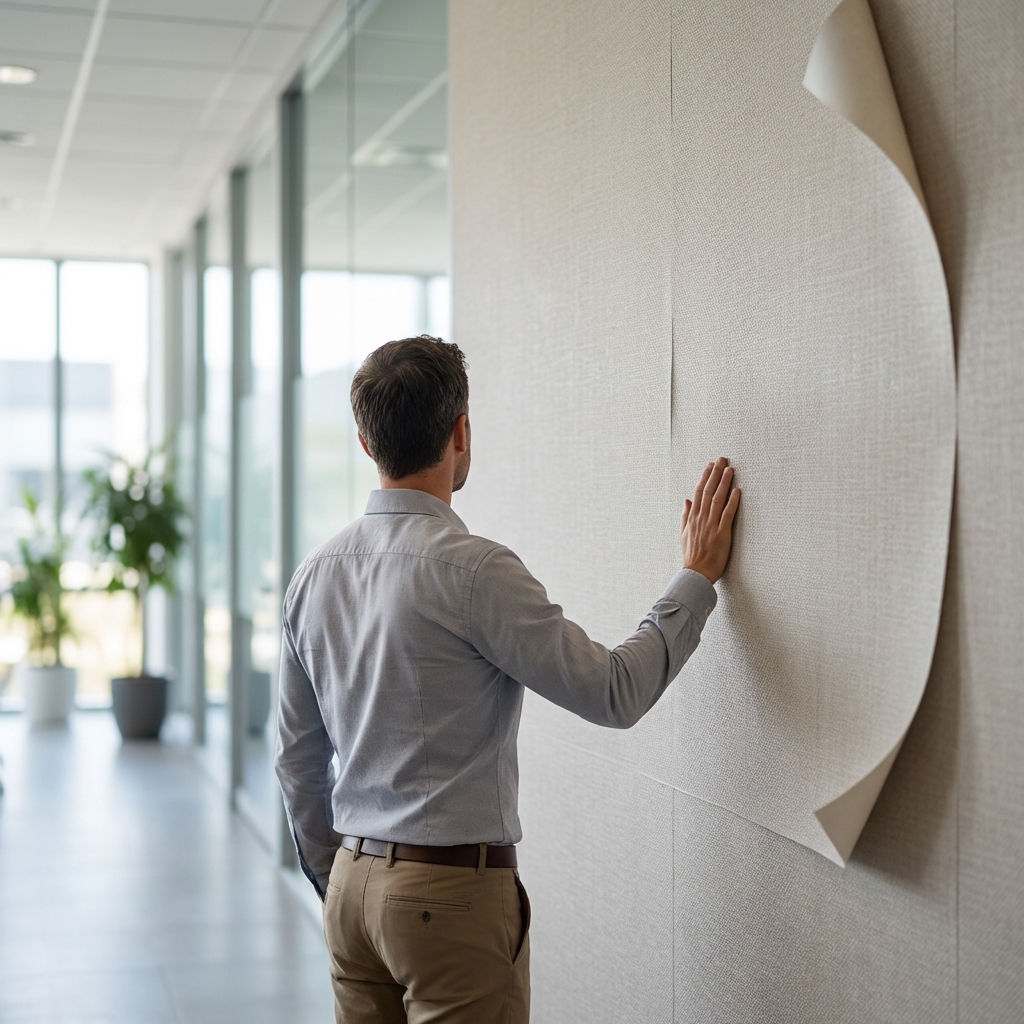
Vinyl wall coverings and wallpaper have been mainstays for branded interiors. A typical program prints graphics onto vinyl or wallcovering stock off-site, ships rolled panels, and installs with adhesives. Panels are aligned edge-to-edge, seams are trimmed, bubbles are worked out, and the adhesive cures. When installed well, the result is a continuous image—visually. In practice, seams remain mechanical boundaries that can lift, collect dirt, or telegraph over time.
Complementary or alternative approaches include:
- Cut vinyl decals: For spot graphics, logos, and type. Edges can catch wear in high-traffic corridors.
- Traditional wallpaper: Often textured for hospitality or workplace moods; less common for wayfinding or photoreal content.
- Hand-painted murals: Unique and artisanal, but schedule-intensive, sensitive to artist availability, and highly variable in consistency.
For institutions, vinyl’s strength—off-site fabrication—can also be a weakness. Lead times, shipping coordination, and field conditions introduce risk. If a panel is misprinted, damaged in transit, or trimmed incorrectly, replacement can stall a schedule. Adhesives require surface prep and cure windows. Removal at end-of-life can pull paint, requiring patch and repaint. Over multi-location rollouts, these small frictions multiply.
Installation Speed and Operational Disruption Comparison
Campus projects live and die by schedules. The faster a solution installs, the less it impacts patients, students, visitors, and employees—and the more sites can be completed inside tight windows like semester breaks or fiscal year close.
Direct-to-wall printing favors speed and predictability:
- Typical installation under five hours per wall: A crew arrives with a mobile printer, registers the artwork, prints, and performs a brief final cure. Many institutions complete multiple locations in a single day.
- No adhesive cure time: Areas can return to service rapidly. For hospitals and clinics, this reduces room closures.
- Minimal staging: No panel rolls to unbox, sort, and pre-fit; fewer tools and less smell or dust.
- On-site corrections: If a label or directional arrow needs a minor change, crews can revise on the spot.

Vinyl wall coverings tend to be slower in the field:
- Surface prep and priming: Walls may require smoothing or sealing for proper adhesion.
- Panel alignment and trimming: Intricate prints or long corridors demand precision and time.
- Cure and off-gassing: Spaces may need to remain clear while adhesives set and odors dissipate.
- Rework risk: Damaged or misprinted panels necessitate re-fabrication and shipping, prolonging timelines.
For occupied buildings with limited tolerance for downtime—healthcare, education, public-sector agencies—low-disruption installations are essential. Direct-to-wall printing is specifically tuned to that operational constraint, often running off-hours with little impact on adjacent activity.
Durability and Maintenance Performance Analysis
Durability depends on how a graphic integrates with day-to-day use: hallway traffic, cleaning protocols, humidity swings, and incidental abrasion. Performance is measured not just by the first month’s appearance, but by how the surface holds up after years of carts, backpacks, and routine sanitation.
What direct-to-wall printing delivers:
- Seam-free surface: Without panel edges, there are fewer points where mechanical failure starts. Edges are often where peeling, dirt buildup, and snagging begin with vinyl.
- Cleanability: Cured inks form a dense film that tolerates non-abrasive, common cleaners. In high-traffic zones, optional clear coats can raise abrasion resistance and make maintenance even easier.
- Stability on textured or rigid substrates: Printing onto CMU, sealed concrete, or brick leverages the wall’s inherent durability. There’s no overlay to delaminate when humidity or temperature shifts.
- Paint-over-ready at end-of-life: When programs change, facility teams can patch and paint like any other wall—no adhesive removal, no scraping residue.
Vinyl’s durability is tied to its panelized nature and adhesive bond:
- Edge vulnerability: Seams at panel joints present paths for moisture and friction to work against the adhesive, especially near HVAC diffusers, exterior walls, or bathrooms.
- Cleaning limits: Strong chemicals and aggressive scrubbing can dull vinyl finishes or loosen edges over time.
- Substrate dependency: Adhesive failure or telegraphing can occur on imperfect surfaces; even small wall defects can read through a glossy vinyl face.
- Repair complexity: Localized damage can require panel replacement, which rarely matches perfectly due to print batch or aging differences.
For data-driven teams, EastCoast MuralPros outlines the direct-to-wall durability benefits specific to high-traffic corridors, patient areas, and student zones. The overarching pattern: fewer seams, fewer failures, simpler cleaning, and a predictable end-of-life path.
Cost-Effectiveness and Lifecycle Value Comparison
Line-item price tells only part of the story. Lifecycle value for institutional wall graphics captures procurement, installation, disruption, ongoing maintenance, and end-of-life. Costs accrue across these categories differently for direct-to-wall and vinyl wall coverings.
Direct-to-wall printing economics:
- Fabrication efficiency: On-site production eliminates shipping, repacking, and panel labeling. There’s less waste from misprints and handling damage.
- Shorter install windows: Labor is focused on printing, not panel staging and seam management. That compresses schedules and reduces off-hours premiums.
- Lower disruption costs: Areas return to service faster, which matters where room downtime has a measurable operational value.
- Streamlined updates: Directional changes, seasonal campaigns, or brand refreshes are simplified; graphics are printed in place without demolition.
- End-of-life: Paint-over readiness avoids adhesive removal and extensive wall repair, curbing replacement labor by a meaningful margin.
Vinyl and wallpaper cost features:
- Predictable per-panel price: Vendors can quote material and printing precisely; however, shipping, storage, and re-fabrication contingencies add variability.
- Installation complexity: Skilled wallpaper installers are required, and long runs increase seam management time.
- Failure remediation: Peeling seams or damaged panels drive ongoing service calls and replacements, often outside warranty windows.
- Deinstallation: Removing adhesive-backed coverings incurs wall repair and repaint. In lease turnovers, this can become an urgent line item.
For multi-site rollouts, the small efficiencies add up. Institutions that shift to direct-to-wall printing often find:
- Reduced rework and contingency spending tied to fabrication/shipping errors.
- Shorter project durations, improving schedule certainty.
- Fewer maintenance tickets related to seam failures and edge scuffing.
- Lower end-of-life costs due to simplified repainting.
EastCoast MuralPros also supports subscription-based refreshes for seasonal or strategic updates, allowing budget smoothing and proactive lifecycle planning across campuses, hospitals, or retail networks. When interior branding must evolve on a set cadence, this model removes the peaks and valleys from capital and operations budgets.
Design Quality and Visual Impact Assessment
The purpose of graphics is not merely to cover a wall; it is to communicate at scale. That means faithful color, crisp legibility, and imagery that holds up when viewers are inches away and when they’re 60 feet down a corridor.
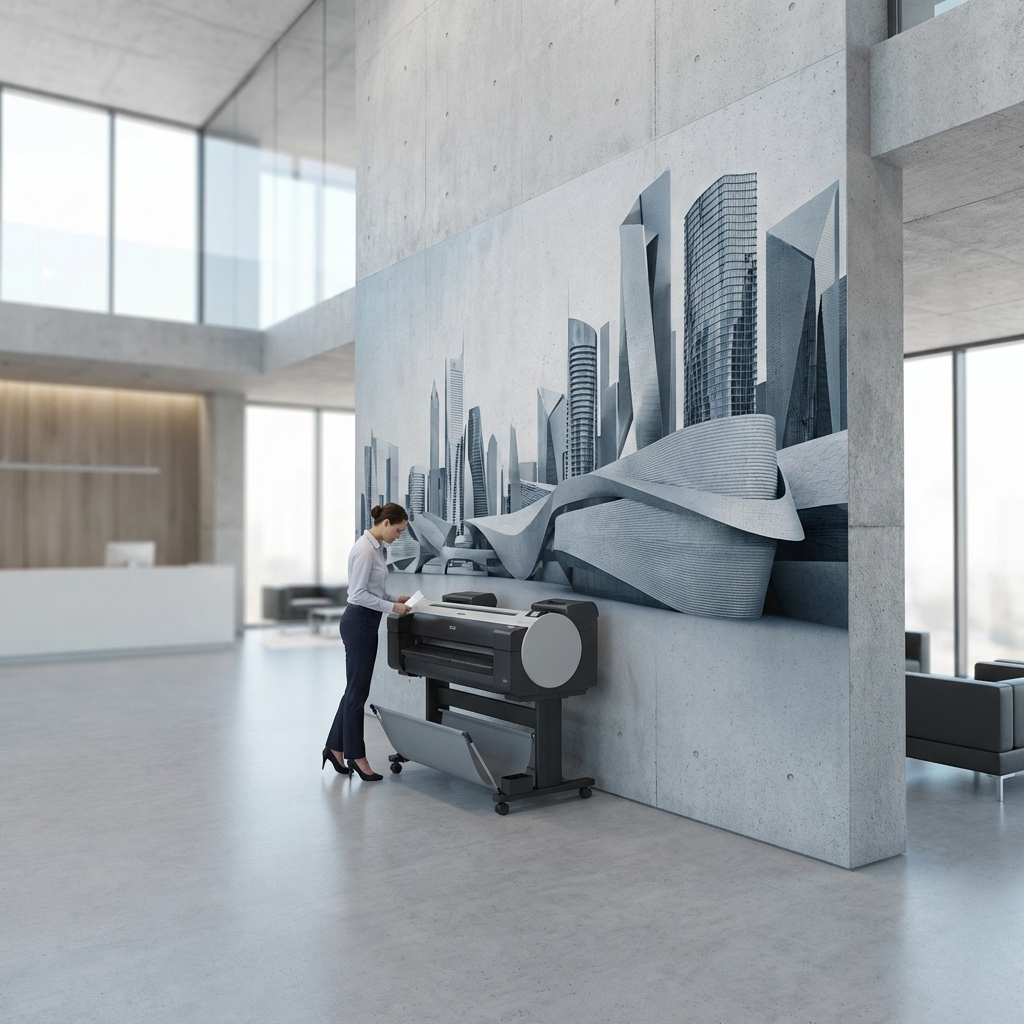
Direct-to-wall printing establishes design quality through:
- High-resolution imaging at architectural scale: Photoreal textures, fine gradients, and sharp edges remain intact on large surfaces.
- Seam-free composition: No vertical panel lines interrupt faces, typography, or continuous backgrounds—critical for museums, galleries, and hospitality feature walls.
- Consistent color profiles: On-site system calibration paired with controlled art workflows supports brand color accuracy across locations.
- Integrated wayfinding: Arrows, icons, and instructional graphics can be embedded directly onto walls, reducing signage clutter and improving visibility.
Vinyl can achieve strong visual results, particularly for:
- Heavily textured or specialty finishes: Embossed or metallic wallcoverings produce tactile effects beyond flat printing.
- Surfaces requiring coverage of imperfections: Thicker wallcoverings can mask mild substrate issues that might telegraph in painted conditions.
- Temporary exhibitions: Preprinted panels allow fast swaps during short exhibition windows when walls are protected from paint cycles.
For most institutional branding installation requirements—multi-floor wayfinding, branded corridors, patient/visitor communications—direct-to-wall’s seam-free presentation and crisp detail stand out. In collaboration with digital artists, EastCoast MuralPros deploys scalable workflows to adapt artwork to different wall sizes and aspect ratios without compromising composition or typography.
Note: Where tactile or Braille components are required for code compliance, printed wall graphics are typically part of a system that includes compliant signs at the proper mounting heights. Integrating both yields clarity without overcrowding the environment.
Sustainability and Environmental Considerations
Sustainability goals are shaping procurement criteria for commercial interior branding methods. The material, process, and end-of-life profile of a solution now weigh as heavily as upfront cost.
Direct-to-wall printing advantages:
- No vinyl or adhesives: Eliminates PVC and reduces the chemical load associated with glue application and removal.
- Lower shipping and packaging: On-site imaging minimizes freight and the protective materials used for rolled panels.
- Reduced waste: No panel overages, misfit trims, or liner backings headed to landfill.
- Lifecycle efficiency: Simple paint-over eliminates demolition waste; the substrate remains in place.
- Low-odor, fast-curing inks: Minimal disruption and fewer off-gassing concerns in occupied environments.
Vinyl and wallpaper considerations:
- Material composition: Many vinyl products are PVC-based with chlorine chemistry and plasticizers that complicate recycling.
- Adhesive waste and removal: Liner backings, trimmings, and solvent use add to waste streams.
- Shipping intensity: Fabrication, freight, and protective packaging increase embodied energy per project.
- End-of-life: Removal typically ends in landfill and necessitates wall repairs.
For a deeper analysis of these trade-offs, EastCoast MuralPros compares direct-to-wall vs. traditional vinyl sustainability across material, process, and lifecycle impacts. Institutions pursuing reduced waste initiatives, LEED-aligned strategies, or corporate ESG goals often find direct-to-wall aligns with their directives while improving schedule reliability.
Pros and Cons of Direct-to-Wall Printing
Pros:
- Seam-free, integrated aesthetic that reads as part of the architecture.
- Fast, low-disruption installation suitable for occupied buildings and sensitive areas.
- High-resolution output for branding, wayfinding, and photoreal imagery at scale.
- Adhesive-free system reduces failure points and simplifies end-of-life paint-over.
- Compatible with finished and unfinished walls (drywall, CMU, sealed concrete, brick).
- On-site production eliminates shipping delays, packaging waste, and fabrication errors.
- Consistent execution across multi-location rollouts, reinforced by calibrated workflows.
- Durable, cleanable surfaces designed for high-traffic corridors and public spaces.
- Subscription-ready operational model for planned refreshes and pilot-to-scale programs.
Cons:
- Substrate matters: Very rough, friable, or actively damp surfaces may require sealing or patching for optimal results.
- Texture reads through: Unlike thick wallcovering, direct printing won’t mask significant wall imperfections.
- Permanent placement: Once printed, the image is not repositionable; changes require reprinting or repainting.
- Color on dark bases: Intense dark paints or porous masonry might benefit from priming or white underlayers to ensure vibrancy.
- Clearance and access: The printer needs floor access and a stable setup area; extremely constrained spaces may require special planning.
Pros and Cons of Vinyl Wall Coverings
Pros:
- Panel modularity: Individual sections can be swapped if damaged or for updates.
- Specialty finishes: Textured and embossed wallcoverings deliver tactile experiences.
- Conceals minor imperfections: Thicker materials can mask surface flaws without extensive wall prep.
- Off-site fabrication: Panels can be produced early while construction finishes lag in the field.
Cons:
- Seams and edges: Visible or latent seam lines are long-term failure points in high-traffic and high-humidity environments.
- Adhesive dependence: Installation and removal are labor-intensive; adhesives can fail or leave residue.
- Longer timelines: Coordination, shipping, and cure windows slow schedules and complicate multi-site rollouts.
- Maintenance burden: Cleaning can dull finishes, lift edges, or drive uneven wear across panels.
- Environmental impact: PVC content, adhesive waste, and landfill-bound end-of-life conflict with sustainability goals.
Recommendation Framework for Institutional Decision-Makers
Selecting between direct-to-wall printing and vinyl wall coverings is easier with a structured approach. Use the following framework to evaluate the right fit for each space, program, and brand objective.
1) Operational constraints
- Can the space tolerate room closures or odors? If not, prioritize low-disruption solutions.
- Are installs limited to off-hours or short windows? Favor technologies that complete in a single shift.
2) Surface and environmental conditions
- What is the wall substrate—drywall, CMU, concrete, brick—and its finish level?
- Are there humidity swings, temperature variations, or high abrasion near corners and handrails?
- Will texture telegraph distract viewers, or does the space read well with an integrated, painted-like surface?
3) Visual and brand requirements
- Are photoreal images, fine typographic detail, and seam-free compositions essential?
- Do you need integrated wayfinding and instructional graphics without signage clutter?
- Is a specialty textured finish or metallic effect a must-have?
4) Lifecycle and maintenance
- What cleaning agents will be used, and how frequently?
- How often will content change—every few months, annually, or only upon rebranding?
- Does the lease, program, or capital plan require cost-effective end-of-life strategies?
5) Sustainability and policy goals
- Are there ESG, LEED, or waste-reduction targets that discourage vinyl or adhesives?
- Can onsite production reduce freight and packaging for multi-location rollouts?
6) Budget and schedule certainty
- How sensitive is the project to re-fabrication, shipping delays, or field rework?
- What’s the projected total cost over five years, including maintenance and refresh cycles?
When to choose direct-to-wall printing:
- Multi-floor healthcare wayfinding where downtime must be minimized and edges cannot fail.
- K–12 and higher education corridors that demand durable, cleanable imagery through heavy foot traffic.
- National workplace refreshes requiring consistent brand color and swift, predictable installs.
- Museums and cultural institutions seeking photoreal exhibits at wall scale without panel seams.
- Landlord portfolios managing tenant turnovers that benefit from paint-over simplicity and quick rebrand cycles.
When vinyl wall coverings may still fit:
- Feature walls needing specialty textured finishes or metallic effects not achievable by direct printing.
- Surfaces with significant imperfections that are impractical to skim or repair.
- Short-term exhibitions where preprinted, modular panels align with rapid changeovers—provided the maintenance and waste profile is acceptable.
How to pilot and scale
- Start with a pilot floor or building to validate installation time, cleaning protocols, and visual outcomes.
- Standardize design packages and color targets; document substrates and priming requirements by building.
- Create a lifecycle playbook: refresh cadence, paint-over procedures, and budget forecasting.
- For campuses and national brands, consider a subscription model for scheduled updates across seasons or program phases. EastCoast MuralPros supports full-campus solutions and multi-location rollouts with consistent execution, enabling pilot-to-scale transitions without re-specifying every site.
Conclusion: Selecting the Right Solution for Your Organization
Institutional wall graphics live at the intersection of design intent and operational reality. The most successful programs combine high-fidelity visuals with fast installs, minimal disruption, durable performance, and responsible end-of-life strategies. Direct-to-wall printing rises to that challenge for many institutional and commercial environments by delivering seam-free imagery, adhesive-free application, and lifecycle-efficient outcomes at scale. Vinyl wall coverings still earn a place where specialty textures or masking capabilities are essential, but their panel seams, adhesive reliance, and waste profile can limit performance across large portfolios.
If your organization values speed, predictability, cleanliness, and sustainability alongside visual excellence, a direct-to-wall approach merits serious consideration. For teams exploring vinyl wall coverings alternatives, EastCoast MuralPros brings a next-generation, on-site printing capability designed for high-traffic, occupied buildings—complete with collaborative tools for digital artists, in-studio printing for ancillary assets, and subscription options for planned refreshes.
Your campuses, clinics, hotels, and workplaces deserve graphics that work as hard as your operations do. Choose the method that aligns with your schedule, brand standards, maintenance model, and environmental commitments—and build a system you can replicate confidently across every location. To learn more about durable wall printing solutions and see how a pilot can translate into a campus-wide standard, visit eastcoastmuralpros.com.
Contact us to learn more