Introduction: The Evolution of Commercial Wall Graphics Solutions
Commercial Wall Graphics: Modern Alternatives to Vinyl and Wallpaper
Commercial wall graphics have moved from decorative afterthought to a strategic tool for branding, wayfinding, and user experience across large facilities. Over the last decade, organizations have sought faster, more durable, and more sustainable alternatives to traditional vinyl wall coverings and wallpaper. They need solutions that scale across multi-location portfolios, perform in high-traffic environments, and install with minimal disruption.
Emerging direct-to-wall printing technologies have shifted what’s possible. Instead of fabricating panels or applying adhesive films, teams can now print high-resolution wall murals directly onto finished and unfinished substrates—drywall, CMU, concrete, and brick—without seams or vinyl. The result looks and feels integrated with the architecture, holds up to daily use, and removes the shipping delays and fabrication variables baked into older methods.
EastCoast MuralPros (ECMP) is among the providers leading this shift, offering a performance-based alternative to vinyl and wallpaper designed around the realities of facilities, procurement, and operations. For organizations under pressure to deliver predictable outcomes, ECMP’s blend of direct-to-wall printing, fast on-site installation, and lifecycle-efficient finishes is changing how interior environments are upgraded, branded, and maintained.
This article outlines how modern commercial wall graphics compare to legacy options, where they deliver the highest ROI, and the considerations facility, brand, and construction teams should weigh when selecting a vendor or system.
Limitations of Traditional Vinyl Wraps and Wallpaper in Commercial Spaces
Vinyl wall coverings and wallpaper paved the way for large-scale graphics in commercial interiors, but they carry well-known constraints once applied at scale or used in demanding environments.
Common issues include:
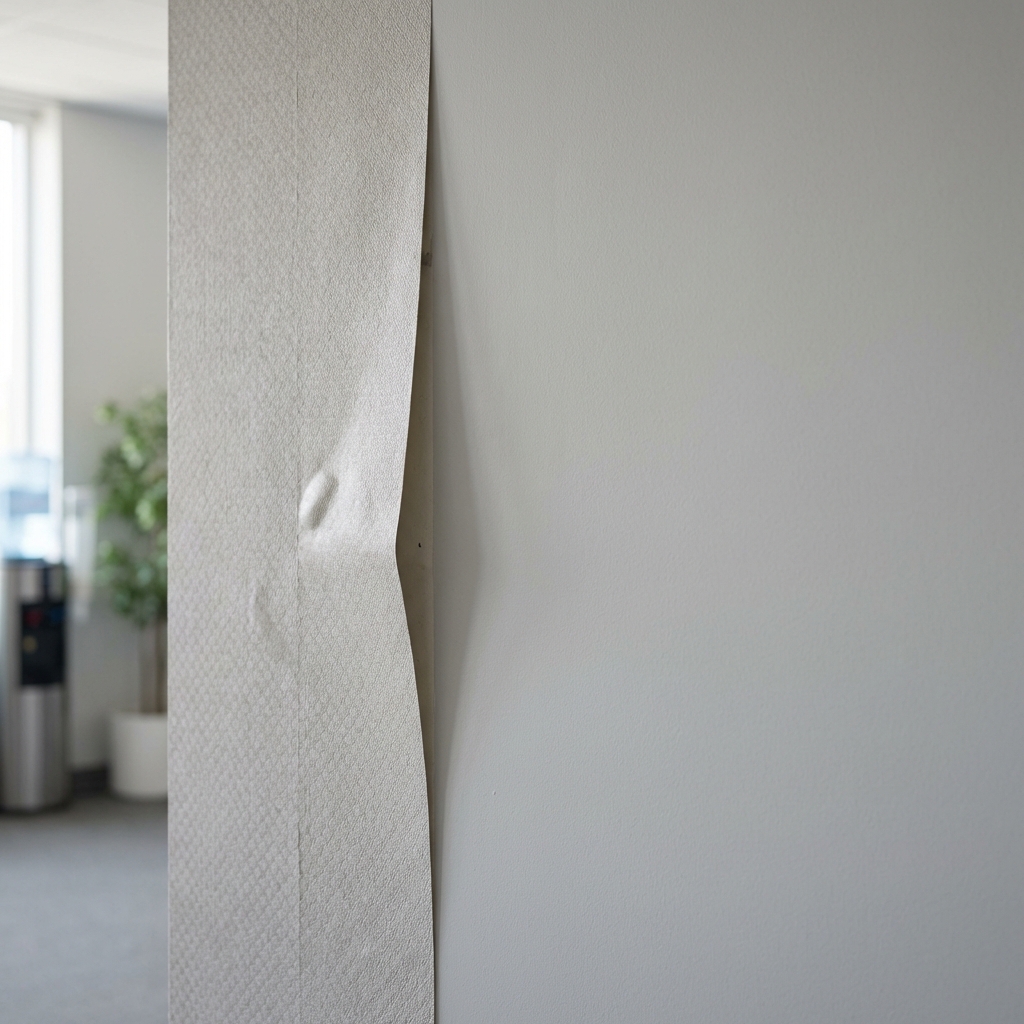
- Adhesive failures over time, especially at seams, edges, outside corners, or over textured substrates, leading to peeling and bubbling.
- Visible seams interrupting large images and complicating cleaning where dirt or moisture can collect.
- Sensitivity to humidity and temperature swings, which can accelerate delamination in restrooms, kitchens, vestibules, and exterior-adjacent walls.
- Limited compatibility with unfinished surfaces like rough CMU, brick, or concrete, often requiring skim coats, panels, or costly prep work.
- Long lead times tied to shop fabrication, shipping, and on-site staging, with rework required if graphics or dimensions were mis-specified.
- Installation disruption in occupied spaces due to adhesives, odors, and extended wall prep/curing windows.
- Removal challenges that damage paint or drywall, followed by patching, priming, and repainting—expensive during tenant turnovers or brand refreshes.
- Inconsistent color or finish across panel sets or multiple sites when fabrication occurs in different runs.
- Greater signage clutter when wayfinding must be mixed with plaques and panels to avoid adhesive limitations.
Procurement and facilities teams also report unpredictable total cost of ownership. While a line item for vinyl material can appear low, the hidden costs—surface remediation, panel fabrication, shipping, protection, long installation windows, periodic replacement, and end-of-life demolition—quickly erode budget and schedule certainty for multi-location programs.
What Is Direct-to-Wall Printing Technology
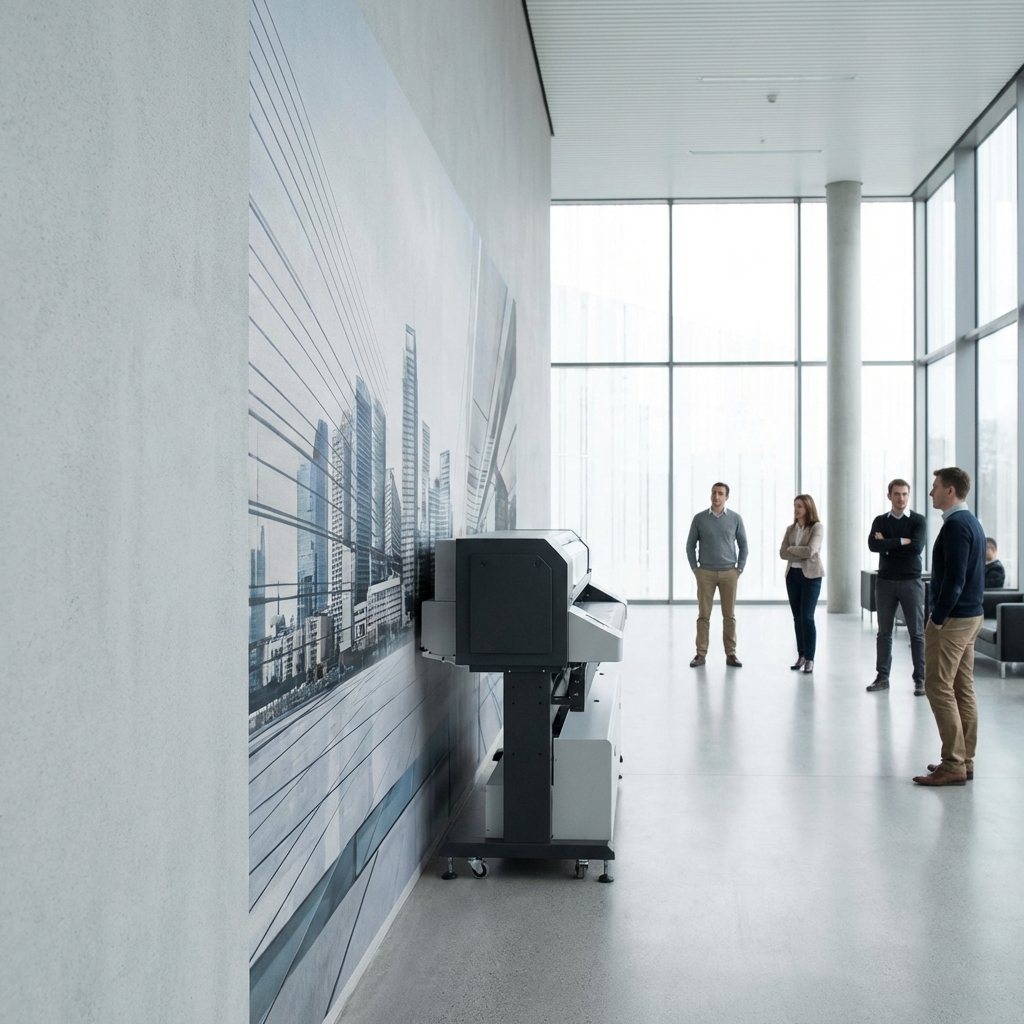
Direct-to-wall printing uses mobile, high-precision equipment to deposit UV-cured inks directly onto vertical building surfaces. Instead of applying an adhesive-backed graphic or hanging a pre-printed wall covering, the system prints the image on-site, curing the ink instantly under integrated UV light. The result is a seam-free, high-resolution wall mural that conforms to the actual surface profile—smooth drywall, CMU block, concrete, or brick—without vinyl, liners, or paste.
Key components of the process:
- Digital preflight: Artwork is scaled, color-managed, and profiled for the exact substrate and environment. Pantone-accurate brand colors and photographic details are prepared at architectural scale.
- On-site calibration: The print head is aligned to wall geometry and surface characteristics; test swatches verify color and adhesion before the full run.
- UV-curable inks: Inks are cured as they’re applied, producing a durable, cleanable film that resists abrasion and typical maintenance chemicals.
- Seam-free output: Graphics are printed continuously to the designed dimensions, eliminating panel breaks and reducing places where dirt or moisture can accumulate.
EastCoast MuralPros’ platform extends this capability beyond walls. In addition to on-site printing, ECMP supports in-studio printing for doors, tables, and standees—useful when a cohesive interior branding system spans architectural surfaces and movable elements. For creative teams, ECMP offers collaborative tools to help digital artists scale their work across locations, volumes, and formats while maintaining consistency.
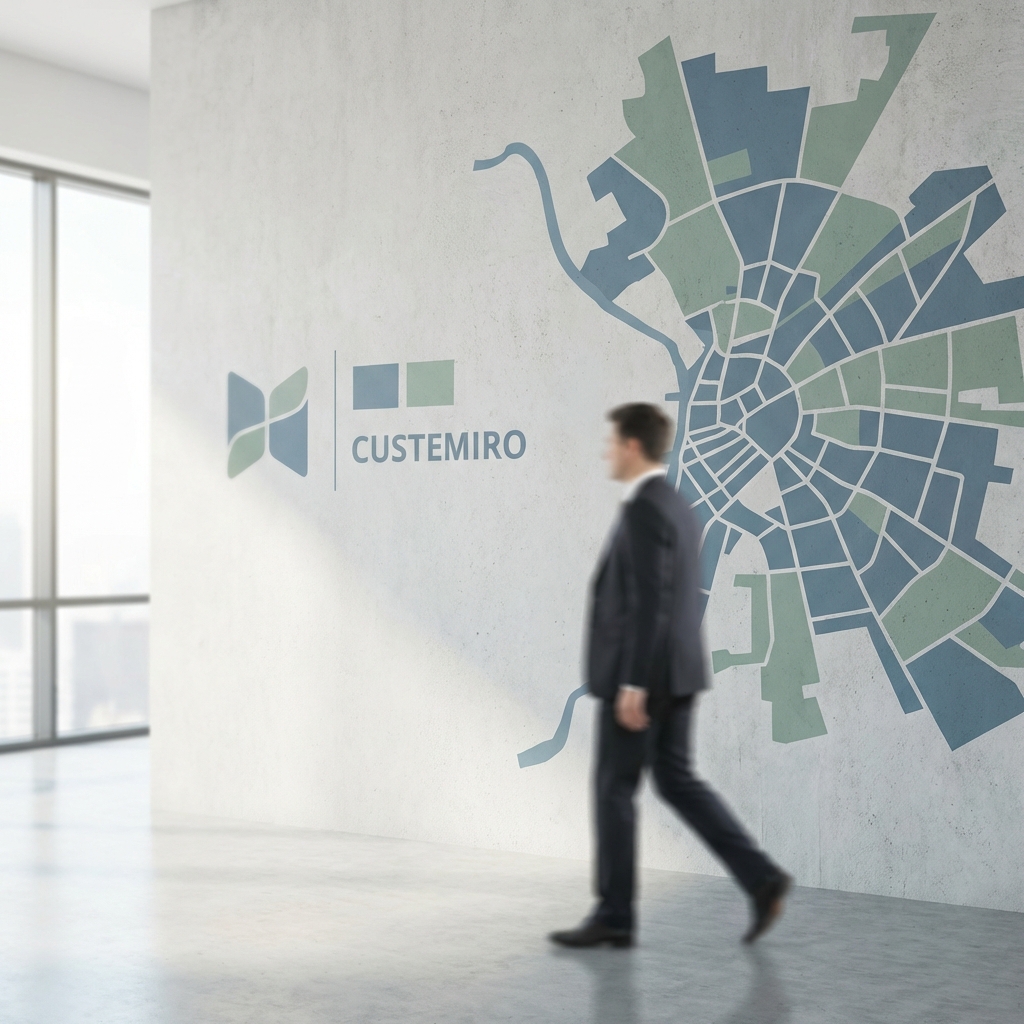
Because direct-to-wall systems are compatible with both finished and unfinished surfaces, they often remove the need for heavy surface prep or fabrication, compressing schedules and avoiding the risk of dimensional misfits common in panel-based graphics.
Key Advantages of Modern Wall Graphics for Commercial Facilities
For facility leaders, brand managers, and procurement teams, modern commercial wall graphics built on direct-to-wall printing deliver benefits aligned with real operational constraints and KPIs.
What stands out:
- Architectural integration: Seam-free graphics at architectural scale create a purposeful, built-in appearance—no shiny vinyl edges, no overlaps, and no panel seams to map through images.
- Speed and certainty: On-site production eliminates shipping delays and fabrication errors. Most installations complete in hours, not days.
- Multi-surface compatibility: Print directly on drywall, CMU, concrete, and brick—finished or unfinished—expanding where graphics can go without panels or adhesive backers.
- Durability and cleanability: UV-cured ink films stand up to high-traffic use and routine cleaning, including healthcare-grade disinfection.
- Lifecycle efficiency: Paint-over-ready finishes simplify end-of-life or tenant transitions—no peeling, scraping, or demolition of coverings.
- Consistency at scale: Centralized color management and on-site calibration drive consistent execution across multi-location and national rollouts.
- Wayfinding without clutter: Integrated wayfinding, safety, and instructional graphics reduce the need for plaques and applied signage, decluttering corridors and lobbies.
- Program flexibility: Subscription models allow seasonal or strategic refreshes without capital-level commitments each time.
- Artist and content enablement: Collaborative tools help digital artists and brand teams adapt content libraries to varied wall sizes and regional requirements, accelerating approvals and throughput.
For organizations exploring vinyl wall covering alternatives, the performance uplift is not simply a materials swap—it’s a change in delivery model that reduces variables, condenses timelines, and increases predictability across complex portfolios.
Installation Speed and Minimal Business Disruption
The most consistent feedback from operations and facilities teams is that installation speed and low disruption matter as much as visual quality. Direct-to-wall printing was designed with those realities in mind.
A typical workflow:
- Site assessment: A quick survey verifies substrates, access, and protection needs. Artwork is finalized and preflighted in parallel.
- Mobilization and masking: On the day of installation, the team masks adjacent surfaces, levels the printer, and runs small color/adhesion tests.
- Live print: The system produces a full-resolution image directly on the wall. UV curing is instantaneous; no drying windows or adhesive off-gassing.
- Turnover: Protective masking is removed, floors are cleaned, and the space is immediately usable—often within the same shift.
What this looks like in practice:
- Corporate offices: Overnight installs complete before employees arrive. No rolling carts of panels, no long cure times, and minimal odor.
- Healthcare corridors: Work is sequenced between clinical rounding windows. Quiet operation and small footprints keep egress clear, and the surface is usable as soon as the crew strikes.
- K–12 and higher education: Phased upgrades during short breaks minimize downtime. A gym lobby or commons wall can be printed in under five hours.
- Retail and hospitality: Seasonal campaigns and brand updates can be executed off-hours without closing space to guests or customers.
Because printing occurs on-site, there’s no risk of a mis-fabricated panel or a shipment delay derailing a tightly sequenced schedule. This low-disruption installation is particularly valuable in occupied buildings where every hour of downtime has a measurable cost.
Durability and Maintenance in High-Traffic Commercial Environments
Performance in the real world determines the success of any wall system. Direct-to-wall printing produces a durable, cleanable surface engineered for daily wear and frequent cleaning.
What durability looks like:
- Abrasion resistance: UV-cured inks create a robust film that resists scuffs and contact from carts, bags, and light equipment commonly found in corridors and lobbies.
- Cleanability: Routine cleaning with mild detergents, and, where required, healthcare-grade disinfectants, does not degrade image quality. No seams mean fewer edges to lift or collect grime.
- Environmental stability: Graphics perform in conditioned interiors and spaces subject to humidity swings (e.g., vestibules, restrooms) better than adhesive-applied vinyl, which can delaminate.
- Texture tolerance: On CMU, brick, and concrete, the printed image conforms to the surface, preserving visual continuity without adhesive bridging or panel telegraphing.
Maintenance protocols are straightforward:
- Standard wipe-downs remove marks and fingerprints.
- Periodic deep cleans with approved solutions maintain color vibrancy.
- Spot touch-ups are rarely required; if a program change is needed, the area can be sanded if necessary and painted over without scraping adhesives.
By removing the failure modes associated with adhesive seams and edges, facilities teams spend less time fielding work orders for peeling, bubbling, or panel replacement—key contributors to lifecycle cost and user complaints.
Cost Efficiency and Lifecycle Advantages
When procurement teams evaluate vinyl wall covering alternatives, total cost of ownership (TCO) becomes the deciding metric. Direct-to-wall printing typically reduces both initial and recurring costs by eliminating fabrication steps, compressing schedules, and streamlining end-of-life transitions.
Where savings accrue:
- No panel fabrication: Eliminates shop production, overage orders, and re-fabrication when dimensions change late.
- No shipping or crating: Removes freight, damage risk, and time buffers for logistics.
- Faster installation: Condensed labor windows cut overtime or after-hours premiums and reduce the need to close spaces.
- Fewer failures: No seams or adhesives to repair over time lowers work orders and service calls.
- Paint-over-ready end-of-life: Avoids removal labor, substrate damage, and patch/prime cycles typical for vinyl or wallpaper de-installs.
- Longer refresh intervals: Durable surfaces maintain appearance longer, extending the period before an update is needed.
Program-level levers:
- Subscription models: Spreading updates across quarters or seasons stabilizes budgets and aligns refreshes with occupancy and brand calendars.
- Multi-location rollouts: Centralized color management and repeatable field processes deliver consistent results and predictable pricing across regions.
- Alternate to construction: Many branding or interior experience goals once tied to millwork or panel systems can be achieved with high-resolution wall murals, avoiding permitting and long lead items.
The net effect is a lifecycle-efficient solution with reduced replacement and maintenance cycles. For landlords and asset managers, that often translates into faster lease-ups, fewer punch-list items between tenants, and a better presentation of space at lower annualized cost.
Applications Across Industries: Healthcare, Education, Retail, and Hospitality
While the core technology is consistent, the way commercial wall graphics deliver value varies by sector. Direct-to-wall printing adapts to mission-critical needs in healthcare, education, retail, and hospitality.
- Healthcare systems and medical facilities:
– Integrate wayfinding, safety instructions, and infection-control messaging directly onto corridor and lobby walls, reducing signage clutter and snag points. – Use calming, evidence-informed imagery in patient areas and pediatric spaces without edges for tampering. – Durable, cleanable surfaces withstand routine disinfection. – Explore deeper sector guidance in ECMP’s resource on healthcare interior branding.
- Colleges, universities, and K–12 districts:
– Full-campus solutions connect athletics, academics, and student life with consistent brand moments across arenas, commons, corridors, and residence halls. – Instructional graphics and wayfinding are integrated directly into walls, reducing reliance on plaques that can be vandalized or removed. – Vacation and intersession windows are ample for multi-building upgrades given sub-day install times per wall.
- Retail chains and multi-location brands:
– Speed supports seasonal or campaign-driven updates via subscription models, with national rollouts executed consistently across stores. – High-resolution wall murals convey product stories, regional authenticity, or category navigation without adding fixtures. – On-site printing eliminates shipping delays and last-minute fabrication errors that can compromise opening timelines.
- Hospitality brands and hotel operators:
– Feature walls, corridors, food-and-beverage spaces, and meeting rooms can be refreshed between guest cycles with minimal noise and odor. – Cohesive brand programs extend into back-of-house with instructional and safety graphics that stand up to daily cleaning. – Paint-over-ready finishes simplify property improvement plans and operator transitions.
EastCoast MuralPros also supports museums and cultural institutions where photoreal, high-resolution imagery with crisp detail at architectural scale is central to storytelling. Because the finish integrates with the substrate, gallery walls and exhibit corridors read more like architecture than applied décor—beneficial when aesthetics and conservation are top priorities.
Design Flexibility and Wayfinding Integration
Modern programs succeed when visual impact aligns with operational clarity. Direct-to-wall printing offers design flexibility that helps brand, workplace, and experience teams connect identity, instruction, and navigation without adding fixtures.
What this enables:
- Seam-free imagery at scale: Panoramic visuals, typographic systems, and fine-detail photography remain crisp across long corridors and double-height walls.
- Brand-color fidelity: Managed color workflows and on-site swatches dial in Pantone-critical elements across substrates and lighting conditions.
- Wayfinding as part of the environment: Floor numbers, directional cues, safety icons, and instructional content can be embedded within feature walls, reducing signage clutter and installation touchpoints.
- Variable content at volume: Room-specific identifiers, language localization, and campus zoning can be templated—ideal for full-campus solutions or multi-site rollouts.
- Cross-surface consistency: In-studio printing on doors, tables, and standees extends campaigns across architectural and movable elements while keeping a unified palette and finish.
Collaboration tools complete the system. ECMP’s workflows help digital artists and brand teams scale assets for different wall sizes and substrates, version content by site, and maintain version control during procurement and construction. Field-proofing—printing small test areas directly on the intended wall—replaces guesswork with live, on-substrate approvals that speed decision-making and reduce rework.
The result is a design-forward program that communicates clearly and looks intentional, not piecemealed.
Sustainability Benefits Over Traditional Wall Covering Methods
Sustainability goals are increasingly tied to procurement decisions for commercial wall graphics. Direct-to-wall printing offers measurable advantages over vinyl and wallpaper throughout the product lifecycle.
Material and process efficiencies:
- No vinyl or PVC: Eliminates plastic films, adhesive liners, and panel substrates, reducing material inputs and landfill waste.
- On-site production: Avoids shipping and crating, cutting transport emissions and damage-related reprints.
- Right-sized output: Printing only what’s needed in place reduces overage typical in panel fabrication.
- Longer service life: Durable, cleanable finishes reduce replacement frequency and the waste that accompanies frequent change-outs.
- Low-disruption refresh and end-of-life: Paint-over-ready finishes avoid demolition and substrate remediation, shrinking the scope of future projects.
Operational benefits:
- Fewer chemical exposures associated with adhesives and paste during install.
- Reduced signage clutter when wayfinding and instructional content are integrated, lowering the need for additional materials.
For a deeper look at waste reduction and embodied impacts compared with adhesives and panel-based systems, ECMP provides a sector-focused analysis of direct-to-wall printing and sustainability considerations in commercial design.
Taken together, these factors support ESG reporting and procurement criteria that prioritize lifecycle efficiency and material reduction without compromising visual performance.
Conclusion: Choosing the Right Wall Graphics Solution for Your Organization
Selecting the right path for commercial wall graphics begins with clarifying operational realities and performance expectations. For teams actively seeking vinyl wall covering alternatives, direct-to-wall printing offers a strong balance of speed, durability, scalability, and sustainability—particularly in occupied buildings and multi-location portfolios.
A vendor-selection checklist:
- Substrate compatibility: Can the system handle your mix of drywall, CMU, concrete, and brick—finished and unfinished?
- Installation windows: What are typical install durations, and can work proceed safely in occupied spaces without extended cure times or odors?
- Color and quality: How are brand colors managed? Will you see on-wall test swatches before committing?
- Durability and cleaning: Are surfaces validated for your cleaning protocols, especially in healthcare and high-traffic environments?
- Program scalability: Can the partner deliver consistent execution across campuses and national rollouts, including wayfinding integration?
- Lifecycle strategy: Are finishes paint-over-ready, and do subscription models support seasonal or strategic refreshes within operating budgets?
- Risk and logistics: Does on-site printing eliminate shipping delays and fabrication errors that complicate schedules?
EastCoast MuralPros specializes in next-generation direct-to-wall printing for commercial and institutional teams that need durable wall graphics installed quickly and at scale. With a focus on predictable outcomes—fast installation typically completed in under five hours, seam-free graphics at architectural scale, and cleanable, paint-over-ready finishes—ECMP provides a performance-based alternative to vinyl wall coverings and wallpaper.
If your organization is planning a brand rollout, wayfinding overhaul, or a fast environmental refresh without construction, consider piloting direct-to-wall printing on a representative set of walls. A well-structured pilot will validate installation speed, visual quality, cleaning compatibility, and user response—giving stakeholders the confidence to scale the approach across floors, buildings, or a national portfolio.
Contact us to learn more