Introduction: Why Custom Wall Graphics Matter for Modern Commercial Spaces
Custom Wall Graphics Services: High-Performance Alternatives to Vinyl and Wallpaper
The way a space looks, functions, and communicates now plays a decisive role in how people work, learn, shop, heal, and connect. For facility leaders and brand owners, the question is no longer whether to use visual graphics—but how to do it quickly, durably, and at scale without the headaches of vinyl or the delays of construction. That’s where custom wall graphics services grounded in direct-to-wall printing technology are setting a new standard.
Unlike decorative one-offs, today’s commercial wall graphics serve many missions at once: they clarify wayfinding, strengthen brand identity, deliver safety and instructional messages, and elevate the occupant experience. They also have to deliver with consistency across multi-location portfolios and be robust enough for high-traffic environments. When done well, graphics feel integrated into the architecture—seam-free, photoreal, and paint-over-ready for the next program cycle.
EastCoast MuralPros helps organizations meet these expectations with a performance-based alternative to vinyl wall coverings and wallpaper. By printing high-resolution imagery directly to surfaces on site, the team accelerates schedules, reduces lifecycle costs, and eliminates many of the failure modes that plague adhesives and panels. For hospitals, school systems, corporate campuses, retail chains, and landlords, it’s a practical way to transform interiors without disruption or waste.
Understanding Direct-to-Wall Printing vs. Traditional Wall Covering Methods
Most teams are familiar with traditional wall covering options: vinyl wraps, wallpaper, and hand-painted murals. Each has a role—but each also introduces constraints. Adhesives can fail, seams can telegraph and collect grime, long runs are labor-intensive, and replacements often require downtime and demolition that ripple across operations. Hand-painting can be beautiful but is slow, hard to replicate, and challenging to scale.
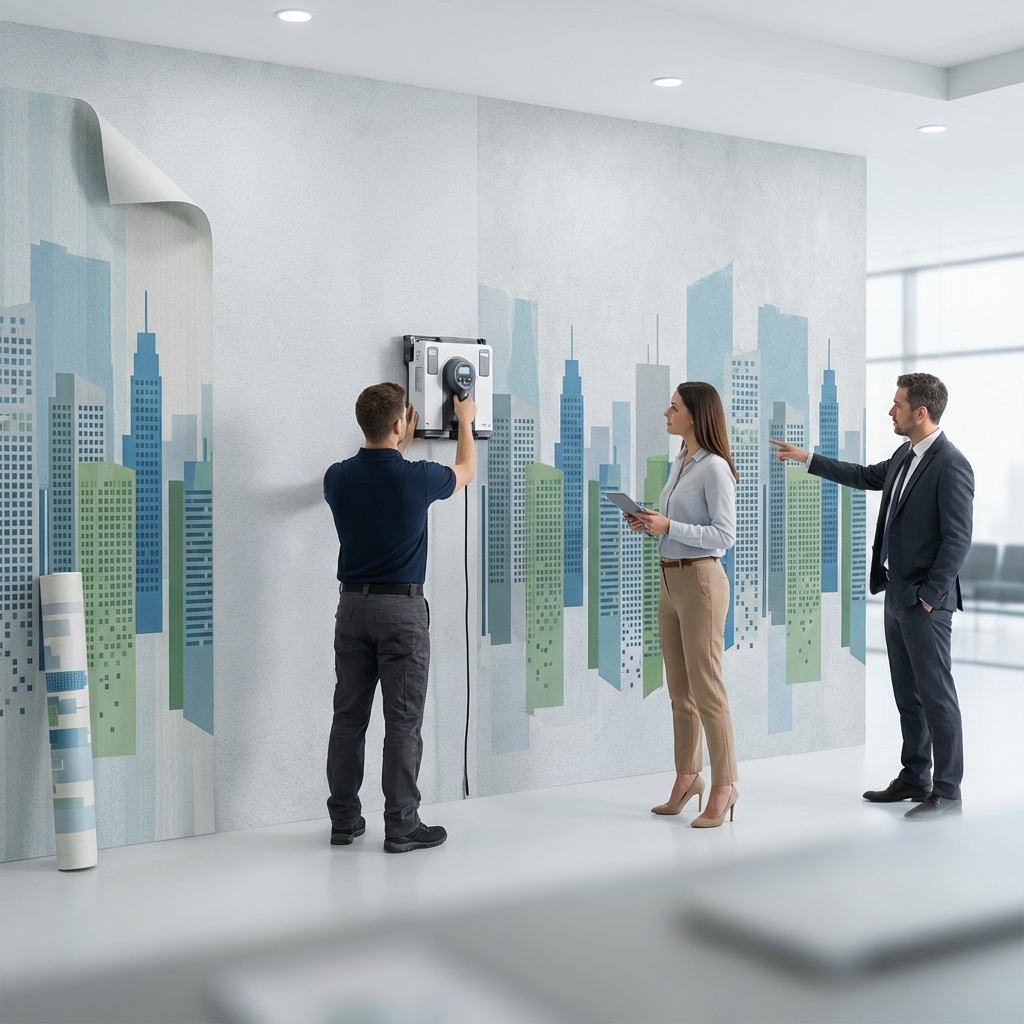
Direct-to-wall printing technology approaches the problem differently. A mobile print system registers to the wall and jets high-resolution ink directly onto the surface—no vinyl, no adhesives, and no panel seams. Because the output is applied on site, teams avoid shipping delays and fabrication errors. The finish reads like a painted surface, so it feels integrated into the architecture rather than applied on top of it.
The method is compatible with finished and unfinished substrates, including drywall, CMU block, concrete, and brick. It is particularly well-suited to architectural-scale deployments where seam-free wall graphics are essential—large corridors, lobbies, and multi-story statements that would otherwise require alignment of multiple vinyl panels. For elements better handled offsite, many providers, including EastCoast MuralPros, also offer in-studio printing on doors, tables, and standees to complement on-site work.
Beyond the aesthetic and logistical gains, direct-to-wall output is paint-over-ready. When tenants turn, programs change, or brand standards update, the surface can be prepped and painted like any other wall—no peeling, scraping, or landfill-bound sheets. That lifecycle efficiency is one reason many procurement teams are re-evaluating their default to vinyl and wallpaper.
Key Advantages of Custom Wall Graphics for Commercial and Institutional Use
Facility and brand leaders choose custom wall graphics services when they need integrated, predictable outcomes. The advantages of direct-to-wall printing align closely with operations, finance, and design priorities:
- Architecture-first visuals: Photoreal, high-resolution imagery with crisp detail at scale that reads like finish work, not decoration.
- Seam-free results: No panel lines, lifted edges, or overlaps—just uninterrupted visuals across long runs and irregular conditions.
- Wayfinding without clutter: Directional, safety, and instructional graphics integrate into the plane of the wall, freeing floor space and simplifying signage systems.
- Speed with certainty: Typical on-site print windows under five hours keep spaces open and on schedule.
- Durability and cleanability: A performance-based surface stands up to high-traffic touchpoints and routine cleaning protocols.
- Paint-over-ready: Rebrands, tenant turnover, and program updates are faster because removal isn’t required.
- Scale with control: Consistent execution across floors, buildings, and national portfolios—critical for brand and facilities governance.
EastCoast MuralPros adds process-focused benefits that matter to operations: collaborative tools that help digital artists scale their work, standardized preflight and proofing to minimize surprises, and subscription options for seasonal or strategic refreshes. The result is a turnkey system that handles both single feature walls and full-campus programs with equal rigor.
Speed and Installation: Minimizing Disruption in Occupied Buildings
The loudest objection to traditional graphics is time. Even when vinyl is available, wall prep, panel alignment, adhesive cure time, and punch-list fixes push timelines into days—an eternity in occupied spaces. Direct-to-wall printing compresses that sequence.
- Streamlined site readiness: After an initial survey and file approval, crews can mobilize with minimal staging. Minor patching and dusting typically suffice; no adhesive mixing or panel unpacking is required.
- Fast print windows: For many walls, commercial wall graphics installation can be completed in under five hours—from setup to final inspection—so teams can schedule evening or weekend work with no impact on Monday operations.
- Low-disruption procedures: Installers work within contained footprints, often without blocking egress or moving furniture beyond immediate wall clearances. For healthcare and education, this reduces patient, student, and staff detours.
- Fewer surprises: On-site printing eliminates shipping delays and fabrication errors. If a last-minute content correction or dimension change is needed, adjustments can often be made live without scrapping material.
Compatibility with surfaces like drywall, CMU, concrete, and brick means fewer escalation calls to patch substrate issues discovered mid-install. And because no adhesives or vinyl are applied, indoor air quality concerns related to off-gassing adhesives and large-format panel handling are minimized. For facilities teams measured on uptime, the combination is powerful.
Design Flexibility and Scalability Across Multi-Location Rollouts
The promise of custom wall graphics services is only fully realized when designs scale consistently from one wall to hundreds. That requires more than a great printer; it requires process, file governance, and collaboration between brand, design, and operations.
- Color management and consistency: Direct-to-wall systems are calibrated for consistent, brand-accurate output across different surfaces and conditions. Managed color profiles, controlled test prints, and lighting evaluations ensure that the fifth site looks like the first.
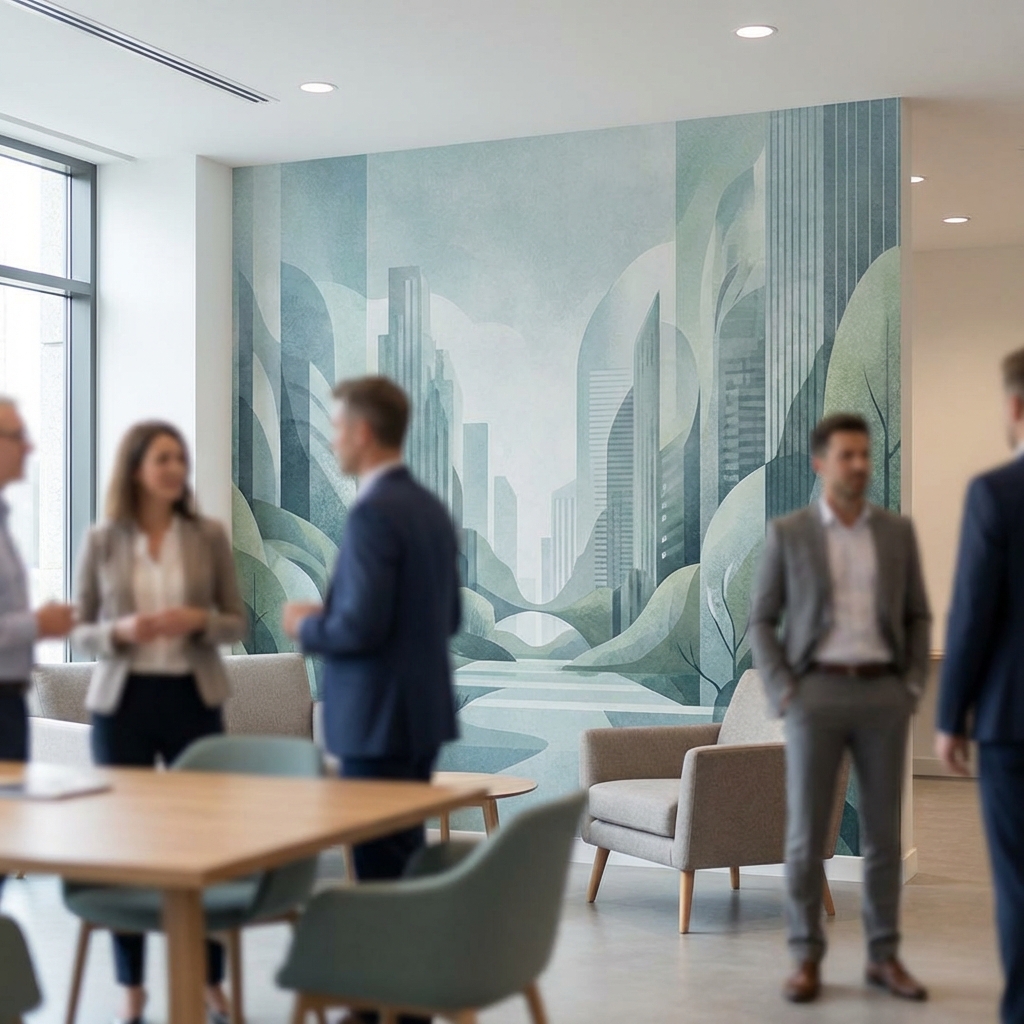
- Seam-free at architectural scale: Long corridors, atriums, and stair towers can be treated as continuous canvases, free from the constraints of panel widths. This opens possibilities for large-format storytelling, campus-scale wayfinding ribbons, and immersive branded environments.
- Collaborative tools for creators: EastCoast MuralPros supports digital artists and design teams with templates, scale guidelines, file packaging, and preflight checks. Artists can confidently deliver photoreal textures, typographic systems, and complex data visualizations knowing the output will hold at size.
- Versioning and localization: Retailers and hospitality brands need variations by region, season, or offer. A controlled file library and subscription model support planned refreshes without re-specifying the whole system each quarter.
- Full-campus strategy: For hospitals and school districts, custom wall graphics become a unifying framework: campus maps, department identities, vendor-neutral safety messaging, and donor recognition that reads holistically across buildings.
When paired with disciplined site surveying and a clear approval workflow, multi-location or national rollouts become predictable, repeatable, and reportable—conditions procurement teams expect from mission-critical vendors.
Durability and Maintenance: Performance-Based Solutions for High-Traffic Environments
Aesthetics open the door, but durability determines long-term value. Facility managers need surfaces that stand up to everyday wear: rolling carts, backpacks, daily cleanings, and the occasional scuff. Direct-to-wall printing was developed with these realities in mind.
- Cleanable finish: Graphics are engineered to tolerate routine maintenance with non-abrasive cleaners. In healthcare and education, this compatibility with established cleaning protocols is essential.
- No seam failures: Without panel edges to lift or chip, there are fewer failure points—no catching edges near doorways or baseboards, no dirt accumulation in overlaps.
- Impact and abrasion resistance: While not indestructible, the printed layer resists common scuffs and marks better than film-based systems that rely on adhesives at the edges.
- UV and lighting stability: Properly specified systems mitigate fading under normal indoor light exposure, helping maintain brand integrity over time.
For deeper guidance on selecting finishes and cleaning protocols suitable for high-traffic areas, EastCoast MuralPros has published practical insights on direct-to-wall durability benefits. Importantly, when graphics eventually need to change, facility teams can prep and paint over the surface. There is no peeling, no adhesive residue, and no hidden substrate damage—an operational advantage when schedules are tight and budgets closely watched.
Cost Efficiency and Lifecycle Advantages Over Vinyl and Wallpaper
Budget scrutiny is part of every decision. The strongest argument for a shift away from vinyl and wallpaper is rarely first cost—it’s lifecycle efficiency, reduced disruption, and fewer points of failure that lead to unplanned expenses.
Consider the cost stack of vinyl and wallpaper:
- Materials: PVC or paper stock, adhesives, primers, and overlaminates
- Fabrication and shipping: Panelization, packaging, freight, and storage
- Installation labor: Skilled alignment across seams, trimming, cleanup, and rework when panels misalign
- Failures and replacements: Edge lifting, bubbling, or moisture-related issues that require repair or full replacement
- Downtime: Occupied spaces closed for installation or corrective work, impacting productivity and revenue
Direct-to-wall printing removes multiple line items in that stack. There are no vinyl sheets to fabricate or ship, no adhesive to stage, and fewer labor hours tied to panel alignment. Because the approach is faster and more predictable, it is easier to secure off-hours windows that prevent operational impacts. Over a five- to seven-year planning horizon, fewer replacements and the ability to paint over at end-of-life materially reduce total cost of ownership.
For multi-location brands, these efficiencies compound. Predictable schedules allow tighter coordination with other trades. Centralized file governance reduces redesign and re-specification time. And a subscription-based model, like the one offered by EastCoast MuralPros, converts episodic capex spikes into planned opex, supporting seasonal promotions or strategic refreshes without new procurement cycles.
A simple scenario illustrates the point: if a corridor requires one night of on-site printing every two years for targeted content refreshes, versus multi-day panel replacements and disposal every two to three years, the savings in labor, disruption, and waste become immediately tangible. Add the avoided risk of panel failure between cycles, and the cost case grows stronger.
Applications Across Industries: Healthcare, Education, Retail, and Hospitality
Because the output reads like an architectural finish, direct-to-wall systems adapt to many missions without feeling “temporary.” Typical applications include:
Healthcare systems and medical facilities
- Integrated wayfinding that escorts patients from entry to destination without reliance on crowded signposts
- Departmental identities, donor recognition, and staff-only zones clearly delineated without obstructing corridors
- Safety and instructional messages—hand hygiene, PPE reminders—embedded directly on walls near points of care
- Durable wall murals for offices and clinical back-of-house areas that stand up to cart traffic and routine disinfection
Colleges, universities, and K–12 districts
- Full-campus identity systems that unify athletics, academics, and student life
- Instructional graphics in labs and makerspaces; code-friendly stairwell motivators and egress guidance
- Alumni and donor storytelling that scales from residence halls to arenas without panel seams
- Paint-over-ready finishes that simplify summer turnover and evolving program needs
Retail chains and multi-location brands
- Speed-to-floor seasonal campaigns managed through a subscription cadence
- Localization—store-specific cues layered onto a national brand system
- Back-of-house safety and process graphics that withstand high touch and cleaning
- Consistent execution across formats, from urban flagships to smaller footprints
Hospitality brands and hotel operators
- Branded storytelling in lobbies, corridors, and amenity spaces that reads as part of the interior design
- Wayfinding and guest information delivered as integrated surfaces to reduce signage clutter
- Rapid installation windows to respect occupancy and avoid negative guest impact
- Room-adjacent applications where seams would otherwise telegraph under variable lighting
Commercial landlords and asset managers
- Lease-up strategies for spec suites and corridors that distinguish properties without construction
- Rapid rebrands during tenant turnover with minimal make-ready
- Elevator lobby identities and large-format murals that avoid panel seam maintenance
Museums and cultural institutions
- Photoreal, high-resolution imagery suitable for galleries and traveling exhibits
- Clean, seam-free backdrops for interpretive content, maps, and donor walls
- In-studio printed elements—doors, tables, and standees—that complement on-site work
Across these sectors, teams choose custom wall graphics services to address real operational constraints: minimal downtime, clear wayfinding, durable results, and predictable rollouts that hold up across portfolios.
Sustainability Considerations in Modern Commercial Interior Design
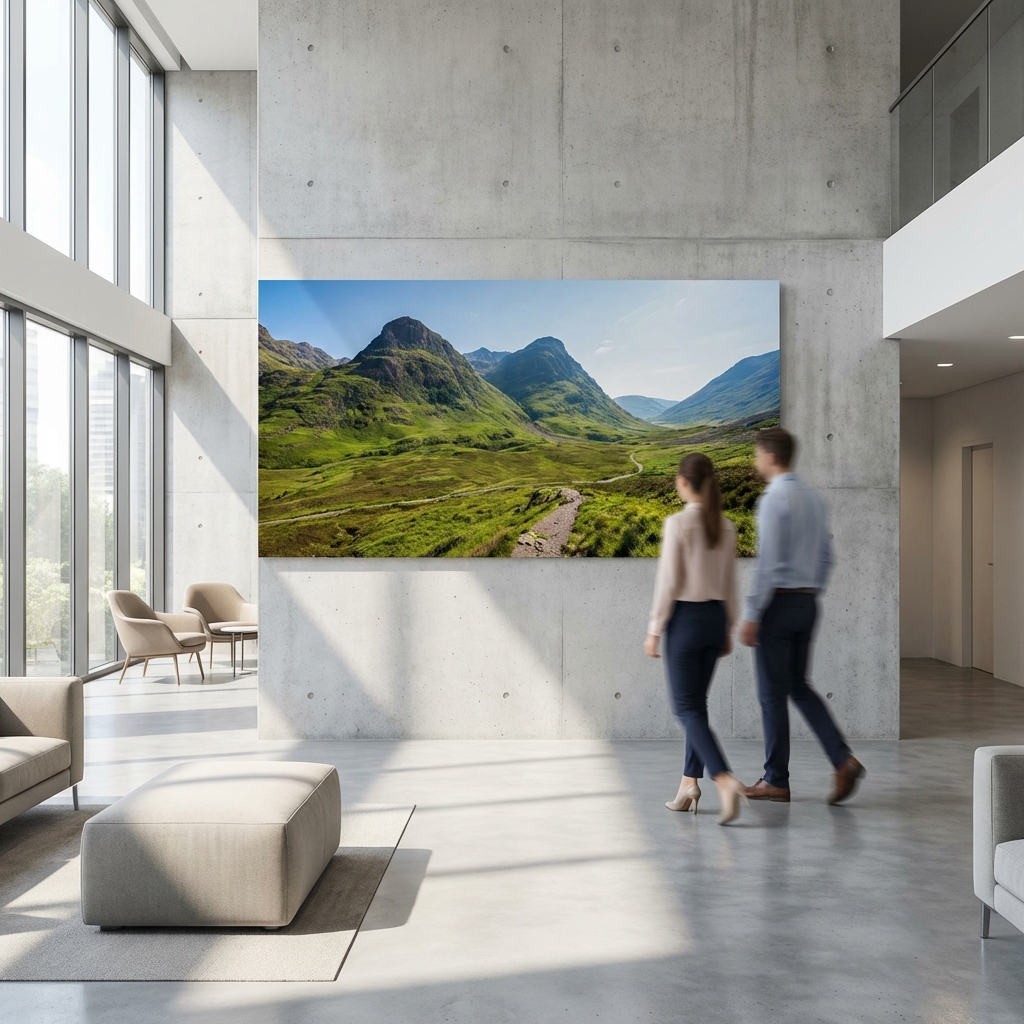
Sustainability is no longer a side benefit—it is a procurement criterion. Traditional wall coverings often rely on PVC-based materials, adhesives, and overlaminates that carry embodied carbon and generate significant waste at demolition. Offcuts, failed panels, and end-of-life tear-outs contribute to landfill volume, especially in large programs.
Direct-to-wall printing technology reduces material inputs at every stage:
- No vinyl or paper substrate to fabricate, package, or ship
- No adhesive mixing, application, or off-gassing concerns from large applied films
- Fewer misprints and rework due to final sizing changes; adjustments happen on site
- Paint-over-ready end-of-life that avoids removal waste and minimizes tenant turnover timelines
When projects avoid panelized systems, they also avoid storage and freight emissions associated with crating and shipping. That matters for national rollouts where logistics footprints scale quickly. While sustainability claims should always be grounded in project-specific data, the structural waste reduction inherent in direct-to-wall approaches is clear and aligns with broader corporate responsibility goals and material reduction strategies in green building frameworks.
For a deeper look at waste reduction comparisons, EastCoast MuralPros provides a practical overview of direct-to-wall printing vs vinyl. Facilities leaders can use these insights to inform internal sustainability narratives and to support procurement evaluations focused on total lifecycle impact rather than upfront price alone.
Implementation and Procurement: What Facility Leaders Need to Know
A high-performing graphics program is as much about process as it is about print quality. Facility directors, procurement teams, and designers can streamline delivery by clarifying scope and expectations from the start.
Recommended steps and checkpoints
- Discovery and intent: Define goals—brand, wayfinding, safety, or experience—and where graphics will live. Identify critical operational windows (after-hours, weekends, semester breaks, or phased sequences).
- Site survey and substrate assessment: Document wall conditions, lighting, and access constraints; confirm compatibility with drywall, CMU, concrete, or brick; note patch and paint needs.
- Content development and file governance: Establish brand color targets, typography, and image resolution standards for architectural scale. Use templates and preflight checklists to prevent last-minute redesign.
- Proofing and mockups: Approve calibrated test prints under site lighting; verify color accuracy and legibility distances for wayfinding or instructional content.
- Safety and compliance: Coordinate infection control risk assessments where required, confirm OSHA and site-specific safety training, and plan containment procedures to maintain egress.
- Scheduling and phasing: Book off-hours windows as needed; align with other trades (paint, patch, electrical); sequence work to minimize path-of-travel impact.
- Acceptance criteria: Define what “complete” means—edge alignment to architectural features, color tolerances, and legibility standards. Capture as-built documentation for future refreshes.
- Maintenance plan: Provide cleaning guidance and touch-up protocols. Confirm paint-over readiness and communication for future tenant or program changes.
Spec and RFP guidance
- Use performance language over prescriptive materials: Require “seam-free wall graphics printed directly to wall with cleanable finish; compatible with drywall, CMU, concrete, and brick; paint-over-ready.”
- Require schedule certainty: “Typical installation completed in under five hours per wall,” with provisions for occupied buildings.
- Demand scalability: “Consistent execution across multi-location rollouts, with centralized file governance and color management.”
- Lifecycle focus: “Reduced replacement cycles versus vinyl; paint-over end-of-life; on-site printing to eliminate shipping delays and fabrication errors.”
- Pilot-to-program path: Start with a single corridor or floor, then scale using standardized deliverables, proofing, and acceptance criteria.
EastCoast MuralPros supports procurement with clear scoping, collaborative tools for digital artists, and subscription models for planned refreshes. Whether the need is a targeted pilot or a full-campus deployment, the process is designed to limit risk while delivering design-forward, operations-friendly outcomes.
Conclusion: The Future of Commercial Wall Graphics and Branding Solutions
As organizations seek higher-performing interiors with less disruption, direct-to-wall custom wall graphics services are emerging as a practical default. They deliver what modern facilities demand: speed, seam-free execution, durability in high-traffic environments, and paint-over-ready flexibility for future change. They also offer measurable advantages over vinyl and wallpaper in material use, waste reduction, and total lifecycle cost.
The next wave of branded environments will be defined by responsiveness—how quickly a system can adapt to new programs, seasonal messaging, or evolving wayfinding needs. With on-site, high-resolution output and scalable workflows for multi-location portfolios, teams can treat walls less like static finishes and more like dynamic communication surfaces. That shift unlocks new space planning strategies, clearer occupant journeys, and environments that remain fresh without adding construction.
For decision-makers exploring sustainable wall covering alternatives that perform operationally and visually, direct-to-wall printing represents a proven, low-disruption path forward. EastCoast MuralPros partners with facilities, procurement, designers, and brand teams to make that transition predictable—from pilot to program, single wall to campus scale.
Contact us to learn more