Introduction: The Evolution of Commercial Wall Graphics Solutions
Commercial wall graphics have moved well beyond framed art, vinyl wraps, and wallpaper. Brand, facilities, and capital projects teams now expect solutions that install quickly, stand up to traffic, and scale across sites without unpredictable timelines. In response, wall printing companies have introduced direct-to-wall printing technology—delivering high-definition imagery directly onto architectural surfaces without adhesives or panel systems.
The shift is more than aesthetic. As organizations compress renovation schedules, reduce waste, and lean into experience-driven interiors, traditional wall coverings reveal limitations: seams that telegraph, materials that peel, and lengthy fabrication windows that complicate occupancy. Direct-to-wall approaches cut out shipping and mounting, making large-scale mural printing a practical alternative for hospitals, schools, workplaces, hospitality, and multi-tenant properties.
EastCoast MuralPros exemplifies this evolution, pairing on-site printing workflows with facility-aware project management. For decision-makers evaluating alternatives to vinyl wall coverings, the category promises fewer variables in the field, paint-over-ready finishes for future change, and a durable, cleanable surface that feels integrated with the building—rather than applied to it.
Understanding Direct-to-Wall Printing Technology and Its Advantages
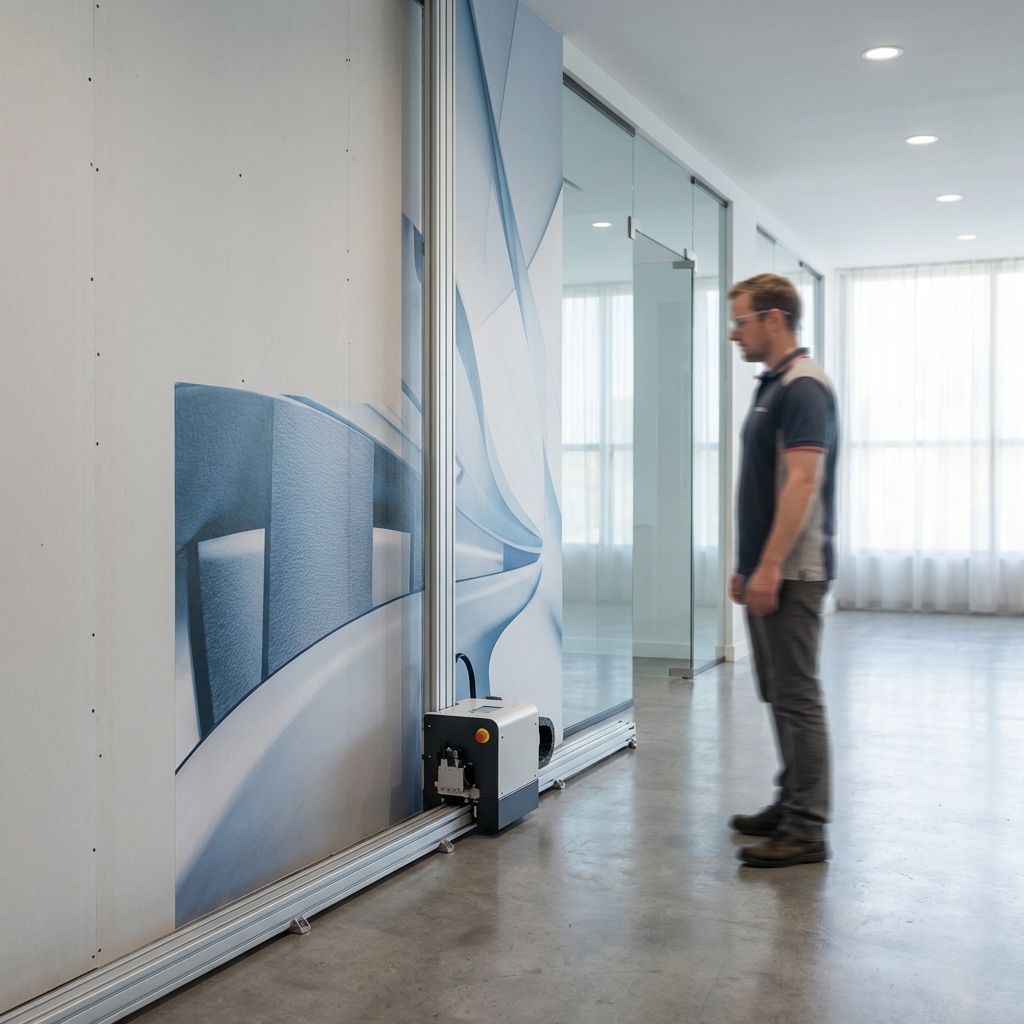
Direct-to-wall printing technology deploys precision print heads on a track or mast system that traverses the wall, laying down high-resolution imagery with UV-LED cured inks. The approach eliminates adhesive films and carrier materials entirely. Hardware can accommodate textured substrates—drywall, CMU, primed concrete, and even brick—by adjusting head height and ink laydown to the surface microtexture.
Color-managed workflows ensure design intent translates at architectural scale. ICC profiling, proofing, and preflight checks address gamut limits and scale artifacts before crews arrive on-site. For environments with daylight or disinfectant cleaning, selectable topcoats and clear inks increase abrasion resistance and cleanability without losing photoreal crispness.
Core advantages include:
- Seam-free presentation across long runs and tall walls
- Minimal odor and low disruption during curing with UV-LED systems
- High-resolution commercial wall graphics that preserve fine type, gradients, and brand color fidelity
- Paint-over-ready finishes that support tenant turnover and program updates without demolition or material disposal
- Compatibility with both finished and unfinished walls, reducing dependencies on panel backers or skim coats where not required
Beyond walls, many providers—EastCoast MuralPros among them—offer in-studio direct-to-substrate printing for doors, tabletops, and freestanding standees. That expands the toolkit for integrated experiences where wayfinding, messaging, and brand storytelling extend beyond a single plane.
How Wall Printing Companies Compare to Traditional Vinyl and Wallpaper
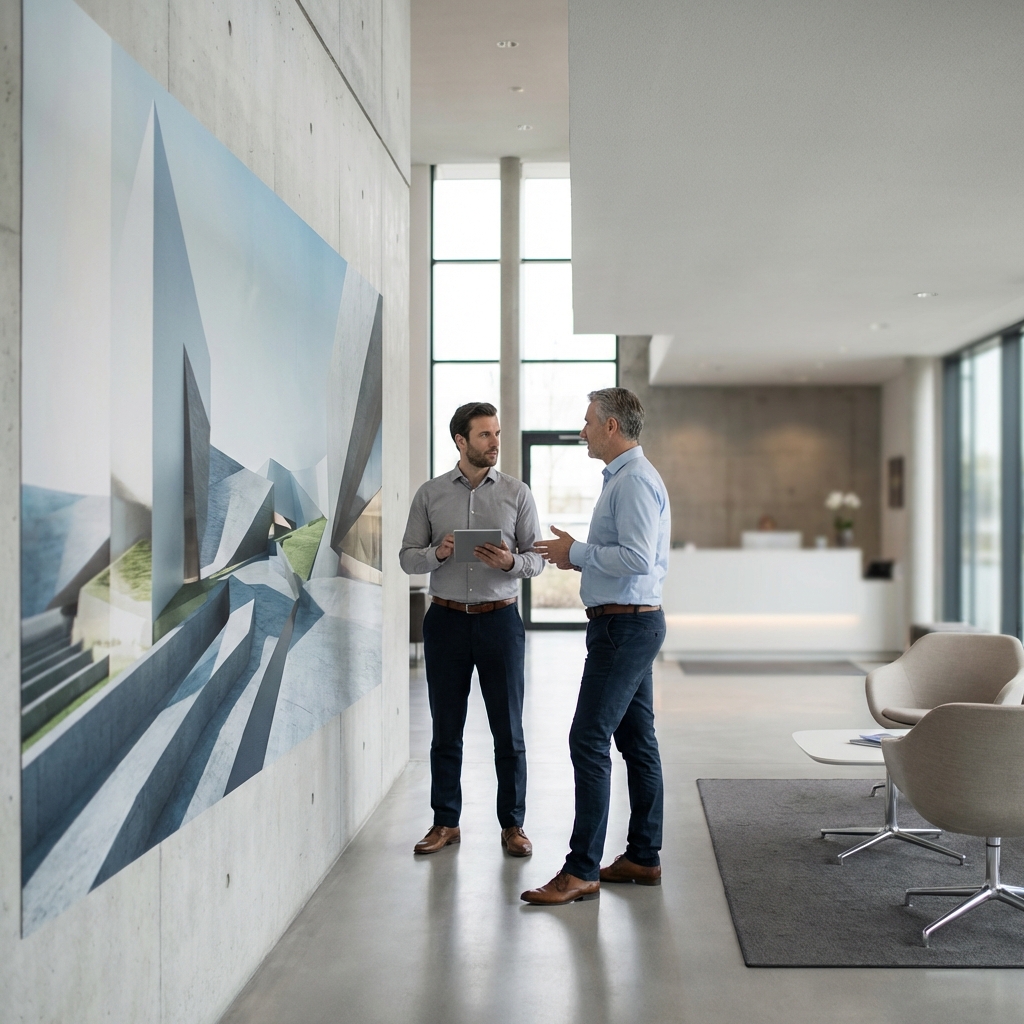
Compared against vinyl and wallpaper, direct-to-wall printing differs in materials, workflow, and lifecycle. Vinyl and wallcoverings rely on adhesives and seams; field tolerance issues—humidity, thermal swings, and substrate movement—can cause bubbling or edge lift over time. Direct-to-wall printing fuses image layers directly to the painted or primed surface, removing the adhesive variable and eliminating seam alignment as a failure mode.
Key comparison points:
- Finish quality: Direct-to-wall yields a monolithic surface with no panel breaks. Vinyl and wallpaper often reveal seams, especially on long runs or curved walls, and can telegraph substrate imperfections.
- Speed and logistics: Wallcoverings require shop fabrication, shipping, acclimation, and large staging areas. On-site printing compresses timelines—typical single-wall installs complete in under five hours—while also avoiding shipping delays and crate damage risks.
- Maintenance and refresh: Vinyl removal is labor-intensive and can damage paint or drywall; adhesive residue may require remediation. Direct-to-wall finishes are cleanable and paint-over-ready, making program changes or tenant white-boxing straightforward.
- Cost over time: Upfront unit prices may appear similar across methods, but direct-to-wall tends to reduce lifecycle costs by eliminating removal labor, waste disposal, and frequent replacements triggered by seam fatigue or adhesive failure.
Wallpaper remains appropriate for certain tactile or repeat-pattern aesthetics. Yet for high-resolution brand imagery, integrated wayfinding, and large, continuous spans, wall printing companies typically deliver a performance-based alternative that aligns with modern construction and operations realities.
Key Features to Evaluate When Selecting a Wall Printing Provider
Selecting the right partner involves more than hardware specifications. Look for operational maturity, color rigor, and a deployment model that fits your facilities and procurement processes. Consider the following evaluation criteria:
- Surface compatibility and testing: Ability to assess drywall, CMU, concrete, and brick; clear recommendations for primer/paint systems and mockup testing before rollout.
- Print capability: Native resolution, inkset (CMYK + white or clear), maximum print height/width, and methods for maintaining alignment over long runs.
- Color management: ICC profiling, brand color matching, proofing protocols, and on-site calibration for consistent results across locations.
- Durability and cleanability: Demonstrated performance with hospital-grade disinfectants and scuff resistance in corridors, lobbies, and classrooms; optional topcoat systems where needed.
- Installation in occupied spaces: Quiet operation, low-odor curing, dust control, infection prevention measures, and flexible off-hours scheduling.
- Program design support: Preflight services, tiling/scale checks, contrast verification for wayfinding and safety graphics, and accessibility-aware typography guidance.
- Project management: Clear submittals, safety documentation, insurance, background checks where required, and a single point of contact for multi-site coordination.
- Rollout experience: References for multi-location or national deployments; documentation and QC processes to ensure consistent execution.
- Change management: Paint-over-ready finishes, removal guidelines (if protective topcoats are used), and lifecycle maintenance plans.
- Value-add services: In-studio direct-to-object printing, collaborative tools to help digital artists scale their work, and subscription options for seasonal or strategic refreshes.
EastCoast MuralPros, for instance, emphasizes predictable field operations—mockups, site checks, and a streamlined approval process—so print days remain tightly scheduled and disruption is minimized.
Installation Speed and Minimal Disruption in Occupied Spaces
Occupied buildings demand quiet methods, clean job sites, and predictable time-on-wall. Direct-to-wall workflows are designed around those constraints. A typical sequence includes a pre-install site visit, surface verification, and a file preflight. On install day, the team masks edges, sets the track or mast, performs a brief surface wipe, and begins printing. With UV-LED curing, inks harden immediately, so there is no downtime for off-gassing or adhesive set.
For hospitals, schools, and corporate offices, the reduction in disruption is measurable:
- Time on site: Many installations conclude in under five hours per wall, including setup and demobilization—often scheduled after-hours or between shifts.
- Odor and noise: UV-LED systems are low-odor and comparatively quiet; air handling impacts are minimal relative to solvent-based processes.
- Footprint and safety: Crews require a compact staging area and barrier tape, not a full room closure. Because panels and adhesive buckets are eliminated, there is less physical clutter and trip risk.
Logistics also simplify. On-site printing removes shipping lead times, crate handling, and back-and-forth for panel reprints. That consolidation reduces schedule risk and eliminates costly fabrication errors discovered only after opening packaging. For facilities teams measured on uptime, this is the core value proposition: a fast, low-disruption installation that still yields architectural-scale imagery.
Durability, Maintenance, and Lifecycle Cost Considerations
Beyond first impressions, facilities leaders care about scrubbability, impact resistance, and predictable upkeep. Direct-to-wall prints form a durable film that bonds to the painted substrate, with abrasion resistance suitable for corridors, elevator lobbies, patient units, classrooms, and back-of-house areas. When paired with an appropriate base paint and, where required, a clear topcoat, the finish tolerates frequent cleaning with mild detergents and many EPA-registered disinfectants. Always confirm specific cleaners against the provider’s care guide.
Key maintenance advantages include:
- Cleanability: Smooth, non-seamed surfaces are easier to wipe down and less likely to trap soil or harbor edge failures.
- Touch-ups: Minor scuffs on surrounding paint can be spot-repaired without disturbing the printed area; selective reprinting of localized damage is often possible.
- Fade resistance: UV-LED inks show strong indoor lightfastness; for sunlit atriums, providers may specify UV-inhibiting clear coats or strategic placement.
- End-of-life: Paint-over-ready surfaces allow rapid neutralization for tenant turnover, avoiding night/weekend tearouts and adhesive remediation common with vinyl.
Lifecycle cost modeling typically tilts in favor of direct-to-wall printing. Consider avoided costs: no panel fabrication, minimal shipping, reduced installation hours, and no removal labor. Risk costs also drop—there are fewer failure modes (no seams, no adhesives), and any future reprints can be executed on-demand, on-site, without re-fabricating entire sets. For procurement teams, this predictability helps flatten maintenance budgets across fiscal years.
Scalability for Multi-Location and Enterprise Rollouts
Enterprise programs succeed when every site receives consistent color, sharpness, and schedule performance. Mature wall printing companies build their services around repeatability: standardized preflight checklists, calibrated devices, and tightly controlled installation playbooks that adapt to each building’s constraints.
Elements that unlock scale include:
- Centralized asset management: Master files, naming conventions, and revision tracking to avoid version drift across dozens of sites.
- Color governance: Shared ICC profiles and device calibration ensure brand colors and skin tones reproduce uniformly from campus to campus.
- Field logistics: Crews trained for occupied environments, union or background-checked where needed, and able to work swing or overnight shifts without expanding the footprint.
- Submittals and documentation: Shop drawings, sample prints, SDS sheets, and as-built photos for each location to satisfy facilities and compliance records.
- Program flexibility: Subscription models for seasonal or campaign-based refreshes keep content current without new construction, while pilot-to-rollout pathways let owners validate performance before scaling.
EastCoast MuralPros focuses on consistent execution across multi-location and national rollouts, a critical need for retail chains, healthcare systems, and universities that standardize visual programs. Because printing happens on-site, teams bypass the variable of common-carrier shipping, reducing schedule slip and damage claims at scale.
Applications Across Healthcare, Education, and Corporate Environments
Direct-to-wall printing earns its keep when graphics are more than decorative. In healthcare, calming imagery and intuitive wayfinding can reduce stress and improve throughput. Corridor walls, nurse stations, and family waiting areas benefit from durable, cleanable finishes that support infection prevention protocols. Safety and instructional graphics can be integrated without adding sign clutter—floor-to-ceiling visuals communicate from distance without creating protrusion hazards.
Education environments—from K–12 to research universities—use large-scale mural printing for mascots, donor recognition, STEM storytelling, and residence life culture. Brick, block, and concrete common in older schools are suitable substrates with the right prep. For a deeper dive on campus-wide strategies, see this resource on campus branding with direct-to-wall printing.
Corporate workplaces use institutional interior branding to align culture, product storytelling, and visitor experience across lobbies, labs, and meeting floors. Safety-critical environments—R&D, manufacturing, logistics—benefit from integrated wayfinding and instructional zones that remain legible at a glance and withstand heavy traffic. Hospitality and venues leverage photoreal imagery in guest corridors and conference centers, while museums and cultural institutions take advantage of crisp detail at architectural scale for exhibitions and donor walls. EastCoast MuralPros also supports in-studio printing for doors, tables, and standees, extending narratives to touchpoints that move or require replacement on different cadences.
Sustainability and Environmental Benefits of Modern Wall Printing
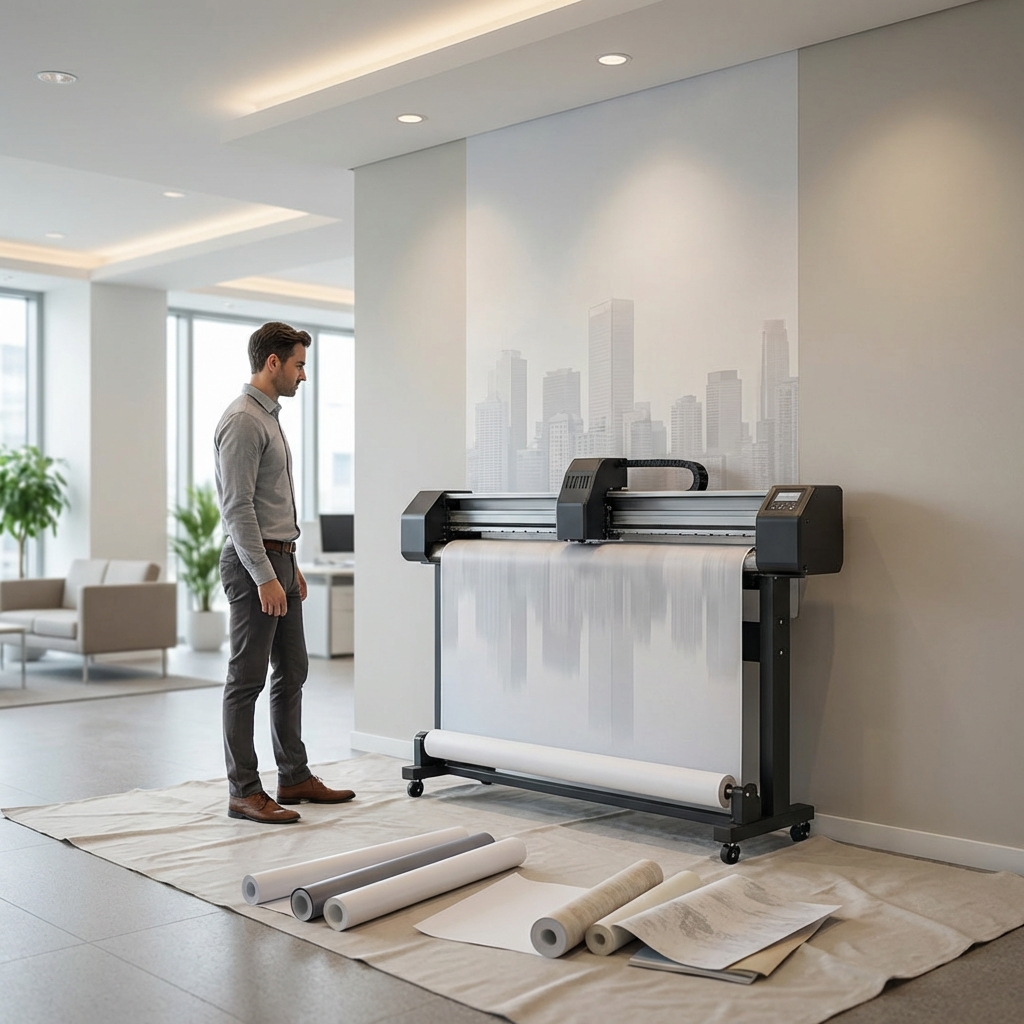
Procurement teams are increasingly tasked with reducing embodied carbon and material waste. Direct-to-wall printing eliminates PVC films, paper backers, and most adhesive chemistries used in vinyl wall coverings and wallpaper. The result is a leaner bill of materials: no liners to landfill, no shipping pallets of pre-fabricated panels, and no adhesive residue requiring solvent-based cleanup at removal.
Sustainability levers include:
- Fewer materials: No carrier layers, no seam tapes, and no adhesive buckets—just ink applied to an existing painted surface.
- Reduced transport: On-site printing removes crates and pallets from the supply chain, lowering transport emissions and risk.
- Longer service life: Durable, cleanable finishes extend the interval between replacements, minimizing churn.
- End-of-life efficiency: Paint-over-ready surfaces avoid demolition waste; debranding happens with a roller and low-VOC paint.
Ink technologies matter, too. UV-LED cured inks are low-odor and emit minimal VOCs during installation, enabling work in occupied spaces with less impact on indoor air quality. For teams evaluating material footprints, this analysis of direct-to-wall printing vs vinyl outlines the waste and sustainability trade-offs in more detail. While no single approach covers every scenario, direct-to-wall printing consistently reduces waste streams and simplifies responsible decommissioning.
Choosing the Right Wall Printing Partner for Your Organization
The best outcomes start with a clear brief and a provider equipped to deliver under real-world constraints. Use this checklist to structure your selection:
- Define the objective: Branding, wayfinding, safety/instructional, or wellness/art? Clarify performance metrics—legibility distances, color targets, cleanability, and lifespan.
- Verify surfaces: Request substrate assessments and adhesion/cleanability tests on representative walls—drywall, CMU, concrete, brick—as applicable.
- Demand proofing rigor: Ensure color targets are achievable; review scaled proofs and on-substrate samples before greenlighting a rollout.
- Confirm install methodologies: Ask about noise, odor, dust controls, infection prevention measures, and after-hours scheduling capabilities for occupied spaces.
- Plan for scale: Evaluate the provider’s multi-site project management, documentation standards, staffing model, and capacity for national or campus-wide deployments.
- Address compliance: Confirm insurance, safety training, background checks, and any union requirements; collect SDS and maintenance documentation for facilities records.
- Align on lifecycle: Discuss cleanability, repair approaches, topcoat options, and debranding protocols (paint-over readiness).
- Explore programmatic options: Consider subscription models for seasonal or strategic refreshes, collaborative tools to help digital artists scale content, and in-studio direct-to-object solutions that complement wall programs.
- Set service levels: Establish SLAs for schedule adherence, response times, and punch-list closure; document warranty terms and escalation paths.
EastCoast MuralPros aligns well with institutional buyers who value speed, predictability, and architectural integration. The company’s full-campus solutions, low-disruption installations typically completed in under five hours per wall, and performance-based alternative to vinyl wall coverings make it a practical partner for procurement-driven evaluations. To see whether the approach fits your use case, engage a pilot on a representative wall and review the result against your durability and brand standards.
Conclusion: The Future of Commercial Interior Wall Graphics
Direct-to-wall printing has matured from niche novelty to enterprise-ready tool. It addresses the limitations of vinyl and wallpaper with a cleaner, faster, and more scalable method for delivering commercial wall graphics that feel integral to the building. For organizations managing multi-site portfolios, the benefits compound: consistent execution, minimized disruption, fewer materials, and paint-over simplicity when programs change.
As wall printing companies continue refining hardware, color science, and field protocols, expect even crisper detail, broader substrate compatibility, and more integrated applications—wayfinding that eliminates sign clutter, safety and instructional graphics woven into architecture, and seasonal content refreshed through subscription models without construction. Museums, hospitals, schools, workplaces, and hospitality environments can leverage high-resolution, large-scale mural printing to transform circulation paths and gathering spaces in days, not weeks.
If your team is actively seeking alternatives to vinyl wall coverings with strong performance and lifecycle advantages, direct-to-wall printing technology merits a structured pilot. Providers like EastCoast MuralPros demonstrate how on-site printing, durable finishes, and enterprise-grade project management converge to meet the demands of modern facilities. The future of interior branding is integrated, scalable, and operationally efficient—and it’s already on the wall.
Contact us to learn more