Introduction: Why Non-Adhesive Wall Solutions Are Transforming Commercial Interiors
Across healthcare systems, school districts, workplaces, and retail portfolios, interior teams face the same mandate: improve the look and performance of spaces quickly, predictably, and at scale—without introducing disruption or costly maintenance cycles. Traditional vinyl wraps and wallpaper have been the default for decades, yet they carry constraints: they rely on adhesives, create seams and edges, and require replacement when they fail or styles change.
Non-adhesive wall murals—produced with direct-to-wall printing technology—have emerged as a practical, performance-led alternative. Instead of installing a vinyl product, teams print high-resolution graphics directly onto finished or unfinished surfaces. The result is architecture-integrated visuals with no seams, no panels, and no adhesive failure modes.
For facilities directors and procurement teams, the benefits are operational as much as visual. On-site printing shortens schedules, reduces shipping risks, and standardizes outcomes across locations. For designers, the medium unlocks photoreal, edge-to-edge wall graphics at architectural scale—without the visual clutter of overlapping panels.
EastCoast MuralPros specializes in commercial and institutional applications of this approach, helping organizations replace adhesives and panels with adhesive-free wall graphics that meet brand, facilities, and lifecycle targets. If your team is evaluating vinyl wrap alternatives or commercial wall printing solutions, the following guide outlines how non-adhesive wall murals perform and where they outperform traditional methods.
The Problem with Traditional Vinyl Wraps and Wallpaper
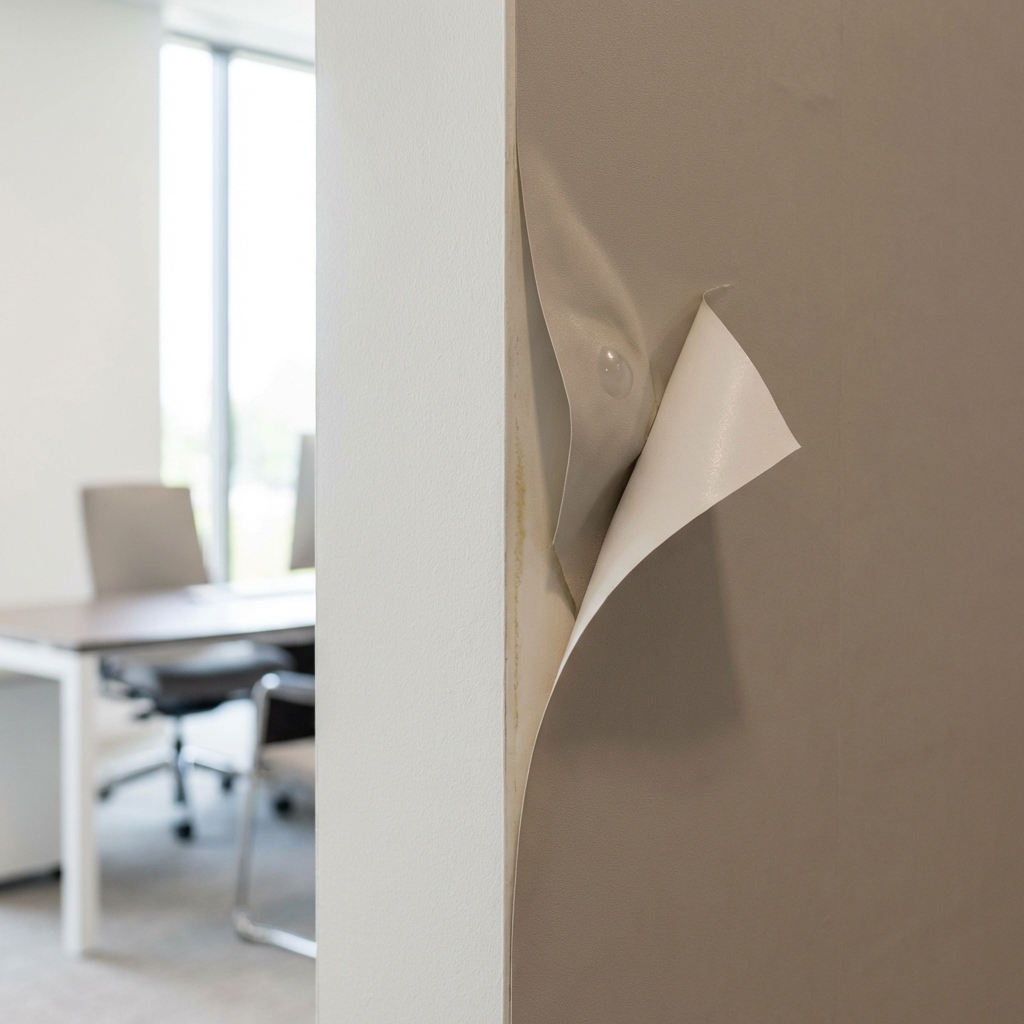
Vinyl and wallpaper can look strong out of the gate, but the lifecycle is often compressed by the realities of occupied buildings. Edges and seams invite picking and abrasion. Adhesives react to humidity and temperature swings, leading to bubbles, curling, or failure on textured or porous surfaces like CMU and concrete. Removal introduces downtime and repair costs as walls are patched and repainted.
These products also strain operations when projects scale. Multi-location rollouts multiply touchpoints: material ordering, freight, warehousing, and staging. Shipping delays and fabrication variances push schedules and introduce color inconsistency across sites. Install complexity compounds risk; curves, corners, and obstructions demand field adjustments that can leave visible overlaps or distortions.
Health and safety expectations add another dimension. Many organizations now avoid introducing additional adhesives, VOCs, and off-gassing into active care settings, classrooms, and workplaces. With traditional wallcoverings, install crews may need to work off-hours to accommodate odors and cleanup, extending timelines and labor costs.
Finally, vinyl’s end-of-life is rarely efficient. When a brand evolves or messaging changes, most vinyl goes to landfill. Frequent refresh cycles—seasonal promotions, new tenants, wayfinding updates—magnify the waste stream and the expense of recurring removals and reinstalls.
If your team has experienced these pain points—premature aging, difficult removals, unpredictable schedules—non-adhesive wall murals are designed to eliminate the underlying failure modes by removing adhesives and seams from the equation.
How Direct-to-Wall Printing Technology Works
Direct-to-wall printing brings the print engine to your site. Rather than printing on a substrate in a factory and shipping it, a mobile large-format system prints high-resolution imagery directly onto your prepared wall surface. UV-LED inks cure instantly under onboard lamps, bonding to masonry, drywall, plaster, sealed wood, concrete, and even brick.
A typical workflow combines prepress rigor with field precision:
- Site survey and material assessment to confirm compatibility (painted drywall, CMU, sealed concrete, primed brick, etc.).
- Digital preflight to validate resolution, color targets, and scaling for architectural dimensions.
- On-site calibration and small test swatches to confirm adhesion, finish, and color under local lighting conditions.
- Controlled, pass-by-pass printing in CMYK (and often white) to ensure crisp edges, smooth gradients, and accurate brand colors over large expanses.
- Optional clear coats in high-touch or healthcare zones to increase abrasion and disinfectant resistance.
Because graphics are applied in-situ, installers maintain continuous alignment across long walls, around corners, and over obstructions, producing visual continuity that panelized systems rarely achieve. There are no seams to telegraph through the design, no panels to shrink, and no adhesive cure time. Spaces can often return to normal use shortly after completion.
EastCoast MuralPros uses this process on both finished and unfinished surfaces and offers in-studio printing for non-wall elements—doors, tabletops, and standees—so brand narratives remain consistent across touchpoints. For design teams and digital artists, collaborative tools support scaling artwork to the realities of buildings: precise tiling plans are replaced with direct-to-wall proofs and real-world color checks, compressing the feedback loop between screens and space.
Key Advantages of Non-Adhesive Wall Murals for Facilities Teams
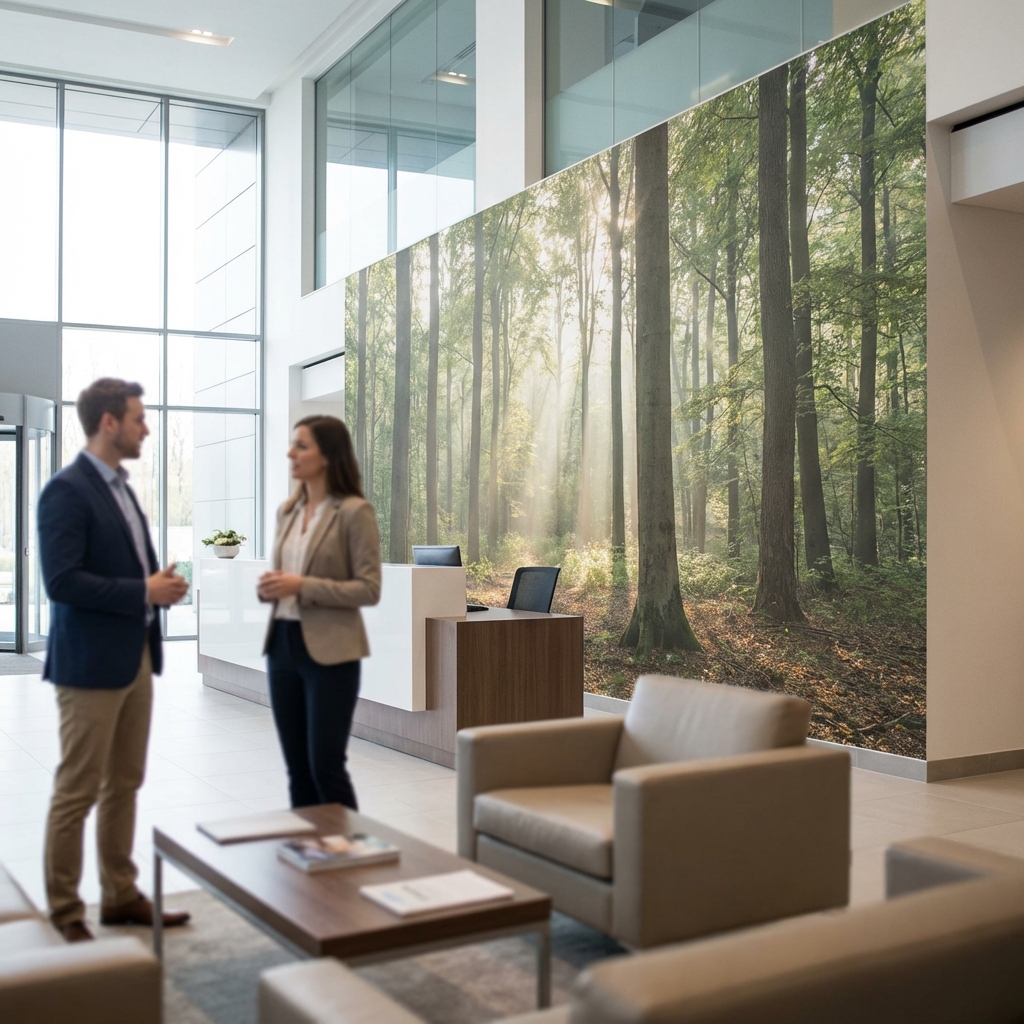
Facilities, procurement, and project managers evaluate interior graphics through the lens of operations. Non-adhesive wall murals are engineered to align with those priorities:
- Adhesive-free performance: eliminates bubbles, edge-lift, and adhesive residue; avoids VOC and odor concerns common with wallpaper pastes and adhesives.
- Seam-free execution: continuous, edge-to-edge visuals without panel lines, overlaps, or shrinkage.
- On-site production: no shipping lead times, crate damage risks, or fabrication errors; fewer handoffs and fewer variables to manage.
- Fast schedules: many installations complete in under five hours, even in occupied buildings.
- Durable, cleanable surfaces: UV-cured inks and optional protective finishes withstand cleaning protocols and high-traffic wear.
- Wayfinding without clutter: integrate directionals, safety messaging, and instructional graphics directly into architecture—no extra plaques or brackets.
- Multi-surface compatibility: print on painted drywall, CMU, concrete, brick, and more; works on finished and unfinished surfaces.
- Paint-over-ready changes: future tenants or program updates require paint, not demolition or removal.
- Lifecycle efficiency: fewer replacements, lower maintenance, and reduced downtime compared to vinyl or wallpaper.
- Predictable brand color: calibrated profiles deliver consistent hues across different substrates and sites.
- Subscription refresh options: budget-friendly, planned content updates for seasonal campaigns and strategic changeouts across campuses.
- National rollout consistency: standardized processes and QA produce repeatable results across multi-location portfolios.
For teams accustomed to navigating the uncertainties of panelized graphics, this approach emphasizes reliability and schedule certainty without sacrificing design ambition.
Installation Speed and Minimal Disruption Benefits
In many commercial and institutional settings, downtime is the most expensive line item. A hallmark of non-adhesive wall murals is the ability to finish quickly with minimal interruption to daily operations. Direct-to-wall printing is clean, quiet, and largely self-contained. There are no large tables for panel alignment, no adhesives to mix, and no lengthy curing windows.
Typical projects follow a streamlined sequence:
- Prepress and approvals are completed remotely in advance.
- Crews arrive with a mobile printer, inks, and any optional clear coat.
- After a brief calibration and a small on-wall test, printing begins.
- UV-LED curing stabilizes the image instantly; areas are often usable immediately after.
- If a protective topcoat is specified, it’s applied and cured quickly, allowing spaces to reopen the same day.
Because the process avoids rolling out large sheets or managing long adhesive seams, crews can work in tighter footprints and around operational needs. Night and weekend windows are common; many organizations complete a corridor, lobby, or meeting floor in a single off-hours session. For facilities teams coordinating with security, infection control, or classroom schedules, this reduction in touchpoints and the compressed timeline simplifies stakeholder communication.
On-site production also eliminates shipping dependencies. You avoid timeline slips from delayed crates or damaged panels and reduce the margin for fabrication inaccuracies. EastCoast MuralPros structures projects so wall measurements, color targets, and file verification are resolved up front, shortening installation day to a focused, low-disruption sprint.
Durability and Maintenance in High-Traffic Environments
Durable interior wall graphics must stand up to carts, backpacks, rolling luggage, cleaning cycles, and occasional impacts. Direct-to-wall systems use UV-cured inks formulated for abrasion and chemical resistance, producing a surface that holds color and detail under frequent cleaning. Optional protective clear coats further increase scuff resistance and facilitate disinfectant wipe-downs in healthcare, education, and foodservice environments.
Because there are no seams or edges to catch, non-adhesive wall murals resist the common failure points associated with vinyl and wallpaper. Corners and door returns—often the first places to show wear—benefit from continuous printing that wraps surfaces without introducing an edge to peel. And when a localized area is damaged, the absence of panels means touchup strategies change: you can spot-repair or schedule a quick reprint pass without replacing an entire run of material.
Maintenance protocols are straightforward:
- Dust or dry wipe as needed.
- For marks or scuffs, use mild detergents or standard disinfectant wipes; avoid abrasive pads.
- In heavy-use zones, specify a protective topcoat during project planning to increase stain resistance.
For a deeper look at how these finishes perform in demanding spaces, this overview of direct-to-wall durability benefits explains abrasion and cleanability considerations for facilities managers.
When branding or messaging inevitably changes, the surface is paint-over-ready. A standard scuff sand and prime is typically enough to create a clean slate—no adhesive removal, no wall repair from torn drywall paper, and no extended closure of corridors or rooms.
Cost Comparison: Non-Adhesive Murals vs. Vinyl and Wallpaper
Initial line-item pricing tells only part of the story. Facilities and procurement teams evaluate total cost of ownership (TCO): installation hours, disruption costs, shipping, maintenance, expected lifespan, and removal or changeout expenses. Across these categories, non-adhesive wall murals often deliver a lower lifecycle cost compared to vinyl or wallpaper.
Key cost levers include:
- Installation labor: Direct-to-wall printing reduces handling and alignment time—no panel matching, trimming, or adhesive application—compressing labor hours.
- Shipping and fabrication: On-site production eliminates crating, freight, and the risk of damaged or misprinted panels that trigger reprints and delays.
- Downtime: Faster, cleaner installs minimize operational disruption; many projects are completed outside business hours at no productivity cost.
- Maintenance: Seam-free surfaces reduce failure points; fewer repairs and replacements mean fewer work orders over time.
- Changeouts: Paint-over-ready surfaces avoid removal labor, wall repair, and landfill fees associated with spent vinyl.
- Scale efficiencies: Multi-location rollouts benefit from standardized prep, color profiles, and scheduling, producing predictable unit costs across sites.
While unit pricing can vary by region, surface, and scope, facilities teams typically find that non-adhesive solutions recapture budget over a 2–4 year horizon through reduced maintenance and changeout costs. For organizations that refresh branding seasonally or annually—retail, student life, hospitality—a subscription model from providers like EastCoast MuralPros spreads costs into predictable intervals and coordinates change windows across locations. That structure keeps spaces current without repeated capital spikes or emergency timelines.
The financial impact is also risk-related. Avoiding adhesives removes a major cause of warranty issues and tenant complaints. Fewer shipping events reduce the chance of schedule-busting delays. And standardized, repeatable execution lowers the likelihood of color inconsistency, a common source of rework and additional cost in traditional rollouts.
Design Flexibility and Seam-Free Architectural Scale Graphics
Design teams often compromise for the limits of materials: panel sizes dictate seam locations, and textures or curves cause visual breaks. With direct-to-wall printing, the building becomes the canvas. Non-adhesive wall murals deliver continuous imagery across long runs, around corners, and over complex geometries without introducing panel edges or overlap shadows.
Capabilities that matter to designers and brand owners:
- Photoreal, high-resolution output at architectural scale with crisp micro-detail for galleries, museums, and feature walls.
- White ink for underlay and overprint on darker or non-white substrates, enabling accurate brand colors on concrete, brick, or tinted paints.
- Precision alignment for typographic clarity in wayfinding and instructional graphics; room numbers, floor identifiers, and safety icons can be integrated into the architecture without signage clutter.
- Variable data and zone-specific messaging embedded into the same print session—ideal for campuses and large facilities with repeating layouts.
- Consistent color management: custom profiles per substrate keep hues predictable from site to site and room to room.
Non-wall elements can also be brought into the system. EastCoast MuralPros’ in-studio printing on doors, tables, and standees lets teams extend artwork and messaging to additional surfaces without relying on decals or panel adhesives. This is especially useful for donor recognition, exhibit captions, branded tabletops in student areas, or flexible event signage.
For digital artists and internal creative teams, collaborative tools streamline scaling artwork to real-world conditions. Large assets are preflighted for resolution at final size, color targets are soft-proofed and then verified on test swatches under site lighting, and installation proofs replace composite mockups. The net effect: the design you approve on-screen is the experience you see in space, at full fidelity.
Sustainability and Lifecycle Efficiency
Sustainability goals increasingly guide procurement decisions. Traditional vinyl and wallpaper generate substantial waste at installation and end-of-life, and they rely on adhesives and plasticized materials with challenging disposal profiles. Non-adhesive wall murals address many of these concerns at the source.
Core sustainability advantages include:
- Material reduction: Printing directly on walls bypasses PVC films, liners, and backing papers; no spent rolls or release liners head to landfill after installation.
- Lower shipping footprint: On-site production cuts freight and packaging, reducing transport emissions and damage-related waste.
- Longer useful life: Seam-free graphics resist common failure points, extending replacement intervals and avoiding recurring waste cycles.
- Clean changeouts: When it’s time to update, paint replaces removal and disposal, minimizing debris and eliminating adhesive residue.
- Operational air quality: UV-LED inks have no lengthy off-gassing period, and the process avoids wallpaper pastes and high-VOC adhesives.
If your team is assessing environmental trade-offs, EastCoast MuralPros’ comparison of direct-to-wall vs. vinyl sustainability outlines how waste streams, freight, and replacement cycles influence impact over time.
While every project’s material and maintenance profile is unique, organizations consistently gain lifecycle efficiency when they remove adhesives and panels from high-turnover interior graphics. This supports ESG reporting needs and simplifies conversations with occupants and stakeholders about material health and waste.
Multi-Location Rollouts and Brand Consistency
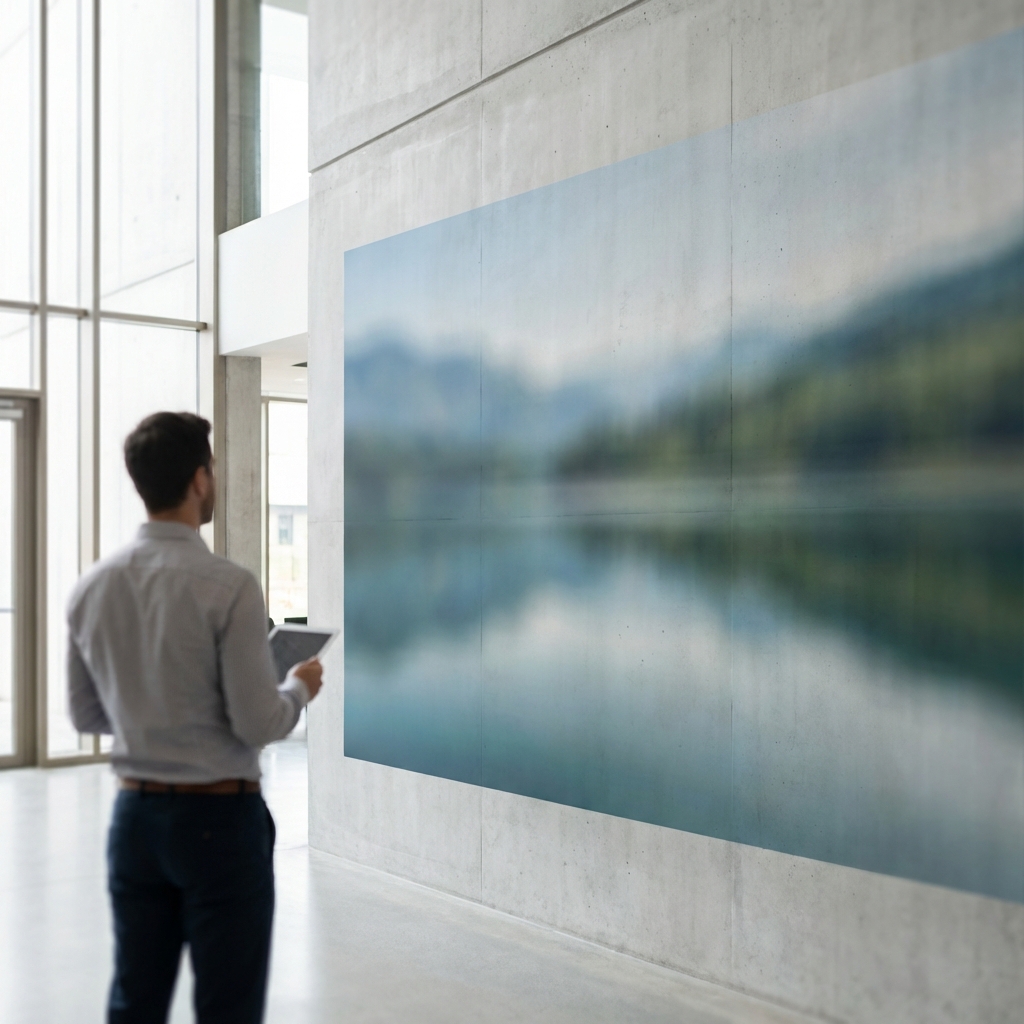
National brands, healthcare systems, and university networks need repeatable results. Variability across vendors, substrates, and installers can erode brand equity and create operational noise. Non-adhesive wall murals lend themselves to standardized execution because the core process is controlled on site with a consistent toolkit.
Program components that support scale:
- Centralized artwork libraries and naming conventions to eliminate version drift.
- Substrate-specific color profiles validated across representative wall types (painted drywall, CMU, sealed concrete, brick).
- Pilot sites to lock visual and operational standards before regional or national expansion.
- Playbooks for surface prep, sequencing, access, and protection of adjacent finishes.
- QA checkpoints with calibrated test swatches, on-wall approvals, and photo documentation.
EastCoast MuralPros structures rollouts to reduce friction for facilities and procurement teams. Because printing is performed on site, the system adapts to local conditions—lighting, wall textures, obstructions—while maintaining the same output standards across locations. This translates into consistent brand color, consistent linework and typography, and consistent scheduling assumptions from campus to campus.
For seasonal promotions or phased renovations, subscription-based refresh plans coordinate change windows across markets. Content updates are locked well in advance; install teams move through locations in a predictable cadence, keeping marketing, workplace, and facilities partners aligned without emergency work orders.
Industry Applications: Hospitals, Schools, Retail, and Corporate
Healthcare Hospitals and clinics need durable graphics that support patient experience and staff workflows. Non-adhesive wall murals integrate wayfinding into walls—color-coded paths, unit identifiers, and directional cues—reducing reliance on protruding signage that can clutter corridors. UV-cured surfaces with optional protective coats tolerate frequent disinfecting and rolling equipment traffic. Calming, photoreal imagery in waiting areas and patient rooms can be refreshed without intrusive demolition; when programs change, paint returns the space to baseline with minimal downtime.
Education K–12 districts and universities are often built with CMU block and concrete, surfaces that challenge vinyl. Direct-to-wall printing adheres and cures on these substrates, enabling mascots, values walls, lab instructions, and athletic branding at true architectural scale. Seam-free execution resists student picking at edges, and integrated instructional graphics—lab safety steps, studio protocols, makerspace rules—live on the wall without additional plaques. For campus-wide initiatives, full-floor and multi-building deployments can be coordinated during breaks, with subscription refreshes timed to academic calendars.
Retail and Hospitality Retailers require flexibility for seasonal campaigns and rapid rebrands across many locations. Non-adhesive wall murals enable large, photoreal features behind cash wraps, fitting rooms, and entry moments without the risk of peeling seams under HVAC and humidity changes. Because on-site printing eliminates shipping dependency, teams avoid last-minute delays from freight and can schedule after-hours installs to protect trading hours. Hospitality brands can brand corridors, elevator bays, and meeting floors with durable, cleanable finishes that meet housekeeping standards and change seasonally without sending pallets of spent vinyl to landfill.
Corporate and Commercial Real Estate Workplace teams use adhesive-free wall graphics to brand lobbies, create culture narratives on collaboration floors, and deliver wayfinding in large campuses. In meeting zones and huddle rooms, typographic systems and iconography applied directly to the wall avoid the visual noise of plaques and panels. For landlords and asset managers, paint-over-ready finishes are particularly useful during lease-up periods: spec suites can be branded quickly for tours and then reset for the next tenant without removal costs. Building amenities—fitness centers, cafes, and community spaces—benefit from durable, cleanable surfaces that endure daily traffic.
Museums and Cultural Institutions Curators and exhibit designers demand fidelity. Non-adhesive wall murals produce crisp, photoreal reproductions for didactics, supergraphics, and immersive environments, with white ink enabling accurate color on specialty primed walls or darker base coats. Because exhibits often load in and out on compressed schedules, the speed of direct-to-wall printing supports tight changeovers. Donor walls and gallery tables can be finished in-studio for cohesive exhibits without adhesive-based panels that age poorly under strong lighting.
Public Sector and Safety Communication Transit hubs, municipal buildings, and public campuses need graphics that are visible, legible, and resilient. Direct-to-wall printing supports integrated safety and instructional systems—evacuation maps, code signage, and zoning identifiers—without creating additional sign clutter or maintenance burdens. Seam-free execution stands up to daily wear, and changes can be implemented in phases to maintain services.
Across these sectors, the same operational themes recur: finish quickly, minimize disruption, deliver high-quality visuals, and reduce lifecycle costs. Non-adhesive wall murals align with those requirements while giving designers the freedom to think beyond panels.
Conclusion: Why Non-Adhesive Wall Murals Are the Future of Commercial Branding
Interior environments now change as fast as brand strategy, tenant mix, and public health guidance. Solutions that rely on adhesives and panels struggle to keep pace. Non-adhesive wall murals, produced with direct-to-wall printing technology, combine architectural integration with operational certainty: fast installs, seam-free visuals, durable and cleanable finishes, and paint-over-ready updates.
For facilities teams, the advantages are tangible—shorter schedules, fewer variables, and lower lifecycle cost. For designers and brand owners, the medium unlocks photoreal, high-resolution imagery at true architectural scale with predictable color across locations. And for procurement and sustainability leaders, reduced material waste and clean changeouts support longer-term goals without compromising performance.
Organizations adopting this approach are standardizing how they deliver interior graphics across hospitals, schools, workplaces, and retail portfolios. EastCoast MuralPros partners with these teams to plan pilots, tune workflows, and scale nationally with consistent results. If your next rollout needs adhesive-free wall graphics that are fast, durable, and design-forward, the next-generation alternative to vinyl is already on the wall.
Contact us to learn more