Introduction: Why Commercial Spaces Need Modern Wall Graphics Solutions
Professional Wall Printing Services: The Modern Alternative to Vinyl and Wallpaper
Commercial interiors have to do more than look good. Today’s campuses, healthcare systems, workplaces, retail networks, and public institutions rely on walls to communicate brand, direct people, support safety, and adapt to rapid change. Leadership teams expect solutions that are fast to deploy, durable in high-traffic settings, and predictable across multiple sites—all while reducing waste and avoiding construction-level disruption.
Professional wall printing services emerged to meet that bar. By producing high-resolution imagery directly on finished or unfinished surfaces, these systems deliver seamless, architectural-scale graphics without adhesives, panels, or long install windows. For organizations under pressure to modernize quickly, direct-to-wall printing technology provides a performance-based alternative to vinyl wall coverings, wallpaper, and one-off decorative murals.
EastCoast MuralPros is among the providers leading this shift, offering institutional-grade execution, on-site printing, and integrated solutions that serve facilities directors, procurement teams, and design partners. The result: branded environments and information systems that look intentional, install quickly—often in under five hours—and stand up to real-world use.
Traditional Wall Covering Methods and Their Limitations
Vinyl wraps, wallpaper, and hand-painted murals have been the default for decades, but each carries significant trade-offs that are difficult to reconcile with modern operational requirements.
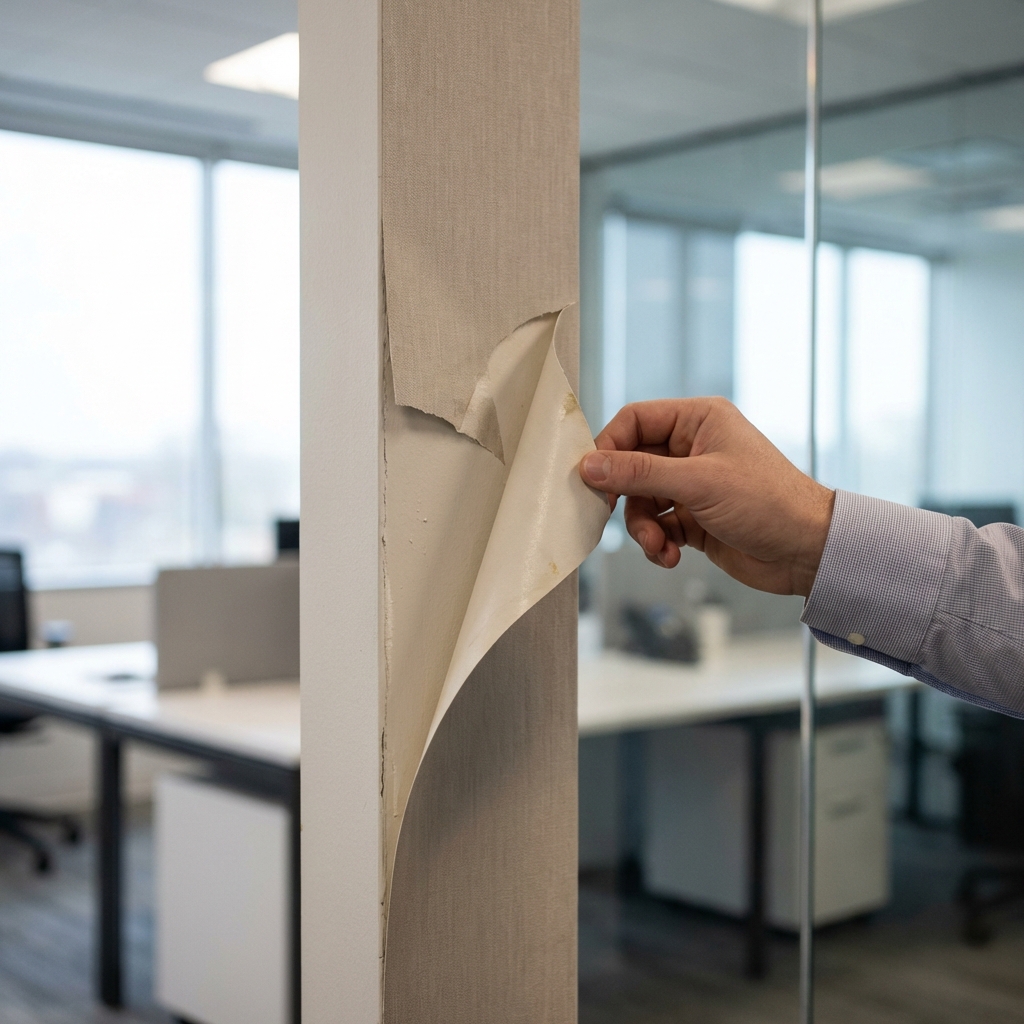
- Vinyl wall coverings: Depend on adhesives and seams. Over time, seams can telegraph, edges can peel, and bubbles can form—especially around HVAC diffusers, corners, and substrate transitions. Installation requires careful panel alignment, often a multi-day process for larger areas. Replacement cycles generate recurring material waste and disruption.
- Wallpaper: Offers pattern variety, but seams, paste, and surface sensitivity limit lifespan in high-traffic or high-touch zones. Humidity and temperature swings accelerate aging. Removing and replacing wallpaper between tenants can be messy, time-consuming, and costly.
- Hand-painted murals: Capable of beautiful results, but timelines stretch due to artist availability, staging, and dry-times. Reproducing the same visual across multiple locations is challenging, and maintenance can be inconsistent. For teams managing brand compliance or schedules across a portfolio, bespoke painting introduces risk.
These approaches also add freight, packaging, and on-site storage to the mix. Every panel shipped is a potential point of delay or damage. For organizations seeking predictable outcomes, especially across campuses and national footprints, traditional methods make it hard to control schedule, lifecycle cost, and quality.
How Direct-to-Wall Printing Technology Works
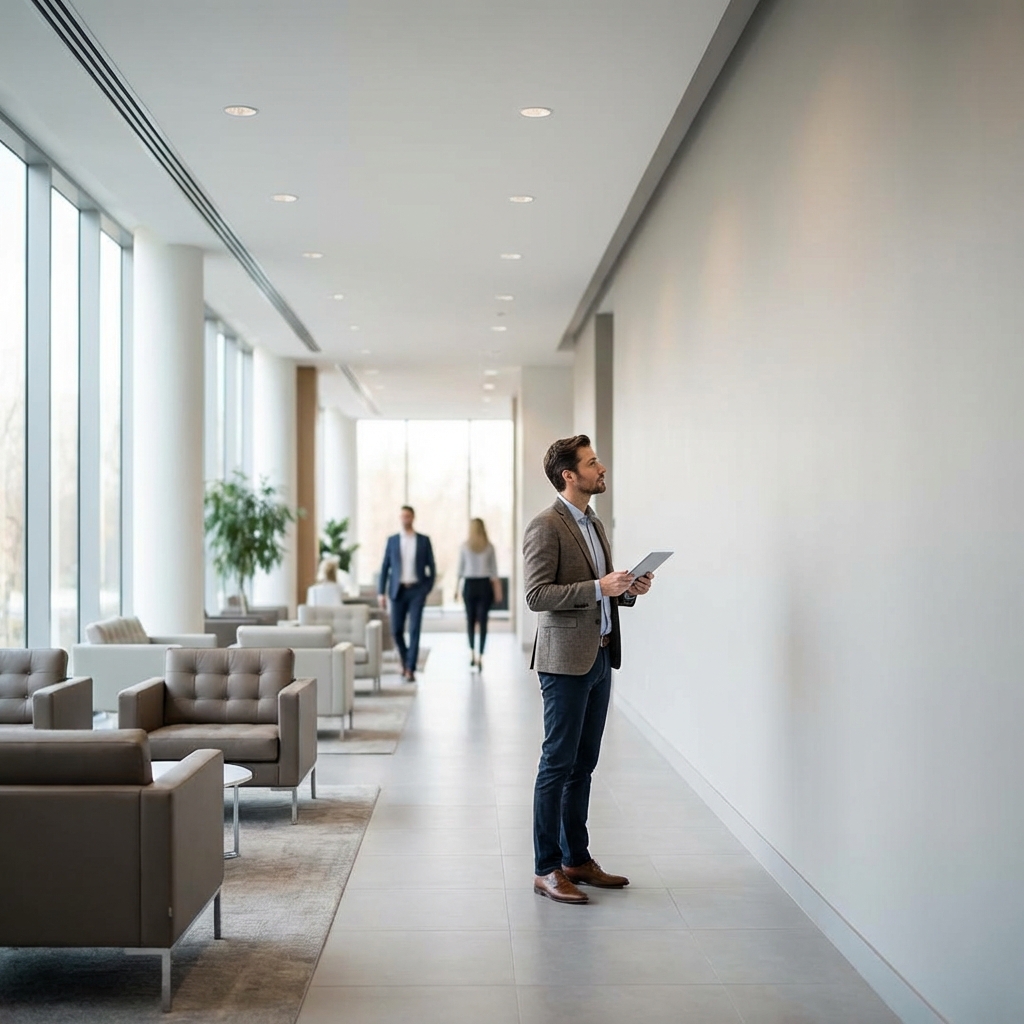
Direct-to-wall printing technology brings the production process on-site, depositing high-resolution imagery directly onto the wall. At a high level, a mobile printer traverses the surface, using UV-curable or similar inks that cure instantly under integrated lamps. The result is a crisp, seam-free mural that becomes part of the wall—not a layer applied on top.
Several capabilities make this possible:
- Surface mapping and calibration: The system accommodates subtle surface irregularities found in drywall, CMU block, concrete, and even brick. Variations in texture are accounted for during setup to maintain print head distance and detail.
- Color-managed output: Artwork is profiled to target brand colors and photographic fidelity. Custom profiles and test patches are used to validate results before production runs, an essential step for brand and facilities teams.
- Minimal prep and masking: Because the print occurs on-site, there’s no panel handling or adhesive application. Floors and adjacent finishes are masked, alignment is laser-checked, and then the wall is printed in sections for continuous, seamless coverage.
- Instant curing and immediate usability: Prints cure as they’re laid down, creating durable, cleanable surfaces that resist scuffs and handle daily cleaning protocols. Most spaces return to service the same day.
- Paint-over-ready finishes: When programs change or tenants turnover, walls can be primed and repainted without stripping panels or adhesives.
By eliminating shipping and pre-fabrication steps, on-site printing reduces points of failure and shortens timelines. EastCoast MuralPros leverages this process to remove common bottlenecks—no waiting on freight, no mis-cut panels—so projects stay on track and teams can move forward with confidence.
Key Advantages of Professional Wall Printing Over Vinyl and Wallpaper
Shifting from adhesives and panels to professional wall printing services yields advantages that compound over the project lifecycle.
- Seam-free, architectural-scale coverage: Continuous imagery across entire elevations without panel breaks or alignment risk. This elevates the perceived quality of a space and integrates visuals into the architecture.
- Faster project delivery: Installations are typically completed in under five hours per wall, which protects schedules and reduces after-hours staffing costs. On-site printing eliminates shipping delays and fabrication errors.
- Adhesive-free durability: No glue to off-gas or fail. Cured inks form a robust, cleanable surface suitable for high-traffic corridors, lobbies, classrooms, and patient areas.
- Minimal disruption: Low-noise equipment, compact staging, and same-day return-to-service make the process fit for occupied buildings—critical for healthcare, higher education, and corporate workplaces.
- Performance and lifecycle efficiency: Reduced failure points translate to longer service life and fewer maintenance calls. When it’s time to refresh, the wall is paint-over-ready rather than trapped under layers of adhesive.
- Surface compatibility: Finished and unfinished substrates—drywall, CMU, concrete, and brick—can be printed directly, broadening design options without added build-out.
- Cost predictability at scale: Consistent execution across multi-location and national rollouts supports procurement planning, brand governance, and stakeholder buy-in.
For a closer look at performance in high-traffic environments, see EastCoast MuralPros’ overview of Direct-to-wall printing benefits.
Applications Across Commercial and Institutional Environments
Direct-to-wall printing is versatile by design. It supports durable interior branding solutions and mission-critical communication across sectors where timelines, cleanliness, and scale matter.
- Corporate real estate and workplaces: Elevate lobbies, collaboration zones, and conference suites with brand narratives, culture walls, and privacy-friendly textures. Seam-free execution helps modernize dated spaces without construction.
- Retail and multi-location brands: Deploy seasonal campaigns, product storytelling, and immersive backdrops with consistent color and quality across stores. Subscription models enable quarterly refreshes aligned to merchandising calendars.
- Healthcare systems and medical facilities: Support wayfinding, patient experience, and caregiver communication while minimizing clutter. Cleanable, durable walls perform in corridors, waiting areas, and family spaces.
- Education—K–12 and higher ed: Execute full-campus solutions that blend identity, athletics, donor recognition, and instructional graphics into a coherent system. See ideas for large-scale campus programs in Campus branding with high-res printing.
- Hospitality and hotel operators: Refresh corridors and guest touchpoints between occupancy windows. Photoreal textures and regional artwork at architectural scale create distinctive, brand-right environments.
- Commercial landlords and asset managers: Accelerate lease-up with differentiated amenity spaces and marketing suites. Paint-over-ready finishes simplify turnover without costly demos.
- Museums and cultural institutions: Install high-resolution mural printing that meets curatorial standards—photoreal imagery, crisp typography, and exhibit graphics that update between shows without panel inventory.
- Public-sector and institutional owners: Implement placemaking, community storytelling, and safety messaging with scalable, low-disruption deployment.
Complementary capabilities extend beyond walls. EastCoast MuralPros offers in-studio printing for doors, tables, and standees—useful for exhibitions, pop-ups, and wayfinding totems—and collaborative tools that help digital artists scale their work from screen to architectural scale.
Installation Speed, Durability, and Minimal Disruption Benefits
Operations and facilities teams prioritize schedule certainty and occupant safety. Direct-to-wall printing is structured to respect both.
- Streamlined workflow: A typical engagement includes a site survey, substrate assessment, and small test print for validation. Artwork is preflighted for resolution and color. On installation day, crews mask, align, and print with minimal staging—often completing a wall in under five hours.
- Occupied-building friendly: Equipment has a compact footprint and low noise profile, making it suitable for overnight or off-peak windows. Because there are no adhesives or large panels, there’s less material handling and less chance of incidental damage to the space.
- Immediate return-to-service: Cured inks are ready for light cleaning shortly after printing. Hallways re-open, suites turn over, and instructional areas return to use the same day.
- Built for high-traffic environments: Printed surfaces are designed for routine cleaning and contact. Scuff resistance, colorfastness, and cleanability contribute to lower maintenance calls and fewer premature replacements; cleaning procedures should follow the facility’s standard protocols and the printer’s care guidance.
- Future-proofing: Graphics are paint-over-ready, which makes tenant transitions and program changes straightforward. There’s no adhesive removal phase, no panel waste, and no lingering residue to address.
For institutions that cannot afford downtime—hospitals, academic buildings in session, 24/7 workplaces—this low-disruption model is often the deciding factor.
Scalability for Multi-Location Brand Rollouts and National Campaigns
Rolling out commercial wall graphics across a portfolio is as much an operational challenge as a creative one. Professional wall printing services support the process with consistency, coordination, and data.
- Color and brand control: Calibrated profiles, spot-color matching for key brand hues, and proofing protocols help maintain visual fidelity across regions and substrates. Reference panels and approval paths reduce subjective discrepancies.
- Repeatable methods of procedure (MOPs): Standardized site surveys, substrate prep guidelines, and QA checklists yield similar results from location to location—even when surfaces differ (e.g., drywall in one store, CMU in another).
- Centralized project management: Scheduling, artwork version control, and stakeholder sign-offs flow through collaborative portals. Facilities, brand, and procurement teams gain visibility into statuses, constraints, and dependencies.
- Efficient field logistics: On-site printing removes the need to ship panels to every destination, cutting lead-time variability and risk of in-transit damage. Crews arrive with the equipment and consumables needed to produce on the spot.
- Subscription-based refreshes: For brands with seasonal storytelling or universities with evolving campaigns, subscription models fund planned updates, keep spaces current, and spread costs predictably across fiscal periods.
EastCoast MuralPros structures programs to execute consistently across multi-location and national rollouts, giving teams a clear path from pilot to scale without sacrificing quality or schedule.
Sustainability and Lifecycle Cost Advantages
Environmental impact and total cost of ownership are increasingly central to procurement decisions. Direct-to-wall printing technology addresses both.
- Material reduction: No vinyl, no wallpaper, and no adhesive mean substantially less plastic, liner waste, and packaging. On-site production eliminates panel scrap and reduces the volume of inbound freight.
- Fewer replacements: Durable, cleanable finishes extend service life, which reduces replacement frequency and the associated labor, materials, and hauling. Lower churn translates to lower emissions over time.
- Streamlined turnover: When it’s time to change, paint-over-ready walls avoid demolition and adhesive removal. Labor hours drop, spaces re-open faster, and there’s little to no landfill-bound panel waste.
- Logistics efficiency: Eliminating long-distance shipments cuts transport-related emissions and the risk of project delays due to damaged goods or mis-shipments.
- Portfolio-level savings: Lifecycle modeling consistently shows that longer service intervals plus faster refreshes reduce the real cost per year of service. For owners managing dozens or hundreds of sites, the compounding effect is significant.
Compared to wallpaper and vinyl, this approach is much more sustainable, especially at scale. It aligns with ESG priorities while meeting the practical demands of facilities and operations teams.
Design Flexibility and High-Resolution Quality Standards
Design intent shouldn’t be compromised by production limits. High-resolution mural printing delivers photoreal imagery and razor-sharp typography at architectural scale, achieving outcomes often impossible with seamed materials.
- Crisp detail at size: Files prepared at 100–150 ppi at final dimensions (or higher where feasible) yield photographic clarity. Vector artwork for logos and typography ensures edge precision.
- Seam-free compositions: Panoramas, gradients, and large-format photography flow uninterrupted across long runs and around architectural features, elevating perceived quality.
- Texture-friendly output: Printing directly onto CMU, concrete, or brick lets designers leverage existing textures as part of the composition, blending brand and architecture.
- Color management: ICC profiling, soft proofs, and on-site test patches help align expectations. Spot colors and brand-critical hues can be tuned through iterative profiling.
- Integrated program elements: Designers can carry motifs across halls, up stairwells, or around columns to form cohesive narratives. This is supported by precise registration and equipment capable of vertical and horizontal tracking.
- Artist collaboration: Digital artists can scale work confidently using templates, preview tools, and preflight guidance. EastCoast MuralPros supports this through collaborative workflows that translate screen-native art into built-space clarity.
- Complementary assets: In-studio printing on doors, tables, and standees lets teams create layered experiences—exhibit labels on tabletops, brand totems near entries, or portable messaging that echoes wall themes.
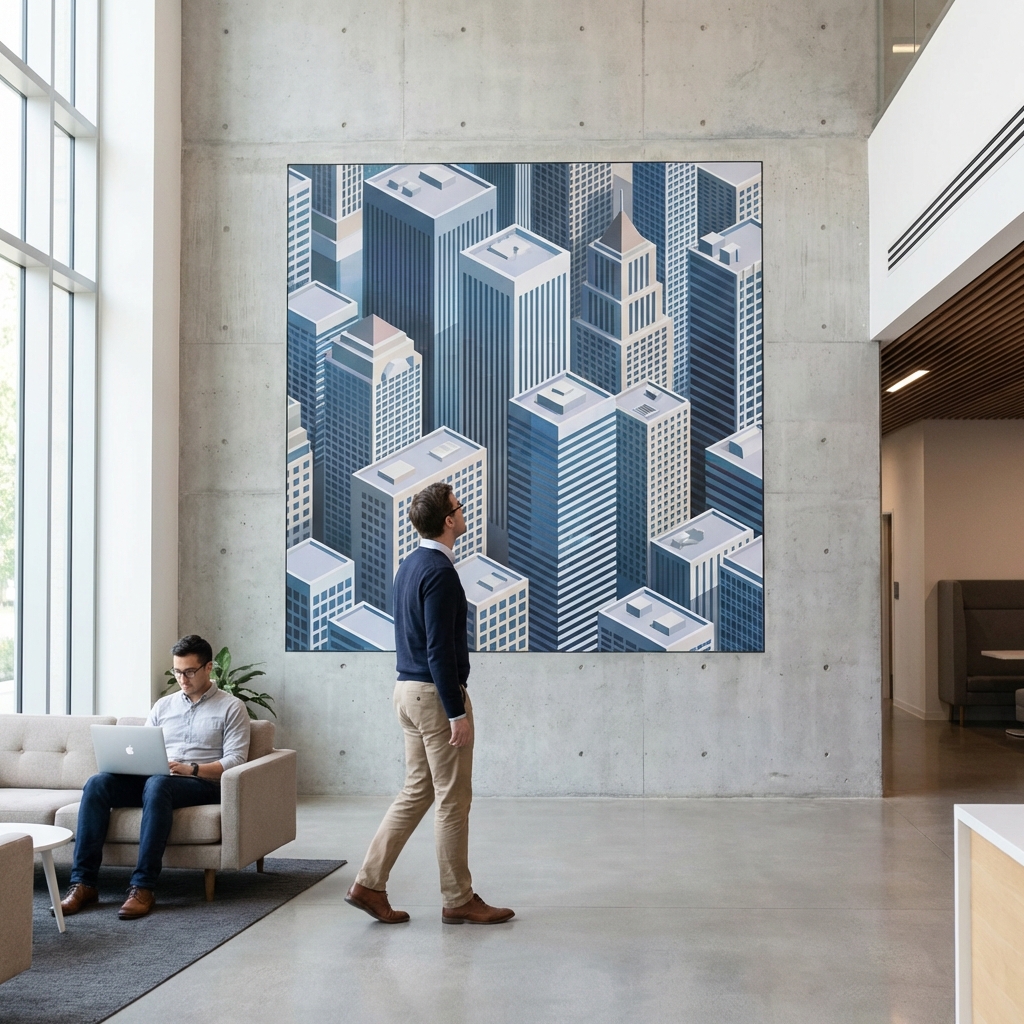
When the goal is premium, gallery-caliber visuals—such as in museums and cultural institutions—professional wall printing services offer the fidelity and finish quality curators expect.
Wayfinding and Instructional Graphics Integration
Walls are underused real estate for wayfinding, safety, and instructional content. Direct-to-wall printing turns corridors and transition zones into clear, intuitive guidance systems without adding sign clutter.
- Legible hierarchies: Large numerals, color-coded zones, and consistent iconography can be printed directly onto walls adjacent to decision points. Typography is crisp and visible from distance, aiding quick comprehension.
- Flow and behavioral cues: Arrows, footprints, and gradient paths can be embedded along routes to guide visitors through lobbies, clinics, or academic buildings. These elements are durable and easy to clean.
- Safety and instructional overlays: Handwashing reminders, equipment instructions, or emergency egress cues can be integrated where attention is highest—inside rooms, near elevators, or along exit routes—reducing reliance on temporary signs.
- Campus-scale systems: Universities and K–12 districts can deploy integrated wayfinding across multiple buildings, aligning with brand standards while improving student and visitor navigation. For strategy and examples, see EastCoast MuralPros’ perspective on Campus branding with high-res printing.
- Easy updates: When departments move or programs change, paint-over-ready finishes allow selective refreshes without full system re-installation.
Facilities teams gain a dual benefit: walls that elevate the environment and also make it easier for people to find their way, learn, and act safely.
Choosing the Right Wall Printing Partner for Your Organization
Selecting a provider is a facilities and procurement decision, not just a creative one. A capable partner will demonstrate reliability, schedule certainty, and measurable performance.
Key evaluation criteria:
- Technology and media expertise: Ask how the team manages varying substrates (drywall, CMU, concrete, brick), wall textures, and height constraints. Request details on curing systems, safety measures, and finish characteristics.
- Color and quality control: Look for ICC color management, spot-color matching processes, and on-site proofing protocols. Review case studies showing brand consistency across multiple locations.
- Occupied-building execution: Confirm methods for low-disruption installs—masking, equipment footprint, noise levels, and same-day return-to-service practices. Seek references from healthcare or education clients if relevant.
- Durability and maintenance guidance: Request documentation on cleanability, abrasion resistance, and recommended maintenance. Clarify warranty terms and service response times.
- Program management at scale: For multi-site rollouts, probe scheduling capacity, standardized surveys, QA checklists, and communication workflows. Ensure there’s a clear path from pilot to national deployment.
- Design collaboration and preflight: Evaluate file-prep templates, resolution standards, and review portals. For digital artists and internal design teams, confirm that collaborative tools support architectural scaling.
- Safety and compliance coordination: The vendor should coordinate with your facilities and risk teams regarding access, equipment staging, and building protocols. Insurance and site-specific plans are table stakes.
- Lifecycle and sustainability: Ask for lifecycle cost comparisons against vinyl/wallpaper, and documentation of waste and shipping reductions that support ESG reporting.
EastCoast MuralPros aligns with these criteria, providing direct-to-wall printing technology, full-campus solutions for schools and hospitals, and consistent execution across national rollouts. The firm’s on-site production model, paint-over-ready finishes, and durable, cleanable outputs make it a strong fit for organizations seeking predictable, high-quality results. For more, visit eastcoastmuralpros.com.
Conclusion: The Future of Commercial Interior Branding
Commercial interiors are shifting away from adhesive-heavy wall coverings and toward integrated, performance-based solutions. Professional wall printing services meet this moment with seam-free visuals, rapid installation, and durability suited to high-traffic environments. They compress project timelines, simplify maintenance, and unlock portfolio-scale consistency—while keeping options open with paint-over-ready finishes.
For institutions balancing brand, wayfinding, and operations, direct-to-wall printing technology isn’t just another decorative option. It is a durable interior branding solution that aligns with how facilities are managed today: quickly, predictably, and with lifecycle efficiency. Teams that adopt this approach gain speed, design freedom, and measurable cost and sustainability advantages—across a single wall, a full campus, or a national portfolio.
Contact us to learn more