Photoreal Imagery at Architectural Scale for Professional Environments
7 Best High-Definition Wall Murals for Commercial Spaces and Institutions
Commercial interiors are under pressure to do more with every square foot—guide people, reinforce brand values, boost tenant satisfaction, and adapt quickly to change. High-definition wall murals have become a cornerstone of that strategy, but the execution method matters as much as the design. Traditional vinyl wall coverings and wallpaper often peel, bubble, trap dirt at seams, or require lengthy installation windows that disrupt operations. Hand-painted murals can look great but are hard to scale, frequently schedule-bound, and inconsistent across locations.
Direct-to-wall printing technology changes the equation. By placing photoreal artwork, branding, and wayfinding directly onto finished or unfinished surfaces—without adhesives or seams—teams can deliver a design-forward result with predictable speed, durability, and lifecycle value. EastCoast MuralPros specializes in this approach for commercial landlords, healthcare systems, schools, retail brands, corporate workplaces, hospitality, museums, and other institutional owners. Installations are typically completed in under five hours, on-site printing eliminates shipping delays and fabrication errors, and the result is a cleanable, seam-free surface that can be painted over when programs or tenants change.
Below are seven of the best use cases and capabilities of high-definition wall murals for commercial and institutional environments—focused on performance, not just decoration.
The impact of a mural is defined by two things: fidelity and scale. High-definition wall murals bring the two together in a way vinyl panels and pieced graphics often can’t. With direct-to-wall printing, photographic images, 3D visualizations, detailed maps, and intricate brand textures appear crisp at lobby distances and stand up to close-up inspection in corridors and patient rooms.
What makes photoreal work at this size:
- Color-managed workflows that maintain brand consistency and tonal nuance from digital file to wall.
- Seam-free imaging so gradients, faces, landscapes, and typography appear uninterrupted across long runs.
- Fine-line accuracy for technical diagrams, architectural drawings, and complex icon systems.
Professional environments benefit when visuals feel integrated with the architecture rather than stuck on top of it. In a hotel lobby, a panoramic cityscape can set the property’s tone. In a corporate reception area, a product macro or innovation timeline builds credibility at first impression. In museums and cultural institutions, gallery-quality reproductions provide immersive context without the build-out of temporary walls or casework.
For design teams, the file pipeline is straightforward. Vector files scale infinitely, while photography and raster art render best when prepared at a viewing-appropriate effective resolution. A good rule of thumb is to design at the largest planned size and let the production team optimize at preflight. EastCoast MuralPros collaborates directly with digital artists and brand agencies, offering tools that help creatives scale their work to architectural dimensions without compromising detail or color fidelity.
Beyond walls, in-studio printing on doors, tables, and standees extends a narrative consistently across an environment. Imagine a campus visitor center where a large wall mural maps the institution’s history while branded tabletops and wayfinding standees pick up the same visual system. The entire experience reads as one identity, executed purposefully across touchpoints.
The end result is a compelling, professional-grade canvas that does not rely on panel seams or adhesive films to look finished. It’s a precision print that feels like part of the building.
Seamless Installation Without Vinyl or Adhesive Solutions
Most frustrations with commercial wall graphics trace back to adhesives, panels, and the seams they create. Direct-to-wall printing removes those failure points. No adhesive means no bubbling, lifting, or edge catching. No panel seams means no visual breaks, no dirt-catching overlaps, and no alignment surprises at installation.
A typical installation process:
- Site assessment: Verify surface type, lighting, environmental constraints, and access.
- Surface prep: Wipe down dust and debris; minor patching where needed. Compatible substrates include drywall, CMU, concrete, and brick—finished or unfinished.
- Print staging: Calibrate color and registration; mask baseboards and sensitive edges as required.
- On-site printing: A mobile direct-to-wall system images the design continuously across the surface.
- Quality check and turnover: Inspect for consistency and edge cleanliness; remove masking and reopen the area.

Because there is no vinyl to unroll, cut, or panel-match, installation is fast and predictable—often completed in under five hours, even in occupied spaces. The low-disruption workflow is ideal for hospitals, schools, offices, and retail, where access windows may be limited to nights or short maintenance blocks.
Edge conditions, corners, door frames, and penetrations are where vinyl systems typically need trimming and are more prone to damage. Direct-to-wall printing handles these with precision, imaging right up to reveals and architectural interruptions without creating adhesive stress points. This results in a cleaner finish around built-ins, glazing, and equipment.
Another advantage is paint-over readiness. When tenants change or departments rebrand, facilities teams can prep and repaint just as they would any wall—no removal of adhesive films, no scraping of backing paper, and no patching from delaminated drywall. For landlords and property managers managing turnover, that’s a notable schedule and cost benefit.
Finally, on-site printing eliminates the logistics and risk associated with shipping large-format panels. There are no crate delays, no bent corners, and fewer opportunities for error between fabrication and field conditions. What was approved in preproduction is executed in place, at full scale.
Durable, Cleanable Surfaces Built for High-Traffic Facilities
Commercial and institutional interiors demand longevity. Corridors, patient waiting areas, dining halls, and transit concourses are continually touched, bumped, and cleaned. High-definition wall murals produced with direct-to-wall printing technology are engineered to hold up under that pressure while maintaining image quality and color integrity.
Durability shows up in several ways:
- No seams for dirt to accumulate and no edges to snag, peel, or darken.
- A hard-wearing, cleanable finish that resists scuffs and routine wear in high-traffic locations.
- Graphics that remain legible and bright after repeated cleaning with non-abrasive agents.
Where vinyl coverings can trap grime at overlaps and begin to curl with temperature fluctuations, direct-to-wall prints maintain a monolithic surface. That matters in food service corridors, clinical support areas, and education environments where custodial teams need predictable, wipe-down maintenance rather than specialty care.
Over the lifecycle of a space, durable interior branding reduces service calls and replacement cycles. When sections suffer localized damage from a cart scrape or furniture move, repair is straightforward: touch up the substrate as you would a wall, then reprint the affected area for a precise, clean match. Facilities teams retain control rather than scheduling full-panel replacements.
For decision-makers evaluating alternatives to vinyl and wallpaper, the technical advantages of direct imaging translate into lower total cost of ownership. Fewer disruptions, fewer failure points, and fewer replacements create a performance-based alternative to decorative films. For a deeper look at how this approach holds up in demanding settings, see EastCoast MuralPros’ overview of direct-to-wall printing benefits.
In hospitality and retail, durability meets design when finishes still look fresh months after opening, even in areas with rolling luggage or frequent fixture resets. In healthcare, cleanability supports infection-control protocols by simplifying maintenance routines. In education, a vibrant corridor graphic stays intact through semesters of backpacks and bulletin boards, preserving the intended message long after ribbon-cutting.
Multi-Location Branding with Consistent Execution Across Rollouts
Scaling brand environments across dozens—or hundreds—of sites is a logistics exercise as much as a design challenge. To maintain a consistent experience, multi-location owners need predictable color, layouts that adapt to varied wall sizes, and a repeatable process that respects operational windows in each location.
Direct-to-wall printing supports these needs through:
- Calibrated color workflows that lock in brand tones across substrates and site conditions.
- Templated design systems that flex to local wall dimensions while retaining hierarchy and impact.
- On-site imaging that avoids variable installation skill levels associated with vinyl paneling.
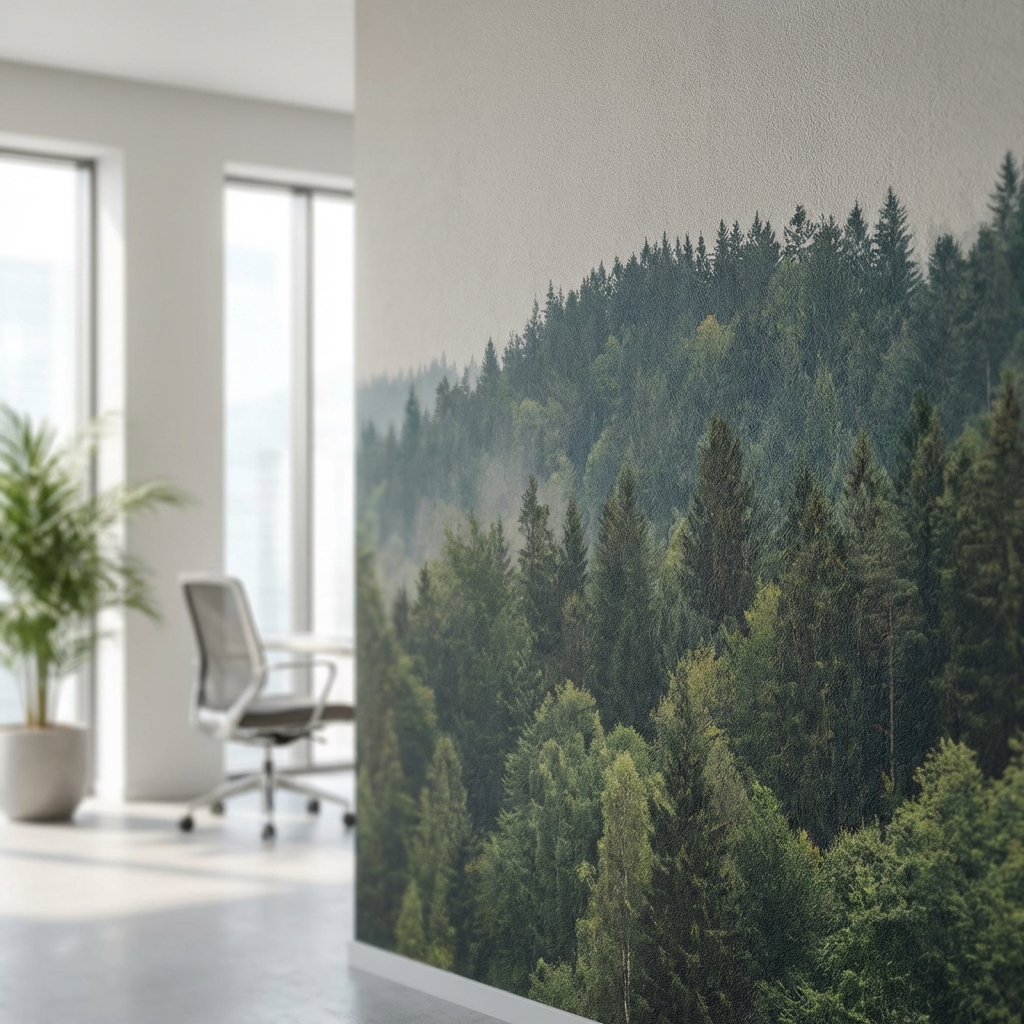
EastCoast MuralPros frequently delivers coordinated rollouts for retail, corporate workplaces, and healthcare networks. Teams typically begin with a pilot site to validate artwork at scale, test the palette under real lighting, and confirm durability and cleanability expectations. The learnings feed into a deployment playbook covering surface prep, phasing, access assumptions, and a standard approval ladder—so every stakeholder knows what to expect.
Project management is as important as print quality. A strong rollout plan includes:
- A substrate inventory by location (e.g., painted drywall in offices, sealed CMU in back-of-house).
- A scheduling matrix that respects local hours of operation and blackout dates.
- A strike-off process for critical colors and photographic content, performed on each representative substrate.
- A communication cadence with facilities managers for day-of access and turnover.
For hospitality and retail brands that refresh seasonally or around promotional cycles, a subscription model can organize work into predictable windows. Graphics update on schedule without mobilizing large construction teams or closing spaces. In corporate real estate, this approach supports agile workplace programs where zones shift purpose and teams need visual alignment fast.
Consistency across a national footprint doesn’t mean every wall looks the same. Regional storytelling, local photography, and site-specific donor recognition can plug into a parent system without losing brand equity. When the execution method is uniform and reliable, creative teams can push content variation with confidence.
Wayfinding and Instructional Graphics Integrated into Architecture
Wall space is one of the most underutilized tools for wayfinding and instructional communication. Instead of relying solely on plaques and hanging signs, printing navigational cues, safety reminders, and instructional content directly onto walls integrates guidance into the natural flow of movement—without adding signage clutter.
Effective integrated systems share a few characteristics:
- Clear hierarchy: Zone identifiers, directional arrows, and destinations are easy to parse at a glance.
- Consistent iconography and typography: Symbols and type scale well across corridors, lobbies, and rooms.
- Color-coded paths: Tones associate to departments, academic colleges, or service lines and appear at key decision points.
In hospitals, printing durable, high-contrast markers and directional cues at corridor intersections and lift lobbies reduces reliance on freestanding signs that can be moved, blocked, or knocked over. In schools and campuses, color-coded wings and large-format instructional murals support new student orientation and event traffic. For public-sector buildings, adding floor-level identifiers and service windows right to the wall clarifies journeys and shortens queues.
Instructional graphics are equally powerful. In clinical environments, handwashing reminders near sinks remain visible and intact through repeated cleaning. In workplaces, safety procedures and do-not-block equipment zones become part of the walls themselves. In museums and cultural institutions, interpretive text and object context can be integrated beside display areas, enabling an uncluttered gallery while maintaining educational depth.
Because direct-to-wall imaging is paint-over-ready, updates to routes, department names, or safety standards are straightforward. Teams can refresh messaging without replacing sign hardware, and new information inherits the same seam-free, professional finish as the original system.
For large education environments considering a comprehensive approach, this overview of campus branding with direct-to-wall printing highlights how navigation, identity, and storytelling can live together coherently across buildings and academic districts.
Sustainable Alternatives to Wallpaper and Vinyl Wall Coverings
Sustainability in interiors is about reducing waste, extending service life, and simplifying end-of-life decisions. High-definition wall murals produced with direct-to-wall printing address each of these goals by removing the material-heavy layers common to traditional wallcoverings.
Key sustainability advantages:
- No PVC films or pressure-sensitive adhesives, which means less plastic and chemical waste.
- On-site imaging that minimizes packaging and eliminates the need to ship large-format panels.
- Seam-free surfaces that reduce premature replacement due to edge failure or dirt accumulation.
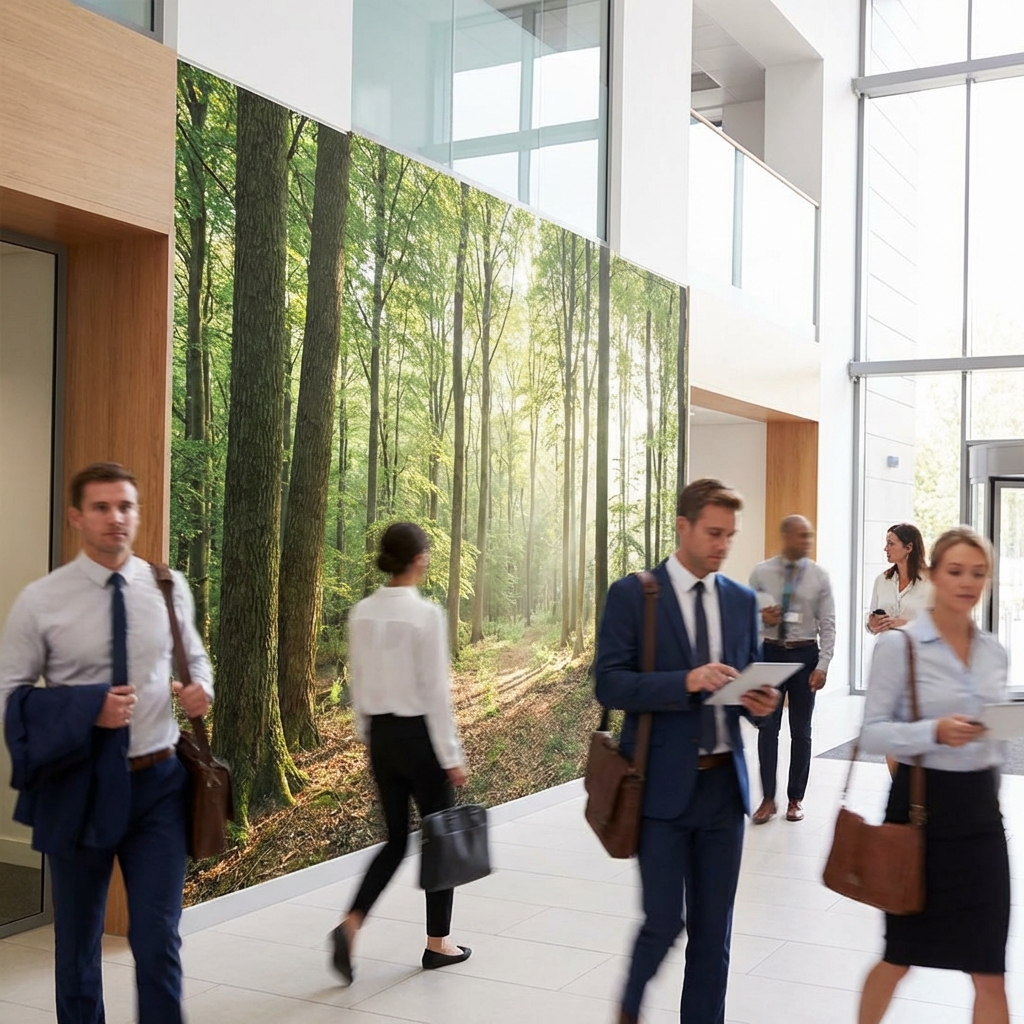
Lifecycle efficiency is often overlooked in sustainability conversations. When a mural lasts longer and remains easy to clean, it avoids the cycle of removal and replacement that sends vinyl and wallpaper to landfill. And when it’s time to change, a paint-over-ready finish allows facilities teams to refresh the space without tearing down adhesives or repairing damaged drywall skins.
Another sustainability lever is scope control. Because the technology is compatible with both finished and unfinished surfaces like drywall, CMU, concrete, and brick, owners can often avoid additional build-out layers, backers, or skim coats just to accept a graphic. The imaging meets the wall as it exists, reducing materials and labor that have little to do with function or design intent.
For multi-location brands and public institutions reporting on ESG or sustainability initiatives, replacing vinyl wall coverings with direct imaging is a practical, visible step. It aligns with goals to reduce waste and improve building operations without creating new maintenance burdens. It also preserves access to high-impact storytelling—photoreal visuals, donor walls, and mission statements—without the environmental cost of disposable films.
Sustainability is strongest when paired with operational efficiency. The same process that keeps waste down also compresses schedules and lowers risk. There’s less to ship, fewer items to store, and fewer leftover panels to account for after installation. A material-light, on-site method is often the most sustainable one.
Fast Installation with Minimal Disruption to Operations
Even the best design fails if it requires closing critical areas for days. High-definition wall murals built with direct-to-wall printing technology are designed for speed and predictability, delivering a finished result in hours, not weeks.
What speed looks like in practice:
- Preflight coordination ensures artwork is approved, color-checked, and properly scaled before crews arrive.
- Day-of installation prioritizes access windows; teams often complete a zone in under five hours.
- No adhesives, panels, or extensive masking keeps staging light and cleanup fast.
For occupied buildings, this approach respects operations. In healthcare, it fits between shift changes or during planned maintenance blocks. In corporate workplaces, it avoids lengthy swing spaces and minimizes after-hours labor. In retail and hospitality, it keeps revenue areas open, schedules tightly aligned to low-traffic periods, and shortens the time from creative approval to customer-facing impact.
The playbook for a smooth install typically includes:
- A joint walkthrough with facilities to confirm site conditions and logistics like elevator access.
- Surface readiness guidelines provided in advance so housekeeping or maintenance can prep walls efficiently.
- A communication plan for security and reception teams, including access badges and safety zones.
- A final punch and handoff, often the same day, with as-builts or photos for records.
Speed also reduces risk. On-site printing eliminates shipping delays and fabrication errors that can derail a schedule late in the process. When the printer meets the wall, there is no crate to be lost, no panel to be mismatched to field conditions, and no reordering lead time.
From a financial standpoint, reducing downtime is as important as controlling material costs. For a hotel lobby, every hour closed is measurable revenue off the books. For a university, every day of construction noise during finals week is a reputational cost. A fast, low-disruption installation protects both.
When graphics need to change seasonally or around strategic initiatives, EastCoast MuralPros offers a subscription model that sequences refreshes across a portfolio. The cadence aligns with campaign calendars or academic terms, turning what used to be capital projects into planned, predictable operating activities. That rhythm keeps environments current without surprises—for the brand team, the facilities group, and the people who use the space every day.
—
High-definition wall murals are no longer just decorative. They are a performance tool for branding, navigation, and communication—delivered fast, durably, and at scale. By removing adhesives and seams, direct-to-wall printing technology turns walls into functional surfaces that support operations, enhance identity, and adapt to change with minimal waste. For commercial landlords, institutional owners, and multi-location brands, it’s a practical way to elevate spaces while protecting schedules and budgets. EastCoast MuralPros helps teams plan, pilot, and roll out these systems across entire campuses and portfolios—consistent, cleanable, and ready for what’s next.
Contact us to learn more