Introduction: The Evolution of Corporate Office Wall Art and Interior Branding
Corporate office wall art has moved far beyond framed posters and decorative wallpaper. Today’s workplaces demand visuals that do more than fill space—they need to communicate brand values, improve wayfinding, support culture, and adapt as organizations evolve. As companies consolidate footprints, refresh hybrid offices, and scale across multiple locations, leaders are seeking solutions that fit tighter schedules and higher performance expectations.
This shift has elevated high-resolution, integrated graphics as a core element of workplace interior design. Instead of overlaying finishes on walls, forward-looking teams are printing directly onto finished and unfinished surfaces to achieve a seamless, architectural look. The result is not just decoration; it’s a durable layer of brand, information, and experience that belongs to the building.
EastCoast MuralPros serves this need with direct-to-wall printing technology that replaces vinyl and wallpaper with crisp, photoreal imagery applied on site. For corporate real estate, facilities teams, and brand owners, the approach delivers speed, consistency, and lifecycle efficiency—without the adhesives, seams, and waste of traditional methods.
Why Traditional Vinyl and Wallpaper Fall Short in Commercial Spaces
Vinyl wall coverings and commercial wallpaper were once the default choice for branding and murals in offices. In daily operation, however, they carry costs and risks that become visible quickly. Adhesive-backed products can peel at edges, bubble on textured surfaces, and telegraph every wall imperfection. Seams draw the eye, collect dust, and are susceptible to impact damage and humidity.
For multi-floor and multi-location programs, logistics compound the issue. Graphics must be measured, fabricated, shipped, staged, and then installed—each step introducing variability. Missed dimensions, color shifts between batches, or last-minute change orders create schedule pressure and rework. When a brand program needs to refresh seasonally or iterate with new messaging, tearing down and reapplying materials becomes a disruptive cycle.
Environmental performance is another growing concern. Vinyl and aggressive adhesives contribute to waste during installation and removal, and many products are not easily recyclable. Adhesive residue adds labor to decommissioning, and removal can damage painted substrates that now need repair and repainting. If sustainability targets matter to your organization, it’s worth reviewing the differences in material inputs and waste streams with a side-by-side look at direct-to-wall printing vs vinyl.
In specialized environments—think reception areas with sun exposure, stair towers with temperature swings, or corridors with heavy cart traffic—traditional wall coverings face accelerated wear. The outcome is predictable: patchwork fixes, visible seams, and an overall look that ages before the next budgeting cycle. For facilities directors and procurement teams seeking reliability, this is a weak point they no longer tolerate.
Direct-to-Wall Printing Technology: How It Works and Why It Matters
Direct-to-wall printing replaces applied films with on-site, high-definition printing directly onto the wall surface. Using precise, vertically mobile print heads and UV/LED-curable inks, the system “writes” imagery onto drywall, CMU, concrete, brick, or finished plaster with exact registration. The result is a seam-free graphic that conforms to the architecture rather than sitting on top of it.
A typical workflow is straightforward:
- Discovery and site review: Confirm wall conditions, access, and environmental factors.
- Design coordination: Align brand assets, color targets, and scale for the space.
- File preparation: Calibrate for resolution, color management, and substrate characteristics.
- On-site printing: The printer indexes across the wall, laying down and curing ink in passes.
- Finishing: Optional topcoats and edge treatments, followed by a brief cure and clean-up.
Because the equipment arrives with the team, there’s no waiting on fabrication or shipping. Graphics print where they live, which reduces errors from mismeasured millwork, HVAC revisions, or late furniture changes. If a wall is longer than expected, the file can be scaled in place. If a logo mark requires a slight repositioning due to a fire strobe, that adjustment is immediate—no re-ordering, no delays.
Direct-to-wall also extends beyond walls. EastCoast MuralPros supports in-studio printing on doors, tables, and standees, enabling cohesive branding of touchpoints that sit within the workspace. For artists and internal brand designers, collaborative tools streamline approvals and versioning so that digital work scales cleanly to architectural dimensions.
Key Advantages of Modern Wall Graphics for Corporate Environments
For corporate teams evaluating office branding solutions, direct-to-wall printing aligns with operational priorities as well as design goals. Benefits include:
- Architectural integration: Graphics appear embedded in the building, eliminating seams and edges that date quickly or fail under stress.
- Speed to install: Most projects complete in under five hours per wall, supporting tight turnover windows and off-hours schedules.
- High-resolution imagery: Photoreal output at architectural scale ensures crisp detail from reception to boardrooms.
- Surface compatibility: Print directly to drywall, CMU, concrete, or brick—finished and unfinished—without vinyl or adhesives.
- Durability in high-traffic areas: Cleanable finishes resist scuffs and routine wear, sustaining appearance between refresh cycles.
- Consistency at scale: Centralized color management and standardized methods improve uniformity across multi-location rollouts.
- Seam-free at any length: Long corridors and feature walls read as one continuous field, ideal for statement graphics.
- Paint-over-ready: When leases change or programs shift, the wall is ready for a fresh coat—no adhesive removal.
- Lifecycle efficiency: Fewer materials, fewer replacement cycles, and fewer fabrication steps lower total cost of ownership.
- Wayfinding without clutter: Integrated directional and instructional graphics reduce signage density while improving clarity.
- Sustainable by design: Eliminating vinyl and adhesive waste reduces environmental impact compared to traditional options.
- Flexible refresh models: Subscription programs allow seasonal or strategic content updates without construction-level disruption.
Collectively, these advantages meet the priorities of facilities directors, workplace strategists, and procurement teams who need predictable outcomes under compressed timelines.
Durability and Maintenance: Performance in High-Traffic Office Settings
A common misconception is that high-definition graphics must be delicate. In practice, direct-to-wall printing is engineered for offices, hospitals, campuses, and retail corridors where carts, chairs, and daily cleaning are part of the environment. UV/LED-curable inks bond to the substrate, providing a robust, cleanable surface that tolerates routine care.
Maintenance expectations are straightforward. Most installations require only standard janitorial practices—dusting, spot cleaning with non-abrasive solutions, and periodic wipe-downs. Without seams or lifted edges, there are fewer failure points to catch bags or absorb moisture. In cafés and copy areas, finishes can be specified to a matte sheen to reduce glare and mask incidental scuffs.
For long-term performance, the most important variables are wall prep and choosing the right finish for the use case. During site review, teams confirm substrate condition, patch imperfections, and align gloss levels across adjacent surfaces. These steps help the graphic look integrated on day one and remain stable over time.
If your facilities operate with strict cleanliness standards, it’s worth noting that direct-to-wall systems are compatible with common commercial cleaning protocols when specified accordingly. For a deeper look at how these installations stand up to real-world wear, see this overview of direct-to-wall printing benefits.
Designing Cohesive Brand Experiences Across Multi-Location Offices
Scaling corporate office wall art from a pilot floor to a national footprint requires more than a strong design. It demands a system—templates, contrast guidelines, and asset libraries that ensure each office tells the same story, even with local variations. Direct-to-wall printing supports this by translating digital assets to physical spaces with consistent color and resolution.
A productive approach starts with a kit-of-parts. Define core wall types—reception feature walls, collaboration zones, café statements, corridor wayfinding—and codify how each applies logos, imagery, and typography. Store approved variants in a centralized library so regional teams can select from pre-vetted options without redesigning from scratch.
From there, bake implementation into the process. Include a clear survey protocol, CAD markups for wall coordinates, and finish schedules that cover sheen, substrate, and adjacent paint. Where interiors vary—exposed brick in one branch, Level 5 drywall in another—document the target outcomes and acceptable adjustments so each site reads on-brand.
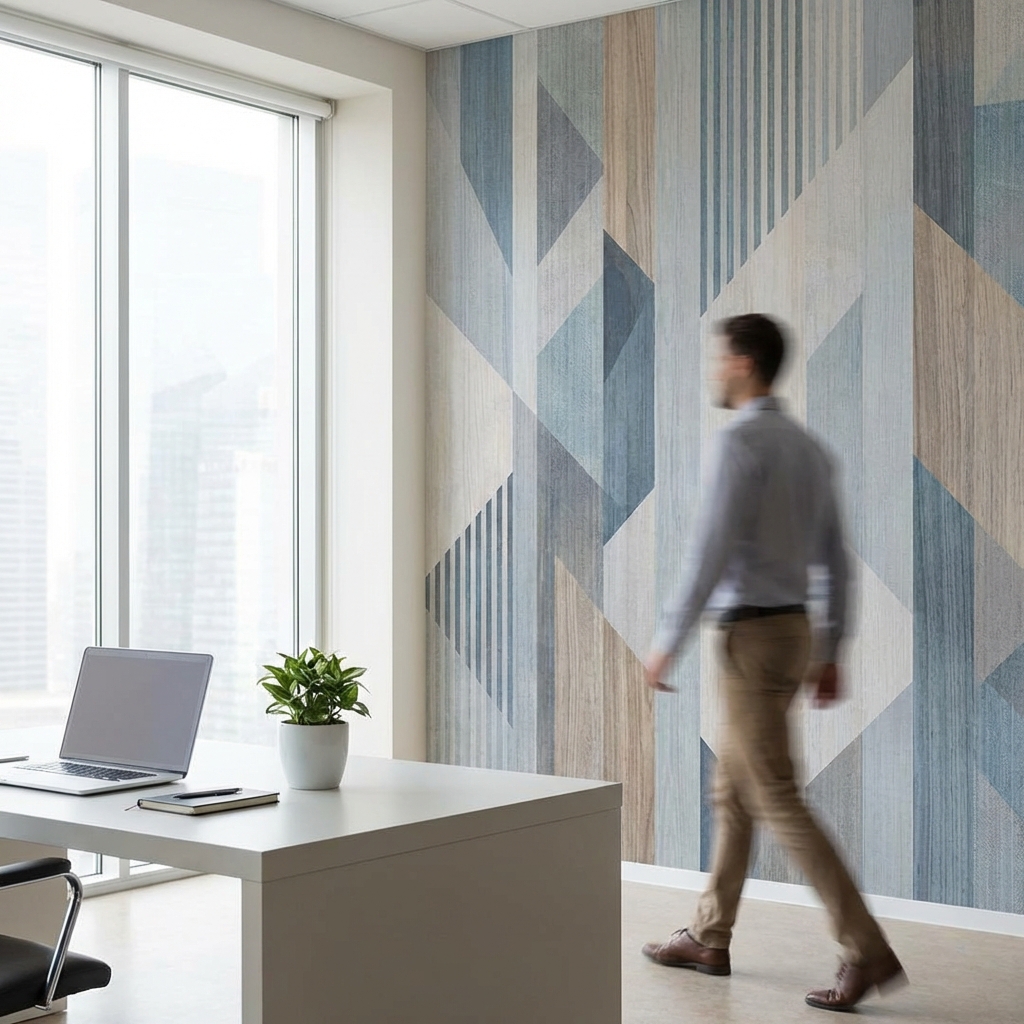
For cross-functional rollouts, governance matters. Align marketing, workplace, and facilities early, and set decision thresholds for site-specific exceptions. EastCoast MuralPros supports this coordination with tools for artwork scaling, proofs calibrated for substrate, and project management tuned to multi-location timelines. The outcome is uniform quality with local relevance, delivered at speed.
Installation Speed and Minimal Disruption for Occupied Workplaces
Corporate offices can’t afford days of downtime for wall graphics. Direct-to-wall installations are designed to fit within tight windows—often a single evening or a half-day—so teams return to work with minimal disruption. With no panels to stage or adhesives to cure, spaces transition quickly from prep to print to handover.
A typical occupied-installation playbook includes:
- Coordination: Confirm access, security, and after-hours work if needed.
- Area prep: Protect adjacent finishes and move or cover nearby furniture as required.
- On-site printing: Execute graphics, adjusting in real time to field conditions.
- Clean-up and walkthrough: Remove protection, confirm quality, and return space to service.
Noise and odor are low, and crews can work in zones to keep adjacent areas operational. Because printing happens on the actual surface, last-minute changes—such as adjusting for an outlet, sprinkler trim, or display bracket—do not derail schedules. For buildings with ongoing operations, such as healthcare admin hubs or financial service centers, that flexibility is the difference between a neat idea and a viable solution.
For campuses or multi-floor headquarters, teams often schedule a rolling sequence: one or two walls per evening, floor-to-floor over a week, with all graphics live by the following Monday. EastCoast MuralPros regularly completes standard walls in under five hours, enabling aggressive punch lists and rapid refreshes across departments.
Cost Efficiency and Lifecycle Advantages Over Traditional Solutions
Beyond first cost, the financial case for moving past vinyl and wallpaper rests on lifecycle math. Direct-to-wall printing reduces materials, handling, and downtime across the entire project arc—from planning and shipping to installation, maintenance, and end-of-life.
Key cost levers include:
- Fewer materials and steps: No adhesive films, no panel seams, and no lamination reduce both line items and failure points.
- On-site production: Eliminates shipping, staging, and related delays that extend schedules and inflate labor.
- Faster installation: Shorter install windows lower after-hours premiums and limit revenue-impacting downtime.
- Clean maintenance: Seam-free, cleanable graphics reduce patching and call-backs common to edge-lifted vinyl.
- Easier decommissioning: Paint-over-ready surfaces avoid adhesive removal labor and wall repairs.
- Smarter refresh cycles: Subscription models support seasonal or strategic updates without starting from zero.
Traditional solutions also carry hidden costs when rolled out at scale. A single misprint on a long panel can cause re-fabrication and re-shipping that cascade into overtime or missed milestones. Variations between print lots require on-site curation to hide color shifts. Direct-to-wall minimizes these variables by converting late-stage complexity into real-time control.
While every specification and budget is different, facilities and procurement teams often find that lifecycle efficiency—fewer materials, fewer touchpoints, and fewer points of failure—makes direct-to-wall printing the financially resilient choice for durable wall murals for offices.
Wayfinding and Functional Graphics Integrated Into Architecture
Clear navigation and safety communication are essential in modern workplaces, especially across large floors or multi-building campuses. Integrating wayfinding directly into walls simplifies the environment: corridors carry directional cues, elevator lobbies present floor identities, and team neighborhoods display naming conventions without a forest of placards.
Functional graphics work best when they are coordinated as part of the architecture. Consider:
- Zone and floor identification: Large-scale numerals or color fields that read at distance.
- Directional cues: Arrows and pictograms embedded at key decision points, not just at doors.
- Safety and instruction: Print-on-wall protocols for labs, maker spaces, or copy areas to reduce separate signage.
- Accessibility: Thoughtful contrast ratios and placement that support visibility and compliance.
- Departmental color-coding: Consistent palettes that scale from paint accents to full-height graphics.
Direct-to-wall printing ensures these elements feel intentional. Without panel seams, arrows and typography remain pristine along long runs. On textured substrates, the message reads as part of the building—a visual language that reduces clutter while improving comprehension. For enterprise offices, hospitals, and educational facilities, this approach keeps spaces legible as programs change.
Case Studies: Successful Corporate Office Wall Art Transformations
Headquarters floorplate reset for a technology firm
- Challenge: A hybrid-work HQ needed to re-establish brand presence across reception, café, and 240 linear feet of corridors without interrupting operations.
- Solution: Direct-to-wall graphics were printed on Level 4 drywall and existing CMU shafts, combining a hero skyline image with lightweight wayfinding. Work occurred over four evenings, with each zone completed and handed back before the next morning.
- Outcome: Seam-free, photoreal graphics unified the floor without adding new signage hardware. Facilities reported no schedule slippage, and the brand team gained a flexible template for three additional floors.
Multi-location financial services refresh
- Challenge: Twenty branch offices were scheduled for a six-week brand update with limited after-hours access and strict security protocols.
- Solution: A kit-of-parts defined reception features, community walls, and staff-zone messaging. On-site printing eliminated shipping coordination to secured locations. EastCoast MuralPros calibrated color profiles across varying substrates for consistent output.
- Outcome: All sites opened on schedule. Procurement consolidated spend through a single vendor with consistent execution, and future refreshes were planned as a subscription cadence for fiscal predictability.
Healthcare administrative campus
- Challenge: A two-building complex needed intuitive wayfinding without increasing signage clutter, plus durable surfaces for high-traffic corridors and café areas.
- Solution: Direct-to-wall typography and pictograms defined circulation, while department identity walls printed on painted concrete block offered scuff-resistant, cleanable finishes. Installations took place over weekends to maintain weekday services.
- Outcome: Staff navigation improved with fewer stand-alone signs to maintain. Cleaning teams reported no issues with routine protocols, and facilities marked the system for replication in an additional building.
Corporate landlord leasing strategy
- Challenge: A landlord wanted to accelerate lease-up for two floors by showcasing the building’s brand potential without committing to a tenant-specific build-out.
- Solution: Feature walls and amenity graphics were printed directly to primed drywall, with content designed to be painted over on tenant turnover. EastCoast MuralPros completed each floor in a single day, enabling back-to-back tours the same week.
- Outcome: The property differentiated itself with a polished, integrated look, and the marketing team gained a fast, low-waste tactic to reset floors between showings and new leases.
Museum-affiliated workspace and gallery
- Challenge: A cultural institution required high-resolution imagery across gallery-adjacent offices and meeting rooms to align staff areas with exhibit standards.
- Solution: Photoreal prints at architectural scale delivered exhibition-quality visuals on office walls, complemented by in-studio prints on doors and table surfaces for cohesive storytelling.
- Outcome: The staff environment mirrored the museum’s public-facing quality without installing removable panels. The institution adopted a seasonal refresh plan aligned with exhibit rotations.
These scenarios underscore the core value of modern commercial wall graphics: predictable speed, integrated aesthetics, and resilient performance across varied conditions and teams.
Conclusion: Choosing the Right Wall Art Solution for Your Organization
Choosing corporate office wall art is no longer a question of which wallpaper to order. It’s a strategic decision about how your workplace communicates, evolves, and performs. For organizations moving quickly—rolling out brand systems, improving wayfinding, or elevating experience without construction—direct-to-wall printing offers a practical, durable, and scalable path forward.
When evaluating options, consider:
- What installation windows can your operations support, and how critical is schedule certainty?
- Do you need seam-free graphics that read as part of the architecture on various substrates?
- How will you maintain, refresh, and eventually decommission the solution—and at what cost?
- Can your partner execute consistently across multiple sites with centralized color management and a clear governance model?
- What sustainability targets guide your materials and waste decisions?
If those questions resonate, direct-to-wall printing from a specialized partner like EastCoast MuralPros is worth a closer look. The approach replaces the compromises of vinyl and wallpaper with high-resolution office graphics that are fast to install, durable in use, and efficient over their lifecycle. For facilities leaders, brand teams, and corporate real estate groups, it’s a modern foundation for office branding solutions that scale with the business.
Contact us to learn more