
Table of Contents
- Introduction: Why Eco-Friendly Wall Graphics Matter for Modern Businesses
- Key Criteria for Evaluating Sustainable Wall Graphics Solutions
- Direct-to-Wall Printing: The Most Environmentally Responsible Option
- Traditional Vinyl Wraps: Environmental Drawbacks and Disposal Challenges
- Wallpaper and Paste-Based Solutions: Sustainability Concerns
- Comparative Analysis: Cost, Durability, and Environmental Impact
- Best Practices for Selecting Eco-Friendly Graphics for Your Organization
- Installation Considerations for Low-Disruption, Sustainable Upgrades
- Lifecycle Cost Benefits of High-Performance Wall Graphics
- Real-World Examples: Institutions Using Sustainable Branding Solutions
- Selection Guide: Matching Your Needs to the Right Solution
- Conclusion: Making the Case for Performance-Based Wall Graphics
Introduction: Why Eco-Friendly Wall Graphics Matter for Modern Businesses
Best Eco-Friendly Wall Graphics for Commercial Spaces: Direct-to-Wall vs. Vinyl
Sustainability has moved from a marketing talking point to an operational requirement in commercial interiors. Facilities directors, workplace teams, and institutional administrators are asked to reduce waste, shorten downtime, and improve occupant experience—often without expanding budgets. Wall graphics sit at the intersection of these priorities. They influence brand perception, wayfinding, safety, and culture while carrying real lifecycle costs and environmental impacts.
Traditional approaches—vinyl wraps and wallpaper—were built for a different era. They rely on adhesives, multiple material layers, and frequent replacement cycles. The result can be peeling seams, disposal challenges, and avoidable disruptions. Meanwhile, eco-friendly wall graphics now include direct-to-wall digital printing, which places high-resolution imagery directly onto finished or unfinished substrates with minimal materials and faster schedules.
EastCoast MuralPros focuses on performance-based, low-waste alternatives for commercial and institutional spaces. For organizations managing multi-location rollouts, campus-wide wayfinding, or frequent brand refreshes, the ability to print at architectural scale without vinyl or paste is a practical, sustainable step forward.
Key Criteria for Evaluating Sustainable Wall Graphics Solutions
When assessing the environmental integrity of wall graphics, look beyond marketing claims. Build your evaluation around criteria that connect sustainability with performance and cost control:
- Material chemistry and health: Identify PVC, phthalates, heavy metals, and solvent-based adhesives. Favor PVC-free, low-VOC solutions and inks with recognized certifications.
- Total material mass: Quantify the square footage of plastic or paper you’ll introduce—and ultimately remove—over the solution’s lifespan.
- Installation inputs and waste: Consider release liners, trimmings, extra adhesive, and the protective films common to vinyl. Fewer inputs generally mean less waste.
- Durability and cleanability: Longer-lasting, abrasion-resistant graphics that can be cleaned gently reduce replacement frequency and labor.
- Removal and end-of-life: Can you paint over it? Does it require chemical removers? Is it recyclable in real-world conditions, not just theoretically?
- Energy and logistics: On-site production reduces shipping, packaging, and returns from fabrication errors, lowering transportation emissions.
- Speed and disruption: Shorter installs minimize off-hours labor, barricades, and lost revenue from closed areas—key to sustainable operations.
- Substrate compatibility: Solutions that work on drywall, CMU, concrete, or brick without additional panels avoid embedded material and permitting complexity.
- Scalability and consistency: National rollouts benefit from standardized processes and predictable results, limiting rework and redundant shipments.
- Documentation: Request safety data sheets, ink specifications, and maintenance guidance to support procurement and compliance.
These criteria give you a complete picture of environmental responsibility while aligning with the operational realities of occupied buildings.
Direct-to-Wall Printing: The Most Environmentally Responsible Option
Direct-to-wall printing places ink directly onto your wall surface, producing photoreal, high-resolution imagery at architectural scale without vinyl or paste. For commercial and institutional teams, this approach delivers sustainability gains alongside schedule and quality advantages.
How it works and why it’s different:
- No vinyl or adhesive layers: With no roll media, backing paper, or lamination, you reduce material mass and eliminate the adhesive chemistry that complicates disposal.
- On-site production: Graphics are printed in place, cutting shipping emissions, packaging waste, and the risk of fabrication errors that trigger reprints.
- Fast, low-disruption install: Many projects complete in under five hours per area, making overnight or phased upgrades feasible during normal operations.
- Seam-free, integrated look: The graphic reads as part of the architecture, avoiding seams that collect dirt, curl, or telegraph through.
- Compatibility with finished and unfinished surfaces: Drywall, CMU, concrete, and brick are common substrates, supporting flexibility without extra panels.
- Cleanable, durable finishes: Properly specified inks and coatings are designed for high-traffic environments, from hospitals and schools to retail and transit corridors.
- Paint-over-ready: When the program changes, you can repaint rather than perform adhesive removal, significantly reducing end-of-life waste and labor.
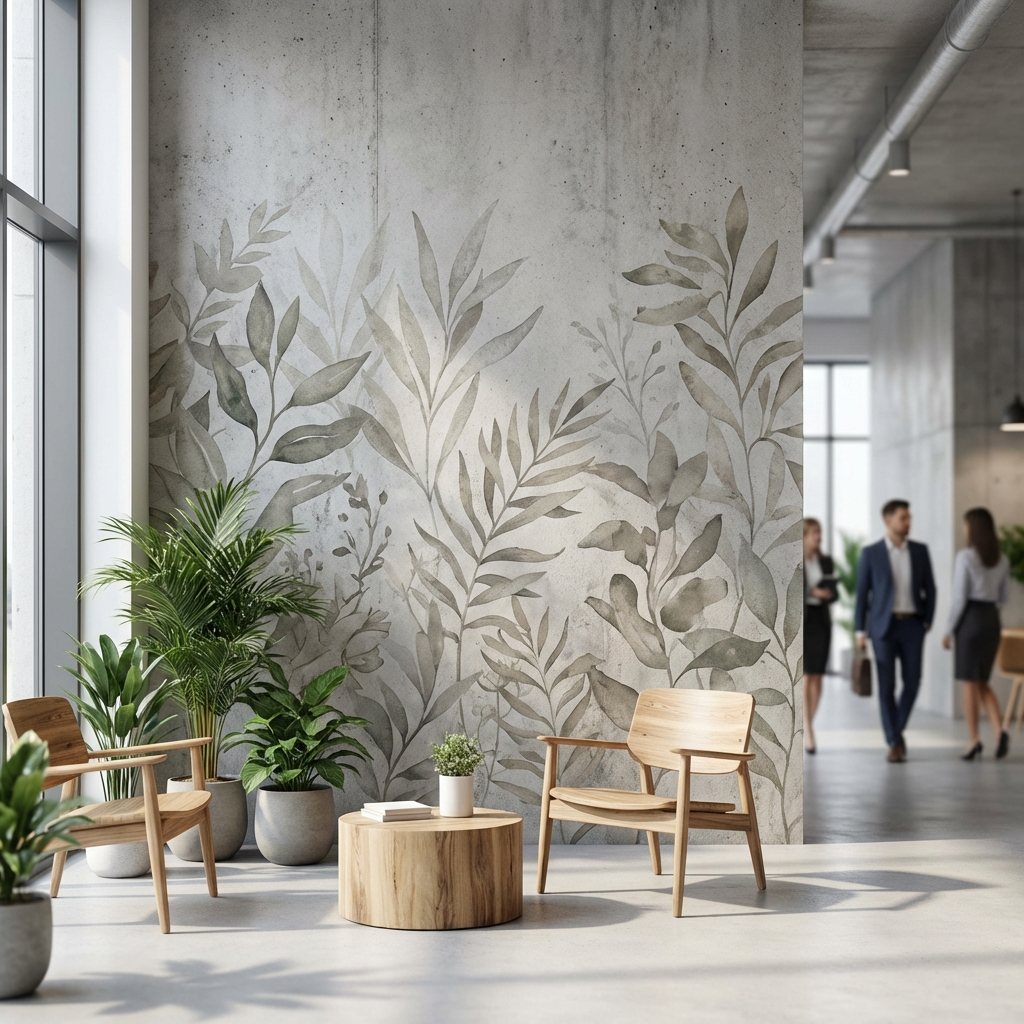
From a sustainability standpoint, direct-to-wall is a minimal-material method with fewer interventions across the lifecycle. It aligns with green building goals by reducing embodied materials, streamlining installation, and extending useful life.
For teams evaluating direct-to-wall printing alternatives to vinyl, EastCoast MuralPros offers consistent execution across multi-location rollouts, integrated wayfinding and instructional graphics, and subscription programs for seasonal or strategic refreshes. The company also enables in-studio printing for doors, tables, and standees when freestanding or component-based elements are part of your program.
If you’re digging into technical differences, this overview of direct-to-wall printing and sustainability considerations can help frame your comparison. To align with procurement and health objectives, review the firm’s stance on PVC-free wall printing, which avoids vinyl altogether.
Traditional Vinyl Wraps: Environmental Drawbacks and Disposal Challenges
Vinyl wraps dominate the legacy market because they are familiar. Yet the underlying material—PVC—is difficult to reconcile with modern sustainability goals and operational realities.
Key environmental issues:
- PVC chemistry: Vinyl (PVC) is chlorine-based and commonly formulated with plasticizers such as phthalates. Its production and disposal have been scrutinized for environmental and health risks.
- Adhesives and liners: Most vinyl relies on pressure-sensitive adhesives and release liners, both of which add to manufacturing inputs and landfill-bound waste.
- Limited recyclability: Post-consumer PVC graphics rarely enter recycling streams due to contamination and composite layers, leading to near-universal landfill disposal.
- Frequent reprints: Peeling, bubbling, and seam failure in high-traffic spaces drive short lifecycles and rework—more material and labor, more often.
Operational concerns compound the footprint:
- Removal labor and chemicals: Adhesive removal is time-consuming and may require solvents or heat, often damaging painted surfaces and triggering patch-and-paint cycles.
- Added layers: Laminates for abrasion or UV protection increase plastic mass and complicate end-of-life handling.
- Shipping and returns: Long rolls, protective packaging, and re-fabrication for fit issues carry emissions and cost that on-site printing largely avoids.
While vinyl can deliver sharp visuals, the cumulative waste, chemical exposure, and short replacement cycles make it a difficult fit for organizations prioritizing eco-friendly wall graphics and consistent, predictable operations.
Wallpaper and Paste-Based Solutions: Sustainability Concerns
Wallpaper—including PVC-free and nonwoven variants—can be an improvement over PVC vinyl, but it still raises sustainability and performance questions in commercial settings.
Considerations that affect green outcomes:
- Adhesive systems: Even “low-VOC” pastes introduce chemicals and water-based cleanup processes. Removal typically requires wetting, scraping, and patching—adding labor and debris.
- Seams and failure points: Seams are prone to lifting and damage, especially in high-touch corridors and near corners. Frequent touch-ups extend maintenance and waste.
- Lead times and collateral waste: Rolls require precise measurement and pattern matching, leading to over-ordering and off-cut disposal.
- Moisture and hygiene: In healthcare, education, and food-adjacent areas, moisture intrusion behind seams can lead to staining or hygiene concerns, shortening lifespan.
- Design limitations: Pattern repeats and panel widths constrain how integrated the graphic feels within the architecture, often prompting additional panels or trims.
For short-term feature walls or hospitality settings with controlled conditions, wallpaper can perform acceptably. But when the brief calls for low-waste commercial murals, rapid installation in occupied spaces, and minimal end-of-life effort, paste-based systems still come up short.
Comparative Analysis: Cost, Durability, and Environmental Impact
Organizations rarely choose a wall graphics strategy on sustainability alone. Performance and cost must align with schedule and brand goals. Here’s how the leading options compare across the factors that matter most.
Cost over time:
- Direct-to-wall printing: Eliminates media costs, liners, and lamination, and often reduces install time by 30–60% compared to multi-panel systems. The ability to print overnight or in short windows cuts downtime costs and avoids barricades in active corridors. Paint-over end-of-life avoids removal labor and solvents.
- Vinyl wraps: Material, lamination, and adhesive costs stack up with panelized production and freight. Removal requires skilled labor and often multiple passes. Rework from bubbling or seam failure increases unplanned spend.
- Wallpaper: Material and paste costs are moderate, but pattern matching and seam management extend install hours. Removal and wall repair add costs during tenant turnovers or brand refreshes.
Durability and cleanability:
- Direct-to-wall: Seam-free surfaces avoid edge failure. UV-curable inks and protective coatings are designed for abrasion resistance and gentle cleaning, making them well-suited to high-traffic environments.
- Vinyl: Good surface durability out of the box, but prone to edge curl, peeling at corners, and punctures that propagate. Cleaning must avoid aggressive chemicals that compromise adhesion.
- Wallpaper: Prone to scuffs, tears at seams, and moisture issues unless carefully maintained. Cleanability depends on the specific finish and paste type.
Environmental impact:
- Direct-to-wall: Minimal material mass, no PVC or pressure-sensitive adhesives, and reduced freight and packaging. End-of-life typically involves painting over the graphics rather than sending composite materials to landfill.
- Vinyl: High material mass and reliance on PVC and plasticizers, with adhesives and liners that are landfill-bound. Shorter lifecycles multiply waste and labor.
- Wallpaper: Lower plastic content when PVC-free, but paste systems, seams, off-cuts, and wet removal create waste and extend labor.
For sustainable interior branding in occupied buildings, direct-to-wall printing offers the strongest balance of performance, predictable cost, and environmental responsibility.
Best Practices for Selecting Eco-Friendly Graphics for Your Organization
A structured selection process ensures the solution you choose meets sustainability goals and operational needs:
- Define the program: Identify the roles graphics will play—brand storytelling, wayfinding, safety, instructional support—and the performance needed in each area.
- Audit surfaces and conditions: Note substrates (drywall, CMU, concrete, brick), texture, moisture exposure, cleaning protocols, and nearby impact risks.
- Set sustainability thresholds: Specify PVC-free materials, low-VOC inks, and documentation for emissions and cleanability. Ask vendors how they manage waste on site.
- Prioritize low-disruption methods: In hospitals, schools, and 24/7 workplaces, plan for night or weekend work and require installs that finish in a single shift per area.
- Request samples and mockups: Evaluate color accuracy, resolution at viewing distance, and touch-friendly durability on your actual surface.
- Plan maintainability: Confirm cleaning guidance and resistance to common disinfectants. Ensure coatings support routine hygiene practices.
- Consider refresh cadence: If your brand or wayfinding changes seasonally, evaluate subscription or programmatic refresh options to avoid removal labor and reduce waste.
- Align with compliance: Validate ADA, life-safety, and egress considerations when integrating wayfinding and instructional graphics.
- Validate scalability: For multi-location portfolios, confirm national or campus-wide execution can be achieved consistently with local site constraints.
These practices protect your schedule and budgets while advancing a credible sustainability posture.
Installation Considerations for Low-Disruption, Sustainable Upgrades
Installation is where sustainability meets operations. Efficient planning reduces labor, waste, and disruption—especially in occupied buildings.
What to address before day one:
- Site assessment: Verify substrate integrity, finish level, moisture levels on masonry, and any contaminants that could affect adhesion or ink performance.
- Minimal prep: Where needed, light sanding or patching followed by appropriate primer promotes adhesion for direct-to-wall printing while avoiding the extra layers panels would require.
- Sequencing: Coordinate with other trades to avoid rework. Printing after major dust-generating activities—and before final cleaning—helps maintain image quality.
- Occupied building protocols: In healthcare and education, plan overnight work, HEPA-filtered dust control if required, and low-odor materials. Direct-to-wall’s fast cure reduces lingering smells and reopening windows.
- Access and safety: Confirm lift access, barricades, and life-safety clearances. Keep egress and critical signage visible throughout.
- Quality control: Approve layout and test swatches in advance. Live proofing on wall saves time compared to re-fabricating panels off site.
- Handover: Provide cleaning guidance and a paint-over plan for end-of-life. Document color recipes and artwork sources for future refreshes.
EastCoast MuralPros typically completes individual areas in under five hours, enabling phased upgrades that keep operations running. On-site printing also eliminates shipping delays and fabrication errors, which is especially important for schedule-sensitive environments like hospitals and airports.
Lifecycle Cost Benefits of High-Performance Wall Graphics
Sustainability gains often show up as lifecycle savings. When you select a method designed for durability, cleanability, and easy end-of-life, the total cost of ownership drops.
Where TCO advantages emerge:
- Fewer replacements: Seam-free, abrasion-resistant graphics cut recurring material and labor, especially in corridors and high-touch zones.
- Reduced downtime: Faster installs and paint-over transitions keep spaces open, protecting revenue in retail or patient throughput in healthcare.
- Less rework: On-wall proofing and in-situ adjustments prevent costly refabrication and shipping of corrected panels.
- Lower disposal costs: Avoiding vinyl means less landfill volume and no chemical removal. Paint-over-ready finishes mean a roller and drop cloth—not dumpsters.
- Portfolio efficiency: Consistent methods and color management across multiple sites avoid vendor churn, cut freight, and streamline procurement.
- Programmatic refresh: Subscription models spread costs predictably and replace the spike of tear-out and reinstallation with planned, low-waste updates.
For many organizations, the combination of environmental responsibility and schedule certainty is what unlocks funding. A performance-based approach lets sustainability serve the business case rather than compete with it.
Real-World Examples: Institutions Using Sustainable Branding Solutions
Institutions are quietly replacing panelized graphics with low-waste commercial murals that perform better day to day. The scenarios below illustrate how eco-friendly wall graphics advance operational goals.
- Academic campus wayfinding and culture walls: A university refreshed residence hall lobbies and a student services corridor during summer session. Direct-to-wall printing delivered photoreal imagery on painted CMU and concrete block in two nights, with no adhesives or seams. Facilities staff reported easier cleaning and a straightforward paint-over plan for future program changes.
- Regional hospital patient towers: A healthcare system integrated wayfinding, safety reminders, and calm imagery along long inpatient corridors. Night-shift printing avoided patient moves and floor closures. UV-curable inks with protective coatings offered high cleanability—critical where disinfectants are used daily. Elimination of vinyl and paste aligned with sustainability reporting goals.
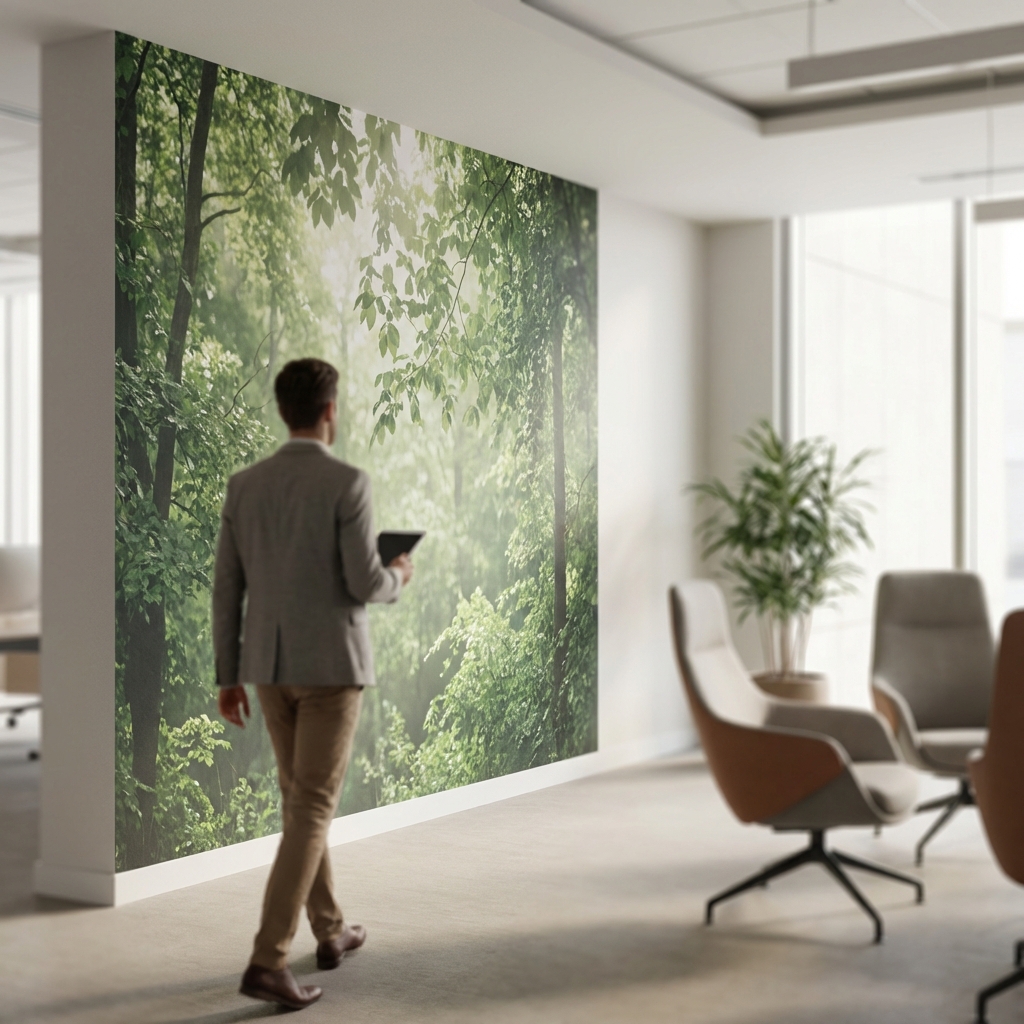
- Multi-location retail refresh: A national retailer introduced seasonal brand moments on high-texture drywall and brick feature walls across 60 stores. On-site printing removed freight and re-fabrication delays, reducing the refresh cycle time from weeks to days. Stores stayed open, and graphics could be repainted at season’s end instead of torn down and landfilled.
- Commercial landlord spec suites: A property owner activated empty floors with brand-neutral, texture-rich murals to support leasing tours. Installation was completed during building hours with minimal noise and no odors. As tenants moved in, the landlord repainted to white in a single evening, avoiding removal labor and waste.
- Museum and cultural institution exhibits: A museum deployed photoreal wall-sized reproductions with fine text and integrated directional cues. Direct-to-wall printing avoided seams that distract in galleries and maintained crisp detail at close viewing distances. After the temporary exhibit concluded, the walls were primed and repainted for the next show.
- Corporate workplace refresh: A headquarters updated collaboration hubs and cafe walls with sustainable interior branding while keeping conference rooms in use. Prints on previously painted wallboard were finished in one weekend across three floors. Facilities teams appreciated the consistent finish quality and lack of peeling edges near doorways.
Each scenario leverages the same principles—minimal materials, fast execution, and easy end-of-life—to meet program goals without the waste and downtime of legacy methods.
Selection Guide: Matching Your Needs to the Right Solution
Choosing the best eco-friendly wall graphics depends on your substrate, use case, and operational constraints. Use these guidelines to match needs to methods:
Choose direct-to-wall printing when:
- You need fast, low-disruption installation in occupied spaces (healthcare, education, corporate, retail).
- Substrates include drywall, CMU, concrete, or brick that you intend to keep in place.
- You want seam-free, photoreal imagery at architectural scale with high cleanability.
- End-of-life simplicity (paint-over readiness) is a priority to minimize waste and labor.
- You manage multi-site or campus programs and require consistent execution and color.
Consider enhanced wallpaper or fabric-based media when:
- A very short-term installation (under three months) is required on delicate surfaces, and removal must leave no trace.
- Fire rating, texture, or specialty finishes are specified that cannot be replicated in situ. Choose PVC-free, low-VOC options and confirm paste chemistry.
- Historic or highly sensitive substrates prohibit any direct finishing; ensure mockups and removal tests are completed.
Use vinyl selectively and improve its footprint when:
- An unusual performance requirement demands it (e.g., extreme abrasion zones). If you must use it, select PVC-free films where feasible, request low-VOC adhesives, and minimize lamination layers.
- Complex compound-curved surfaces are involved that cannot be addressed by other methods.
Additional procurement checks:
- Request documentation for ink chemistry, VOCs, and cleanability.
- Confirm infection-control compatibility in healthcare and cleaning compatibility in education and food-adjacent areas.
- Pilot test a representative area to validate adhesion and finish on your specific surface.
- Plan a paint-over protocol and color matching for future refreshes to lock in end-of-life savings.
This decision framework ensures sustainable choices also align with durability, brand standards, and building operations.
Conclusion: Making the Case for Performance-Based Wall Graphics
Eco-friendly wall graphics are no longer a compromise. Direct-to-wall printing provides a proven, performance-based path to sustainable interior branding, reducing waste and downtime while delivering crisp, seam-free visuals at scale. Compared with vinyl wraps and paste-based wallpaper, it minimizes materials, streamlines logistics, and simplifies end-of-life—key levers for cost control and credible sustainability reporting.
For commercial landlords, healthcare systems, school districts, and multi-location brands, the most responsible choice is often the one that performs best day to day. EastCoast MuralPros helps teams implement direct-to-wall programs that are durable, cleanable, and paint-over-ready, with the schedule certainty and national consistency large portfolios require. When you align environmental responsibility with operational performance, you accelerate projects, reduce lifecycle costs, and create spaces that work better for occupants and facilities alike.
Contact us to learn more