Introduction: Key Criteria for Selecting Commercial and Institutional Wall Graphics
Choosing wall graphics for commercial and institutional spaces begins with aligning design goals to operational realities. Decision-makers should evaluate options not just on aesthetics, but on how well they deliver schedule certainty, durability, lifecycle value, and scalability across multiple locations. This is where direct-to-wall printing services stand apart from traditional vinyl wraps and wallpaper, especially for teams tasked with repeatable, compliant, and disruption-free upgrades.
Prioritize criteria that directly affect performance and risk:
- Installation speed and disruption: Can room-scale installs be completed in a single shift while spaces remain occupied?
- Surface compatibility: Will the system print cleanly on drywall, CMU, concrete, or brick without adhesives, seams, or panel lines?
- Image fidelity: Does high-resolution mural printing hold crisp detail at architectural scale under varied lighting?
- Durability and maintenance: Are finishes cleanable for high-traffic zones, and paint-over-ready for future tenant or program changes?
- Wayfinding and safety: Can graphics integrate instructional content without signage clutter and maintain sightlines?
- Consistency at scale: Are color profiles and execution uniform across multi-location rollouts?
- Lifecycle economics: What are replacement cycles, freight/fabrication risks, and owner labor impacts?
- Sustainability: Are you considering vinyl wall wrap alternatives that reduce PVC, adhesives, and waste?
- Risk mitigation: Does the provider offer pilots, proofs, and clear performance documentation?
In practice, direct-to-wall approaches reduce seams, bubbling, and shipping variables because printing happens on-site. A hospital corridor can deploy durable, cleanable wayfinding overnight, while a K–12 campus updates mascots and instructional graphics during a long weekend. Corporate workplace teams can standardize brand walls across dozens of offices with color-managed files and repeatable field workflows, delivering architectural branding solutions without construction.
EastCoast MuralPros meets these criteria with next-generation, adhesive-free printing executed on finished or unfinished surfaces, often completed in under 5 hours per area. Teams get photoreal commercial wall graphics, durable office wall art, and integrated wayfinding that’s seam-free and consistent nationwide. Their lifecycle-efficient model includes subscription refreshes, in-studio printing for doors and standees, and collaborative tools that help digital artists scale work. For organizations prioritizing sustainability alongside performance, explore their sustainable wall printing alternatives.
Top Recommendation for Permanent Branding: Direct-to-Wall UV Printing Technology
For permanent, architecturally integrated branding, the most reliable path is adhesive-free, UV-cured output produced directly on the surface. Modern direct-to-wall printing services eliminate seams, bubbles, and edge-lift that plague vinyl—and they install with minimal disruption. The result is commercial wall graphics that look designed into the building, not applied onto it, making them ideal vinyl wall wrap alternatives in offices, schools, hospitals, and multi-site retail.
Expect photoreal clarity at architectural scale. High-resolution mural printing delivers crisp type, accurate brand colors, and continuous gradients across long corridors, atriums, stair cores, and CMU or brick feature walls. Because the print head can address finished and unfinished substrates (drywall, concrete, block, brick), you avoid costly panels and surface-prep steps common with wallpaper and films.
Durability is equally important for permanent branding. UV-cured inks create a tough, cleanable surface that stands up to high-traffic wear and routine maintenance, including non-abrasive cleaners. When programs change, a paint-over-ready finish lets facilities teams reset spaces without demolition—driving lifecycle efficiency and reducing waste compared to wallpaper or vinyl.
Speed and certainty matter in occupied buildings. On-site printing removes shipping risks and fabrication errors, with typical installations completed in under 5 hours per zone. Wayfinding, safety, and instructional content can be embedded directly into walls to reduce signage clutter—ideal for hospitals, campuses, and transit-adjacent environments.
Practical applications include:
- Healthcare: Unit branding and infection-control reminders on scrubbed corridors without panels to catch debris.
- Education: Mascots, donor walls, and color-coded wayfinding on CMU hallways that resist scuffs.
- Corporate and landlords: Durable office wall art and leasing graphics that can be refreshed between tenants.
- Hospitality and retail: Large-format brand moments and photo backdrops that align across multi-location rollouts.
- Museums and cultural: Photoreal exhibits and didactics that read sharply from both near and far.
EastCoast MuralPros specializes in performance-based architectural branding solutions at scale, combining on-site printing with consistent execution for national programs. Teams can leverage collaborative tools for digital artists, a subscription model for seasonal refreshes, and in-studio printing of doors, tables, and standees to extend a system beyond walls. For a deeper look at how this approach streamlines upgrades, see our guide to modernizing commercial interior walls.
Recommendation for Temporary Signage: Traditional Adhesive Vinyl Wrap Applications
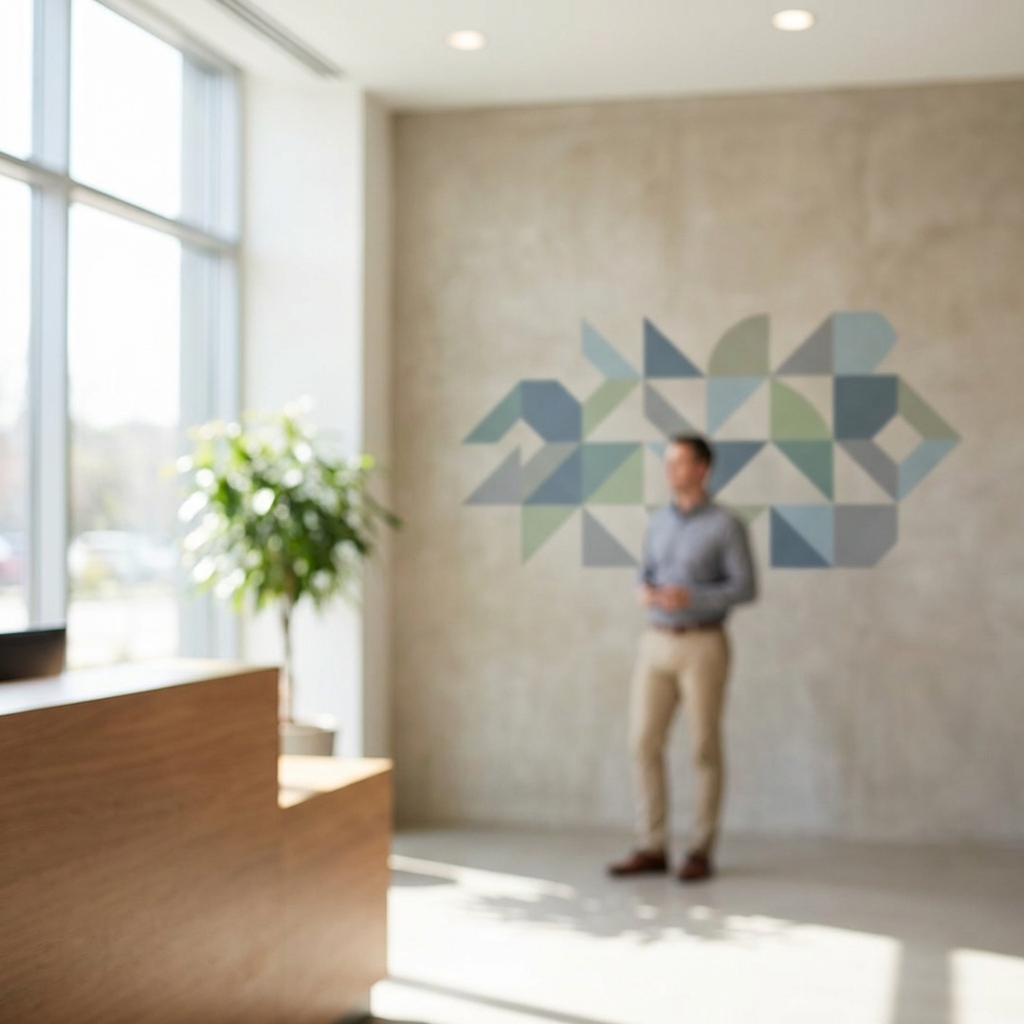
For truly short-term messages—think weeks to a few months—traditional adhesive vinyl wraps remain a practical choice. They install fast, come down quickly, and are ideal when content will turn over after a campaign, event, or lease-up period. Limit them to smooth, non-porous surfaces (glass, metal, sealed laminate, finished elevator doors) for clean removals and fewer failures.
Common examples include seasonal retail promotions, pop-up brand moments, trade-show zones carved out inside a lobby, and construction detours that change as phases advance. Elevator cabs, glass partitions, and column wraps are frequent targets because they provide high visibility without risking paint damage to drywall. For floors, use slip-rated films with a matched laminate and be prepared to replace high-traffic areas during longer activations.
Best practices for temporary vinyl:
- Select removable, low-tack films with air-release liners; match with a protective laminate for cleaning and scuff resistance.
- Prep surfaces: ensure paint is fully cured (typically 30+ days), clean with isopropyl alcohol, and install within the manufacturer’s temperature range.
- Avoid unsealed drywall, textured CMU, brick, or raw concrete; always run a test patch to check adhesion and prevent paint lift.
- Plan the removal window and disposal; adhesives and liners are landfill-bound, so minimize square footage where possible.
- Confirm fire/smoke ratings and ADA considerations for corridors, exits, and reflective surfaces.
When the message needs to live longer, be more durable, or read as part of the architecture, shift to direct-to-wall printing services. EastCoast MuralPros delivers high-resolution mural printing as a vinyl wall wrap alternative that installs in hours with minimal disruption and no adhesives. The result is seam-free commercial wall graphics that are cleanable, paint-over-ready, and ideal for architectural branding solutions, wayfinding, and durable office wall art across campuses and multi-location portfolios.
A hybrid approach works well: use vinyl selectively for short-lived promos on glass and fixtures while reserving walls for permanent or rotational brand layers printed directly in place. EastCoast MuralPros can also produce in-studio pieces—standees, tabletops, and doors—to support campaigns without touching walls, and their subscription model streamlines seasonal refreshes with predictable schedules and consistent execution.
Comparison Summary: Print Resolution, Installation Speed, and Long-Term Durability
Direct-to-wall printing services deliver true high-resolution mural printing that reads cleanly at architectural scale. Because the image is produced in-place without panels, there are no seams to interrupt gradients, fine typography, or photographic details. On drywall, CMU, concrete, or brick, the print bonds to the surface microtexture for an integrated, built-in look—ideal for brand walls, donor recognition, and gallery installations. By contrast, vinyl is fabricated on rolls, creating panel joints every few feet and introducing alignment risks that can be noticeable in patterns and large-format imagery.
Speed favors on-site printing. Eliminating separate surveying, off-site fabrication, shipping, and panel staging compresses schedules dramatically; most 20–40 ft feature walls can be completed in under five hours with low disruption. That makes it feasible to update a clinic corridor between shifts, refresh a corporate lobby overnight, or prepare a school entry before a weekend event. Vinyl often requires multi-visit coordination, longer area closures for layout and application, and rework when edges bubble or seams misalign.
At a glance, the key differences are:
- Image continuity: Seam-free prints vs. panel seams that break visuals
- Installation time: Single-session, low-disruption vs. multi-step, multi-day for large runs
- Rework risk: On-site accuracy vs. off-site fabrication errors and fit issues
- Substrate flexibility: Finished and unfinished surfaces vs. smoother surfaces preferred
- Lifecycle: Paint-over-ready refreshes vs. removal, adhesive residue, and panel replacement
Long-term durability hinges on how graphics age in high-traffic environments. Direct-to-wall outputs have no vulnerable edges for peeling or snagging and are engineered to be cleanable, making them well-suited for corridors, patient areas, and retail back-of-house. When change is needed, teams can simply paint over and reprint—reducing downtime and waste. Vinyl expands and contracts with temperature, and edges can lift or seam lines creep, leading to patchwork fixes that undermine brand standards for commercial wall graphics.
For multi-site consistency and architectural branding solutions, EastCoast MuralPros combines on-site high-resolution printing with programmatic controls suited to facilities and procurement teams. As a proven vinyl wall wrap alternative, the firm supports campus wayfinding, durable office wall art, and seasonal brand refreshes through a subscription model, with the option to print doors, tables, and standees in-studio for cohesive rollouts.
Operational Advantages: Evaluating Maintenance Cycles and Surface Compatibility
When facilities leaders weigh total cost of ownership, maintenance cycles and surface compatibility are where direct-to-wall printing services separate themselves from vinyl. Adhesive films introduce seams, overlaps, and panel joints that become failure points under cleaning, humidity shifts, and thermal expansion. Once edges lift or bubble, touch-ups are visible and replacement often requires full panel swaps, wall repair, and downtime. In contrast, printing directly on the substrate eliminates seams and adhesives, reducing the risk of premature failures and recurring service calls.
Maintenance is also simpler. Vinyl and wallpaper typically need specialized cleaners to avoid dulling or delaminating the surface, and removal can damage paint or drywall. EastCoast MuralPros produces durable, cleanable finishes designed for high-traffic environments that can be wiped with standard facilities protocols. When it’s time to change messaging or branding, the paint-over-ready finish is refreshed with primer and paint—no scraping adhesive, no landfill-bound panels, and significantly less disruption.
Surface compatibility directly affects schedule and risk. Adhesive graphics generally require smooth, sealed walls; porous or textured substrates demand labor-intensive skim coating and priming. EastCoast MuralPros prints on finished and unfinished surfaces with consistent results, enabling a broader set of use cases without added trades or prep work. Examples include hospital CMU corridors, brick lobby feature walls, raw concrete cores, and painted drywall across office floors.
Surfaces commonly supported for commercial wall graphics and wayfinding include:
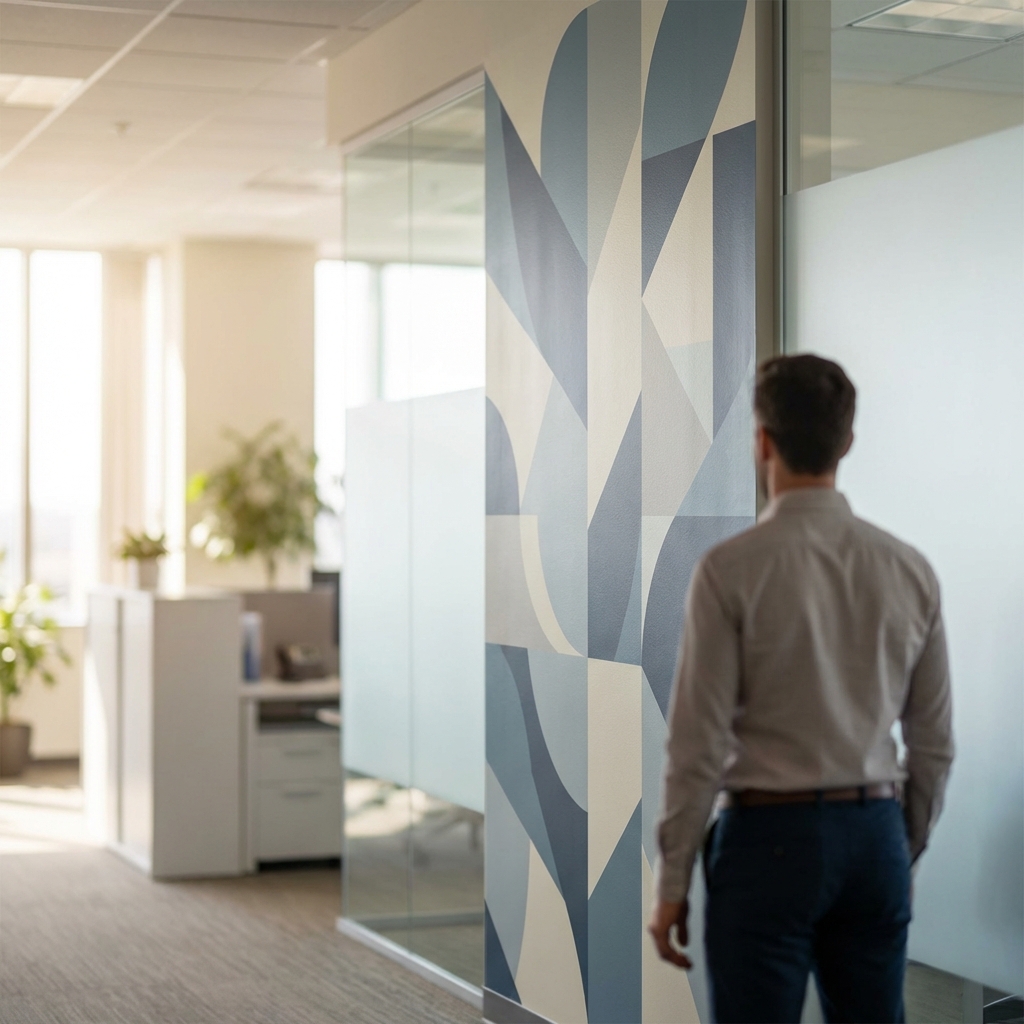
- Drywall (painted or primed) for durable office wall art and brand moments
- CMU/block and sealed concrete in healthcare and education hallways
- Brick and exposed concrete for architectural branding solutions in lobbies
- Select wood doors, tables, and standees via in-studio printing for coordinated programs
Operationally, on-site, seam-free, high-resolution mural printing reduces lead time and uncertainty. There are no panels to ship, fewer fabrication errors, and installations are often completed in under five hours, even in occupied buildings. For multi-location rollouts, EastCoast MuralPros delivers consistent execution and vinyl wall wrap alternatives that extend maintenance cycles, shrink refresh costs, and keep spaces looking photoreal at architectural scale.
Selection Guide: Choosing the Right Solution Based on Facility Type and Traffic
Selecting between direct-to-wall printing services and traditional films comes down to traffic, touch, and turnover. High-traffic corridors, frequent cleanings, and multi-surface conditions typically favor a seam-free, adhesive-free approach that won’t peel under stress. EastCoast MuralPros delivers commercial wall graphics on finished and unfinished substrates, making it a reliable fit when you need schedule certainty and consistent quality across locations.
Start with a quick decision lens:
- Traffic and cleaning: Daily wipe-downs and carts/bags brushing walls require durable, cleanable finishes.
- Substrate mix: Drywall, CMU, concrete, and brick benefit from on-site printing that adapts to surface variations.
- Downtime tolerance: Occupied facilities need low-disruption, under-5-hour installs.
- Scale and repeatability: National rollouts demand consistent color and execution across sites.
- Refresh cadence: Seasonal updates point to subscription-based programs and paint-over-ready finishes.
Facility-specific guidance:
- Healthcare systems: Corridors, waiting rooms, and staff areas need cleanable, seam-free graphics and integrated wayfinding without sign clutter. On-site, overnight installs minimize patient-area disruption.
- K–12 and higher ed: Stairwells, cafeterias, and labs benefit from durable graphics that handle backpacks and traffic. Paint-over-ready surfaces make program changes easy between terms.
- Corporate workplaces: Lobbies, meeting zones, and brand walls call for high-resolution mural printing and durable office wall art. Seam-free execution supports architectural branding solutions without panel lines.
- Retail and multi-location brands: Fast resets and seasonal campaigns favor vinyl wall wrap alternatives that print in place, eliminating shipping delays and fabrication mistakes.
- Hospitality: Guest corridors and amenity spaces need photoreal imagery installed during off-hours with minimal noise and dust.
- Museums and cultural institutions: Large-format, crisp detail at architectural scale elevates exhibitions and environmental graphics while preserving wall integrity.
- Commercial landlords: Turn floors quickly with graphics that paint over cleanly between tenants—no adhesive removal or wall repair.
Consider vinyl or panel systems when you need removable decals, dimensional letters, or extremely short-term pop-ups. For most high-touch, long-run, and multi-surface applications, direct-to-wall printing services from EastCoast MuralPros provide a performance-based alternative with faster installs and fewer lifecycle costs.
EastCoast MuralPros can audit substrates, pilot a test wall, and stage after-hours installations across campuses or portfolios. Their on-site model delivers consistent outcomes for national programs while reducing waste and downtime.
Sustainability Factor: Reducing Environmental Waste in Commercial Interior Upgrades
Vinyl wall coverings and wallpaper drive hidden waste across their lifecycle: PVC film, adhesive backers, release liners, seam trims, packaging, and frequent tear-outs when messages change. For multi-tenant buildings or multi-location brands, that often means dumpsters of scrapped material every refresh cycle. Adhesive residue remediation can also require chemicals and labor, compounding the environmental and budget impact.
Direct-to-wall printing services replace that material stack with on-site, high-resolution mural printing directly on drywall, CMU, concrete, or brick—no vinyl, panels, or adhesives. Because images are produced in place, there are no pallets of rolls, oversized crates, or over-ordered extras that end up in the bin. Seam-free execution eliminates overlap waste and produces cleaner, more integrated commercial wall graphics. For example, a university can update wayfinding across a residence hall in a weekend without generating a load of discarded film and liners.
Sustainability gains expand over the lifecycle. Durable, cleanable imagery reduces the frequency of replacements typical of vinyl that peels, bubbles, or scuffs in high-traffic zones. When programs shift, a paint-over-ready finish lets teams retire or refresh graphics with standard paint instead of demolition and adhesive stripping. Landlords can turn a suite quickly between tenants, and brand teams can schedule seasonal updates through a subscription without buying new substrates each time.
Material waste you avoid with vinyl wall wrap alternatives:
- PVC film, adhesive backers, and release liners associated with traditional wraps and wallpaper
- Overlaps, seams, and trim-off scraps required to align panels at scale
- Crating, pallets, and protective packaging for fabricated panels shipped to site
- Removal chemicals, heat, and labor to remediate adhesive residue during decommissioning
- Replacement cycles driven by edge failures, delamination, and hard-to-clean surfaces
- Redundant hardware signage when wayfinding, safety, and instructional graphics are integrated into the architecture
EastCoast MuralPros delivers these sustainability benefits with consistent execution across campuses, hospitals, workplaces, and national rollouts. Their direct-to-wall printing services support architectural branding solutions and durable office wall art that stand up to daily use while minimizing waste. For teams seeking measurable, practical improvements over vinyl, it’s a scalable path to lower-impact interiors without compromising image quality.
Call to Action
Contact us to learn more