Introduction: The Evolution of Commercial Interior Graphics
Commercial Wall Printing Services: A Modern Alternative to Vinyl and Wallpaper
Commercial interiors have moved beyond posters, framed art, and traditional wallpaper. Facilities teams now expect brand-right, durable graphics that install fast, perform under heavy use, and scale across portfolios. As organizations phase out vinyl wall coverings due to seams, peeling, and maintenance issues, commercial wall printing services are becoming the performance standard.
Direct-to-wall systems enable high-resolution wall graphics that feel integrated with the building itself. They compress schedules, reduce disruption, and open new possibilities for wayfinding and environmental branding. For multi-site operators, they also resolve a longstanding challenge: how to execute consistently across different buildings, substrates, and conditions without rework, long shipping queues, or extended downtime.
EastCoast MuralPros is among the providers leading this transition. By combining advanced print equipment with on-site production workflows, they deliver a practical, durable interior wall solution that outperforms decorative approaches and removes the headaches of adhesives, panels, and frequent replacements.
What is Direct-to-Wall Printing Technology
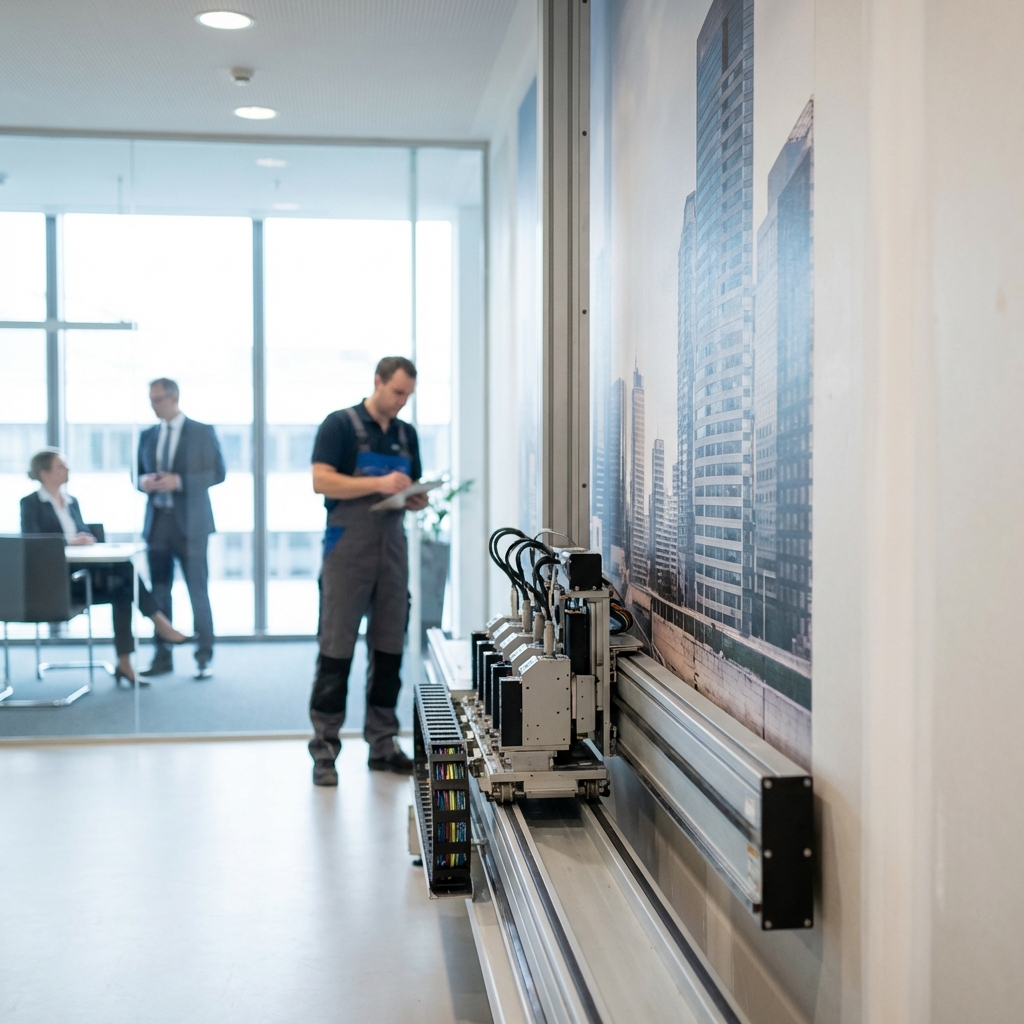
Direct-to-wall printing technology brings the large-format printer to the project site and places your imagery directly onto the wall—no vinyl, wallpaper, or secondary materials required. The print heads traverse the surface and deposit durable inks that are cured in place, producing crisp, photoreal visuals with smooth tonal gradients and tight detail.
Unlike traditional wraps, the graphic becomes part of the architectural surface. Because there is no film, there are no seams, bubbles, or edges to contend with. The result is a clean, integrated finish that reads as intentional design rather than an applied layer. For architects and interior designers, that difference is substantial—especially on long runs, tall atriums, or masonry.
A typical direct-to-wall workflow includes:
- Site assessment of substrates (e.g., drywall, CMU, concrete, brick) and environmental conditions
- Artwork preparation, scale studies, and color proofing
- On-site positioning, live test passes, and operator calibration
- Seam-free mural installation, with on-board curing for immediate handling
- Final inspection and turnover, often within a single shift
Providers like EastCoast MuralPros also print in-studio on doors, tables, and standees for coordinated elements that match on-site walls. This hybrid approach keeps graphics consistent across touchpoints—useful for lobbies, exhibit galleries, and branded amenity zones.
Key Advantages Over Traditional Vinyl and Wallpaper Solutions
Vinyl and wallpaper had a long run in commercial environments, but they carry trade-offs that are difficult to justify today. Direct-to-wall printing solves those pain points and introduces new performance gains.
Key advantages include:
- Adhesive-free execution: Eliminates failure modes like peeling, bubbles, and edge-lift; avoids adhesive residue and difficult removals.
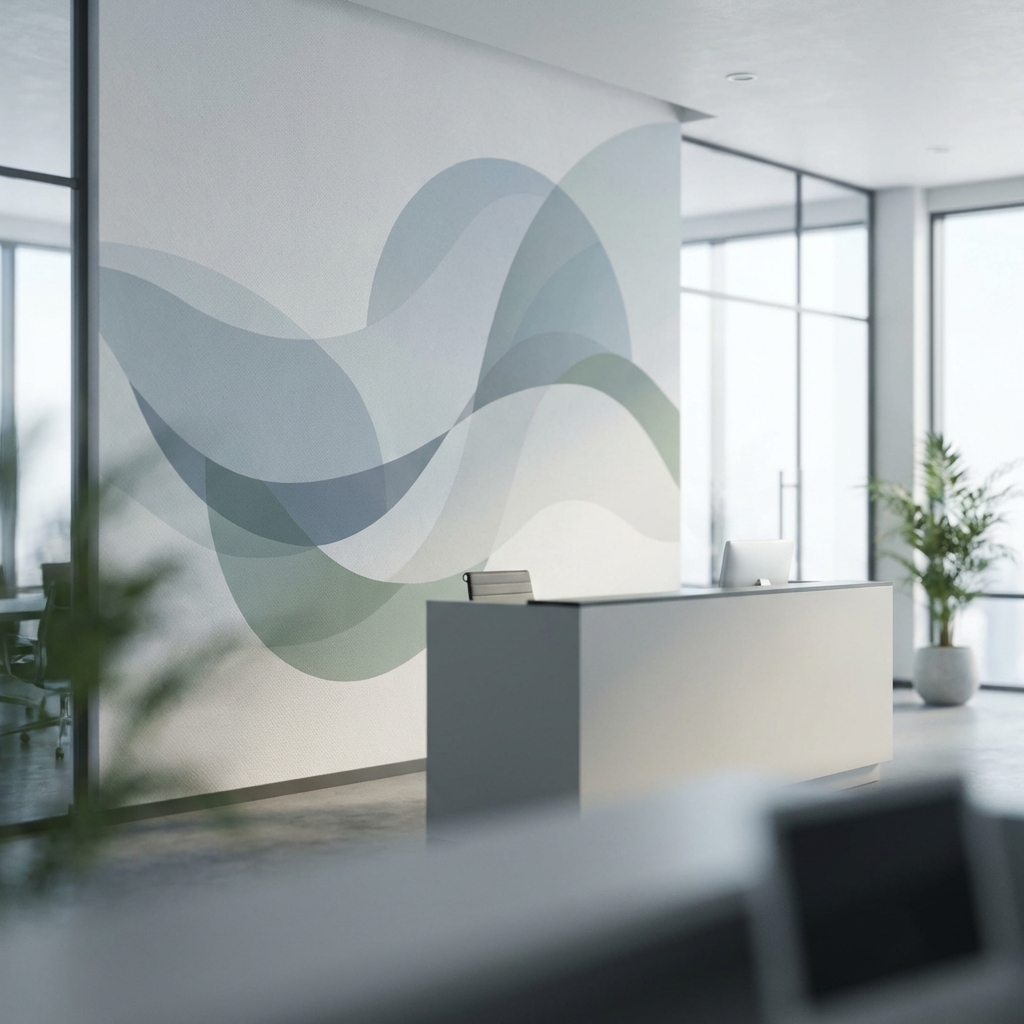
- Seam-free mural installation: No panel seams or overlaps, so long corridors and tall feature walls read as a single, uninterrupted field of color and detail.
- Speed and predictability: On-site printing removes shipping bottlenecks, re-fabrication delays, and mis-measured panels. Schedules tighten and become more reliable.
- Architectural integration: Graphics sit flush with the surface and feel designed-in, not applied. This elevates brand perception and guest experience.
- Durable, cleanable surfaces: Built for high-traffic environments; supports routine cleaning and wipe-downs without compromising image fidelity.
- Paint-over-ready finish: When programs or tenants change, walls can be repaired or repainted without demolition, waste hauling, or adhesive mitigation.
- Lifecycle efficiency: Without films to replace, the total cost of ownership declines—fewer interventions across the life of a space.
- Broader substrate compatibility: Works on finished and unfinished surfaces (drywall, CMU, concrete, brick) with correct surface prep.
For facilities, procurement, and workplace teams under pressure to do more with less, these attributes shift wall graphics from a decorative add-on to a dependable, performance-based alternative to vinyl wall coverings and wallpaper.
Commercial Applications Across Industries and Facility Types
Direct-to-wall printing is versatile enough to support campus-scale programs and detailed, compliance-oriented zones. The same system can produce brand walls, educational exhibits, and integrated wayfinding in a single mobilization—useful when timeframes are compressed or renovations are phased.
Common applications include:
- Corporate and workplace: Lobby features, culture walls, meeting room identifiers, wellness messaging, and program-specific graphics that evolve with teams.
- Healthcare systems: Corridor wayfinding, zone color-coding, safety and instructional cues, donor recognition, and child-friendly imagery—all with cleanable, durable finishes suited for high-traffic care environments.
- Education (K–12 and higher ed): Full-campus solutions spanning residence halls, student centers, academic departments, and athletics, designed for seasonal refreshes and event cycles.
- Hospitality: Guest corridors, conference centers, amenity spaces, and F&B zones with brand storytelling at architectural scale; rapid updates for rebrands or property flag changes.
- Retail and multi-location brands: National rollouts, localized content, promotional cycles, and store-in-store activations executed consistently across footprints with varied substrates.
- Museums and cultural institutions: Photoreal, high-resolution imagery for galleries and temporary exhibits; integrated interpretive graphics that minimize signage clutter while preserving curatorial intent.
- Public-sector and institutional owners: Civic branding, public information graphics, and durable interior wall solutions that align with budget cycles and long-term maintenance plans.
- Commercial landlords and asset managers: Lease-up readiness, amenity upgrades, and “white box plus graphics” strategies that minimize construction while elevating the tenant experience.
Because installation is low-disruption and often completed in under five hours per location, teams can target critical paths—opening dates, accreditation visits, or new tenant move-ins—without sacrificing quality.
Installation Speed and Minimal Disruption Benefits
Most organizations cannot tolerate lengthy closures or intrusive construction. Direct-to-wall printing prioritizes schedule certainty and occupant comfort, enabling teams to modernize interiors while buildings remain in use.
Installation advantages that matter operationally:
- Fast cycles: Typical spaces are completed in under five hours, including setup, positioning, printing, and quality checks. Multi-wall or multi-floor scopes can be phased to match security, infection control, or quiet-hour requirements.
- Occupied building friendly: Low noise and point-of-need curing reduce disturbance. Areas can reopen quickly, often the same day, with no off-gassing from adhesives or lingering panel smells.
- No shipping or panel staging: On-site printing eliminates the logistics burden of crating, storage, and handling large graphic panels—especially valuable for high-rises and constrained campuses.
- Fewer trades to coordinate: Because the system applies directly to prepared walls, there’s no need to schedule separate wallcovering crews, specialty adhesives, or vinyl panel overlaps.
- Precise fit on site: Live test passes and on-wall previews allow operators to refine placement and scale in real time, protecting design intent when dimensions vary from plan.
For facilities directors managing uptime and safety protocols—particularly in healthcare and education—low-disruption installation enables needed upgrades without displacing staff, students, or patients.
Durability, Maintenance, and Lifecycle Cost Efficiency
The right wall graphic should look as good in month 24 as it does on day one. Direct-to-wall systems are engineered for longevity in high-traffic areas, supporting routine cleaning and daily wear with minimal upkeep.
What durability looks like in practice:
- Cleanable finish: Surfaces tolerate standard wipe-downs and non-abrasive cleaners used by custodial teams, protecting both image clarity and hygiene standards.
- Impact resilience: Without edges or seams, there are fewer failure points from carts, backpacks, or rolling chairs grazing the wall.
- UV-stable imagery: Color-managed, high-resolution wall graphics maintain visual fidelity under normal interior light exposure.
- Targeted touch-ups: Because there’s no film to replace, minor scuffs can be addressed locally, or the wall can be repainted entirely when programs change.
- Paint-over-ready: End-of-life is simple—no labor-intensive removal, adhesive abatement, or wall repair from pulled-down vinyl.
Lifecycle math matters. Vinyl may appear inexpensive at purchase, but repeated replacements, edge failures, and removal labor inflate total cost of ownership. Direct-to-wall printing reduces interventions, lowers waste, and mitigates schedule risk associated with fabrication and refabrication. For multi-location brands, that efficiency compounds across hundreds of sites and fiscal years.
Sustainability and Environmental Impact Compared to Alternatives
Sustainability is now a core evaluation criterion for interior upgrades. Compared to wallpaper and vinyl wall coverings, direct-to-wall printing offers clear environmental advantages by eliminating plastic films, adhesives, and frequent replacement cycles.
Sustainability benefits include:
- Material reduction: Printing onto existing walls removes the need for PVC or PET film, liner papers, and overlap seams—significantly cutting embodied material.
- Fewer shipments: On-site production reduces freight emissions and the risk of re-fabrication due to damage or field measurement variances.
- Longer useful life: Durable finishes extend refresh timelines, lowering waste generation and supporting lifecycle-based procurement decisions.
- Simplified end-of-life: Paint-over-ready surfaces avoid landfill-bound vinyl and contaminated adhesive backers.
For teams benchmarking options, EastCoast MuralPros provides additional insights on environmental performance in this comparison of direct-to-wall vs vinyl sustainability. As sustainability standards and reporting requirements tighten, solutions that inherently reduce materials and logistics will align best with organizational and regulatory goals.
Design Flexibility and Customization Capabilities
Design latitude is where direct-to-wall printing excels. Without the constraints of panels or seams, imagery can span entire surfaces—wrapping corners, aligning with reveals, and integrating with architectural rhythms. Photoreal, high-resolution imagery holds up at close viewing, while large fields of color render without banding or panelization.
Capabilities to drive creative outcomes:
- Architectural-scale continuity: Seam-free fields across long corridors, high lobbies, and curved surfaces read as intentional design rather than applied graphics.
- Color-managed brand accuracy: Calibrated workflows maintain brand colors and tonal consistency across locations and substrates.
- Surface versatility: Finished and unfinished substrates (drywall, CMU, concrete, brick) can be leveraged to reinforce concept—think raw masonry textures paired with crisp graphic overlays.
- Programmatic systems: Create modular design kits that adapt by region, department, or season while preserving core brand structure.
- Rapid iteration: On-site previews enable last-meter refinements to scale, crop, and alignment for perfect placement in real conditions.
- Extended elements: In-studio printing on doors, tables, and standees brings cohesive storytelling to touchpoints beyond walls.
Scalable collaboration is also essential. EastCoast MuralPros supports digital artists and design teams with collaborative tools—cloud proofing, annotated markups, and production templates—to help creative work scale across a portfolio without losing nuance. For institutions, this means one design language can carry from main campus to satellite locations with minimal rework.
Multi-Location Rollout and Brand Consistency
When projects move from one lobby to one hundred sites, execution discipline becomes the differentiator. Direct-to-wall printing is well-suited to multi-location rollouts because it standardizes how graphics are produced, color-calibrated, and quality-checked in the field.
Elements of a reliable rollout program:
- National color governance: Reference prints and ICC-managed profiles inform consistent output across regions and building conditions.
- Repeatable methods: Documented placement rules, elevation references, and substrate prep standards minimize variance and guesswork.
- Pilot-to-scale process: Begin with a pilot in representative sites to validate workflow, then expand to full portfolios with lessons learned.
- Centralized asset libraries: Approved artwork, room-by-room typologies, and wayfinding icon sets streamline local adaptations.
- Capacity planning: Coordinated scheduling and crew allocation ensure tight go-live windows are met without sacrificing quality.
EastCoast MuralPros specializes in consistent execution across multi-location and national programs, including subscription models for seasonal or strategic refreshes. This supports cyclical initiatives—employee campaigns, academic calendars, retail promotions—while keeping long-term maintenance predictable and budget-aligned.
Wayfinding, Safety, and Instructional Graphics Integration
Signage clutter is a frequent complaint in complex buildings. By integrating wayfinding, safety, and instructional graphics directly onto walls, facilities can guide people more effectively while reducing visual noise and maintenance overhead.
Integrated approaches that work:
- Zone coding and landmarks: Color fields, large numerals, and pattern systems create intuitive cues that help users orient quickly.
- Corridor and junction guidance: Arrows, icons, and concise text embedded at decision points make routes clear without additional sign hardware.
- Safety and instructional overlays: Hygiene protocols, equipment instructions, and room-use guidelines can be updated per program cycle without replacing fixtures.
- Education and healthcare specificity: Pre-K–12 visuals tailored for age-appropriate comprehension; hospital wings with coordinated colors and pictograms for language-independent navigation.
- Accessibility alignment: Wall graphics can complement, not replace, required code-compliant tactile signage, creating a unified information environment.
The benefit is twofold: occupants navigate spaces faster and with less stress, and facility teams manage fewer devices that can fail, misalign, or require frequent repositioning. For high-throughput corridors and lobbies, integrated graphics are an elegant way to keep information visible without crowding the environment with brackets and plaques.
Choosing the Right Provider and Evaluating Solutions
Selecting a provider for commercial wall printing services involves more than comparing per-square-foot rates. You’re choosing a partner to deliver brand-critical work inside occupied buildings on compressed schedules. A structured evaluation helps de-risk the decision.
What to look for:
- Technical capability: Confirm resolution, print height/width ranges, and compatibility with your wall substrates (drywall, CMU, concrete, brick). Ask for on-wall test prints in representative conditions.
- Color management: Review proofing processes, brand color calibration, and how the team documents and reproduces results across sites.
- Cleanability and durability: Request maintenance protocols and cleaning test outcomes for your environment (e.g., healthcare-grade routines).
- Process discipline: Seek clear site-survey checklists, installation sequencing, safety plans, and contingency steps for occupied settings.
- Experience in your sector: Prior work in healthcare, education, retail, hospitality, or corporate portfolios indicates fluency with approvals, off-hours scheduling, and compliance norms.
- Risk and safety credentials: Verify insurance, background checks for on-site technicians, and adherence to relevant protocols (e.g., ICRA in clinical areas).
- Artwork handling: Ensure secure asset transfer, version control, and a documented review/approval workflow with annotated markups.
- Warranty and end-of-life guidance: Understand what’s covered, expected service life, and paint-over recommendations for future changes.
- References and pilots: Speak with peer facilities or run a pilot on a representative wall to validate performance, crew professionalism, and occupant impact.
EastCoast MuralPros aligns with these practices, providing collaborative review tools, predictable scheduling, and performance-focused execution. For a deeper dive into program benefits, their overview of the advantages of custom wall printing offers criteria you can bring into procurement evaluations.
Conclusion: Why Organizations Are Switching to Direct-to-Wall Printing
Facilities leaders, architects, and brand teams are moving to direct-to-wall printing because it reframes wall graphics as an operational asset. The approach compresses timelines, reduces disruption, and delivers high-resolution, seam-free results that integrate with the architecture. Compared to vinyl and wallpaper, it is a durable interior wall solution with lower lifecycle costs and a significantly smaller environmental footprint.
From full-campus upgrades in schools and hospitals to national retail refreshes and corporate rebrands, commercial wall printing services deliver schedule certainty and design fidelity at scale. Wayfinding, safety, and instructional graphics can be built into the environment, simplifying information delivery and reducing hardware clutter. And when programs evolve, paint-over-ready finishes make change straightforward.
EastCoast MuralPros exemplifies what this new standard looks like: direct-to-wall printing technology, fast on-site execution, collaborative tools for creative teams, and the capacity to roll out consistently across portfolios. For organizations seeking sustainable wall covering alternatives that perform in real-world conditions, the case is clear—direct-to-wall printing is the modern, dependable choice.
Contact us to learn more