Introduction: The Strategic Importance of Corporate Lobby Branding
Corporate lobbies do more than host visitors for a few minutes—they frame the narrative about your organization’s competence, stability, and values. Thoughtful corporate lobby branding solutions translate strategy into space, signaling to clients, recruits, and partners that what happens inside your building is intentional and well-managed. When the right message is expressed the moment someone steps through the doors, organizations see faster trust-building, smoother wayfinding, and higher perceived quality of service.
The pressure on facilities and workplace teams is real: deliver high-impact entrance branding quickly, keep disruptions minimal, and avoid solutions that age poorly. EastCoast MuralPros helps address that challenge with next-generation direct-to-wall printing that produces high-resolution, seam-free graphics without vinyl or adhesives. For organizations seeking performance, speed, and scalability, this approach turns underperforming lobbies into precise expressions of brand and purpose—often in a single shift.
Why First Impressions Matter in Corporate Environments
The lobby is a high-stakes touchpoint that sets expectations for everything that follows. People subconsciously evaluate cleanliness, clarity of wayfinding, brand consistency, and attention to detail within the first few seconds. When office entrance graphics are cohesive and legible, visitors feel oriented and confident. When they’re outdated or piecemeal, stakeholders assume similar gaps exist in your operations.
First impressions impact measurable outcomes. In a competitive leasing market, a compelling entrance can accelerate tenant interest. For HR and recruiting, a strong lobby can reduce candidate drop-off by projecting a modern, people-first culture. In healthcare and higher education, welcoming lobbies can influence satisfaction scores and reduce confusion by integrating wayfinding at the point of entry. Across these contexts, your lobby is less a waiting area and more a brand performance zone—one worth optimizing with deliberate, resilient design.
Traditional Lobby Branding Methods and Their Limitations
Many organizations still rely on a mix of painted feature walls, framed art, dimensional letters, wallpaper, and vinyl wraps to refresh their lobbies. While familiar, these methods can be slow to install and prone to aging issues that undermine their initial impact.
Common limitations include:
- Seams and edges: Wallpaper and vinyl often reveal panel joints and can bubble or peel, especially near HVAC diffusers, sunlit areas, or high-touch corners.
- Downtime and disruption: Millwork, panel systems, and custom fabrication require staging, shipping, and multiple trades—often extending schedules in occupied buildings.
- Inflexibility: Once adhesive materials are applied, updates are time-consuming. Seasonal branding, regulatory messaging, or tenant turnover becomes a costly cycle of removal and reinstallation.
- Quality control: Colors can drift across print batches and substrates; surface texture telegraphs through thin films; and metallics or gloss levels may not match the design intent.
- Shipping and fabrication risks: Damage-in-transit and mismeasured pieces push projects off schedule, frustrating facilities and procurement.
- Lifecycle costs: Frequent replacements and maintenance add up, and removal generates significant waste.
For decision-makers tasked with reliability, speed, and cost predictability, these constraints create unnecessary risk. They also make it harder to scale updates across campuses or multi-location portfolios with consistent results.
Direct-to-Wall Printing: A Modern Alternative to Vinyl and Wallpaper
Direct-to-wall printing is a commercial wall printing technology that places high-resolution imagery and branding directly onto finished or unfinished substrates—drywall, CMU, concrete, or brick—without vinyl or adhesives. It produces seam-free murals with precise detail at architectural scale, allowing graphics to feel truly integrated with the building, not applied onto it.
Key advantages over lobby design alternatives to vinyl and wallpaper include:
- Adhesive-free integration: No films, seams, or edge failures. Graphics read as part of the wall, elevating the look and reducing long-term maintenance.
- Speed and predictability: On-site printing eliminates shipping delays and fabrication errors, enabling many lobby installs to complete in under five hours.
- Photoreal clarity at scale: Fine typography, complex brand gradients, and photography hold up from close range to atrium distances.
- Low-disruption workflow: Minimal noise, minimal staging, and small installation teams suit occupied buildings with sensitive operations.
- Paint-over-ready: When it’s time to rebrand or re-tenant, you can simply paint over the print—no tear-out, scraping, or adhesive residue.
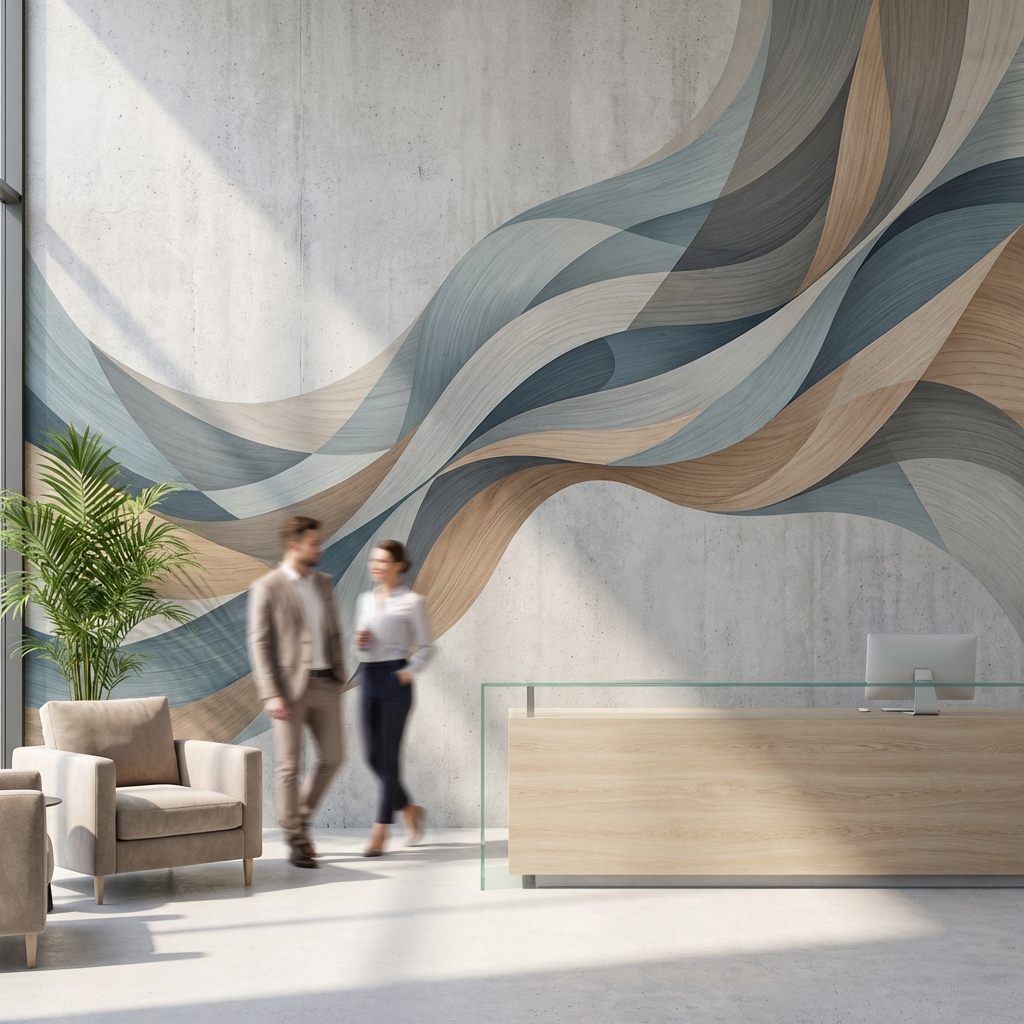
EastCoast MuralPros brings these advantages to corporate and institutional environments with a performance-based alternative to vinyl wall coverings and wallpaper. Beyond walls, in-studio printing can extend branding to doors, tables, and standees for cohesive lobby touchpoints like check-in stations and event fixtures. For digital artists and brand teams, collaborative tools help scale creative work from one feature wall to nationwide rollouts without compromising fidelity or speed.
Design Flexibility and Customization Options for Corporate Lobbies
Lobby environments vary widely—glass-and-stone atriums, textured CMU corridors, or warm timber reception areas—so the design system must adapt without loss of quality. Direct-to-wall printing offers unusual freedom for both subtle and high-impact expressions.
Ways to tailor your lobby experience:
- Architectural scale without seams: Span feature walls, soffits, columns, and long corridors as one continuous design, avoiding panel lines.
- Brand precision: Color-managed workflows reproduce exact hues across multiple locations, while typography and iconography remain razor-sharp.
- Integrated wayfinding: Embed directional cues, floor identifiers, and safety instructions directly into the visual language to reduce signage clutter.
- Storytelling formats: Donor walls, mission statements, timelines, and product narratives can be layered into a single composition with clear hierarchy.
- Surface versatility: Create cohesive experiences on drywall, CMU, concrete, or brick—enabling unified design across new construction and legacy finishes.
- Seasonal refresh paths: A subscription model allows planned updates for product launches, recruiting cycles, or holiday moments with clear budgets and timelines.
Design collaboration is also simpler. Teams can develop art at true scale, preflight complex visuals, and preview sightlines from key approach angles (elevator banks, reception desks, main entries). For lobbies with large windows or challenging lighting, tonal contrast and gloss-control strategies ensure legibility. And because the system is paint-over-ready, design iterations are not weighted by removal complexity—encouraging creativity while protecting capital budgets.
Installation Speed and Minimal Business Disruption
Organizations often delay lobby updates because they fear weeks of staging, material handling, and downtime. Direct-to-wall printing rearranges that equation. With on-site equipment and trained technicians, many lobby projects complete within a single shift—often in under five hours—so operations continue with minimal interruption.
Facilities teams appreciate:
- Predictable scheduling: Weekend and after-hours installations fit around peak foot traffic or critical events without extended closures.
- Compact footprint: No palletized vinyl, large panels, or crates clogging your lobby or loading dock; fewer trades to coordinate.
- Clean process: Low-disruption equipment minimizes noise and dust, and the site is returned to service quickly after completion.
- Fewer handoffs: Eliminating shipping and off-site fabrication reduces the cascade of schedule risks that often derail tight timelines.
EastCoast MuralPros plans around building logistics—elevator reservations, security access, and staging zones—so installations proceed smoothly even in occupied, high-security, or healthcare environments. When a new tenant signs late Friday, or a CEO town hall is scheduled Monday morning, instant branding for corporate spaces becomes practical instead of aspirational.
Durability and Maintenance in High-Traffic Lobby Spaces
Entrances endure constant wear: rolling luggage, carts, security lines, and frequent cleanings. Lobby graphics must withstand both physical contact and routine maintenance without looking tired after a quarter. Direct-to-wall printing produces durable, cleanable surfaces designed for high-traffic environments, maintaining clarity and color integrity across daily use.
Key durability considerations:
- Cleanability: Routine wipe-downs with common, non-abrasive cleaners maintain appearance without hazing or edge lift (there are no edges).
- Impact tolerance: Without a film to dent or peel, incidental contact is less likely to create visible failures.
- Sunlight and lighting: Graphics retain crisp detail and legibility even under varied lighting conditions common to glass-heavy lobbies.
- Serviceability: When it’s time to refresh, a straightforward paint-over returns the wall to a neutral state for the next tenant or program.
For teams evaluating materials head-to-head, see this overview of direct-to-wall printing benefits for high-traffic conditions. The takeaway: a properly specified and executed direct print offers superior lifecycle performance compared to adhesive films or wallcoverings that are vulnerable at the seams.
Cost Considerations and Lifecycle Efficiency
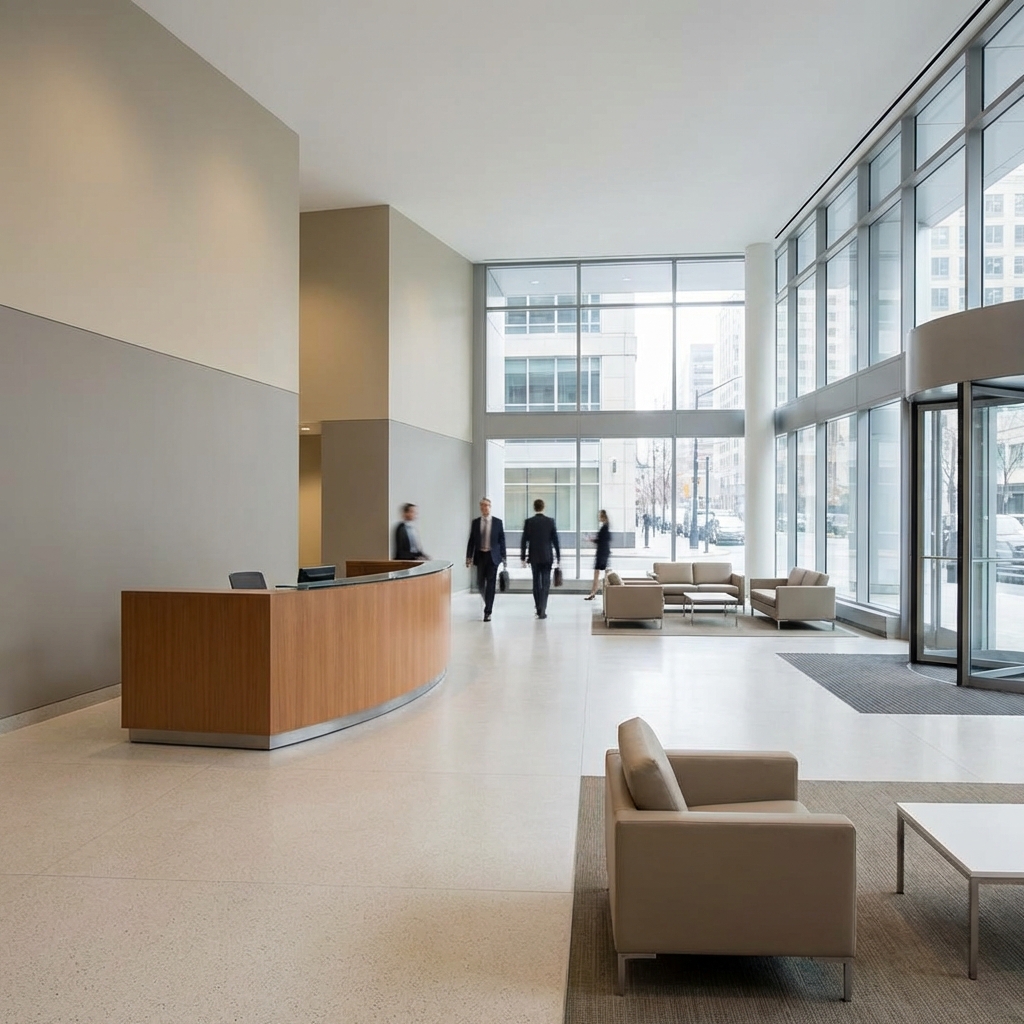
Early estimates for lobby upgrades often treat material costs as the primary driver, but lifecycle and operational factors tend to dominate the total cost of ownership. Adhesive-based solutions and wallpapers typically incur shipping, waste, on-site layout time, and periodic replacement due to edge failures or dated design. Hand-painted murals can be beautiful but introduce extended schedules and artist availability risks.
Cost levers that favor direct-to-wall printing:
- Fewer materials: No vinyl, adhesives, or panel systems, and no surplus rolls for “just in case”—less waste and lower handling costs.
- Installation efficiency: Compressed installation windows reduce after-hours premiums and security staffing.
- Avoided rework: On-site printing eliminates misfit panels or color-shift issues that trigger refabrication.
- Paint-over refresh: Future changes require standard paint instead of demolition or specialized removal, reducing labor and downtime.
- Predictable scaling: National rollouts benefit from repeatable specifications and file libraries, tightening budgets across dozens of sites.
For organizations managing large portfolios or frequent updates, a subscription approach can smooth budgets, provide schedule certainty, and standardize approval workflows. This lifecycle-efficient strategy is as much about financial control as it is about better outcomes—consistent, high-quality branding you don’t have to babysit.
Multi-Location Brand Consistency and Scaling
Brand inconsistency erodes trust, especially when stakeholders interact with multiple offices or campuses. Achieving consistent execution across a network requires more than sending brand files to local vendors; it takes a production system built for repeatability.
How to scale corporate lobby branding solutions with confidence:
- Centralized file governance: Maintain a master library of approved assets, color targets, and typographic specifications that technicians access on-site.
- Surface-aware templates: Prepare art variations for drywall, CMU, concrete, and brick to ensure predictable results across different finishes.
- Color management: Calibrated workflows prevent drift and align results site-to-site, even under different lighting.
- Pilot then roll out: Validate final color and legibility in one or two locations, then apply the same parameters to the full portfolio.
- Coordinated scheduling: Phase installs by region or business unit to minimize operational conflicts and shipping dependencies.
EastCoast MuralPros supports full-campus solutions and multi-location brand refreshes—from corporate workplace networks to healthcare systems and school districts—making enterprise-scale rollouts simpler for facilities, procurement, and brand teams. The combination of on-site printing, standardized processes, and experienced project management reduces the friction that typically slows national programs.
Sustainability Benefits of Modern Lobby Branding Solutions
Sustainability goals have moved from marketing statements to operational requirements. Many organizations now scrutinize not only materials but also waste streams and replacement cycles. Direct-to-wall printing eliminates vinyl and adhesive waste, reduces packaging and shipping, and minimizes end-of-life tear-outs. When the program changes, painting over the graphic returns the surface to neutral—no landfill-bound rolls or panel debris.
Sustainability gains include:
- Material reduction: No PVC-based films or adhesive liners, and no scrap from panel trimming.
- Fewer shipments: On-site printing cuts freight emissions and the risk of damaged goods requiring reshipment.
- Extended service life: Durable, cleanable prints reduce early replacements and maintenance visits.
- Cleaner changeovers: Paint-over updates avoid demolition, reduce downtime, and keep debris to a minimum.
For teams evaluating environmental trade-offs, this overview on direct-to-wall printing compares sustainability and waste factors across options. While every project is unique, organizations consistently find that adhesive-free, on-site workflows help meet internal sustainability KPIs without compromising brand impact.
Case Applications Across Different Industries
Because the approach is substrate-agnostic and operationally lightweight, it adapts well to diverse lobby contexts. Below are representative applications and considerations by sector.
- Corporate headquarters and workplaces:
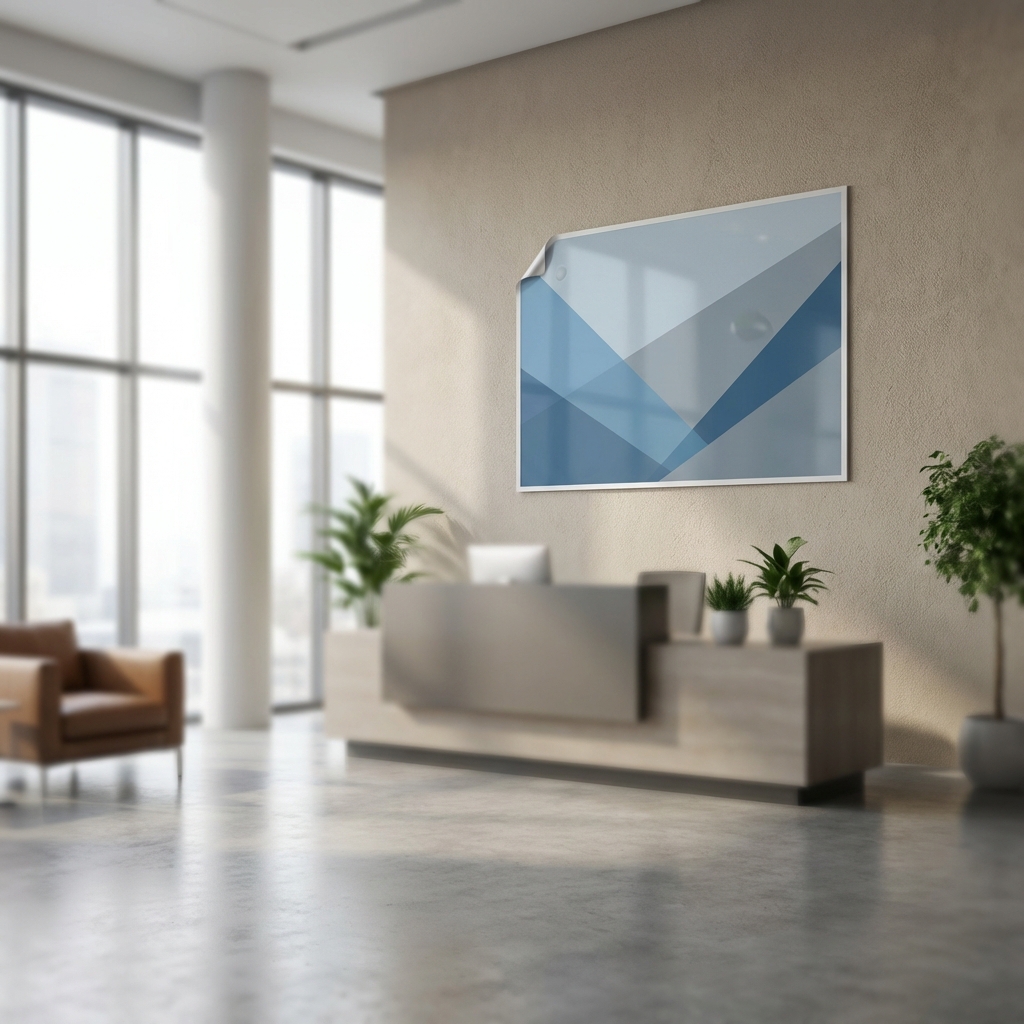
– Challenge: Outdated lobby graphics, multiple tenant receptions, and a need for a clear narrative about culture and capabilities. – Solution: Seam-free feature walls with mission language, product visuals, and floor-to-floor wayfinding integrated at entry points. Subscription-based quarterly refreshes align with campaign cycles. – Outcome: Faster visitor orientation, consistent brand cues for recruits and partners, and a lobby that stays current without recurring construction.
- Healthcare systems and medical facilities:
– Challenge: High-traffic entrances where calm, legible wayfinding is essential; strict downtime and infection-control constraints. – Solution: Direct-to-wall wayfinding, clinical service line identifiers, and soothing imagery printed onto drywall and CMU. Low-disruption, after-hours installations fit clinical schedules. – Outcome: Reduced signage clutter, improved navigation, and durable surfaces suitable for routine cleaning.
- Colleges, universities, and K–12 districts:
– Challenge: Multiple buildings and donor-funded projects; seasonal admissions events; athletics-driven branding moments. – Solution: Campus-wide identity systems, program highlights, and donor recognition integrated into lobbies, corridors, and residence hall entries. Paint-over-ready updates align with academic calendars. – Outcome: Cohesive campus identity and predictable refresh cycles, even across varied wall conditions.
- Hospitality brands and hotel operators:
– Challenge: Franchise brand standards, frequent refresh mandates, and high guest turnover at the front desk. – Solution: Photoreal feature walls and localized artwork printed directly on lobby surfaces, with in-studio printing of matching check-in desk fronts and standees for promotions. – Outcome: Branded arrivals that feel tailored to locale while preserving portfolio-wide consistency.
- Retail chains and multi-location brands:
– Challenge: Compressed rollout schedules, promotional changes, and tight budgets. – Solution: Instant branding for corporate spaces repurposed as retail lobbies and vestibules, combining product storytelling with embedded safety and directional messaging. – Outcome: Faster speed-to-floor for campaigns and fewer site-to-site variances in execution quality.
- Museums and cultural institutions:
– Challenge: Short exhibition timelines, large-scale interpretive walls, and the need for photoreal detail. – Solution: Crisp, high-resolution wall texts, maps, and imagery that read well both up close and across open galleries; integrated instructional graphics without clutter. – Outcome: Architectural-scale storytelling with professional fidelity, then paint-over transitions between shows.
- Commercial landlords and asset managers:
– Challenge: Lease-up periods require fast, cost-controlled lobby upgrades to compete for tenants. – Solution: Neutral-yet-premium feature walls and wayfinding systems that can be quickly rebranded for incoming tenants, avoiding capital-intensive millwork. – Outcome: Market-ready spaces with lower make-ready costs and less downtime between tenants.
- Public-sector and institutional owners:
– Challenge: Procurement scrutiny, safety communications, and limited tolerance for disruption. – Solution: Performance-based specifications for lobby branding that integrate code-required instructions with clear, branded visuals—without adding signage clutter. – Outcome: Durable, consistent results across multiple facilities, aligned with public accountability standards.
Across these settings, EastCoast MuralPros supports collaborative workflows with architects, interior designers, brand teams, and facilities managers. Digital artists can scale their work to architectural dimensions without surrendering control of detail, while administrators gain schedule certainty and lifecycle efficiency.
Conclusion: Choosing the Right Lobby Branding Strategy for Your Organization
Selecting lobby branding isn’t just a design choice—it’s an operational decision that affects schedules, budgets, and stakeholder confidence. As you evaluate options, weigh both near-term impact and long-term performance.
A practical selection checklist:
- Architectural fit: Will the solution integrate seamlessly with your existing surfaces (drywall, CMU, concrete, brick) without added layers or seams?
- Speed and disruption: Can installation occur in under a day with minimal staging and after-hours flexibility?
- Durability: Is the surface cleanable and suited to high-traffic touchpoints without edges that fail?
- Lifecycle plan: How easy is it to refresh after a tenant change or rebrand? What are the removal or changeover costs?
- Scale readiness: Can you roll out the same visual standards consistently across multiple locations or an entire campus?
- Sustainability: Does the method reduce materials, waste, and shipping, and support paint-over changeouts?
- Cost predictability: Are budgets protected from rework, shipping delays, and frequent replacements?
For organizations prioritizing reliability, clarity, and speed, direct-to-wall printing offers a compelling foundation for corporate lobby branding solutions—particularly when you need enterprise-grade results without the baggage of adhesives and extended timelines. If you’re planning a lobby upgrade, a pilot installation is a low-risk way to validate color, legibility, and workflow in your environment and then scale with confidence.
EastCoast MuralPros partners with commercial landlords, workplace teams, healthcare systems, schools, hospitality brands, retailers, museums, and public-sector owners to deliver high-impact entrance branding that’s fast, durable, and lifecycle-efficient. When you’re ready to transform first impressions instantly—and keep them sharp over time—consider a performance-based alternative that treats your lobby like the strategic asset it is. Visit eastcoastmuralpros.com to explore options or initiate a scoping conversation with a team that understands facilities, procurement, and operations from day one.
Contact us to learn more