
Introduction: The Evolution of Institutional Interior Branding
Institutions are rethinking walls as active tools for communication, not just decoration. From wayfinding in hospitals to donor recognition in university corridors, surfaces carry brand, safety, and instructional messages that must be updated quickly and hold up under constant use. Traditional wallpaper and vinyl wall coverings brought color and pattern, but seams, adhesives, and long installation windows often introduced risk, mess, and premature failure in high-traffic environments.
In the debate of direct-to-wall printing vs wallpaper, new wall printing technology changes the calculus. High-definition imagery is printed directly onto drywall, concrete, CMU, or brick—no vinyl, panels, or adhesives—delivering integrated, seam-free commercial wall graphics with minimal disruption. On-site production eliminates shipping delays and fitment errors, while paint-over-ready finishes simplify future refreshes. For facilities teams, it’s a performance-based, lifecycle-efficient path that aligns with procurement and operations priorities.
Modern interior branding solutions for complex campuses now benchmark against criteria like:
- Speed and schedule certainty in occupied buildings
- Durable mural printing that withstands cleaning and daily wear
- Seam-free, photoreal results at architectural scale
- Lifecycle efficiency and easy updates without demolition or waste
- Consistent execution across multi-location rollouts
EastCoast MuralPros helps organizations meet these standards with next-generation direct-to-wall printing that installs in hours, integrates wayfinding and safety cues without signage clutter, and delivers crisp detail suitable for galleries and museums. As a vinyl wall coverings alternative, the approach scales from single corridors to full campuses and national portfolios with predictable quality. It’s also a more responsible choice; teams prioritizing lower-impact upgrades can explore our sustainable wall printing technology to avoid PVC and reduce replacement cycles. Whether refreshing a clinic overnight or coordinating a multi-site brand update, the result is faster, cleaner, and easier to maintain.
Overview of Direct-to-Wall Printing: A Digital-First Technology
Direct-to-wall printing is a digital-first process that brings the printer to your surface, translating brand assets into seamless, architectural-scale imagery without vinyl or adhesives. In the conversation about direct-to-wall printing vs wallpaper, the key difference is execution: wallpaper is fabricated, shipped, pasted, and seamed; direct printing is produced on site with precision control and no material joints. For commercial interior branding, this means fewer points of failure, cleaner lines, and visuals that look integrated rather than applied.
Modern wall printing technology maps surface variations and deposits high-resolution imagery directly on drywall, CMU, brick, or sealed concrete, producing photoreal commercial wall graphics that are durable and cleanable. Because there’s nothing to hang, typical installations finish in under five hours per feature wall with minimal masking and no adhesive cure windows or paste cleanup, keeping occupied areas in operation. Color fidelity and crisp detail hold up at lobby scale and along long corridors, delivering durable mural printing that’s paint-over-ready for future tenant changes or program updates.
Where it outperforms wallpaper in operations and lifecycle:
- No seams to lift or bubble in humidity and high-traffic zones; nothing to peel at corners or edges.
- On-site production eliminates shipping delays, mis-measured panels, and reprints caused by field conditions.
- Consistent color management across campuses or multi-location rollouts enables standardized interior branding solutions.
- Faster refresh cycles and integrated wayfinding or safety graphics without adding physical signage that clutters corridors.
- Lower waste and a performance-based vinyl wall coverings alternative that reduces replacement and maintenance cycles.
EastCoast MuralPros specializes in this approach, delivering seam-free results at architectural scale with low-disruption installs for hospitals, schools, offices, and retail. Teams use the subscription model for seasonal campaigns, while facilities leaders rely on full-campus planning, in-studio printing for doors and standees, and collaborative tools that help digital artists scale artwork. For strategy on turning workplaces into brand touchpoints, see their guidance on corporate branding through physical space.
Overview of Traditional Commercial Wallpaper: The Legacy Approach
For decades, Type II vinyl and other commercial wallpapers have been the default for large-format branding, patterning, and wayfinding in offices, hospitals, schools, and retail. These systems rely on primed walls, paste or pressure-sensitive adhesives, and panelized installation with seams every 48–54 inches. Custom graphics are printed in rolls, which must be aligned carefully to maintain image continuity. The result can look polished at first, but seams, adhesive performance, and substrate prep drive long-term outcomes.
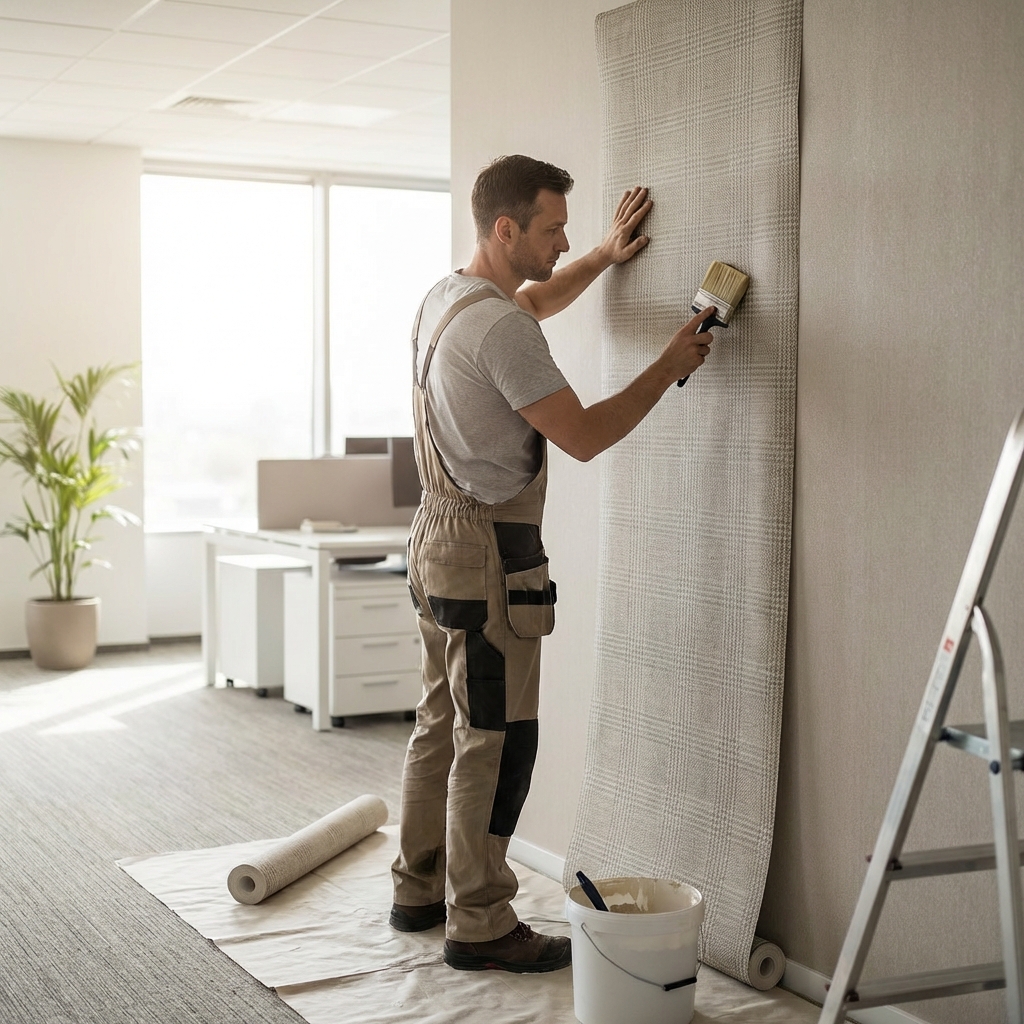
Installation is labor- and schedule-intensive. Surfaces often require skim coating and primer, then installers “book” materials, apply paste, hang, trim, and roll out bubbles—work that introduces odor, mess, and downtime. Curing and off-gassing can limit access to corridors or patient areas, and re-openings are frequently pushed when humidity or temperature slow adhesive set.
Common constraints and failure points include:
- Visible seams and pattern mismatches at doors, corners, and soffits
- Peeling, bubbling, or edge lift in high-humidity zones and near mechanical returns
- Dye-lot variation causing panel-to-panel color shifts during repairs
- Cleaning chemicals degrading inks or topcoats in high-traffic environments
- Damage during removal that tears drywall paper and demands patching
- Long lead times, shipping damage, and overage waste on complex runs
Lifecycle and scalability are also challenging. Updating a single message or wayfinding arrow can require reprinting multiple panels to match color and sheen. Multisite rollouts face variability in wall conditions and installer skill, making consistency difficult across campuses and portfolios. PVC content and adhesives raise sustainability concerns, and frequent replacements inflate total cost of ownership.
In the context of direct-to-wall printing vs wallpaper, many facilities teams now evaluate adhesive-free, seam-free wall printing technology as a vinyl wall coverings alternative. EastCoast MuralPros provides on-site, durable mural printing that minimizes disruption in occupied buildings and supports scalable commercial wall graphics. For interior branding solutions that need fast turns, cleanability, and consistent results across locations, this modern approach addresses the legacy pain points of traditional wallpaper.
Side-by-Side Comparison: Durability, Cleanability, and Maintenance
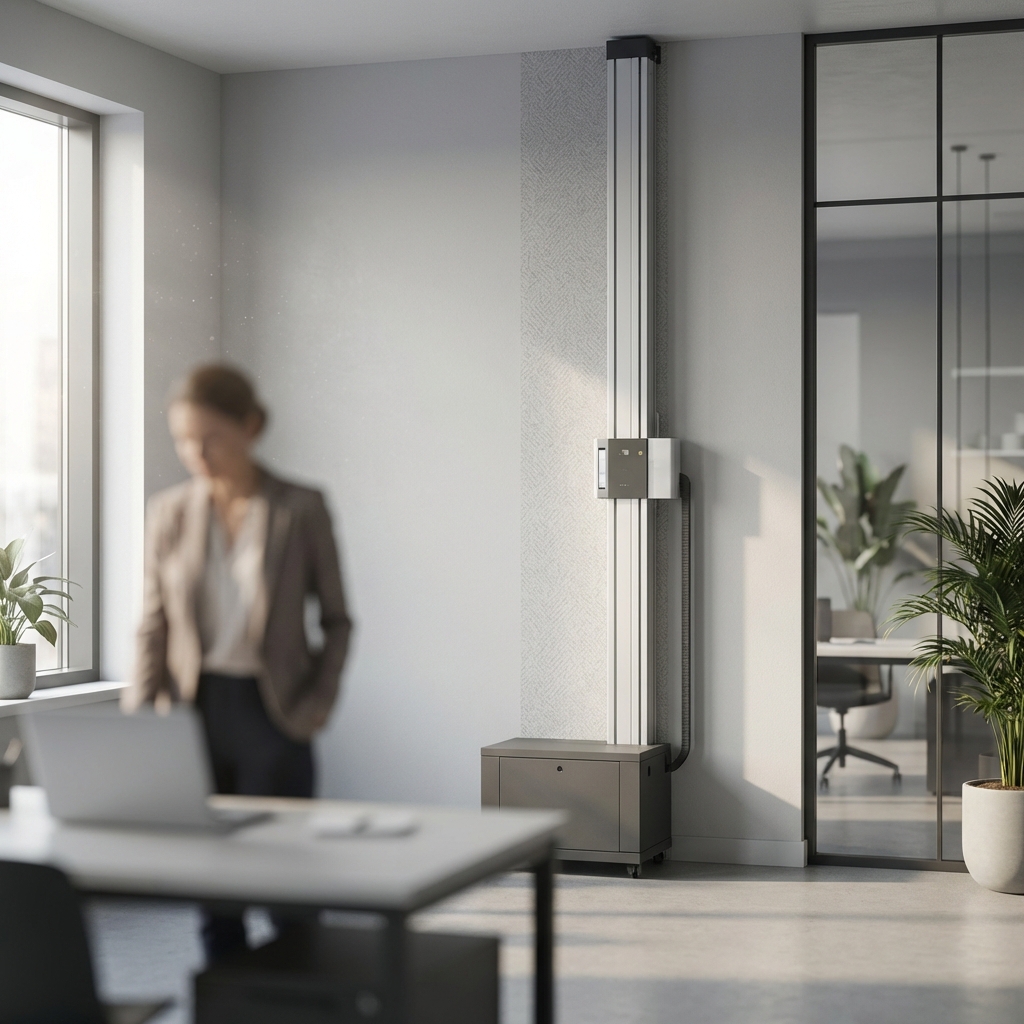
When evaluating direct-to-wall printing vs wallpaper for commercial wall graphics, durability is often the deciding factor. Traditional vinyl wallcoverings depend on adhesives and seams that can peel, bubble, or telegraph wall imperfections—especially on CMU, concrete, or uneven drywall. Adhesive-free wall printing bonds the imagery directly to the surface, creating a seam-free graphic that resists edge-lift and snagging in high-traffic corridors and lobbies.
Cleanability also separates the two approaches. Wallpaper can tolerate light cleaning, but seams and overlaps tend to trap dirt, and aggressive disinfectants may dull PVC finishes over time. Direct-to-wall graphics present a hard-wearing, continuous surface designed for routine wipe-downs with non-abrasive cleaners, supporting facilities protocols in hospitals, schools, and corporate offices without the risk of water intrusion at seams.
Key differences that matter in daily operations:
- Impact and abrasion: Wall printing integrates the graphic into the wall plane, reducing scuffs and tears from carts and backpacks; wallpaper often shows wear along seams and corners first.
- Moisture and humidity: Adhesives are more vulnerable in restrooms, locker rooms, and pool corridors; a seam-free print avoids edge failure when applied to properly primed substrates.
- Substrate tolerance: Direct-to-wall handles finished and unfinished surfaces (drywall, CMU, concrete, brick), while wallpaper typically demands a smooth, prepared wall to avoid telegraphing joints.
- Maintenance workflow: Wallpaper repairs require panel replacement, color-matching, and shipping lead time; direct-to-wall enables targeted on-site touch-ups or full reprints and is paint-over-ready for turnover.
Lifecycle and cost-of-ownership improve with fewer failures and faster refreshes. EastCoast MuralPros delivers durable mural printing with low-disruption installs typically under five hours, minimizing downtime in occupied buildings. Their wall printing technology is a proven vinyl wall coverings alternative for interior branding solutions at scale, reducing replacement cycles and eliminating fabrication errors tied to panels and adhesives.
For multi-location rollouts, the ability to reprint on-site ensures consistent execution across campuses and portfolios. A hospital can update wayfinding across several buildings in one coordinated visit, or a landlord can refresh a corridor between tenants and simply paint over it at the next change—no stripping, no residue, and no seams to repair.
Efficiency Comparison: Installation Timelines and Facility Disruption
When schedules are tight, the practical question in direct-to-wall printing vs wallpaper is how quickly you can mobilize and restore the space. Traditional wallcovering programs often span weeks end to end, while modern wall printing technology compresses work into a single site visit. For teams delivering commercial wall graphics as part of broader interior branding solutions, fewer steps mean fewer delays and less downtime.
Wallpaper and vinyl typically require field verification, file approvals, off-site printing, shipping, staging, and multi-day installation with paste, seams, and trimming. Spaces often need to be cleared, protected, and taken offline while materials cure, and any fabrication errors trigger reorders and rescheduling. Even with skilled installers, seams introduce risk for bubbling, peeling, or misalignment—disruptions facilities teams remember long after the install.
Direct-to-wall systems print imagery directly on finished or unfinished substrates, removing adhesives and panels from the workflow. EastCoast MuralPros completes most zones in under five hours with quiet, low-disruption equipment, allowing work to happen overnight or between shifts in occupied buildings. On-site production eliminates shipping risks and enables consistent execution across multi-location rollouts—critical when you need a reliable vinyl wall coverings alternative at scale.
Examples of timeline and disruption differences:
- A 40-foot lobby feature wall can be printed overnight in ~4 hours, versus 2–3 days for wallpaper including cure time and cleanup.
- A school wayfinding update across multiple corridors can be completed over a weekend, keeping hallways open between print passes.
- A retail refresh during tenant turnover can be surveyed and printed in one mobilization, avoiding the multi-vendor coordination typical of wallcoverings.
Beyond day-one speed, durable mural printing reduces future interruptions. Seam-free graphics are cleanable, designed for high-traffic areas, and paint-over-ready when branding or programs change—no tear-out or adhesive removal. For facilities, procurement, and workplace teams, EastCoast MuralPros offers a predictable path to deliver high-quality results faster with less disruption than wallpaper-based approaches.
Environmental Impact: Sustainability and Lifecycle Cost Analysis
When evaluating direct-to-wall printing vs wallpaper for commercial wall graphics, the biggest sustainability lever is material use. Wallpaper and vinyl wall coverings bring PVC films, paper backers, primers, and wet adhesives; every refresh means more substrate to manufacture, ship, and landfill. Direct-to-wall wall printing technology lays high‑resolution imagery directly onto drywall, CMU, concrete, or brick, eliminating rolls, adhesives, and seams. For multi-location programs, removing pallets of material and packaging measurably reduces freight, storage, and waste.
Chemistry and air quality also differ. Traditional installs rely on wet adhesives and strippers that can create odors and introduce VOCs; PVC films often contain plasticizers and are rarely accepted in mixed recycling. By contrast, on-site durable mural printing cures at the wall and avoids adhesive cure time, reducing odor windows and mess; there’s no liner to strip, and paint-over-ready finishes let the next tenant reset without demolition. Facilities teams gain a vinyl wall coverings alternative that meets procurement sustainability goals.
From a lifecycle cost standpoint, total cost of ownership is driven by:
- Material and packaging acquisition and freight
- Surface prep, installation hours, and punch‑list rework
- Disruption to occupied areas and lost use time
- Refresh cycles and change frequency
- Removal and disposal fees
Direct-to-wall reduces several inputs: fewer materials to buy and ship, faster installs (often under five hours per zone), fewer failure points from seams, and refreshes accomplished by painting or overprinting rather than tearing out substrate.
Consider a hospital corridor or residence hall that updates messaging each semester. With wallpaper, each swap can require stripping seams, patching, re‑priming, ordering new rolls, and diverting traffic for multiple days. EastCoast MuralPros prints on-site in a low‑disruption window, integrates wayfinding and safety graphics into the architecture without signage clutter, and leaves a cleanable, high‑traffic surface. Their campus-wide subscription model turns interior branding solutions into a predictable, lower‑waste program with consistent execution across locations.
Pros and Cons: Direct-to-Wall Printing vs. Traditional Wallpaper
When weighing direct-to-wall printing vs wallpaper for commercial wall graphics, the differences come down to speed, durability, lifecycle cost, and how “integrated” the visuals feel in the architecture. Wall printing technology places ink directly on drywall, CMU, sealed concrete, or brick—no panels or adhesives—so murals read like part of the building, not something applied over it. Traditional wallpaper relies on seams and paste, which can introduce bubbles, peeling, and longer cure times that impact occupied spaces.
Direct-to-wall printing advantages:
- Fast, low-disruption installs (most projects finish in under five hours), ideal for hospitals, schools, and corporate corridors.
- Seam-free, photoreal, high-resolution coverage at architectural scale that doubles as wayfinding or safety graphics without signage clutter.
- Durable, cleanable finishes that are paint-over-ready for future tenant or program changes; more sustainable than vinyl wall coverings or wallpaper.
- On-site production eliminates shipping delays and fabrication errors; consistent execution across multi-location rollouts.
Direct-to-wall printing considerations:
- Requires clear equipment access and a stable surface; crumbly or saturated walls may need prep.
- For strict brand-color control on highly porous substrates, a site test print is prudent.
Wallpaper advantages:
- Familiar procurement and installation workflows with broad pattern libraries and tactile textures.
- Can mask minor surface imperfections when a skim coat and liner are part of the scope.
Wallpaper limitations:
- Seams, paste, and cure time increase risk of bubbles, delamination, and downtime in high-traffic areas.
- Higher maintenance and replacement cycles, especially near corners, carts, and moisture.
- Shipping and fabrication lead times complicate fast-paced interior branding solutions.
For teams seeking a vinyl wall coverings alternative with predictable schedules and durable mural printing, EastCoast MuralPros delivers on-site, adhesive-free results that scale from a single lobby to a full campus. Their subscription model supports seasonal refreshes, while national standards ensure brand consistency across locations.
Conclusion: Strategic Recommendations for Facilities and Procurement Teams
For facilities and procurement teams evaluating direct-to-wall printing vs wallpaper, the most durable and schedule-safe choice for occupied, high-traffic environments is on-site printing. It delivers photoreal, seam-free commercial wall graphics with minimal disruption and no adhesives to fail over time. When lifecycle cost, speed, and consistency across locations matter, wall printing technology is the performance benchmark.
Consider practical scenarios. A hospital can implement integrated wayfinding overnight without signage clutter or long shutdowns. A school district can complete a full-campus refresh during a short break, then paint over when programs change. A retail brand can standardize color and imagery across a national footprint without the variables and delays of shipping rolls of vinyl.
Prioritize the following in your sourcing criteria:
- Installation time and disruption tolerance (target same-day, under 5 hours)
- Surface compatibility (drywall, CMU, concrete, brick—finished and unfinished)
- Lifecycle economics (no peeling, paint-over-ready, reduced replacements)
- Durability and cleanability standards for high-traffic areas
- Visual fidelity (photoreal resolution, seam-free continuity, color management)
- Logistics risk (on-site production vs. shipping and fabrication errors)
- Sustainability and waste reduction (vinyl wall coverings alternative)
If you choose direct-to-wall printing, EastCoast MuralPros is a reliable partner for enterprise-scale interior branding solutions. Their on-site, high-resolution, durable mural printing accelerates schedules while ensuring consistent outcomes across multi-location rollouts and full-campus projects. Teams can also leverage subscription refreshes for seasonal campaigns, integrate safety or instructional graphics into the architecture, and extend creativity to doors, tables, and standees via in-studio production. Start with a pilot in two or three locations, measure cleanability and occupant feedback, then codify standards for materials, finishes, and changeover protocols to scale with confidence.
Call to Action
Contact us to learn more