Introduction: The Evolution of Commercial Wall Graphics
Commercial interiors have always relied on walls to communicate brand, culture, and wayfinding. For decades, vinyl wall coverings and printed films have been the default. They deliver color quickly, but they also bring seams, adhesives, shipping, and recurring replacement cycles. Over the last few years, however, direct-to-wall mural printing technology has moved from a specialty solution to an operationally viable, scalable option for facilities and brand teams.
This shift isn’t just about a new look. It’s about lifecycle performance, schedule certainty, sustainability, and the ability to update spaces without construction. For organizations managing multi-floor campuses, healthcare corridors, student unions, retail flagships, and corporate workplaces, the question is no longer “can we do a mural?” It’s “direct-to-wall printing vs vinyl—which solution will deliver the best value over years of use?”
EastCoast MuralPros operates at the center of this transition. The team brings next-generation, on-site printing systems to finished and unfinished surfaces, producing adhesive-free, high-definition murals in occupied spaces with limited disruption. As you evaluate commercial wall graphics alternatives, it’s useful to understand how the two approaches differ across installation, performance, cost, aesthetics, sustainability, and maintenance.
What Is Direct-to-Wall Printing Technology
Direct-to-wall printing uses mobile, vertical large-format printers that reproduce high-resolution artwork directly onto walls, doors, and other architectural surfaces. Rather than fabricating vinyl panels off-site, technicians align and calibrate a print carriage on-site and lay down UV-curable inks with precise droplet control. Integrated LED lamps cure the ink instantly as it prints, building durable color layers that bond to the surface.
Modern systems are designed to handle a wide range of substrates common in commercial buildings:
- Painted drywall (finished or with construction-level paint)
- CMU block and sealed concrete
- Plaster, brick, and select textured finishes
- Primed millwork and doors
- Specialty surfaces prepared in-studio (tables, standees, fixtures)
A few characteristics define the category:
- Seam-free at architectural scale: No panel overlaps or alignment lines interrupt imagery across long hallways and atrium walls.
- Adhesive-free: No glues, no vinyl shrinkage, and no bubbling.
- High-definition results: Photoreal imagery, crisp typographic edges, and precise brand color matches from small caption text to floor-to-ceiling vistas.
- Fast, low-disruption installs: Printing often completes in under five hours for typical walls, performed in occupied buildings without the mess, off-gassing, or downtime common to traditional methods.
- Paint-over-ready: When programs or tenants change, surfaces can be primed and repainted rather than stripped, patched, and re-covered.
For multi-site programs, direct-to-wall printing supports repeatable, consistent execution—critical for hospitality, healthcare systems, retail chains, and campus environments. Providers like EastCoast MuralPros standardize color profiles, workflows, and approval processes so brand and facilities teams can deploy institutional interior branding across locations without re-learning installation variables each time. Additional program benefits include:
- On-site printing that eliminates shipping delays and fabrication errors
- Collaborations that help digital artists scale their work to architectural dimensions
- Subscription models for seasonal or strategic refreshes
- Integrated wayfinding, safety, and instructional graphics that reduce signage clutter
Understanding Traditional Vinyl Wall Coverings
Vinyl wall coverings span a wide range: Type II commercial vinyl wallpaper, printable PVC films with pressure-sensitive adhesive, and fabric-backed wallcoverings. They’re typically produced off-site on roll media, laminated if needed, trimmed into panels, then installed on prepared walls with adhesives or as peel-and-stick films.
Where vinyl excels:
- Broad material availability and finishes: textures, metallic sheens, and specialty effects
- Familiarity within procurement processes and construction divisions
- Ability to cover existing blemishes with thicker substrates
Where vinyl challenges appear in commercial use:
- Seams and alignment lines, especially across long runs or high-traffic corners
- Adhesive performance over time, with risks of peeling, edge-lift, and bubbling
- Off-site fabrication and shipping, which can introduce delays and damage
- Removal that often requires heat, solvents, and patching, plus disposal of PVC-based waste
Walls must also be prepared to a higher level for vinyl. Even small gouges, drywall ridges, or texture variations can telegraph through films. Installers frequently need to skim-coat, prime, and finish walls before application, extending schedules and multiplying trades on site.
Installation Speed and Timeline Comparison
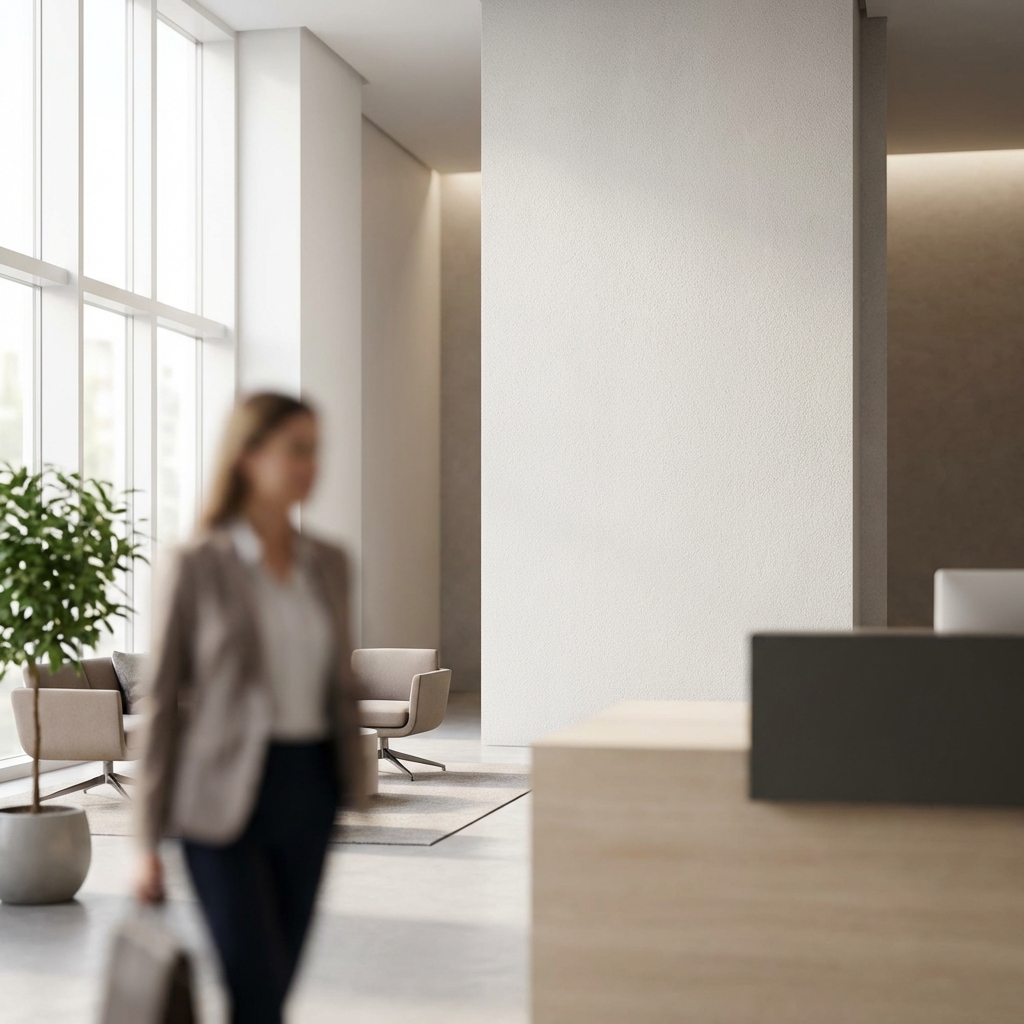
Time is a critical factor when choosing direct-to-wall printing vs vinyl. The two approaches differ not only in “on-the-wall” hours, but in the steps leading up to installation and the disruption each creates in occupied spaces.
Direct-to-wall printing typical sequence:
- Survey and approvals: Site review, color proofing, and file preparation are streamlined because there’s no panelization. Artwork approval flows directly into scheduling.
- Surface readiness: Light cleaning or touch-up priming where needed. Most painted drywall, sealed CMU, and finished concrete accept ink with minimal prep.
- On-site printing: Technicians align the printer, test a small swatch, and proceed. Many walls complete in a single session under five hours, even in active corridors.
- Turnover: UV inks cure immediately as printed, so areas reopen right away.
Vinyl wall covering typical sequence:
- Fabrication window: Media selection, off-site printing, curing, trimming, lamination (if used), then packing.
- Shipping and staging: Transit, receiving, and acclimation on site.
- Wall prep: Patch, skim, sand, prime; allow for dry times between steps.
- Installation: Panel alignment and seaming; careful handling to avoid stretching and bubbles.
- Cure and return to service: Adhesives set; in many cases, post-install protection and limited contact are recommended for 24–72 hours.
For projects running against a lease-up, semester start, or clinical schedule, these differences can be decisive. EastCoast MuralPros often coordinates nighttime or phased daytime printing to minimize disruption in hospitals, schools, and corporate offices—an option that’s harder to execute when multiple trades and materials converge for vinyl installation.
Durability and Long-Term Performance Analysis
Durability is about more than hardness; it’s about how a surface behaves in real traffic, with real cleaning, over the full life of a program.
Direct-to-wall durability profile:
- UV-cured ink forms a thin, robust layer that resists scuffs and routine abrasion.
- No seams means there are no weak points at panel edges where impacts or moisture can cause lifting.
- Frequent cleaning with non-abrasive agents is well-tolerated; in healthcare and education, disinfectant wipe-downs are common and expected.
- Paint-over-ready surfaces simplify end-of-life transitions; there’s no adhesive residue to remove, and no torn drywall paper to repair.
Vinyl durability profile:
- Heavier Type II wallcoverings are tough, but seams remain vulnerable in high-contact zones.
- Adhesives can creep or dry out with temperature swings, humidity, and UV exposure, especially at outside corners.
- Cleaning can drive liquid under lifted edges, accelerating failure or discoloration.
- Removal often damages the wall, triggering patch-and-paint work before a new covering can go up.
In atriums, long healthcare corridors, retail back-of-house paths, and student housing common areas, these performance differences translate into fewer service calls and less downtime with direct-to-wall mural printing technology. For exceptionally rough or friable surfaces, both systems may need priming or sealing; a qualified provider will test and recommend the appropriate prep.
Cost Lifecycle and Total Value Comparison
Organizations rarely evaluate cost as a single line item anymore. Total value considers time, labor, risk, and replacement frequency alongside initial purchase price. Here’s how the economics typically break down.
Cost drivers that favor direct-to-wall printing:
- Compressed timelines: Eliminating off-site fabrication, shipping, and extensive wall prep reduces soft costs and general conditions.
- Fewer trades: One team handles design alignment, color management, and on-site printing; there’s no handoff between printer, shipper, and installer.
- Reduced waste: No panel overage or miscuts; fewer repairs at seams.
- End-of-life efficiency: Paint-over-ready surfaces avoid labor-intensive removal and drywall repair.
Cost drivers that can favor vinyl in certain cases:
- Specialty finishes: If you require unique textural or metallic effects, some vinyl lines may deliver that aesthetic at a predictable unit cost.
- Temporary pop-ups: Short-term installs with planned removal can be viable with specific low-tack films in non-demanding environments.
A five-year illustrative scenario:
- Scope: 12,000 square feet across administrative floors, elevator lobbies, and a main corridor with wayfinding.
- Program needs: Durable wall art for businesses, brand gradients, floor identifiers, and integrated directional graphics.
- With vinyl: Fabrication, shipping, site staging, wall refinishing at seams after 24 months in high-traffic zones, and partial replacement by year four.
- With direct-to-wall: Single mobilization per floor, no panel failures to repair, spot touch-ups as needed, and repaint at end-of-program.
While every project is different, many procurement teams find that direct-to-wall solutions deliver lower lifecycle costs due to faster installs, fewer callbacks, and simplified transitions. When scaled across multi-location rollouts, the logistical savings—consistent artwork execution without freight complexity—can be substantial.
Aesthetic Quality and Design Flexibility
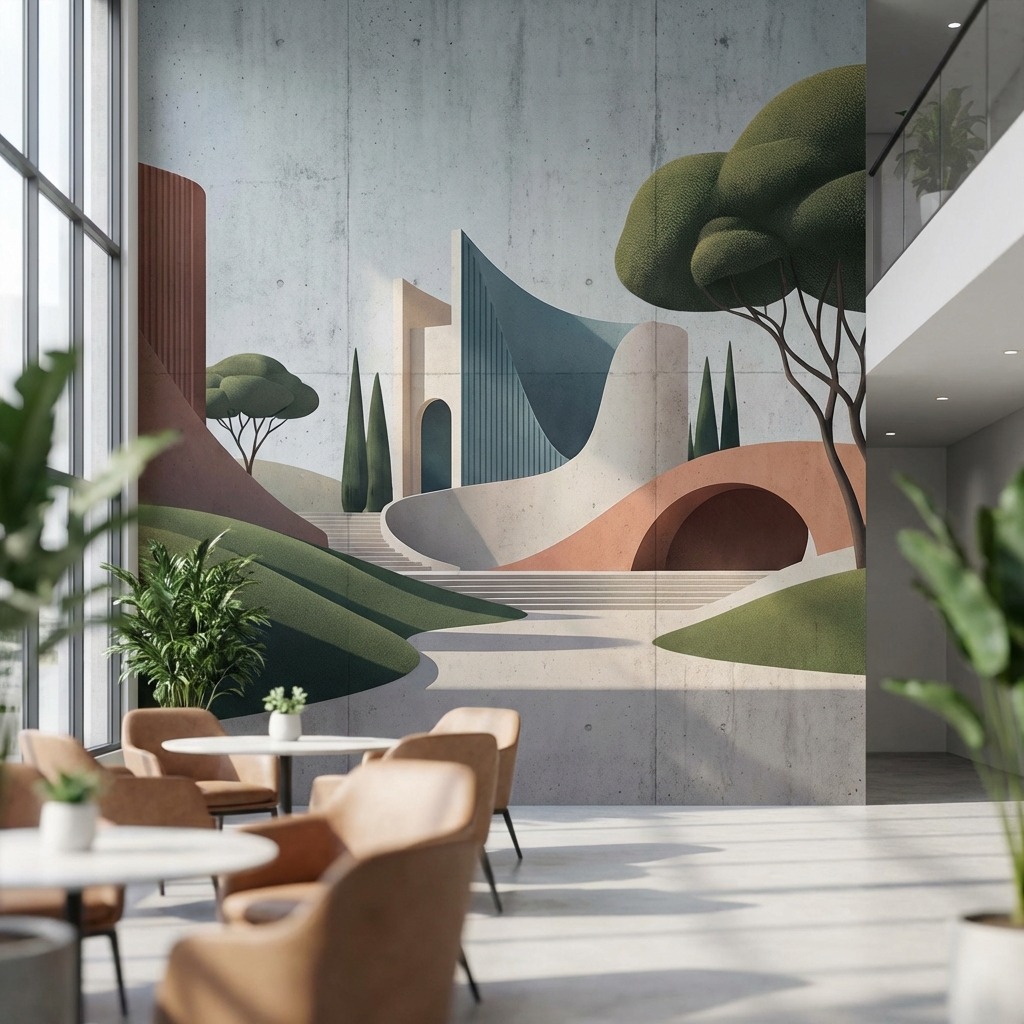
Aesthetics are central to brand experience, especially when stakeholders expect museum-grade fidelity at architectural scale. Direct-to-wall printing offers several advantages:
- Seamless imagery: Panoramic photography, gradients, and micro-typography remain uninterrupted across long spans and convex/concave details within the printer’s reach.
- Photoreal resolution: High-density droplet placement produces crisp vector edges, readable small text, and smooth tonal transitions.
- Surface expression: On substrates like brick or textured plaster, the print integrates with the architecture rather than floating on top like a film. For galleries and museums, this reads as more “built-in” and less applied.
- Design agility: Without panel constraints, designers can scale, crop, and place artwork responsively—ideal for integrated wayfinding and safety messaging that lives in the line of travel.
Vinyl still has a role when you need specialty finishes or thickness to mask surface imperfections. Heavier wallcoverings can hide inconsistent drywall prep and offer tactile textures that digital ink cannot replicate. However, for brand-accurate, photographic content at any size, the color stability and seam-free results of direct-to-wall systems stand out.
For education and campus environments where zones, mascots, donor recognition, and instructional graphics change frequently, direct-to-wall enables large-scale refreshes without new materials each time. If you’re exploring how this works in practice, see examples and strategies in this overview of campus branding with direct-to-wall.
Environmental Impact and Sustainability
Sustainability has moved from “nice to have” to corporate and institutional mandate. When comparing sustainable wall covering solutions, material inputs and end-of-life handling matter.
Direct-to-wall printing considerations:
- No vinyl or adhesive layers: Fewer petrochemical inputs and no PVC waste at removal.
- Reduced freight: On-site production means fewer shipments, less packaging, and lower transportation emissions.
- Lifecycle efficiency: Longer in-service life and paint-over transitions reduce replacement frequency and landfill volume.
- Low-disruption installs: Limited need for sanding or skim-coating reduces dust and site protection materials.
Vinyl wall covering considerations:
- PVC-based products and pressure-sensitive adhesives contribute to waste at removal; contaminated materials are rarely recyclable at scale.
- Panel overage, misprints, and edge trimmings accumulate during fabrication and install.
- Removal often requires chemicals or heat, adding labor and potential indoor air quality impacts.
For a deeper look at waste streams and carbon implications in direct-to-wall printing vs vinyl, EastCoast MuralPros breaks down drivers and data points in this resource: Direct-to-wall vs vinyl.
Maintenance, Cleanability, and Lifecycle Efficiency
Wall graphics live in a world of rolling bags, chair backs, foot traffic, and frequent cleaning. How each system handles routine care is central to lifecycle efficiency.
Direct-to-wall maintenance profile:
- Cleanable surfaces: Routine wipe-downs with non-abrasive cleaners and disinfectants maintain appearance without swelling seams or lifting edges.
- Spot touch-ups: Minor scuffs can often be addressed with on-site, localized reprints or protective coatings without redoing large areas.
- No seam contamination: Dirt and moisture cannot migrate under edges that don’t exist.
- Program changes: When content updates are needed—new directional arrows, updated compliance messaging—subscription models allow scheduled refreshes with minimal waste.
Vinyl maintenance profile:
- Seam vigilance: Edges can collect dust and cleaning residue; lifted seams invite further failure.
- Chemical sensitivity: Harsh cleaners or frequent disinfecting near edges may compromise adhesive bonds.
- Repair complexity: Isolated panel damage often requires panel replacement, which can introduce color-matching challenges if reprinted months or years later.
- End-of-life: Removal and wall repair extend schedules and create dust, noise, and odor—complicated in occupied spaces like clinics or schools.
In high-traffic, hygiene-sensitive environments—acute care corridors, food service areas, student centers—cleanability and predictable upkeep favor direct-to-wall approaches designed for everyday maintenance.
Pros and Cons: Direct-to-Wall Printing
Pros
- Seam-free, high-resolution murals at architectural scale
- Adhesive-free installation; no bubbling, lifting, or shrinkage
- Fast, low-disruption installs often completed in under five hours per wall
- Durable, cleanable surfaces suitable for healthcare, education, hospitality, and retail
- Paint-over-ready end-of-life; straightforward transitions for tenant or program changes
- Scalable execution across multi-location rollouts with consistent color profiles
- Integrated wayfinding, safety, and instructional graphics without signage clutter
- Compatible with finished and many unfinished surfaces (drywall, CMU, concrete, brick)
- On-site printing eliminates shipping delays, fabrication errors, and panel overage
- Lifecycle-efficient and significantly more sustainable than wallpaper and vinyl
Cons
- Surface integrity matters: Extremely friable or heavily textured substrates may require priming or sealing
- Not repositionable: Once printed, adjustments require repainting or new printing
- Specialty textures and metallic effects are limited compared to some vinyl lines
- Very dark walls or strong underlying colors may need additional white ink passes, increasing print time
- Outdoor or constantly wet environments typically require different systems
Pros and Cons: Vinyl Wall Coverings
Pros
- Broad catalog of textures, metallics, and specialty finishes
- Ability to mask minor wall imperfections with thicker wallcoverings
- Familiar procurement and specification pathways within construction workflows
- Certain low-tack films can support short-term, removable activations
Cons
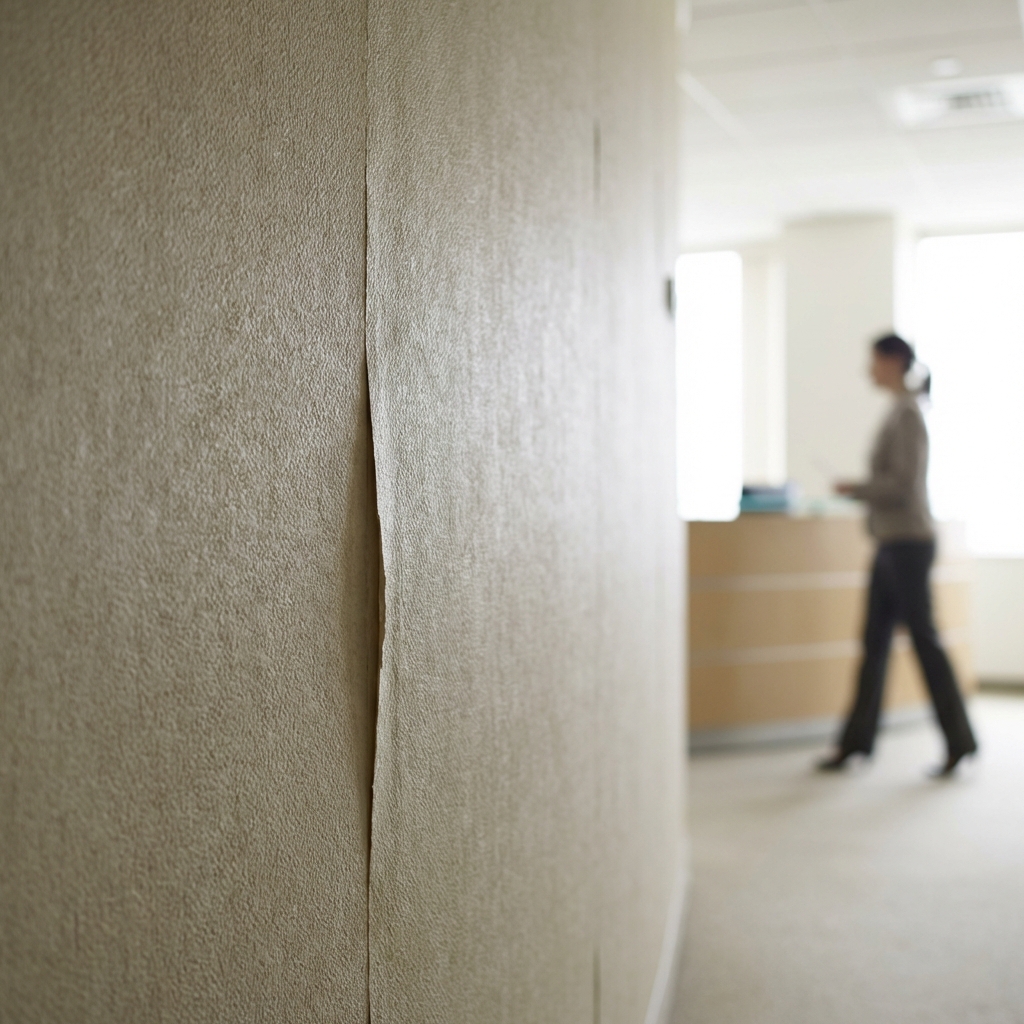
- Seams create visual breaks and long-term failure points in high-traffic areas
- Adhesives can bubble, creep, or dry out; edges are sensitive to cleaning and impact
- Off-site fabrication and shipping add lead time and risk of damage
- Removal often damages walls, requiring patching, priming, and repainting
- PVC-based materials and adhesives introduce significant end-of-life waste
- Color-matching challenges can occur when replacing individual panels months or years later
Choosing the Right Solution for Your Organization
Selecting between direct-to-wall printing vs vinyl is a strategic decision that should reflect operational priorities, not just initial unit price. Use the following framework to align your choice with business outcomes.
- Schedule and disruption tolerance
– If you need to transform spaces in occupied buildings with minimal downtime—during semester breaks, patient transitions, or overnight office windows—direct-to-wall’s on-site, adhesive-free process is inherently faster and cleaner. – If your schedule allows for fabrication lead times, extended wall prep, and acclimation, and you require specialty textures, select vinyl where the finish is essential.
- Surface conditions and substrates
– Painted drywall, sealed CMU, and prepared concrete are excellent candidates for direct-to-wall printing. For highly uneven surfaces where masking imperfections is the priority, a heavier wallcovering may help. – In areas needing frequent instructional updates or integrated wayfinding (e.g., healthcare, transit hubs), direct-to-wall supports content agility without panel seams.
- Program scale and repeatability
– Multi-location and national rollouts benefit from the consistent color management and on-site standardization that direct-to-wall providers offer. This reduces rework, freight variability, and install conflicts. – Single-room decorative features with exotic finishes may justify a vinyl specification if the effect cannot be replicated in ink.
- Sustainability mandates
– If your ESG goals target material reduction, elimination of PVC, and waste minimization, direct-to-wall is typically the stronger fit. – If a project demands a specific certified wallcovering product for compliance or matching adjacent finishes, weigh the associated waste and end-of-life handling in your planning.
- Lifecycle cost and change management
– For spaces that will evolve—new tenants, refreshed brand campaigns, updated safety icons—paint-over-ready transitions deliver predictable budgets and faster turns with direct-to-wall. – If your content is static for a defined term and the wall condition is secondary, evaluate both options’ installed costs and removal implications at end-of-term.
- Sector-specific considerations
– Healthcare: Cleanability, infection control, and limited downtime favor direct-to-wall. Seams and adhesive edges are common pain points in clinical corridors. – Education: Semester-driven schedules, donor signage updates, and wayfinding agility align with on-site direct-to-wall approaches. See practical strategies in the linked campus branding resource. – Workplace and landlords: Turnover cycles and flexible programming require fast refreshes and paint-over transitions; subscription-based refresh models make brand stewardship predictable. – Retail and hospitality: National rollouts, fixture integration, and frequent promotions benefit from seam-free visuals and consistent execution without shipping variability.
EastCoast MuralPros partners with facilities, procurement, and design teams to scope, pilot, and scale programs that meet these criteria. The company’s direct-to-wall systems deliver high-resolution, durable wall art for businesses and institutions, while in-studio capabilities extend brand graphics to doors, tables, and standees. For organizations actively evaluating commercial wall graphics alternatives, a short on-site test print or limited-area pilot can validate adhesion, color, and cleanability under real conditions before committing to a full rollout.
The walls in your care aren’t just surfaces—they’re communication channels. Choose the approach that protects your schedule, reflects your brand with museum-grade fidelity, reduces waste, and keeps maintenance predictable. In many mission-critical environments, direct-to-wall printing has become the performance-based alternative to vinyl wall coverings and wallpaper. When you need architectural-scale impact with operational certainty, it’s an option built for how institutions actually run today.
Contact us to learn more