
Introduction to the Evolution of Commercial Wall Branding
Commercial wall branding has moved from painted murals and wallpaper to printable vinyl, and now to on-site, high-resolution wall printing. For facilities leaders, the question is no longer just “what looks best,” but which approach delivers predictable performance with minimal disruption. That’s why this analysis centers on direct-to-wall printing costs across the full lifecycle—purchase, installation, maintenance, refresh, and end-of-life—compared to vinyl wraps and other commercial wall graphics.
Vinyl has been the default for years, but seams, edge-lift, bubbling, and adhesive failure drive unplanned service calls and accelerated replacement cycles in high-traffic areas. Removal compounds wall covering maintenance costs with labor, wall repair, and waste disposal, especially during tenant turnovers. By contrast, direct-to-wall systems are adhesive-free, seam-free, and installed rapidly—often in under five hours per zone—reducing closures and after-hours premiums. Providers like EastCoast MuralPros deliver photoreal, high-resolution wall printing on finished or unfinished surfaces, with cleanable, durable finishes that can be painted over when programs or tenants change.
When comparing lifecycle costs, account for the full stack of expenses and risks, not just the initial quote:
- Materials and fabrication: vinyl + laminate panels versus in-place, direct-to-wall printing
- Installation labor and site prep: priming, masking, mobilization, and panel alignment versus single-pass on-site printing
- Operational disruption: space closures, off-hours scheduling, and schedule overruns
- Maintenance: cleaning, seam repairs, color fading, and periodic touch-ups
- Refresh cadence: reprints, shipping, and panel replacements versus fast on-site reprints or subscription updates
- Removal and end-of-life: adhesive removal, wall repair, repainting, and landfill fees
- Error and waste: panel misfits, shipping damage, and reprint rates versus on-site proofing and adjustments
- Scale and consistency: multi-location logistics, color matching, and field variability
Consider practical scenarios. A hospital corridor needing integrated wayfinding can be printed overnight, avoiding weeks of permit-driven construction and signage clutter. A school district can roll out mascot and instructional graphics across a full campus with consistent execution and paint-over-ready finishes for future changes. A corporate refresh can move floor-by-floor with low disruption, while a subscription model keeps brand messaging timely without new material waste—an effective set of vinyl wrap alternatives. For teams prioritizing sustainability and PVC reduction, explore EastCoast MuralPros’ sustainable adhesive-free wall technology as a pathway to durable, sustainable wall murals at predictable, lower lifecycle cost.
Comparing Initial Capital Expenditure and Long-Term Value
For commercial wall graphics, the question isn’t just “what does it cost today?” but “what will it cost over the next five to seven years.” Direct-to-wall printing costs typically compare favorably to vinyl because there’s no substrate, adhesive, or panel fabrication. The bigger deltas come from labor, downtime, wall covering maintenance costs, and the risk of rework when panels misalign or fail in the field.
Upfront, direct-to-wall systems print in place, often finishing a large feature wall in under five hours with a two-person crew. That compresses labor and avoids after-hours premiums or phased shutdowns—critical in occupied healthcare, education, and workplace environments. Vinyl wraps, by contrast, add material markups, seam management, adhesive application, and more extensive surface prep, plus shipping and handling that increase both schedule and budget exposure.
Key cost drivers to compare:
- Materials: Vinyl panels, laminates, and adhesives vs. no media for direct-to-wall.
- Installation time: Multi-shift panel installs vs. single-session on-site printing.
- Downtime: Area closures and overnight labor vs. low-disruption, occupied install.
- Rework risk: Panel alignment, bubbles, edge failure vs. seam-free outputs.
- Cleaning/maintenance: Seams and edges to police vs. durable, cleanable surfaces.
- End-of-life: Adhesive removal and wall repair vs. paint-over-ready finishes.
Long-term value also shows up at scale. On-site printing eliminates shipping delays and reduces fabrication errors across multi-location rollouts, producing consistent results with fewer touchpoints. EastCoast MuralPros can structure subscription refreshes so seasonal brand, wayfinding, or instructional updates shift from capex spikes to predictable operating expense—ideal when you’re seeking to modernize buildings without capital expenditure.
Consider two common examples. A hospital corridor can be completed overnight with high-resolution wall printing that’s cleanable and durable, avoiding the infection-control and downtime complications common with vinyl removal and reinstall. A university brand refresh can update donor walls and wayfinding each semester without new substrates or landfill waste, delivering sustainable wall murals that paint over cleanly at the next program change—practical, low-risk vinyl wrap alternatives supported by a performance-focused process.
Installation Efficiency and the Impact on Facility Downtime
Installation speed isn’t just a convenience—it’s a line item in the total cost of ownership. Every hour a corridor, lobby, or patient unit is partially shut down drives real costs in detours, staff time, lost revenue, and after-hours premiums. When comparing direct-to-wall printing costs to vinyl or wallpaper, the biggest deltas often show up in schedule, not materials.
Traditional vinyl-based commercial wall graphics require multi-panel alignment, adhesive management, and significant surface prep. For a 40–80 linear foot wall, it’s common to see a full day or more on site with two installers, plus added time for barricades, dust control, and post-install punch lists. Delays compound when shipments arrive damaged, panels are misprinted, or walls are out-of-plumb—issues that force reprints and second mobilizations.
With on-site, high-resolution wall printing, a single machine images directly to the substrate—no panels, no adhesives, no seams. EastCoast MuralPros typically completes large-feature walls in under five hours, even in occupied environments. The process eliminates shipping and fabrication variables, reduces staging space, and keeps egress paths open, lowering risk and disruption for facilities teams.
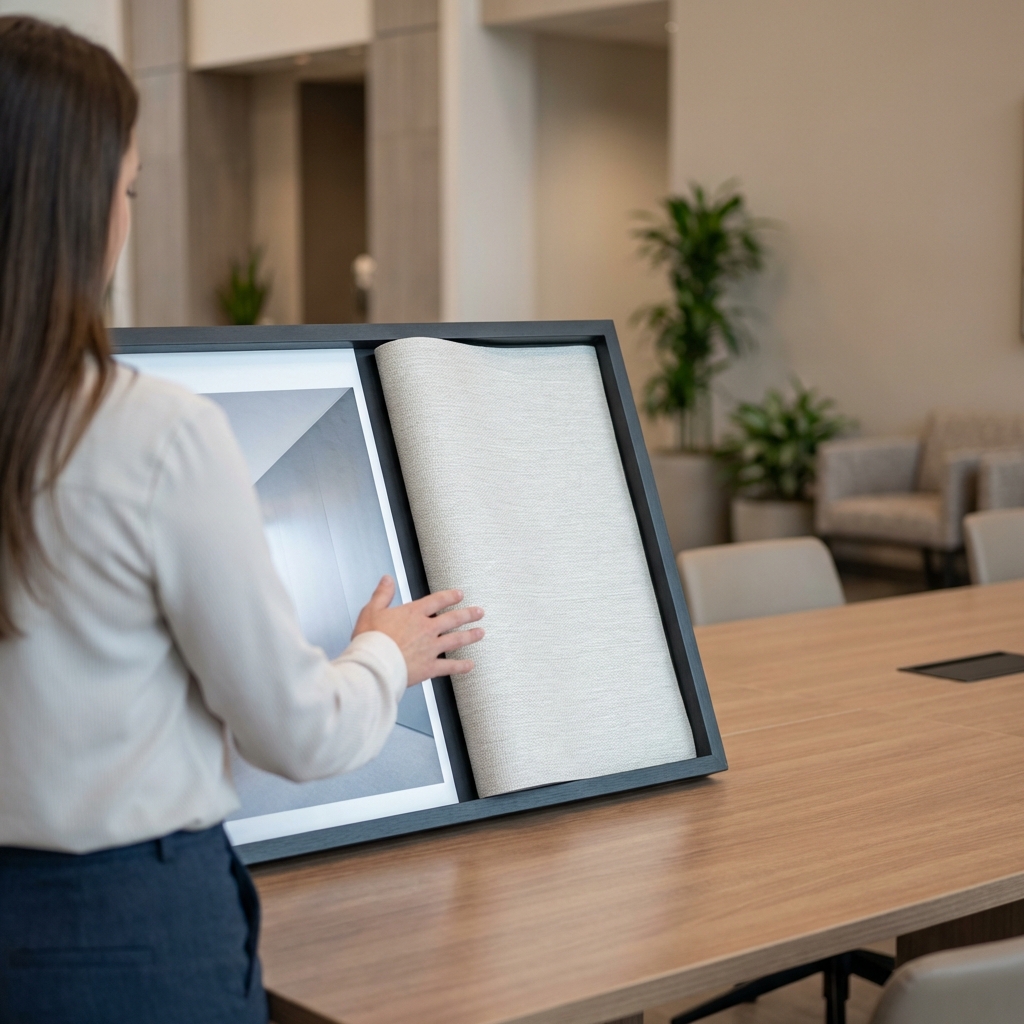
Where minutes turn into money, the delta is stark:
- Healthcare: Printing a 100-foot corridor overnight avoids two days of closures and infection-control barriers commonly required for panel-based installs.
- Education: During dorm turnover weekends, one crew can complete multiple floors without pushing cleaning or move-in schedules.
- Corporate and retail: After-hours installs minimize OT and security costs; spaces reopen for morning traffic with no adhesive odor or panel off-gassing.
This installation efficiency also shrinks downstream wall covering maintenance costs. Seam-free, cleanable surfaces stand up to high traffic without edge failures, and paint-over-ready finishes streamline future tenant or program changes without demolition. For multi-location rollouts, consistent print quality and predictable install times make budget forecasting and scheduling far more reliable.
When evaluating vinyl wrap alternatives, include soft costs in your model: overtime, barricades, infection-control compliance, rework, shipping delays, and the revenue impact of downtime. EastCoast MuralPros’ direct-to-wall approach delivers sustainable wall murals and commercial wall graphics with crisp, photoreal results—installed fast, at scale, and with fewer operational surprises than panel or wallpaper systems.
Durability and Maintenance Requirements in High-Traffic Zones
High-traffic corridors, lobbies, and patient/family areas place unusual stress on wall finishes. Daily cleaning, rolling carts, backpacks, and constant hand contact quickly expose weak points in seams, edges, and films. In these zones, durability is measured by resistance to abrasion and chemicals, how well imagery holds up over time, and the speed and cost to restore surfaces when damage occurs.
Traditional vinyl and wallpaper often fail at the edges first, inviting peeling, bubbling, and grime accumulation. Repairs introduce visible patches and sheen mismatches, and frequent touch-ups inflate wall covering maintenance costs through labor, reprints, and waste disposal. In healthcare and education, disinfectants can accelerate adhesive breakdown, forcing premature replacement and downtime.
Direct-to-wall approaches remove most of those failure points by eliminating seams, adhesives, and applied films. With high-resolution wall printing bonded to the prepared substrate, graphics deliver crisp detail at architectural scale without the edge vulnerability of wraps. EastCoast MuralPros prints on finished and unfinished surfaces (drywall, CMU, concrete, brick) and delivers durable, cleanable finishes designed specifically for high-traffic environments, typically installed in under five hours to minimize disruption.
Key durability factors to evaluate in commercial wall graphics:
- Seam/edge exposure: no edges means fewer snag points and less grime.
- Cleaning chemistry: resistance to quats, peroxide, and bleach-based protocols.
- Abrasion and impact: carts and chairs won’t lift corners that don’t exist.
- Moisture and temperature cycling: no adhesive layer to expand, soften, or fail.
- Repair strategy: paint-over-ready surfaces enable fast resets without demolition.
From a lifecycle perspective, direct-to-wall printing costs are driven by fewer replacements and shorter, predictable maintenance windows. Example: a hospital corridor update that might require days to strip, prep, and re-wrap vinyl can be executed overnight on-site, avoiding shipping delays and fabrication errors. EastCoast MuralPros also supports subscription-based refreshes for seasonal campaigns or wayfinding updates, turning what used to be capital-intensive replacements into scheduled, low-disruption service cycles.
Sustainability is another cost lever. Sustainable wall murals that avoid PVC and adhesives reduce landfill waste and simplify end-of-life—often as straightforward as repainting. For teams seeking vinyl wrap alternatives that scale across multi-location portfolios, EastCoast MuralPros provides consistent execution, integrated wayfinding, and durable results that keep walls on-brand and in-service longer.
Sustainability and Environmental Benefits of Adhesive-Free Technology
Adhesive-free, direct-to-wall production reduces material use at every stage compared to PVC films and wallpaper. There are no vinyl sheets, release liners, or buckets of glue to buy, ship, store, and eventually discard. That shrinkage of inputs lowers embodied carbon and waste generation while also trimming direct-to-wall printing costs tied to freight, protective packaging, and hazardous-material disposal. It’s a cleaner bill of materials for commercial wall graphics without sacrificing performance.
On-site printing cuts the logistics footprint even further. Instead of crating oversized panels and hoping site dimensions were measured perfectly, the image is produced at the wall, eliminating reprints caused by misfits and damage in transit. Fewer deliveries mean fewer pallets, tubes, and foam wraps headed to the dumpster, and less congestion around occupied facilities. In high-compliance environments like hospitals, reducing packaging waste and corridor traffic is a practical sustainability win.
Lifecycle performance is another driver. Vinyl seams, edges, and adhesives can fail in high-traffic areas, escalating wall covering maintenance costs and replacement cycles. A durable, cleanable, seam-free print has fewer failure points and is paint-over-ready at the end of a lease or program, avoiding demolition, adhesive abatement, and landfill loads. The ability to refresh graphics with a new pass of ink, rather than stripping and reapplying materials, is both cost- and resource-efficient.
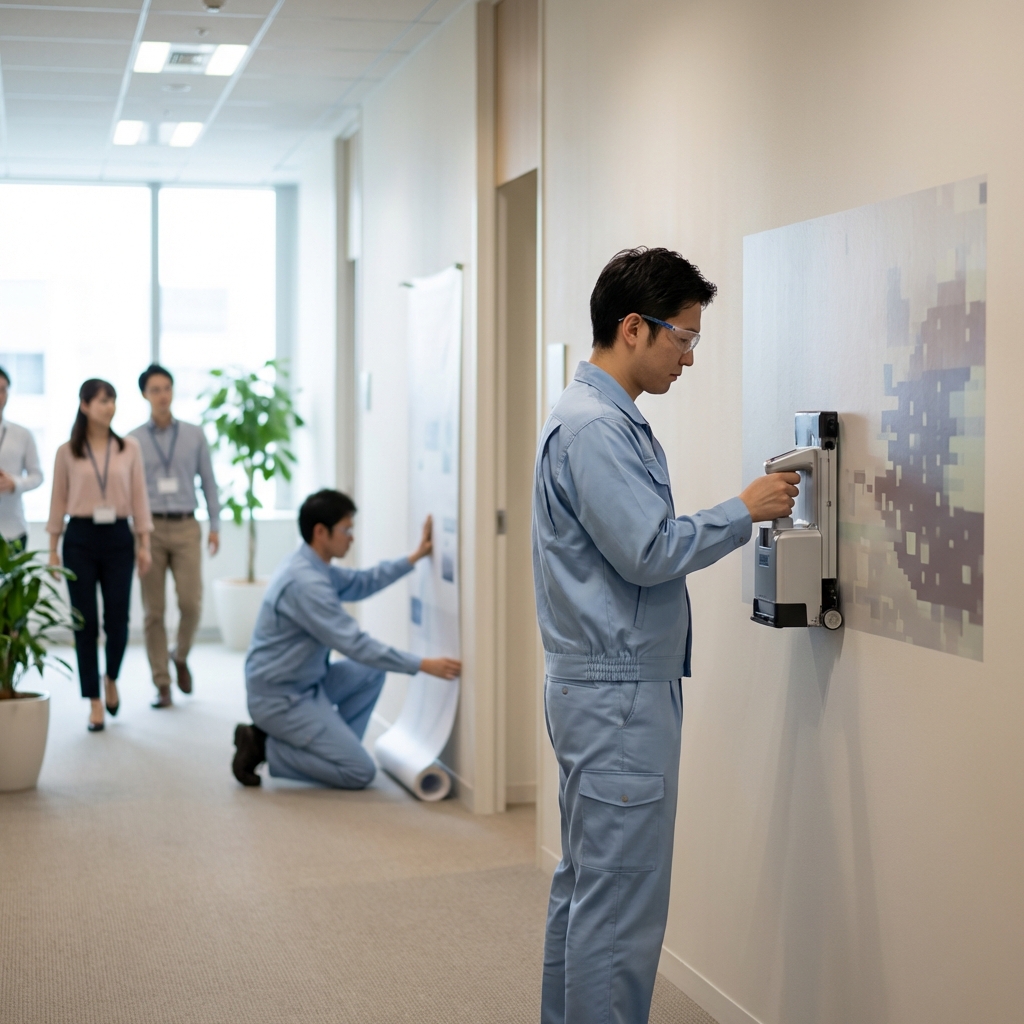
Practical sustainability gains you can plan for include:
- Smaller material footprint: no PVC films, adhesive layers, or liner waste to manage.
- Lower shipping and storage impacts: on-site production minimizes crates, packaging, and inventory.
- Reduced chemical exposure: avoids many adhesive systems that can off-gas VOCs in occupied spaces.
- Easier end-of-life: paint over instead of tear-out, saving labor, debris hauling, and downtime.
- Integrated wayfinding and safety cues as sustainable wall murals, reducing separate signage hardware.
EastCoast MuralPros brings these benefits to scale for institutions and multi-location brands seeking vinyl wrap alternatives. Teams get high-resolution wall printing that’s durable and cleanable for corridors, patient areas, classrooms, and retail zones—often completed in under five hours per location. For campuses that update seasonally, the subscription model aligns sustainability with budget predictability by spreading refreshes over time and avoiding material-intensive overhauls. The result: lower total impact and more predictable direct-to-wall printing costs for mission-critical environments.
Operational Flexibility for Tenant Turnover and Brand Updates
Tenant turnover and brand refreshes require speed without compromising quality. Adhesive-based wraps and panels often add hidden time for surface prep, alignment, and later removal, while paint-based approaches can extend schedules with drying and cure windows. By contrast, direct-to-wall printing costs remain predictable because installation is measured in hours, not days, and finished graphics are paint-over-ready when programs or tenants change.
To compare lifecycle implications, break down the cost drivers behind commercial wall graphics:
- Mobilization and site prep: Vinyl usually needs masking, primer, and seam planning; direct-to-wall printing aligns to existing surfaces (drywall, CMU, brick) with minimal prep.
- Materials and fabrication: Vinyl requires media, laminates, panels, and shipping; on-site printing eliminates shipping, panels, and re-fabrication due to transit damage.
- Installation time and disruption: Vinyl seams, trimming, and bubble remediation extend schedules; direct printing completes large walls in under five hours with low disruption to occupied spaces.
- Wall covering maintenance costs: Vinyl can peel at corners and seams and scuff in high-traffic zones; direct-printed, cleanable surfaces resist edge failure and don’t trap dirt at seams.
- Decommissioning and turnover: Vinyl removal, adhesive remediation, and landfill fees add hours and waste; paint-over-ready finishes let teams reset walls quickly with standard paint.
Consider a landlord bridging a one-week lease gap. Instead of losing days to vinyl removal and reinstallation across corridors and conference suites, on-site high-resolution wall printing can complete branded wayfinding, tenant identity walls, and compliance messaging in a single mobilization. In healthcare, a service-line rename or routing change can be updated during off-hours, avoiding patient disruption and change-order cascades from fabrication errors or delayed shipments.
For multi-location rollouts, consistency is the budget protector. EastCoast MuralPros’ on-site process streamlines approvals from digital files to finished walls, reducing rework and ensuring color-critical outcomes across campuses and stores. Their subscription model supports seasonal campaigns and pilot-to-scale programs, while sustainable wall murals avoid vinyl waste and adhesives entirely—an effective vinyl wrap alternative that improves durability, cleanability, and schedule certainty. The result is a lifecycle-efficient approach to high-resolution wall printing that lowers total cost of ownership while keeping facilities ready for whatever comes next.
Conclusion: Optimizing Facility ROI with Direct-to-Wall Printing
For facilities teams, the question isn’t just “What does it cost to install?” but “What does it cost to own over time?” When you assess total cost of ownership, direct-to-wall printing costs often compare favorably to vinyl and wallpaper because you avoid material markups, seams, adhesive failures, and lengthy change-outs. You also preserve uptime, which is where the biggest savings typically come from in commercial wall graphics.
Key lifecycle drivers to include in your model:
- Installation and downtime: On-site printing is typically completed in under 5 hours per zone, enabling work during off-hours with minimal disruption to occupied buildings.
- Materials and waste: No vinyl or adhesives means fewer procurement steps, less packaging and landfill disposal, and a more sustainable wall mural strategy.
- Surface prep and remediation: Compatibility with drywall, CMU, concrete, and brick reduces prep scope; no seams limits bubbling and edge repairs common with wraps.
- Cleaning and durability: Cleanable, abrasion-resistant results lower wall covering maintenance costs and extend service life in high-traffic areas.
- Refresh and decommission: Paint-over-ready finishes eliminate adhesive removal during tenant turnover and make seasonal updates faster with subscription refreshes.
- Logistics and scale: On-site production reduces shipping delays and fabrication errors, and standardizes outputs across multi-location rollouts.
- Integrated communications: Printing wayfinding, safety, and instructional graphics directly to walls reduces separate signage fabrication and installation.
Consider two common scenarios. A hospital can rebrand a pediatrics corridor overnight, printing photoreal, high-resolution wall printing directly to painted drywall without pulling rooms offline, then clean surfaces per normal protocols. A retailer rolling out a campaign across 12 stores avoids vinyl shipments, field fit issues, and seam repairs, achieving consistent results and faster speed-to-market.
EastCoast MuralPros is a performance-focused partner for teams seeking vinyl wrap alternatives that scale. Their direct-to-wall approach delivers seam-free, durable, and cleanable finishes, compatible with finished and unfinished substrates. Full-campus solutions for schools and hospitals, plus a subscription model for strategic refreshes, help procurement and facilities control lifecycle costs while elevating design quality.
If you’re evaluating direct-to-wall printing costs, build a side-by-side lifecycle analysis that includes downtime, maintenance, refresh cycles, and end-of-lease remediation. A quick pilot with EastCoast MuralPros can validate schedule, quality, and total cost assumptions before a broader rollout.
Call to Action
Contact us to learn more