Introduction: The Evolution of Commercial Wall Graphics and Durability Standards
Commercial interiors ask more of wall graphics than ever. Healthcare, schools, and multi-location brands expect finishes that endure constant cleaning, rolling carts, and daily contact—without looking tired after a few months. This shift is raising the bar on direct-to-wall UV printing durability and pushing teams to evaluate commercial wall covering alternatives that perform like architectural finishes, not temporary décor.
Durability now spans multiple dimensions: abrasion and scratch resistance, impact resilience, chemical and disinfectant tolerance, and seam integrity. Traditional layered systems—printed vinyl plus laminate—often fail at the seams and edges, where peeling and bubbling begin. By contrast, UV ink vs vinyl wrap evaluations increasingly consider how a cured ink film integrates with the wall itself, creating scratch resistant wall graphics that look and feel built-in.
Common stressors that drive failure—and cost:
- Daily abrasion from backpacks, carts, and door traffic that scuffs laminates and telegraphs seams
- Frequent cleaning with quats, alcohols, or peroxides that can soften adhesives and cloud films
- Thermal and moisture movement that causes vinyl to creep, lift, or shrink at corners and reveals
- Incidental impact in corridors and lobbies that dents panels or chips printed layers
Modern LED-UV inks cure instantly into a crosslinked, hard-wearing film with strong adhesion to prepared substrates like drywall, CMU, concrete, and brick. Eliminating seams and adhesive layers reduces common failure points, while the cured surface supports routine wipe-downs and touchups—ideal for impact resistant wall murals in high-traffic zones. For many facilities, this delivers durable interior branding solutions that outlast typical vinyl life cycles and reduce maintenance calls.
EastCoast MuralPros brings these advantages on site, printing directly to finished or unfinished walls to produce seamless, high-resolution graphics in hours, not days. The result is a cleanable, paint-over-ready surface that avoids adhesive mess, minimizes disruption, and scales reliably across campuses, hospitals, and national portfolios. For teams also moving away from PVC, their approach supports sustainable PVC-free wall graphics while meeting the performance expectations of facilities and procurement stakeholders.
Technical Comparison: UV Ink Adhesion vs. Vinyl Adhesive Layers
At the material level, direct-to-wall UV printing durability comes from how UV-curable inks crosslink into a hard, continuous polymer film that interlocks with the wall’s microtexture. During curing, the ink anchors to the surface through a combination of mechanical keying (into pores of drywall, CMU, concrete, or brick) and surface-energy-driven wetting. Vinyl, by contrast, relies on a pressure-sensitive adhesive layer to adhere a plastic film to the wall; performance depends on adhesive chemistry, surface prep, and environmental conditions over time.
Layer construction drives different behaviors. UV ink lays down a thin, microns-thick film (often ~10–30 µm total) that conforms to texture and has no seams or edges to catch, making it ideal for scratch resistant wall graphics in corridors and lobbies. A vinyl system stacks a base film (typically 75–100 µm) plus adhesive and an optional protective laminate (an additional 25–75 µm), creating edge exposure at seams and terminations that can lift, shrink, or trap debris. These edges are the first points of failure under cleaning, humidity, and thermal cycling.
Abrasion and impact tell a similar story. UV inks cure to a high pencil hardness (often ~3H–4H), yielding a tough, cleanable surface that resists scuffs from backpacks and carts—great for healthcare, higher-ed, and retail. Laminated vinyl offers a softer, thicker sacrificial layer that can absorb mild gouges, but once the laminate abrades, the graphic quickly degrades. For true impact resistant wall murals, rigid substrates paired with UV ink’s hard film distribute loads better than a soft adhesive stack that can delaminate on sharp impact.
Common failure modes to consider in UV ink vs vinyl wrap evaluations:
- UV direct print: potential micro-chipping only with severe substrate damage; otherwise stable, seam-free performance.
- Vinyl/laminate: edge lift, tunneling, shrinkage, plasticizer migration, and adhesive creep; seams collect grime and moisture, accelerating failure.
Lifecycle and refresh are where commercial wall covering alternatives shine. UV-printed walls can be repainted when programs change, avoiding removal labor and adhesive residue. EastCoast MuralPros delivers durable interior branding solutions with on-site, seam-free printing that stands up to hospital-grade cleaning protocols and multi-site rollouts. For teams that value schedule certainty and consistent results, their precision wall mural printing process offers a predictable, performance-based path beyond traditional vinyl.
Scratch Resistance and Impact Performance in High-Traffic Commercial Zones
Busy corridors, lobbies, and elevators punish wall finishes with constant contact from carts, gurneys, backpacks, and cleaning crews. In the UV ink vs vinyl wrap debate, failure modes look different: vinyl edges and seams are prone to scuffing, lifting, and catching, which creates tear points and invites moisture and bacteria. Direct-to-wall systems eliminate seams and adhesive build-up, so there’s nothing to delaminate or snag—an inherent advantage in high-wear zones.
UV-curable inks form a crosslinked, hard polymer film that bonds to the wall’s microtexture, delivering strong abrasion resistance without a sacrificial laminate. Vendors should be able to reference adhesion (ASTM D3359) and abrasion (ASTM D4060) data on painted drywall and CMU; pencil hardness for quality systems often lands in the H–2H range, translating into real-world rub and scuff resilience. This is where direct-to-wall UV printing durability outperforms many laminated films, especially for scratch resistant wall graphics that must hold up to daily traffic.
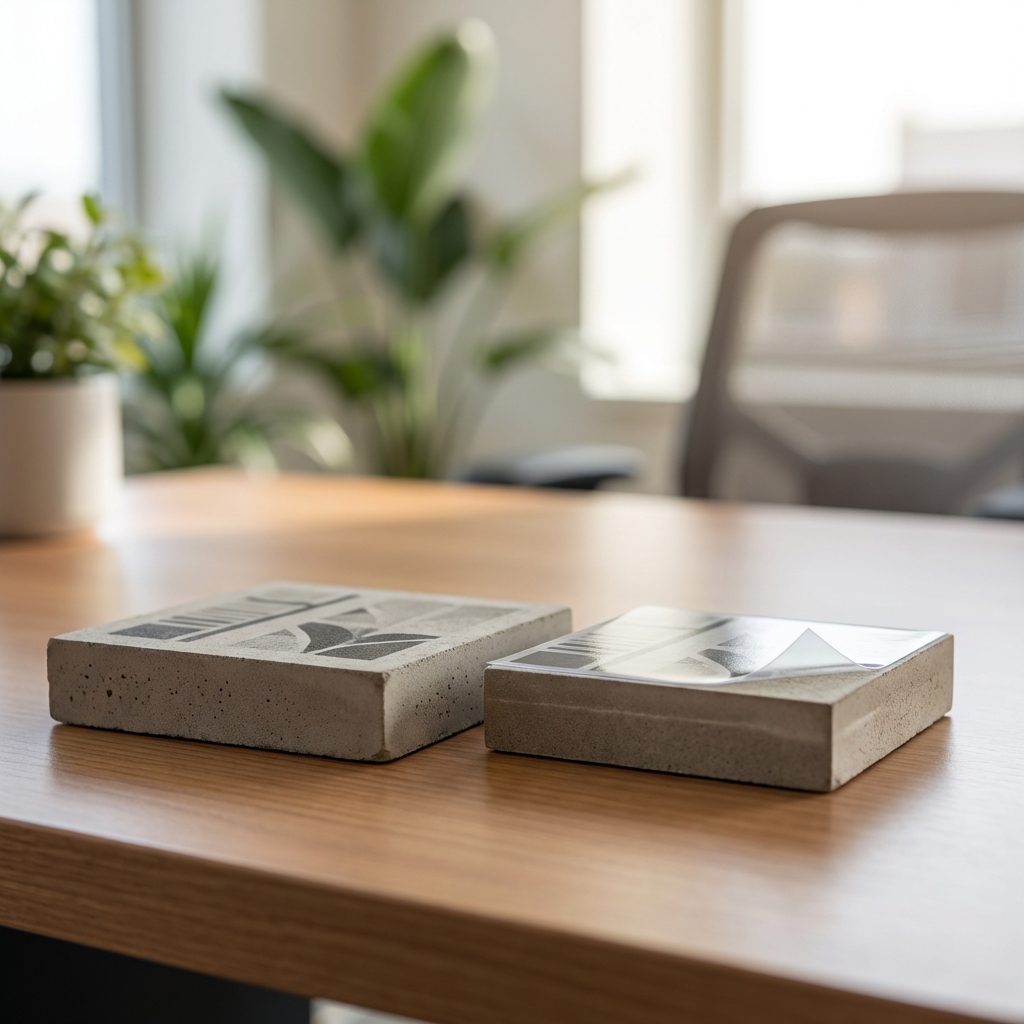
Impact performance is largely dictated by the substrate: drywall can still dent under force, while CMU and concrete resist deformation. However, with no brittle laminate layer or lifted seams, chips and edge failures are far less common, and touch-ups are straightforward. For hospital corridors, school hallways, or retail back-of-house, impact resistant wall murals printed in place absorb incidental contact well and can be integrated with corner guards or chair rails for cart-height protection.
Cleaning is a constant in commercial interiors. Well-cured UV inks resist common facility cleaners—quats, mild detergents, and diluted bleach under typical use—making them practical commercial wall covering alternatives, with testing recommended for specific chemistries. On porous substrates like raw CMU, a clear sealer or primer improves wipeability; EastCoast MuralPros specifies coatings and surface prep to ensure durable interior branding solutions that remain cleanable without gloss drift or staining.
Specification tips to maximize performance:
- Choose painted drywall or sealed CMU for best abrasion resistance; a primer creates a uniform, printable tooth and enhances cleanability.
- Verify third-party test data for adhesion and abrasion on your actual substrate, not just sample panels, and request onsite mockups in a live traffic lane.
- Combine print with physical protection at known strike zones (outside corners, cart paths), then align graphics so guards disappear into the design.
- Plan for lifecycle events: direct-to-wall prints from EastCoast MuralPros are paint-over-ready, enabling fast rebranding or wayfinding updates without tear-out.
Environmental Factors: UV Stability and Color Retention Over Time
Color fade indoors is driven less by weather and more by light spectrum, heat, cleaning chemistry, and substrate temperature. In UV ink vs vinyl wrap comparisons, direct-to-wall UV inks form a crosslinked, inert film that resists photodegradation, while PVC films and pressure-sensitive adhesives can yellow or haze over time. The result is steadier color and gloss retention for direct-to-wall UV printing durability, especially in sunlit lobbies, corridors with windows, and under high-output LEDs.
Typical interior stressors that influence UV stability and color retention include:
- Indirect sunlight and UVA through glazing (especially south- and west-facing glass)
- Heat gain near curtain walls, mechanical rooms, or radiant panels
- Routine cleaning with diluted disinfectants and alcohol-based wipes
- Humidity swings in healthcare, school gyms, or natatorium-adjacent corridors
- Abrasion from carts, backpacks, or chair backs in high-traffic zones
Performance differences show up over months and years. UV-cured inks polymerize into a dense film with strong pigment encapsulation, which helps maintain brand-critical hues and produces scratch resistant wall graphics without relying on laminates that can cloud or edge-lift. Vinyl systems depend on a printed layer protected by a laminate and adhesive; exposure and heat can drive plasticizer migration, causing slight color shift, gloss changes, seam creep, or localized yellowing—issues that compound at panel seams and around door frames.
Real-world examples illustrate the gap. In a glassy university atrium, UV-cured, direct-to-wall murals typically hold visual consistency across wide fields, while vinyl laminates are more prone to seam read-through and perimeter discoloration. In hospitals that disinfect daily, properly specified UV inks generally maintain color and clarity under routine cleaning, supporting durable interior branding solutions and impact resistant wall murals without the maintenance burden of panelized films.
EastCoast MuralPros leverages calibrated UV ink sets, white underprints where needed, and profile-driven color management to keep ΔE drift tight across campuses and multi-location rollouts. Because installations are seam-free and adhesive-free, there’s no laminate edge to yellow or trap grime—an advantage for commercial wall covering alternatives seeking long-term color integrity. For higher-UV interiors, the team can pair prints with UV-filter glazing or shades and provide cleaning guidelines that protect finish quality over time.
Maintenance and Cleaning: Handling Surface Scuffs and Chemical Cleaners
In real-world facilities, the durability story is written by brooms, carts, and cleaning rotations. Direct-to-wall UV printing durability comes from a hard, crosslinked ink film that bonds to the surface, so there are no seams or edges to catch mops or peel under friction. The result is scratch resistant wall graphics that stand up to daily abrasion better than laminated films, making them a strong fit for impact resistant wall murals in corridors, lobbies, and patient or student circulation paths.
Recommended care protocols for UV-cured, direct-to-wall graphics:
- Dry dust with a clean microfiber cloth or soft brush to remove grit before wet cleaning.
- Routine cleaning with a pH-neutral detergent and microfiber pad; avoid soaking the substrate.
- Disinfection with quaternary ammonium products, 70% isopropyl alcohol, or up to 0.1% (1,000 ppm) sodium hypochlorite; follow labeled dwell times and wipe dry.
- Remove rubber marks and heel scuffs with 70% IPA; for stubborn transfers, use a lightly dampened melamine foam—minimal pressure—to avoid burnishing.
- For CMU/brick, agitate with a soft-bristle brush and neutral cleaner; rinse and blot to prevent residue.
- Avoid abrasive powders and pads, citrus/solvent degreasers, acetone/MEK, and high-pH strippers that can mar finishes or attack topcoats.
UV-cured inks are formulated for chemical resistance, but cleaner strength and substrate porosity matter. Always test unfamiliar chemicals in an inconspicuous area and confirm with your infection-prevention or EH&S team. After disinfection, a clean water wipe-down helps prevent film build-up that can attract soil or reduce gloss.
Most wall “scratches” are actually transferred material from carts or bags and will lift with alcohol. True gouges come from substrate damage, not ink failure; in those cases EastCoast MuralPros can execute on-site spot overprinting to restore imagery, or simply paint over—the finishes are designed to be paint-over-ready for future tenant or program changes. This keeps maintenance responsive without invasive repairs or replacement cycles.
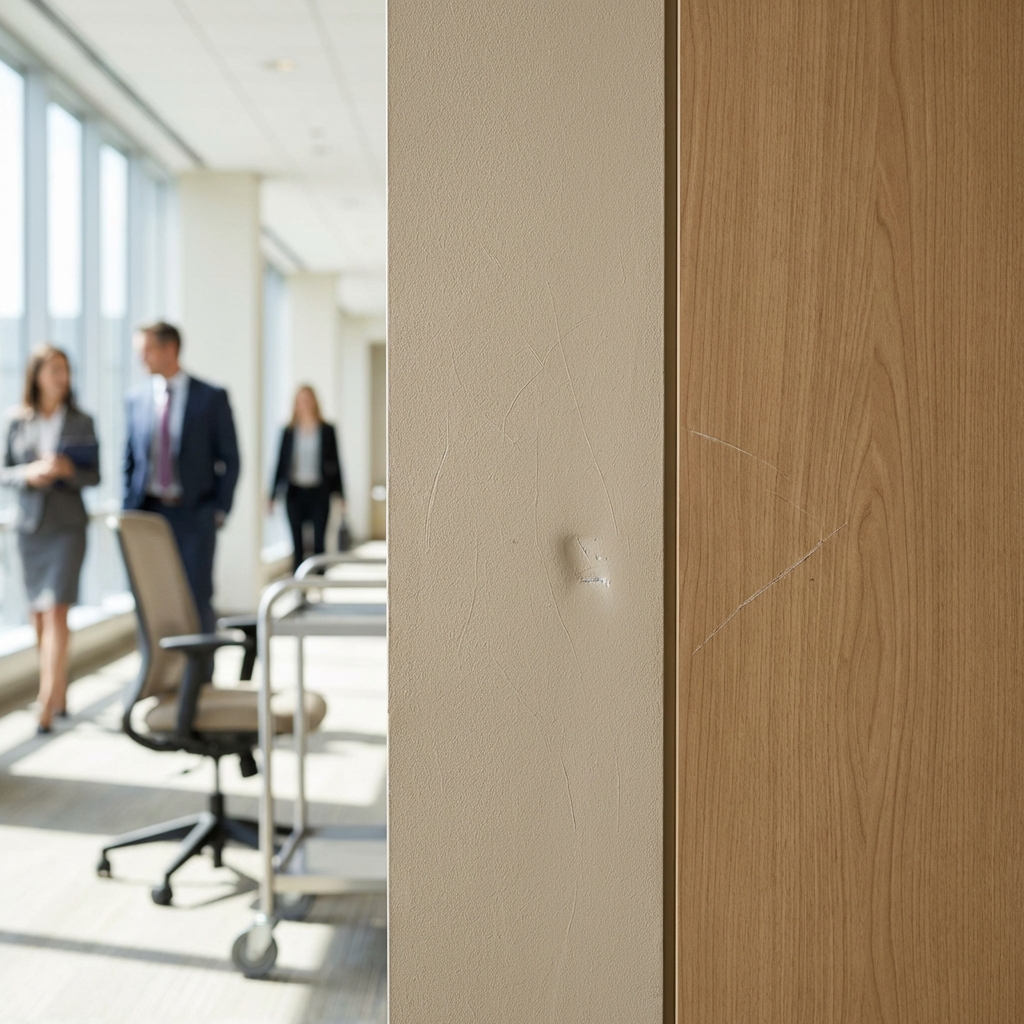
Compared with vinyl laminates, seams and edges are frequent failure points that trap dirt, haze under repeated disinfectant use, and can lift when adhesives are stressed—common pain points for commercial wall covering alternatives. In the UV ink vs vinyl wrap discussion, direct-to-wall systems reduce these risks, maintain visual clarity under aggressive cleaning, and streamline upkeep. For durable interior branding solutions across hospitals, schools, and multi-site workplaces, EastCoast MuralPros delivers a maintenance-friendly, lifecycle-efficient alternative that keeps walls looking new with less effort.
Lifecycle Assessment: Evaluating Long-Term Integrity and Replacement Cycles
When you examine long-term performance, direct-to-wall UV printing durability hinges on how the ink film bonds to the surface versus how a laminate relies on adhesives and seams. UV-curable inks polymerize into a hard, crosslinked layer that keys into the wall’s microtexture, creating a monolithic graphic with no edges to lift. That structural difference is a major reason UV systems age more predictably than film-based solutions in high-traffic interiors.
In practice, UV ink vs vinyl wrap diverges most under routine wear. UV prints function as scratch resistant wall graphics that tolerate daily cleaning and incidental abrasion; the ink film may show scuffs over time, but it won’t delaminate because there’s no adhesive layer to fail. Vinyl, by contrast, is vulnerable to edge picking, seam creep, and plasticizer-related shrinkage, which concentrate damage and shorten replacement intervals.
Common lifecycle stressors highlight the gap in integrity and the triggers that drive premature rework:
- Repetitive cleaning with hospital-grade chemicals, which can cloud laminates or soften adhesives, while cured UV films remain stable when cleaned per spec.
- Impact from carts, backpacks, and chair rails; UV creates impact resistant wall murals that won’t tear at a seam, while films can split or wrinkle.
- Humidity and temperature swings that promote bubbling in vinyl; UV prints are seam-free and less prone to moisture pathways.
- Substrate movement at control joints; a printed wall has no overlapping panels to misalign or lift.
Cost of ownership follows. Vinyl programs often require panel re-lamination, patching, or full replacement to address localized failure, each event adding downtime and waste. Direct-to-wall systems extend refresh cycles and simplify end-of-life: you can paint over the cured graphic when branding changes, avoiding demo, adhesive removal, and landfill-bound material—an advantage for teams vetting commercial wall covering alternatives with sustainability goals.
For durable interior branding solutions at scale, EastCoast MuralPros delivers on-site, high-resolution printing that minimizes disruption and keeps replacement cycles under control. Their paint-over-ready finish, cleanable surfaces, and campus-wide deployment capabilities reduce risk for facilities, healthcare, and education teams managing multi-location standards. Subscription options also turn seasonal or strategic updates into planned, low-impact events instead of unplanned failures.
Conclusion: Selecting the Right Solution for Institutional Longevity
In commercial and institutional settings, durability isn’t just a nice-to-have—it’s a risk and cost variable you can plan around. When comparing UV ink vs vinyl wrap, the biggest differentiator is failure points. Seam-free, direct printing removes edges that peel and bubbles that collect grime, giving you predictable performance under daily wear. If you’re evaluating direct-to-wall UV printing durability, look at adhesion on your substrate, resistance to common cleaners, and how the finish handles abrasion at handrails and corners.
Real-world examples clarify the tradeoffs. In hospital corridors, carts repeatedly clip wall surfaces; laminated vinyl protects initially but tends to scuff at seams and delaminate at edges, while cured UV films bond directly to CMU or drywall, producing scratch resistant wall graphics without lift points. Universities often need impact resistant wall murals for stair towers and commons; a hard-cured UV layer stands up to backpacks and routine wipe-downs without the seam maintenance. Retail rollouts prioritize speed and consistency; on-site printing eliminates shipping delays and ensures color-accurate, durable interior branding solutions across locations.
Use this quick selection checklist to choose the right path:
- You need low disruption and fast turnarounds (overnight or under 5 hours per zone)
- You want commercial wall covering alternatives without vinyl, adhesives, or trimming seams
- Your surfaces vary (painted drywall, CMU, concrete, brick) and must be handled uniformly
- Cleaning with hospital-grade disinfectants is routine and graphics must remain colorfast
- You’re standardizing multi-site branding and need consistent execution at scale
- You want an option that’s paint-over-ready for future tenant or program changes
EastCoast MuralPros fits these criteria with direct, on-site UV printing that delivers high-resolution, seam-free finishes designed for high-traffic environments. Teams rely on the cleanable, adhesive-free surface, rapid installs typically completed in under 5 hours, and compatibility with finished and unfinished substrates. For campuses and health systems, integrated wayfinding and instructional graphics reduce signage clutter while remaining lifecycle-efficient. Their subscription model supports seasonal refreshes, and national rollouts benefit from predictable color, scheduling, and cost.
If you’re planning a pilot, start with a high-traffic corridor or lobby wall, validate scratch and cleaning performance over a maintenance cycle, and then scale. EastCoast MuralPros can audit your substrates, advise on prep, and demonstrate performance-based alternatives that meet institutional longevity targets without construction downtime.
Call to Action
Contact us to learn more