Introduction: The Limitations of Traditional Wall Coverings
Durable Commercial Wall Graphics: A Modern Alternative to Vinyl and Wallpaper
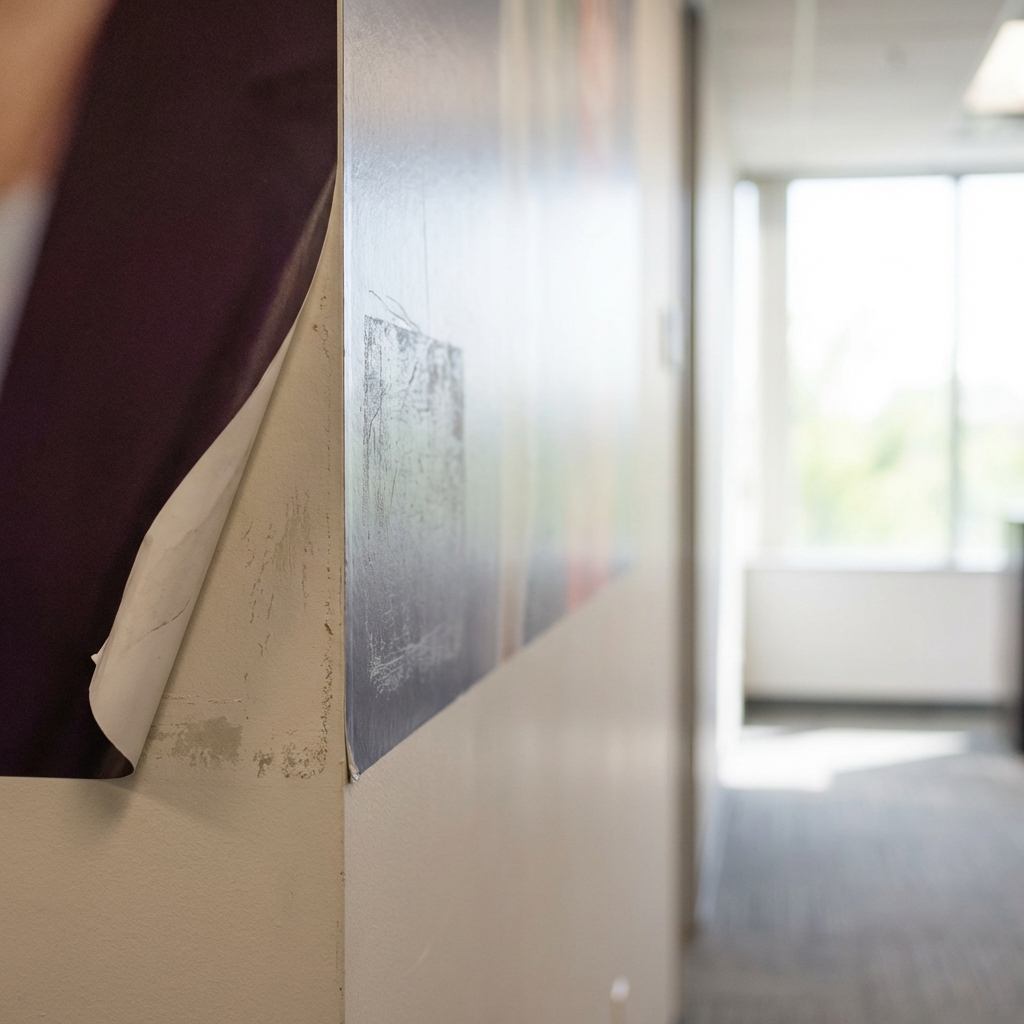
For years, vinyl wall coverings and wallpaper have been the default tools for refreshing commercial interiors. They promise quick visual transformation, yet facility and procurement teams know the hidden tradeoffs. Adhesives can off-gas and fail over time, seams telegraph on textured substrates, edges lift in humidity or high-touch zones, and maintenance escalates as corners snag and panels bubble. When the inevitable refresh comes, removal adds labor, waste, and downtime.
Beyond product performance, traditional methods complicate schedules. Pre-fabrication, shipping windows, and field corrections introduce risk to rollouts. A mis-measured panel or delivery delay can derail a brand launch or stall a corridor reopening. In healthcare, education, corporate workplaces, and retail, those disruptions ripple through operations. Add the requirement to scale across multiple locations and floor plates, and the core weaknesses of vinyl and wallpaper—fragility, seam lines, long lead times, and lifecycle waste—become strategic liabilities.
Durable commercial wall graphics offer a different path. Powered by direct-to-wall printing technology, they prioritize speed, reliability, and performance on high-traffic wall surfaces without adhesives or panels. The result is a clean, integrated finish that supports branding, wayfinding, and user experience at architectural scale.
What Are Durable Commercial Wall Graphics?
Durable commercial wall graphics are high-performance visual systems printed directly onto interior substrates—drywall, CMU block, sealed concrete, even brick—without vinyl or wallpaper. Instead of applying prefabricated panels, a mobile print engine renders high-resolution imagery, typography, and brand elements in place, conforming closely to the architectural surface. The outcome is a seam-free wall graphic that looks built-in, not applied.
Unlike one-off decorative murals, this category is designed to serve as infrastructure. Graphics function as commercial interior branding solutions, integrated wayfinding, safety and instructional layers, and ambient storytelling that stands up to daily use. Inks are cured on contact to create a hard-wearing, cleanable finish; protective clear coats can be specified for additional abrasion resistance when required by the program. When a refresh or tenant change is needed, the surface is paint-over-ready—no adhesive removal, scraping, or wall repair cycles typical of vinyl.
EastCoast MuralPros specializes in this approach, bringing architectural-scale output, precise color control, and consistent execution across single sites and multi-location footprints. For teams under schedule pressure, the promise is simple: durable, photoreal wall graphics delivered fast, without the seams, bubbles, or material waste associated with traditional coverings.
How Direct-to-Wall Printing Technology Works
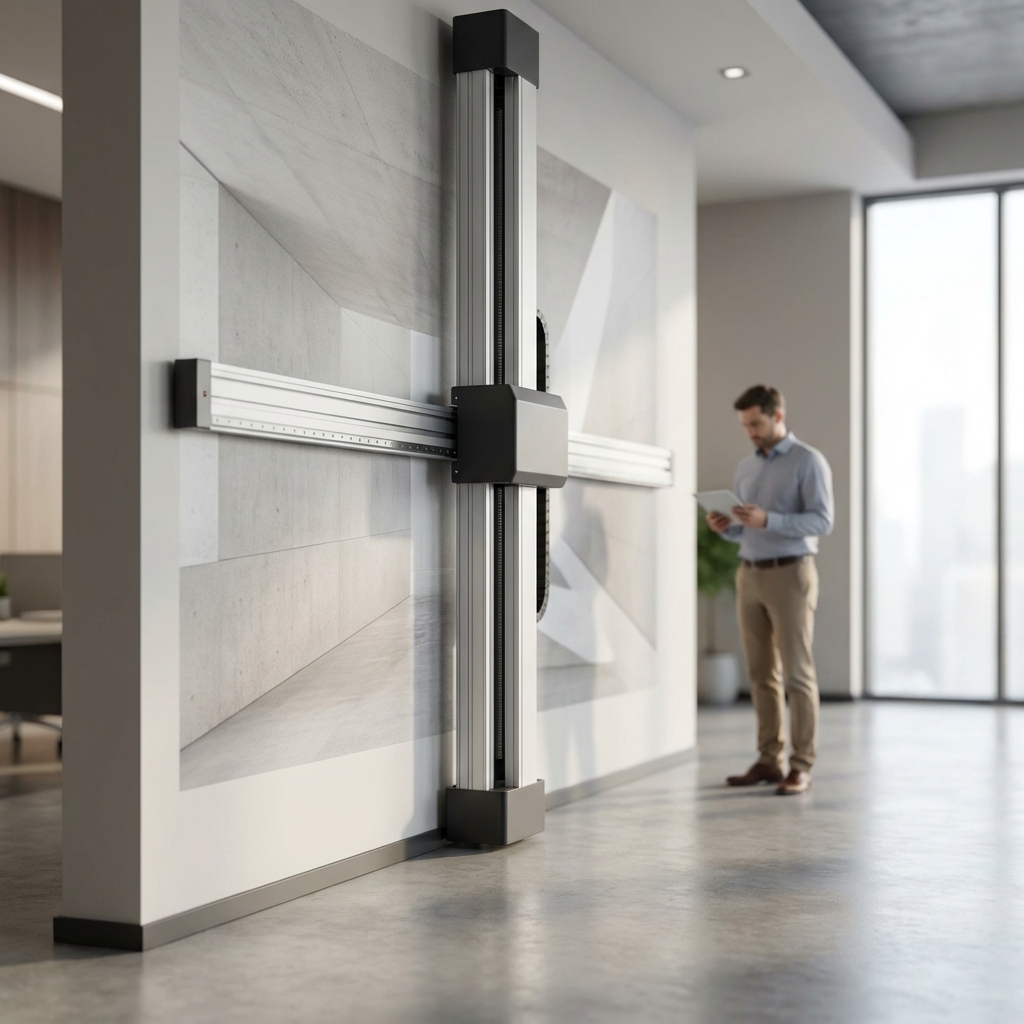
Direct-to-wall printing technology mobilizes what used to be a factory process. A vertical printer docks against the wall and traverses on rails, laying down UV-cured inks in high-resolution passes. CMYK—with white ink options for dark or textured substrates—builds color density and detail. The ink cures instantly under integrated UV light, bonding to the surface and forming a robust, low-profile film that resists smudges and scuffs.
A typical workflow includes:
- Site assessment: Check substrate condition (clean, dry, dust-free), confirm dimensions, power access, and environmental factors.
- File preparation: Set artwork to scale, manage color profiles for brand accuracy, and preflight typography and image resolution for architectural viewing distances.
- Surface prep: Light cleaning and masking of adjacent finishes; certain porous or friable surfaces may benefit from a sealer or primer to lock down dust and equalize absorption.
- Registration and printing: The printer aligns to datum references and renders the image with precise pass overlap for uniform coverage, including white underlayers when needed.
- Protection and sign-off: Optional clear coats for added durability in high-abrasion or clean-chemistry environments; documentation for future reprints or rollouts.
Because everything is produced in place, on-site printing eliminates shipping delays and fabrication errors. It also supports nuanced integration—wrapping around door frames, aligning typography across soffits, or bridging from drywall to CMU without a visible seam or panel transition. EastCoast MuralPros’ teams complement on-site work with in-studio printing for doors, tables, and standees, allowing the same artwork ecosystem to extend across fixtures and branded touchpoints.
Key Advantages Over Vinyl Wraps and Wallpaper
Direct-to-wall printing reframes the value equation for commercial interiors. Facilities leaders and project managers gain control over schedule, quality, and lifecycle performance—factors that often erode with traditional coverings. Advantages include:
- No adhesives, no seams: Graphics are printed directly onto the surface, removing the weakest points of vinyl systems—edge lift, seam creep, and panel mismatch.
- Speed without pre-fabrication: With on-site production, there’s no waiting for panels to be produced, shipped, and staged. Most wall installations complete in under five hours.
- True architectural integration: The printed film sits flush with the wall profile, conforming to textures like CMU or brick without telegraphing overlap lines.
- Fewer failure modes: No backing paper, no trapped air bubbles, no differential shrinkage across panels—common failure causes disappear.
- Predictable rollouts: Eliminating shipping and panelization cuts variables. Teams can pilot and scale with playbooks for substrates, finishes, and color standards.
- Paint-over-ready refresh: When messaging or branding changes, crews can prep and repaint—no adhesive scraping or wall repair cycles.
- Lifecycle efficiency: Durability and cleanability reduce replacement frequency, lowering total cost of ownership.
If your evaluation centers on sustainability and operational waste, this comparison becomes even sharper. For a deeper dive into the environmental differences, see EastCoast MuralPros’ analysis of direct-to-wall printing vs vinyl.
Design Flexibility and Customization Capabilities
Design teams are no longer constrained by panel widths, seam locations, or adhesive compatibility. With direct-to-wall systems, content scales fluidly from a conference-room vignette to a multi-floor feature wall without redesign. Photoreal imagery holds crisp detail at architectural scale, while vector typography and brand marks remain sharp across long corridors and atria.
Key creative capabilities include:
- Seam-free wall graphics at scale: Extend continuous imagery over long runs and around architectural features without visible breaks.
- Coverage on finished and unfinished surfaces: From smooth drywall to textured CMU and sealed concrete, artwork can be tuned with white underprints and density adjustments to maintain legibility and contrast.
- Variable and localized content: Adjust wayfinding arrows, language, or room identifiers by floor or campus while maintaining a consistent system.
- Layered information design: Integrate brand storytelling with safety or instructional graphics to reduce signage clutter and improve comprehension.
- Fine-tuned color management: ICC profiling and test swatches support brand-critical hues and skin tones, particularly important for museums, galleries, and hospitality.
- Artist-friendly workflows: Collaborative tools help digital artists scale their work, translate studio pieces for large-format walls, and manage libraries for seasonal refreshes.
The medium also supports rapid iteration. With a subscription model, organizations can build a cadence of seasonal or strategic updates—campaign messaging in retail, student-life themes by semester, or wellness prompts that reflect workplace initiatives—without reengineering hardware or installing new materials.
Installation Speed and Minimal Disruption
Occupied buildings demand quiet, clean, and fast execution. Direct-to-wall printing was built for those constraints. Because production happens in place and the ink cures instantly, spaces reopen immediately after installation—no long tack times, no off-gassing odors, and no waiting for wall coverings to relax or adhesives to settle.
Typical site impact includes:
- Short work windows: Many prints complete in under five hours, aligned to off-peak or overnight schedules to minimize disruption.
- Low footprint: Printers and masking consume a narrow corridor of floor area; pathways and egress remain clear.
- Clean process: Dry, UV-cured inks mean no liquid adhesives or wet glues. Containment measures protect adjacent finishes, and cleanup is minimal.
- Healthcare-friendly coordination: Infection control protocols, dust management, and noise limits are readily accommodated, making clinical corridors and waiting rooms viable candidates for same-day upgrades.
- No demolition or permitting: Since walls are not rebuilt or paneled, projects bypass construction-heavy workflows and their associated approvals in many jurisdictions.
For landlords, property managers, and facilities teams with tight turnover schedules, the schedule certainty is a primary benefit. The reduced disruption helps maintain operations—classrooms can host a morning lecture, receive an afternoon graphic install, and be ready for evening study hours.
Performance and Durability in High-Traffic Environments
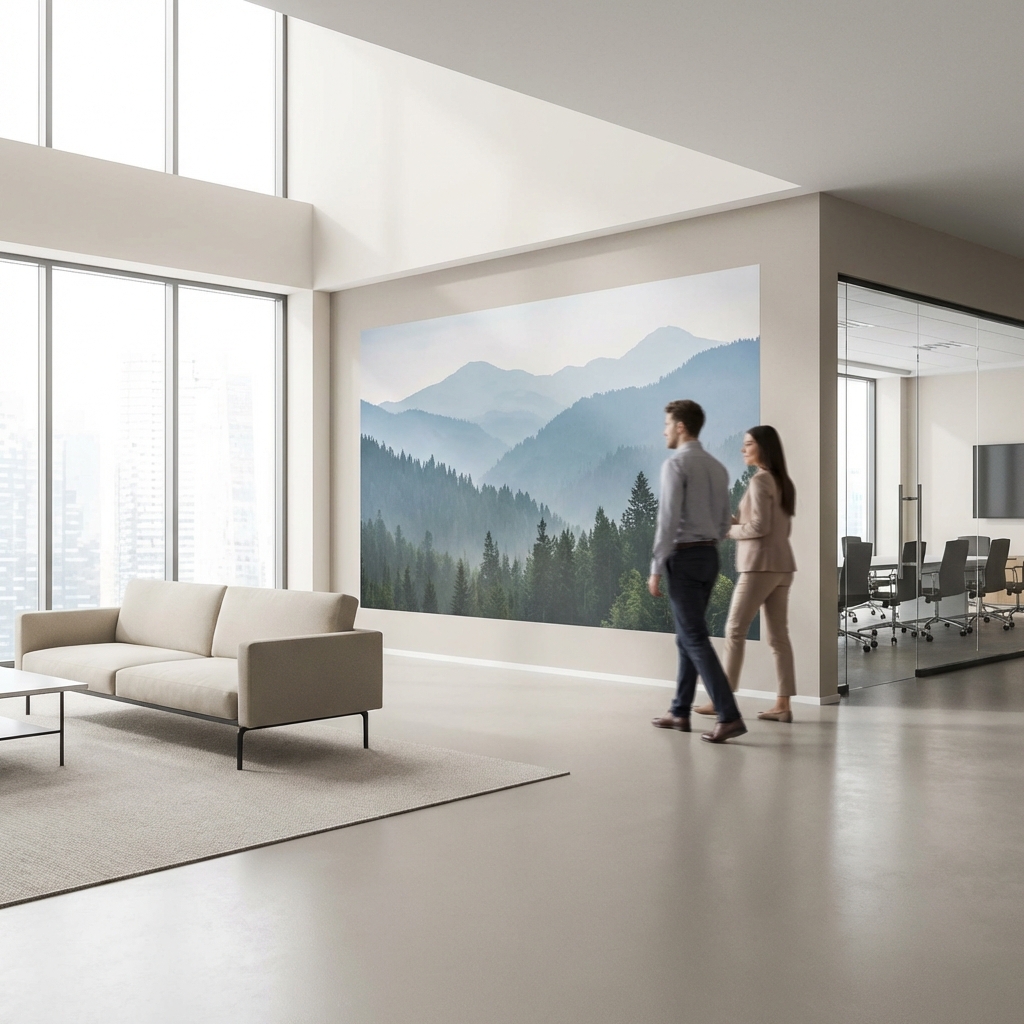
In busy corridors, lobbies, and patient-facing spaces, graphics must endure constant contact. Direct-to-wall prints are engineered for these realities. The cured ink film forms a robust, low-profile layer that resists scuffing from bags and carts; optional clear coats add further abrasion protection and simplify cleaning routines. Unlike panel seams that catch and fray, the edge-free finish minimizes snag points and keeps the wall looking intentional.
Performance characteristics that matter to operators:
- Cleanability: Surfaces are designed to be wiped down with common non-abrasive cleaners, supporting hygiene standards in healthcare and education.
- Color stability: UV-cured inks maintain fidelity under typical interior lighting conditions, protecting brand colors and skin tones in long-term displays.
- Texture compatibility: On CMU and brick, underprints and pass strategies preserve legibility and contrast for wayfinding and safety messaging.
- Repairability and change management: Future updates are as straightforward as prepping and repainting, without substrate damage from adhesive removal.
- Safety alignment: Low-profile, integrated graphics reduce protrusions and clutter, improving clearances in egress paths and equipment zones.
For teams prioritizing operational performance, EastCoast MuralPros outlines the top benefits of direct-to-wall printing with a focus on durability for high-traffic wall surfaces. Museums and cultural institutions also value the medium’s ability to render photoreal imagery with crisp edge quality, enabling galleries and exhibit environments that meet both aesthetic and maintenance demands.
Cost Efficiency and Lifecycle Advantages
Budget holders look past initial installation costs to total cost of ownership. Durable commercial wall graphics alter that equation by eliminating material categories, shortening timelines, and reducing replacement cycles. Over a multi-year horizon, the savings compound.
Where the value shows up:
- Fewer materials, fewer vendors: No vinyl rolls, adhesive systems, or mounting hardware. On-site printing consolidates sourcing and reduces shipping, packaging, and staging costs.
- Compressed labor: With most walls completed in a single work window, labor hours and overnight premiums decrease relative to multi-day panel installs.
- Reduced rework risk: On-site adjustments to scale, placement, or color balance avoid reprints and reshipments that strain budgets.
- Lower refresh costs: Because surfaces are paint-over-ready, changing a message or brand treatment doesn’t trigger demolition, adhesive abatement, or wall repair.
- Scale efficiencies: Multi-wall, multi-floor, and multi-site programs benefit from templates, asset libraries, and playbooks that streamline mobilization and execution.
For programmatic environments—healthcare systems, university campuses, national retail—the subscription model is particularly useful. It spreads investment over time, supports scheduled refreshes, and enables pilot-to-scale strategies that de-risk large commitments while keeping spaces visually current.
Sustainability and Environmental Impact
Sustainability is more than a material claim; it’s a system choice. Direct-to-wall printing removes entire waste streams tied to vinyl and wallpaper—PVC films, liners, adhesive backings, and end-of-life peel-and-toss cycles. By producing in place, projects also reduce shipping volume, packing materials, and the emissions bound up in transporting large-format panels.
Lifecycle advantages include:
- Material minimization: No adhesives or backing papers; only the inked image remains on the wall.
- Longer useful life: Durable, cleanable prints stay serviceable longer, lengthening replacement intervals and reducing turnover waste.
- Lower changeover impact: When the program shifts, a prep-and-paint cycle restores the wall—no landfill-bound vinyl, no solvents to strip adhesive.
- Streamlined logistics: Fewer deliveries, fewer crates, fewer returns or remakes, and less site storage.
If your organization is actively evaluating sustainable wall covering alternatives, EastCoast MuralPros’ side-by-side comparison of direct-to-wall printing vs vinyl offers a useful lens into operational waste and environmental impacts.
Multi-Location Rollouts and Brand Consistency
Consistency is a discipline. National brands, healthcare networks, school districts, and property portfolios need reliable replication of color, typography, and placement across diverse surfaces and lighting conditions. Direct-to-wall workflows support that discipline with standardized file specs, color-managed profiles, and a repeatable on-site process.
How multi-site teams maintain fidelity and speed:
- Asset governance: Centralized libraries for approved artwork, typography, and templates reduce drift and expedite approvals.
- Color standards: Test swatches and profiling deliver brand-critical hues across drywall, CMU, and sealed concrete, keeping locations aligned.
- Site surveys and fit: Standardized measurement and documentation protocols eliminate guesswork and reduce change orders.
- Deployment playbooks: Step-by-step guides for substrates, finish options, and protection levels keep local teams and vendors on the same page.
- National mobilization: Coordinated schedules and consistent staffing models allow synchronized go-lives—critical for campaigns and rebrands.
EastCoast MuralPros’ on-site model pairs well with these needs. By removing panel shipping and field trimming from the equation, rollouts gain predictability and clarity, even when spanning hundreds of walls across multiple facilities.
Ideal Applications: Healthcare, Education, and Corporate Spaces
Durable commercial wall graphics shine where messages must be seen, understood, and maintained with minimal fuss. Three sectors illustrate how the technology meets operational goals without sacrificing design intent.
Healthcare systems and medical facilities:
- Wayfinding that works: Color-coded zones, arrows, and icons applied directly to corridor walls reduce sign clutter and improve patient flow.
- Cleanability and compliance alignment: Smooth, integrated surfaces simplify wipe-down routines in high-contact zones; optional clear coats support more aggressive cleaning protocols.
- Positive distraction and comfort: Photographic nature scenes, calming gradients, or local art improve experience in waiting areas, infusion suites, and family rooms.
- Fast, low-disruption installs: Overnight corridor upgrades reopen before morning rounds; clinical schedules remain intact.
- System-wide standards: Templates for room identifiers, safety instructions, and department branding roll across campuses with color-consistent execution.
Colleges, universities, and K–12 school districts:
- Full-campus solutions: Athletics branding, mascot features, donor recognition, and alumni narratives scale from arenas to student unions to residence halls.
- Instructional and cultural layers: SEL messages, lab protocols, makerspace instructions, and event wayfinding integrate into walls without visual noise.
- Durable under foot traffic: Hallways, gym entries, and cafeteria lines demand cleanable, scuff-resistant surfaces that hold up all semester.
- Summer refreshes made simple: Subscription cycles let facilities re-theme spaces between terms without construction.
- Artist collaboration: Student and faculty artwork can be translated to walls at full resolution—supported by tools that help digital artists scale from tablet to atrium.
Corporate real estate and workplaces:
- Brand immersion: Values walls, innovation timelines, and product storytelling become part of the architecture, not an overlay.
- Agile change management: As teams reorganize and programs evolve, paint-over-ready finishes accommodate new tenants or departmental moves without demolition.
- Privacy and focus: While glass films serve glazing, walls handle orientation, subtle zoning cues, and wellness prompts with minimal visual clutter.
- Speed and certainty: Lobbies, conference zones, and amenity spaces can be refreshed during off-hours and reopened on schedule for all-hands or client visits.
- Multi-location consistency: Headquarters-to-hub rollouts align logos, colors, and tone across continents and time zones.
Other high-value fits include hospitality corridors, retail flagships, museums, and cultural institutions where photoreal, high-resolution imagery must meet exhibit-quality standards yet remain serviceable between shows.
Conclusion: Choosing the Right Wall Graphics Solution
Selecting a wall graphics strategy is a decision about performance, schedule, and stewardship of space. Durable commercial wall graphics—delivered with direct-to-wall printing technology—offer a path that removes seams and adhesives, accelerates timelines, and lowers lifecycle burdens while elevating design quality. For facilities directors, architects, workplace leaders, and procurement teams, the method answers persistent pain points of vinyl and wallpaper with a cleaner, more controllable alternative.
A practical evaluation checklist:
- Substrate readiness: Confirm that target walls are clean, dry, and appropriately sealed for consistent ink adhesion, whether drywall, CMU, or concrete.
- Visual objectives: Define resolution requirements, viewing distances, and the balance of brand, wayfinding, and instructional content.
- Durability needs: Identify zones that warrant protective clear coats or enhanced cleanability protocols based on traffic and cleaning chemistry.
- Rollout governance: Establish file standards, color profiles, and documentation for repeatable multi-site execution.
- Refresh cadence: Consider a subscription model to budget seasonal or strategic updates without reintroducing construction or material waste.
- Operational windows: Align install scheduling with building use to keep downtime near zero.
EastCoast MuralPros supports organizations that need commercial interior branding solutions at scale—fast installs that typically finish in under five hours, seam-free wall graphics that hold up in high-traffic environments, and finishes that are paint-over-ready when programs or tenants change. To explore how the approach can serve your next campus, clinical, workplace, or portfolio initiative, visit eastcoastmuralpros.com.
Contact us to learn more