Introduction: The Challenge of Office Space Upgrades and Downtime Costs
Every facilities leader knows the paradox: the spaces that most need a refresh are the ones you can least afford to take offline. Even a single day of disruption on a high-traffic floor can cascade into missed meetings, rescheduled client visits, and frustrated teams searching for temporary space. For multi-location businesses, multiplying that disruption across sites is not just inconvenient—it becomes a budget and brand risk.
Traditional upgrades like construction-heavy renovations, full-wall re-finishing, or wallpaper replacement push timelines out by weeks and require coordination across trades. In many markets, even small scopes trigger permitting, material lead times, or punch-list returns that stretch schedules beyond what workplace, IT, and security teams can tolerate. That’s why fast office mural installation has shifted from a “nice-to-have” to a strategic requirement: it delivers visible, brand-forward change with minimal downtime.
Modern direct-to-wall printing has emerged as a professional, scalable path to quick wall graphics installation that meets enterprise expectations for quality, safety, and schedule certainty. For operations managers and real estate teams under pressure to keep people productive, it represents a practical way to align interiors with brand, culture, and wayfinding needs—in hours, not weeks.
Why Traditional Mural Solutions Fall Short for Commercial Spaces
Vinyl wall coverings and wallpaper have long been the default for visual change, but their weaknesses become clear in real offices. Adhesive-backed films can bubble, seam, or lift at corners—especially on textured or high-traffic walls—resulting in visible failures that undermine brand credibility. Humidity, temperature swings, and cleaning cycles accelerate these issues, raising ongoing maintenance costs and disrupting floors anew for repairs.
Hand-painted murals, though beautiful, require extended on-site time, specialized talent, and strict staging. Ladders, scaffolding, drop cloths, and paints occupy corridors and collaboration areas for days. Dry times, odor, and the uneven finish risk create additional scheduling friction in occupied environments—and replicating identical work across multiple floors or cities is rarely feasible.
Both approaches add material waste and logistical complexity. Rolls must be printed, shipped, staged, and stored; color shifts can emerge from batch to batch; and every seam introduces a failure point. For procurement and facilities teams standardizing interiors across a portfolio, the risk of variable outcomes and the reality of recurring replacement cycles make vinyl and wallpaper less attractive. Offices that refresh often—following rebrands, tenant shifts, or seasonal campaigns—need a system that installs cleanly, scales predictably, and looks integrated with the architecture, not applied on top of it.
How Direct-to-Wall Printing Technology Enables Fast Installation
Direct-to-wall printing eliminates the substrate entirely. Instead of producing decals or wallpaper, mobile print systems cure high-resolution inks directly onto finished or unfinished surfaces such as drywall, CMU, concrete, and brick. The result is a seamless, adhesive-free graphic that reads like part of the wall itself—without seams, bubbles, or panel alignment issues.
For professional wall printing for offices, speed comes from simplification. With no vinyl fabrication or lamination, there’s nothing to ship, unbox, or trim. Crews arrive with calibrated equipment, align to the wall, run a color-verified test swatch, and print the full-resolution image at architectural scale. UV-cured or similarly robust ink systems set rapidly, so areas can return to use quickly with minimal odor and minimal equipment footprint.
Quality control is data-driven. Color management workflows, ICC profiling, and brand palette references ensure consistency across floors and locations. Digital file preflight catches scaling or resolution issues in advance, and collaborative proofing tools give stakeholders—from brand teams to digital artists—the ability to scale creative confidently. EastCoast MuralPros uses this approach to help teams translate complex brand systems and artwork into precise, repeatable wall executions without the usual friction points of panels or paint.
Installation Timeline: What to Expect in Under 5 Hours
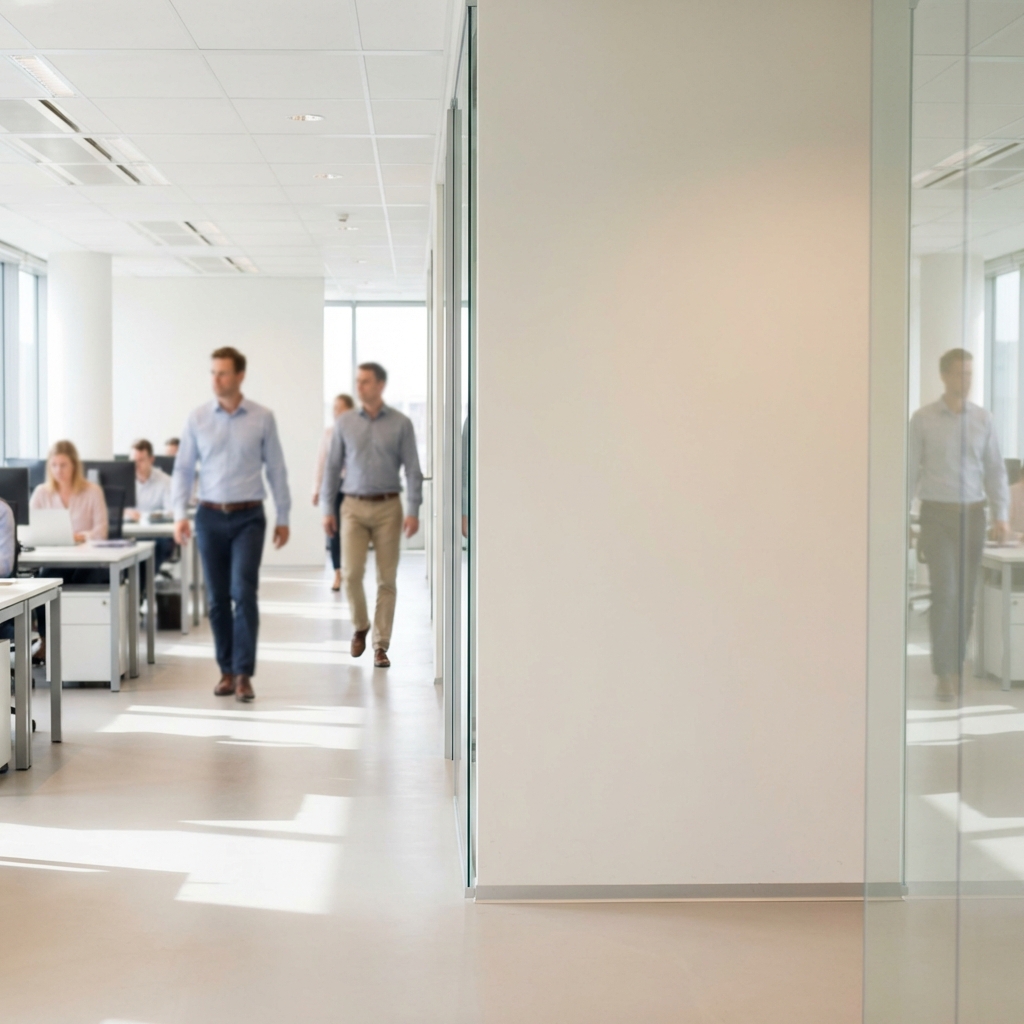
A typical office mural—think reception feature wall, corridor run, or a conference room backdrop—can be completed the same day, often in under five hours from arrival to wrap. The exact time varies with wall size and texture, but a predictable sequence helps teams plan confidently around meetings and daily operations.
A streamlined, fast-turnaround office murals process often looks like this:
- Pre-site readiness: A brief virtual or in-person assessment confirms wall material, condition, and access paths. Graphics are finalized and color-checked in advance.
- Arrival and staging (30–45 minutes): Technicians protect adjacent finishes, set up compact equipment, confirm level/plumb references, and verify the print area is clear of furniture and obstructions.
- Calibration and test (15–30 minutes): A small on-wall test panel verifies color and adhesion on the actual surface. Adjustments, if needed, are applied in software.
- Printing (60–150 minutes, scope dependent): The image is printed edge-to-edge with consistent pass quality. No panel seams, hinge methods, or large ladders are involved in most office conditions.
- Cure and QC (15–30 minutes): Inks cure rapidly; the crew performs a close inspection for uniformity, sharpness, and coverage.
- Cleanup and return to service (15–30 minutes): Protective materials are removed, with the area ready for normal traffic immediately after departure.
Where offices need multiple walls upgraded in sequence, teams can phase work by floor, wing, or time-of-day. Night and weekend sessions minimize visibility further, and because there are no solvents or adhesives to outgas, occupants can return without extended ventilation cycles. The entire approach is built around office continuity: keep the calendar intact while making visible improvements.
Design Flexibility and Customization for Multi-Location Rollouts
Direct-to-wall printing excels where scale and nuance meet. Enterprise brand systems demand exacting typography, color, and photo fidelity across different substrates and lighting conditions. With digital file control and calibrated print workflows, you get a consistent look across every site—whether you’re branding a New York headquarters, a regional hub, or a satellite office.
It’s not just consistency; it’s customization. Templates can be set up to localize content—city names, department icons, compliance statements—while maintaining global brand rules. Graphics can wrap inside corners, navigate around columns, and align precisely with architectural features for a refined, built-in appearance. Because there’s no seam map dictating panel breaks, creatives have more freedom to place critical details exactly where users will notice them.
For programs that update seasonally or quarterly, a subscription model streamlines planning and budget. Facilities teams lock in service windows and pricing, while brand and workplace teams rotate campaigns, cultural storytelling, or wayfinding refreshes on schedule. Complementary in-studio printing for doors, tables, and standees allows pop-up elements to match wall treatments for events and product launches. EastCoast MuralPros also supports digital artists with collaborative tools to scale art portfolios—enabling curated, museum-grade imagery to live across workplaces without re-illustration or repainting at each location.
Durability and Maintenance in High-Traffic Office Environments
In busy corridors and collaboration zones, durability and cleanability are non-negotiable. Because graphics are printed directly onto the wall and cured in place, there’s no edge or seam to catch on, peel at, or trap cleaning fluids. High-resolution imagery retains crisp detail even under repeated wipe-downs, and the finish can be specified to complement existing paint sheens for a cohesive look.
Maintenance is straightforward. Most walls can be cleaned with non-abrasive cloths and common commercial cleaners; where infection-control standards apply—such as in mixed-use workplaces with clinical suites—the finish supports frequent disinfecting without fogging or seam failure. And when branding or tenant needs change, paint-over-ready finishes let facilities teams reset a wall quickly without demolition or adhesive removal.
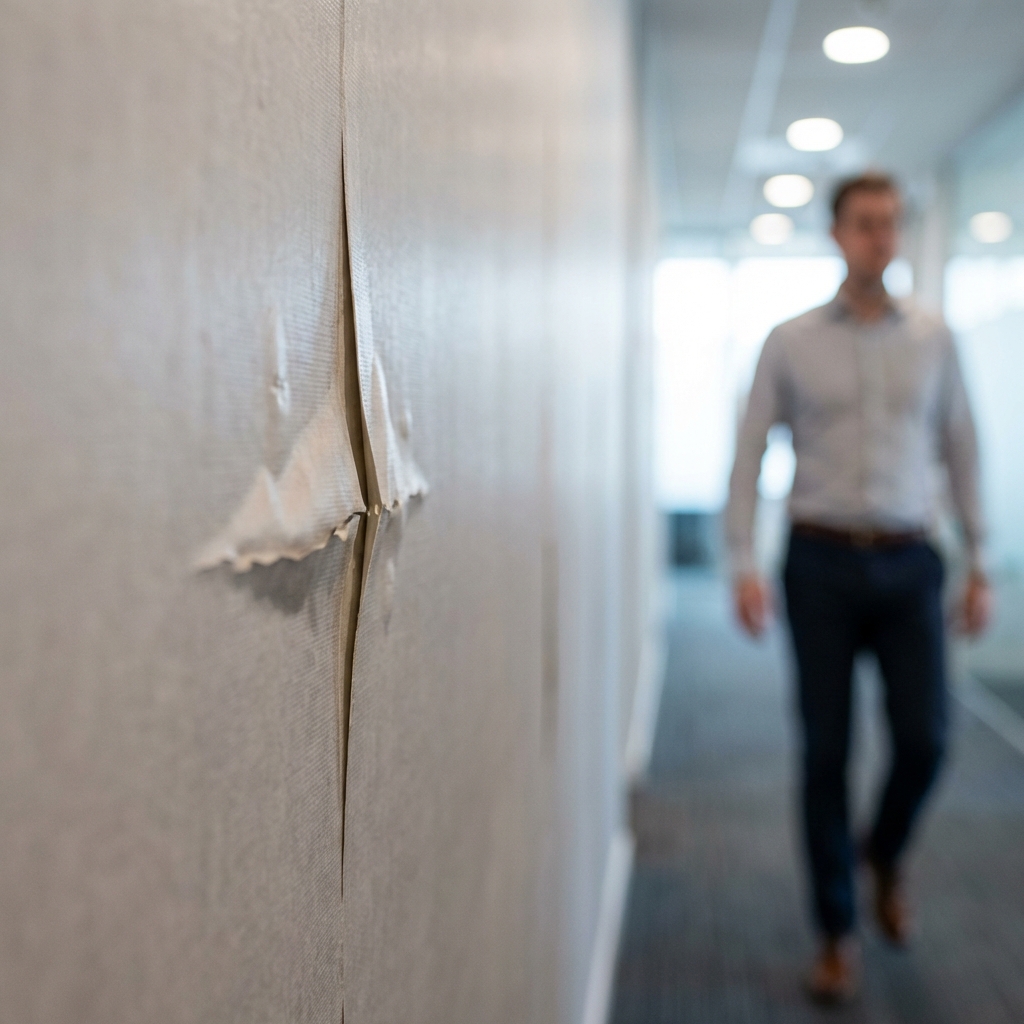
If damage does occur—say, a cart scuff or impact—repairs target the affected area rather than forcing a full-panel replacement. That reduces both downtime and waste. For teams evaluating long-term performance, it’s worth noting the reduced points of failure compared to vinyl and wallpaper. For a deeper dive into performance in high-traffic settings, see EastCoast MuralPros’ overview of direct to wall printing benefits.
Cost-Effectiveness and Lifecycle Advantages Over Vinyl and Wallpaper
Procurement and facilities leaders often compare unit prices and install hours—but the real wins show up in lifecycle math. Direct-to-wall printing removes entire cost categories: substrates, adhesives, lamination, panel trimming, freight, and storage. On-site printing also eliminates shipping delays and fabrication errors that can derail schedules or force costly reprints.
Labor compresses, too. Fewer steps and fewer trades mean fewer mobilizations, a lower chance of scheduling conflicts, and less rework. Because the installation is fast and localized, there’s minimal soft cost from lost productivity, floor shutdowns, or after-hours premiums. When graphics need to change, paint-over resets or targeted touch-ups keep refresh budgets predictable.
From a sustainability perspective, the material footprint is dramatically reduced—there are no discarded backing papers, panel offcuts, or removed vinyl heading to landfill at each update. Many teams now weigh environmental impact alongside cost and speed in RFPs; direct-to-wall printing consistently outperforms wallpaper and vinyl on waste and replacement frequency. For a side-by-side comparison, EastCoast MuralPros’ analysis of direct to wall printing vs vinyl sustainability is a helpful resource.
The net: when you factor in fewer failures, faster updates, and the ability to maintain operations during install, total cost of ownership tilts decisively toward direct-to-wall solutions. That’s why office wall graphics installation programs that start as pilots often become standard across portfolios.
Applications: Branding, Wayfinding, and Workplace Experience
The most effective office murals do more than decorate—they guide, inform, and shape behavior. With direct-to-wall printing, you can integrate branding and wayfinding into the surfaces people already use, eliminating sign clutter while improving comprehension.
High-impact use cases include:
- Reception and client areas: Feature walls with photoreal, high-resolution imagery establish brand presence the moment someone enters.
- Corridors and intersections: Seam-free wall graphics at architectural scale deliver directional cues, neighborhood identifiers, or safety instructions without freestanding signs.
- Conference rooms and collaboration zones: Department-specific visuals, value statements, or product timelines boost relevance and reinforce culture.
- Elevators, stair cores, and amenity spaces: Large-format environmental graphics bring continuity across floors and help guests self-navigate in seconds.
- Training and ops back-of-house: Process visuals, instructional graphics, or lean cues integrated at eye-level where work happens.
Because the finish reads like paint, graphics feel built-in rather than aftermarket—an advantage when creating a polished workplace experience. Museum-grade image quality scales beautifully, enabling curated artwork programs and rotating exhibitions in lobbies or executive floors without lengthy installations. For multi-building campuses or mixed-use projects, these same methods unify branding and wayfinding across offices, retail, and amenities with one standards set.
Implementation for Occupied Buildings with Minimal Disruption
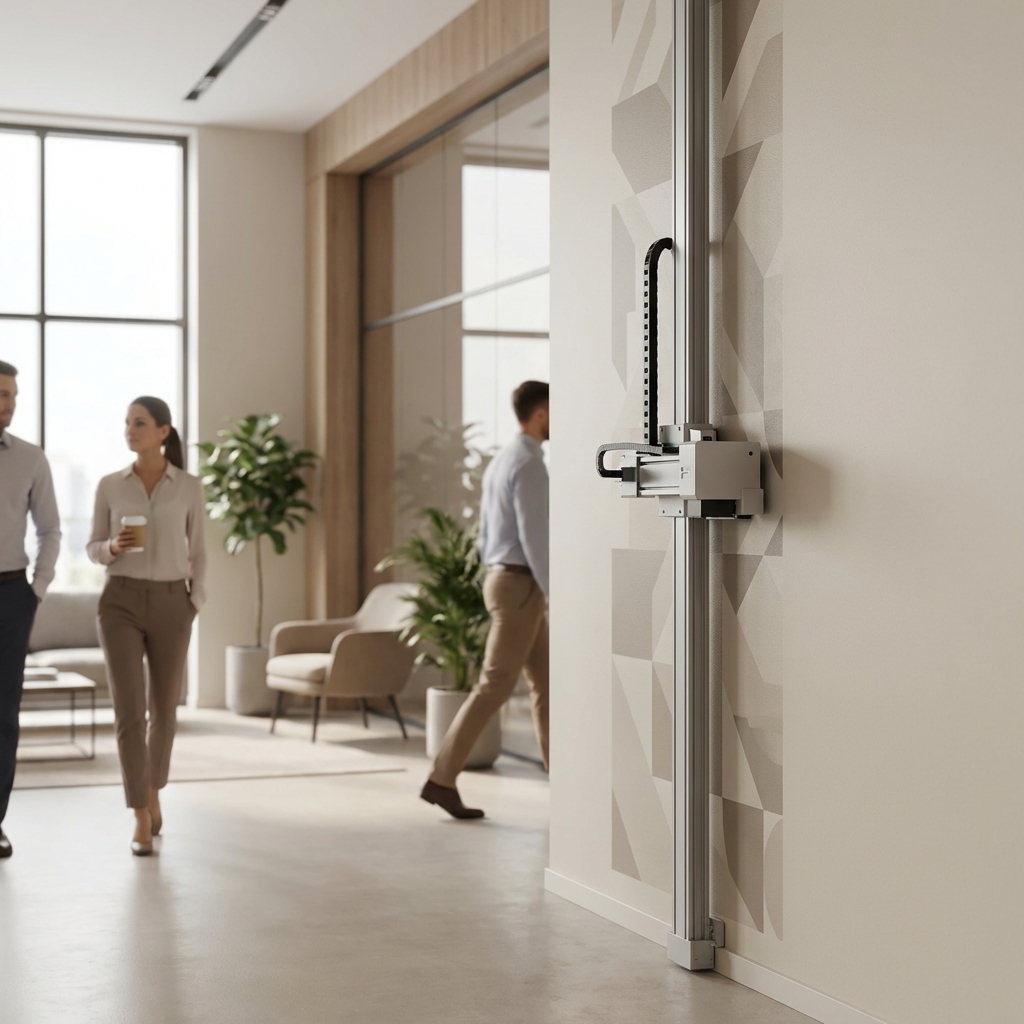
Occupied environments demand discretion. The direct-to-wall workflow is designed around building operations, allowing facilities teams to keep floors open with minimal detours. Crews stage compactly, confining protective materials and equipment to the immediate work zone to maintain egress and access to life-safety devices.
Best practices for low-disruption execution include:
- Phased scheduling: Align work with natural lulls, swing spaces, or after-hours windows to avoid meeting conflicts.
- Clear communications: Notify occupants with concise wayfinding and anticipated timing; most installs start and finish within the same shift.
- Site preparation: Ensure walls are clean, dust-free, and unobstructed; coordinate moves for large furniture only where necessary.
- Environmental controls: Maintain standard indoor temperature and humidity; odor and noise remain low, with no prolonged ventilation needs.
- Safety and compliance: Confirm insurance, background checks, and building protocols; maintain clean pathways and protect adjacent finishes.
Because installation is fast and self-contained, there’s no extended curing time, no adhesive smell, and no return visit to fix panel seams. This matters in professional environments where impression and availability are intertwined—executive suites, client centers, and high-traffic collaboration floors can all be upgraded in stride.
Choosing the Right Partner for Office Mural Projects
The right vendor de-risks schedule, quality, and stakeholder confidence. When evaluating commercial mural printing services, look beyond a portfolio of pretty pictures and probe the operational backbone that makes results repeatable across sites.
Key questions to ask:
- Process and speed: How do you scope, proof, and stage to deliver fast office mural installation in occupied spaces? What’s the documented install timeline by wall type?
- Color and consistency: What tools ensure brand-accurate color across different substrates and lighting? Can you produce and archive color targets for future refreshes?
- Surface compatibility: Which wall types (drywall, CMU, concrete, brick) are supported? What prep or priming is recommended for each?
- Durability and care: What cleaners are approved? Is the finish paint-over-ready for future tenant changes? How are spot repairs handled?
- Safety and compliance: What insurance, training, and building procedures are standard? How is egress maintained during work?
- Scale and logistics: Can you handle multi-location or national rollouts with consistent execution? How do you structure subscriptions or phased programs?
EastCoast MuralPros specializes in professional wall printing for offices and institutional settings, combining fast installation with enterprise-grade consistency. The team delivers seam-free graphics at architectural scale, supports collaborative digital artist workflows, and offers subscription models for seasonal or strategic refreshes. In addition to on-site wall printing, in-studio capabilities for doors, tables, and standees help unify branded environments. For multi-facility owners—including corporate workplaces, healthcare systems, and higher education—ECMP’s approach enables full-campus and multi-location rollouts without the scheduling headaches and waste of vinyl or wallpaper. Learn more at eastcoastmuralpros.com.
Conclusion: Transforming Office Interiors at the Speed of Business
Office environments change fast—brands evolve, teams reconfigure, and communication needs shift overnight. Traditional mural methods struggle to match that cadence without adding downtime and waste. Direct-to-wall printing gives workplace and facilities leaders a reliable path to fast office mural installation that looks built-in, lasts under real use, and scales across sites.
For organizations seeking quick wall graphics installation without sacrificing quality, the advantages are clear: minimal disruption, predictable schedules, and a lifecycle profile that outperforms vinyl and wallpaper. Whether you need a reception refresh in a single evening or a coordinated, multi-market brand update, modern office wall graphics installation can deliver visible impact within the natural rhythms of your business.
EastCoast MuralPros helps teams execute fast-turnaround office murals as part of broader workplace strategies—branding, wayfinding, and employee experience—so spaces keep pace with the organization itself. If you’re ready to evaluate commercial mural printing services built for operational realities, explore how direct-to-wall printing can transform your interiors on your timeline and terms.
Contact us to learn more