
Introduction: The Intersection of Aesthetics and Hygiene in Modern Healthcare Facilities
Healthcare interiors must reconcile two imperatives that often collide: a welcoming, brand-forward experience and rigorous environmental hygiene. Infection control wall graphics provide a path to both, delivering durable visuals that stand up to frequent cleaning while communicating clearly in high-stakes spaces. While sterilization applies to instruments and devices, walls and other environmental surfaces are governed by cleaning and disinfection protocols; finishes must tolerate quats, bleach dilutions, and alcohol without degrading or harboring residue.
Direct-to-wall, medical grade wall printing with UV cured wall ink creates a hardened, non-porous image layer that is seam-free and easy to wipe down. By eliminating adhesives and panel joints, facilities reduce edges where soil and moisture can accumulate, supporting routine EVS workflows. When antimicrobial wall surfaces are required, prints can be paired with approved clear topcoats specified by the facility, preserving cleanability without compromising visual quality. This approach scales across drywall, CMU, and sealed concrete to standardize clinical environment graphics across campuses.
Practical applications go far beyond décor. Clinicians and facilities teams increasingly use sanitary interior branding to embed guidance where it’s needed most, for example:
- Donning/doffing sequences, isolation room door prompts, or hand hygiene reminders printed at PPE and sink stations.
- Color-coded wayfinding and unit zoning that aids patient flow while reducing sign clutter and hardware touchpoints.
- Procedure room labeling, room turnover checklists, and imaging suite safety icons integrated directly on wall surfaces.
- Calming, family-friendly imagery in pediatric corridors and waiting areas that withstands frequent wipe-downs.
EastCoast MuralPros brings this capability on site, installing most walls in under five hours with low disruption to occupied units. Their high-resolution, seam-free prints are cleanable, paint-over-ready for future program changes, and consistent across multi-location rollouts—ideal for hospitals standardizing graphics during phased renovations. Because the process avoids PVC films and adhesives, it is a performance-driven alternative to wallpaper and vinyl and supports facilities seeking alternatives to bacteria-trapping vinyl. The result is a lifecycle-efficient system that aligns design intent with infection prevention priorities, without sacrificing speed or schedule certainty.
Direct-to-Wall Technology: A Seamless Alternative to Bacteria-Trapping Vinyl Wraps
Traditional vinyl wraps introduce seams, overlaps, and adhesive edges that can trap moisture and bioburden—exactly where cotton swabs and wipes struggle to reach. In high-touch corridors, headwalls, and nurse stations, peeling edges and microbubbles become ongoing infection control liabilities. Direct-to-wall, medical grade wall printing eliminates those failure points by producing monolithic, seam-free infection control wall graphics that align with clinical sterilization workflows.
With EastCoast MuralPros, high-resolution imagery is printed directly onto finished or unfinished substrates—drywall, CMU, concrete, even brick—without vinyl or adhesives. UV cured wall ink forms a durable, non-porous surface with crisp detail at architectural scale, enabling clinical environment graphics that are easy to wipe down and audit. Because there’s no film to lift or trap contaminants, staff can clean right to the perimeter, reducing harborages while maintaining design intent for sanitary interior branding.
To fit existing protocols, surfaces are engineered to withstand routine cleaning with common hospital disinfectants (e.g., diluted sodium hypochlorite, quaternary ammonium compounds, and hydrogen-peroxide wipes), following manufacturer dwell times. If policy requires antimicrobial wall surfaces, prints can be paired with an approved antimicrobial clear coat specified by your infection prevention team. When programs or tenants change, paint-over-ready finishes let you reset an area without demolition or adhesive removal—minimizing downtime and waste versus wallpaper or vinyl.
Practical steps to integrate the solution with your SOPs:
- Involve infection prevention early to confirm cleaners, dwell times, and abrasion expectations.
- Pilot a small zone and document wipe-cycle performance before campus-wide rollout.
- Define inspection criteria for edges, corners, and high-touch zones; train EVS on approved pads and motions.
- Plan refreshes through EastCoast MuralPros’ subscription model to rotate messaging without disrupting operations.
Hospitals are using this approach for wayfinding in public corridors, pediatric themes that calm patients without introducing seams, and safety/instructional graphics near handwashing stations. EastCoast MuralPros installs most zones in under five hours with low disruption, delivers consistent execution across multi-site health systems, and supports full-campus deployments of durable architectural branding. The result: cleaner, faster, and more reliable clinical graphics that support infection control while elevating the environment.
Sterilization-Ready Surfaces: Resilience Against Aggressive Medical-Grade Cleaning Agents
Healthcare surfaces must tolerate frequent, aggressive disinfection without fading, bubbling, or trapping residue. Traditional vinyl seams and adhesives can degrade under quats, bleach, and alcohol, creating harborage points and maintenance headaches. EastCoast MuralPros prints infection control wall graphics directly onto prepared substrates, forming a continuous, non-adhesive image layer that stands up to routine terminal cleans and high-frequency wipe-downs in real-world clinical schedules.
The system’s UV cured wall ink crosslinks into a durable, non-porous film that resists chemical etching, staining, and color shift. Facilities teams can use hospital-grade agents—quaternary ammonium compounds, bleach solutions, accelerated hydrogen peroxide, 70% isopropyl alcohol, and phenolics—without lifting edges or softening a vinyl face. In corridors, nurse stations, and patient rooms, prints remain legible and intact even after thousands of microfiber passes and daily disinfectant dwell cycles.
Key properties for cleaning resilience include:
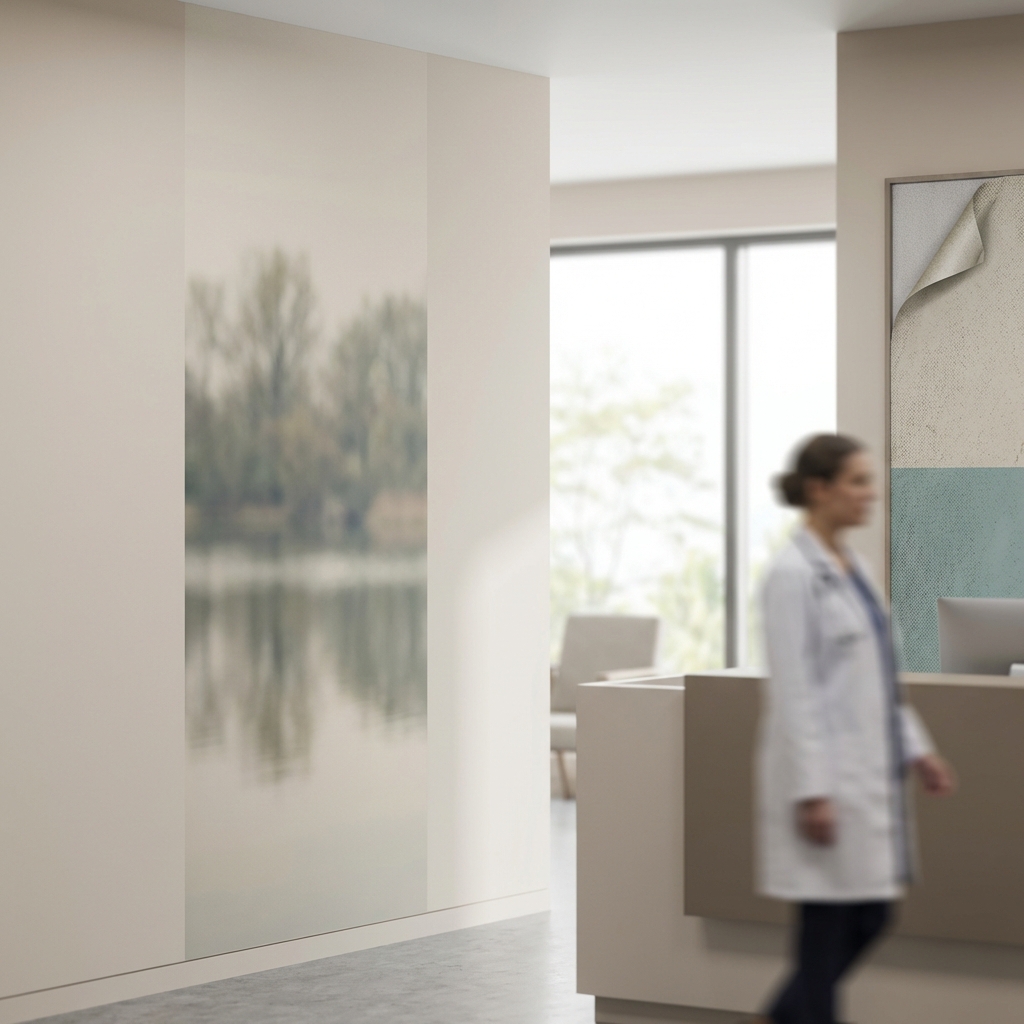
- Seam-free, adhesive-free imaging that reduces soil traps and simplifies wipe-downs.
- Matte, low-texture finish that limits glare and allows full-contact disinfecting across the graphic.
- High abrasion resistance compatible with microfiber, disposable wipes, and soft-bristle scrub pads.
- Chemical durability against common hospital disinfectants with no need for sacrificial laminates or topcoats.
- Paint-over-ready surface, enabling program or tenant changes without demolition or adhesive removal.
This approach enables clinical environment graphics that combine wayfinding, safety cues, and regulatory messaging with sanitary interior branding in areas that see constant cleaning: ED triage zones, med-surg corridors, pharmacy perimeters, and elevator lobbies. Because the imagery is printed in place, there are no vinyl laps to catch fluids, and no shipping or panel joints to fail during turnover cleaning. Visual clarity stays high, so critical instructional content remains readable after repeated disinfection cycles.
For systems pursuing layered infection prevention, direct-to-wall prints integrate smoothly alongside antimicrobial wall surfaces and high-performance paints. EastCoast MuralPros supports medical grade wall printing needs across single campuses and multi-site networks, delivering consistent color, rapid onsite installation (often under five hours per area), and low-disruption workflows. The result is durable, cleanable graphics that meet sanitation expectations while improving the legibility and look of care environments.
The Role of UV-Cured Inks in Creating Non-Porous and Microbial-Resistant Finishes
UV-cured wall ink polymerizes under LED light to form a dense, cross-linked film that bonds directly to the wall, producing a smooth, non-porous finish. Unlike vinyl, there are no seams, edges, or adhesives that can lift over time and trap contaminants—an immediate advantage for infection control wall graphics. The cured film is low-odor and ready for service almost instantly, minimizing downtime in occupied clinical areas.
In healthcare settings, the key question is cleanability. Properly cured UV inks exhibit strong resistance to routine hospital disinfectants, including quaternary ammonium wipes, alcohol-based cleaners, and diluted sodium hypochlorite solutions, helping maintain antimicrobial wall surfaces without degrading image quality. While UV-cured prints are not a substitute for antimicrobial coatings or environmental services protocols, their non-porous, closed surface supports faster, more effective wipe-downs and reduces the micro-harboring that can occur with textured vinyl or painted seams.
Substrate preparation matters. On painted drywall and sealed substrates, UV-cured films achieve the best “medical grade wall printing” performance, delivering consistent gloss and cleanability. On unfinished CMU, concrete, or brick, a compatible primer may be recommended to reduce porosity and create a more sanitary, cleanable base before printing. EastCoast MuralPros assesses existing finishes, conducts on-site adhesion and cleaning rub tests, and aligns the print spec with your facility’s disinfectant list to ensure durable, clinical environment graphics.
To validate sanitary interior branding in a clinical setting, look for:
- Documented compatibility with your EPA-registered disinfectants and rub-cycle testing.
- Seam-free, adhesive-free installation that eliminates grime-catching edges.
- Matte or low-glare finishes that preserve readability under clinical lighting.
- Abrasion resistance suitable for high-traffic corridors and EVS routines.
- Clear maintenance guidance (approved cleaners, dwell times, and what to avoid, such as acetone or harsh abrasives).
Healthcare teams choose EastCoast MuralPros to deploy infection control wall graphics across corridors, nurse stations, pediatric units, and wayfinding zones with low disruption. On-site, direct-to-wall printing delivers photoreal detail at scale in under five hours per zone, with durable, cleanable surfaces and paint-over-ready finishes for future program changes. The result is sanitary interior branding that performs like a building finish, not a decorative layer—consistent across multi-location rollouts and aligned with your sterilization protocols.
Installation Protocols: Maintaining Air Quality and Safety in Occupied Clinical Spaces
Installing infection control wall graphics in active hospitals and clinics requires a protocol that treats the job like a minor procedure: control the environment, protect patients and staff, and verify the space is safe to return to service. EastCoast MuralPros coordinates with Facilities and Infection Prevention to align scope, schedule, and safety expectations before a printer ever rolls onto the floor. This upfront alignment allows clinical environment graphics to be executed without disrupting care or compromising air quality.
Planning begins with an Infection Control Risk Assessment (ICRA) to determine containment needs for the location—public corridors differ from perioperative zones. Where required, we establish temporary anterooms and maintain negative pressure adjacent to sterile spaces, supplemented with HEPA air scrubbers and particulate monitoring. Off-peak or after-hours installs, plus wayfinding detours, reduce foot traffic in the work zone.
Direct-to-wall printing eliminates adhesives, panels, and high-particulate activities, reducing dust and VOC sources associated with vinyl and fabrication. UV cured wall ink hardens on contact under controlled light, minimizing odor and enabling immediate wipe-downs by Environmental Services. For facilities that specify antimicrobial wall surfaces, we can integrate facility-approved antimicrobial topcoats over the print to meet policy requirements. The result is sanitary interior branding that is durable, cleanable, and compatible with common hospital disinfectants after standard verification.
A typical medical-grade wall printing workflow in an occupied unit includes:
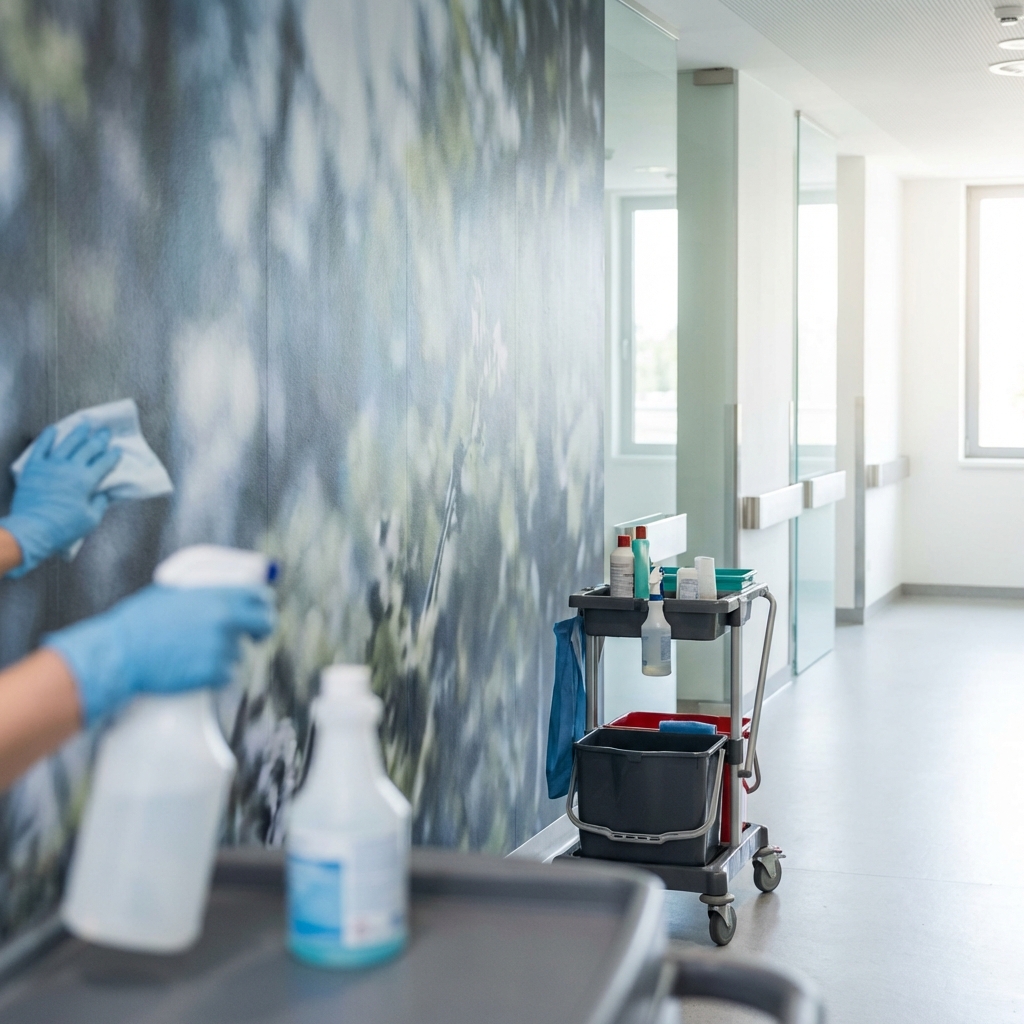
- Joint ICRA with Infection Prevention and Facilities to set the protection class and barriers.
- Containment as needed (anterooms, zipper walls, door sweeps), with negative pressure when near sterile corridors.
- Air management with HEPA scrubbers and real-time particulate checks to uphold ACH targets.
- Surface prep using EPA-registered hospital disinfectants with proper dwell times; cover nearby equipment and use tacky mats.
- Hygiene and housekeeping protocols: glove changes, printer wheel/cable wipe-downs with hospital-grade cleaners, quiet operations, and clear communication with unit staff.
Post-installation, prints are cured, surfaces are wiped, and barriers come down only after air and dust checks meet thresholds agreed in the ICRA. Because EastCoast MuralPros completes most installs in under five hours and prints on finished or unfinished substrates (drywall, CMU, concrete, brick), areas return to clinical use quickly. The combination of on-site production and disciplined protocols delivers consistent, medical grade wall printing across entire campuses without the mess or delays of traditional methods.
Lifecycle Maintenance: Sustaining Graphic Integrity Under Frequent Sanitization Cycles
High-traffic care areas subject graphics to dozens of wipe-downs per week, which is where many vinyl systems fail—edges lift, seams harbor residue, and adhesives discolor. Infection control wall graphics need a continuous, non-porous, chemically resilient surface that won’t trap bioburden or shed at corners. By printing directly to prepared substrates, EastCoast MuralPros eliminates seams and adhesive layers, creating sanitary interior branding that stands up to routine disinfection without introducing dirt-catching interfaces.
Material selection and cure matter. UV cured wall ink is widely specified for clinical environment graphics because it forms a hard, solvent-resistant film that tolerates quats, 70% IPA, and hydrogen-peroxide wipes when properly cured and maintained. Where policies call for antimicrobial wall surfaces, a compatible, third‑party antimicrobial clear coat can be applied over the cured print—always verify claims with the coating manufacturer’s data and facility approval. EastCoast MuralPros’ direct-to-wall approach pairs durable, cleanable finishes with paint-over-ready exits for future tenant or program changes.
Codify a cleaning protocol to preserve image quality while meeting infection control targets:
- Daily: Light dusting and spot cleaning with a damp microfiber and pH‑neutral cleaner; avoid abrasives and scouring pads.
- Disinfection: Use facility-approved quats, 70% isopropyl alcohol, or peroxide per label dwell times; wipe in one direction; follow with a water-damp microfiber to remove residual surfactants that can create haze.
- Tools: Microfiber cloths or soft foam; no bristle brushes, melamine sponges, or steam. Avoid concentrated spray at penetrations and wall/fixture interfaces.
- Monitoring: Monthly visual checks for scuffs around bed rails, carts, and handrails; log chemical changes and re‑qualify any new product on a test patch before campus-wide use.
Plan for the full lifecycle. Establish a wipe-test on a sample panel before go-live, document approved chemistries in the SOP, and schedule periodic audits in high-touch zones like nurses’ stations and corridors. For campuses and multi-site systems, EastCoast MuralPros standardizes substrate prep and print parameters to deliver consistent medical grade wall printing, then supports refreshes through a subscription model—on-site reprints in under five hours minimize downtime. The result is infection control wall graphics that maintain high-resolution fidelity over thousands of sanitization cycles while reducing replacements versus wallpaper and vinyl.
Conclusion: Enhancing Patient Experience Through Safe and Durable Architectural Branding
Thoughtfully executed infection control wall graphics can elevate patient experience while aligning with sterilization protocols. Seam-free, direct-to-wall applications eliminate adhesive joints and lifted edges that trap soil, making daily wipe-downs faster and more reliable. UV cured wall ink produces a dense, non-porous print layer that resists abrasion and chemicals, supporting routine disinfection without ghosting or color fade. When combined with calming imagery and clear wayfinding, clinical environment graphics reduce stress for patients and families navigating care.
Performance in healthcare depends on how the system behaves under real cleaning regimens. Direct-to-wall prints that tolerate quats, diluted bleach, and peroxide-based cleaners maintain appearance and hygiene standards longer than vinyl films that peel, bubble, or seam-split. Paired with antimicrobial wall surfaces and standardized EVS procedures, sanitary interior branding supports infection prevention by simplifying thorough, repeatable cleaning. The result is durable communication that looks integrated with the architecture instead of sitting on top of it.
To implement medical grade wall printing in hospitals and clinics, teams can follow a simple playbook:
- Involve infection prevention and EVS early to confirm approved disinfectants and dwell times.
- Specify matte or low-sheen finishes to control glare and improve legibility in corridors, exam rooms, and nurse stations.
- Validate cleaner compatibility on a printed sample with quats, bleach, and peroxide before rollout.
- Prioritize seam-free installations in high-touch zones such as elevators, reception, and patient room headwalls.
- Document SDS, cleaning SOPs, and repaint procedures so facilities staff can maintain surfaces over time.
EastCoast MuralPros helps healthcare systems operationalize these standards at scale. Their on-site, adhesive-free process installs most projects in under five hours with minimal disruption, and the paint-over-ready finish simplifies future tenant or program changes. Consistent execution across multi-location campuses supports brand, wayfinding, and safety information without signage clutter, while eliminating shipping and fabrication steps that delay openings. For facilities seeking a lifecycle-efficient alternative to wallpaper and vinyl, this approach delivers durable, cleanable results designed for high-traffic environments.
Imagine a pediatric wing with nature scenes guiding families to imaging, or a behavioral health corridor with low-glare, high-contrast cues that withstand daily disinfection. With the right materials, process, and partners, clinical environment graphics can be both healing and hard-wearing—improving outcomes for patients, staff, and operations.
Call to Action
Contact us to learn more