Table of Contents
- The Multi-Location Branding Challenge: Why Traditional Solutions Fail at Scale
- How Direct-to-Wall Printing Solves Consistency Across Every Location
- Installation Speed That Doesn't Compromise Your Operating Schedule
- Durability and Cost Efficiency at the Enterprise Level
- From Design to Execution: Our Collaborative Deployment Process
- Real-World Results: Schools, Healthcare Systems, and National Retailers
- Sustainable Alternative to Vinyl Wraps and Wallpaper
- Performance Guarantees and Lifecycle Advantages
- Getting Started with Your Multi-Location Rollout
- Frequently Asked Questions (FAQ)
The Multi-Location Branding Challenge: Why Traditional Solutions Fail at Scale
Rolling out consistent interior branding across multiple locations sounds straightforward in theory. In practice, we’ve watched organizations struggle with vinyl wall coverings and hand-painted murals because these traditional methods don’t scale reliably.
Consider a national retail chain with 40 locations. When you rely on vinyl wraps, each location requires a fabrication vendor, shipping delays, and on-site installers who measure differently, apply at inconsistent tension, and inevitably deal with bubbling or peeling within 18 months. Hand-painted murals? You’re coordinating artists across regions, managing color drift, and waiting weeks between installations. Healthcare systems face similar friction: they need wayfinding updates during occupied operations, but construction-grade solutions create noise, dust, and schedule risk that disrupt patient care and staff workflow.
The core problem isn’t creativity or intent. It’s that traditional methods don’t consolidate quality control, speed, and durability into a single workflow. You end up trading one pain for another: fast but flimsy, or durable but slow.
We built our direct-to-wall printing platform specifically to eliminate that tradeoff. Instead of outsourcing fabrication and managing vendor dependencies, we print directly onto your walls with high-resolution equipment, on-site and on-schedule. No vinyl. No adhesives. No weeks of lead time. The result: consistent execution across your entire portfolio, installed in hours instead of weeks.
How Direct-to-Wall Printing Solves Consistency Across Every Location
Consistency at scale requires two things: a single source of truth for design, and a repeatable process that produces identical results everywhere.
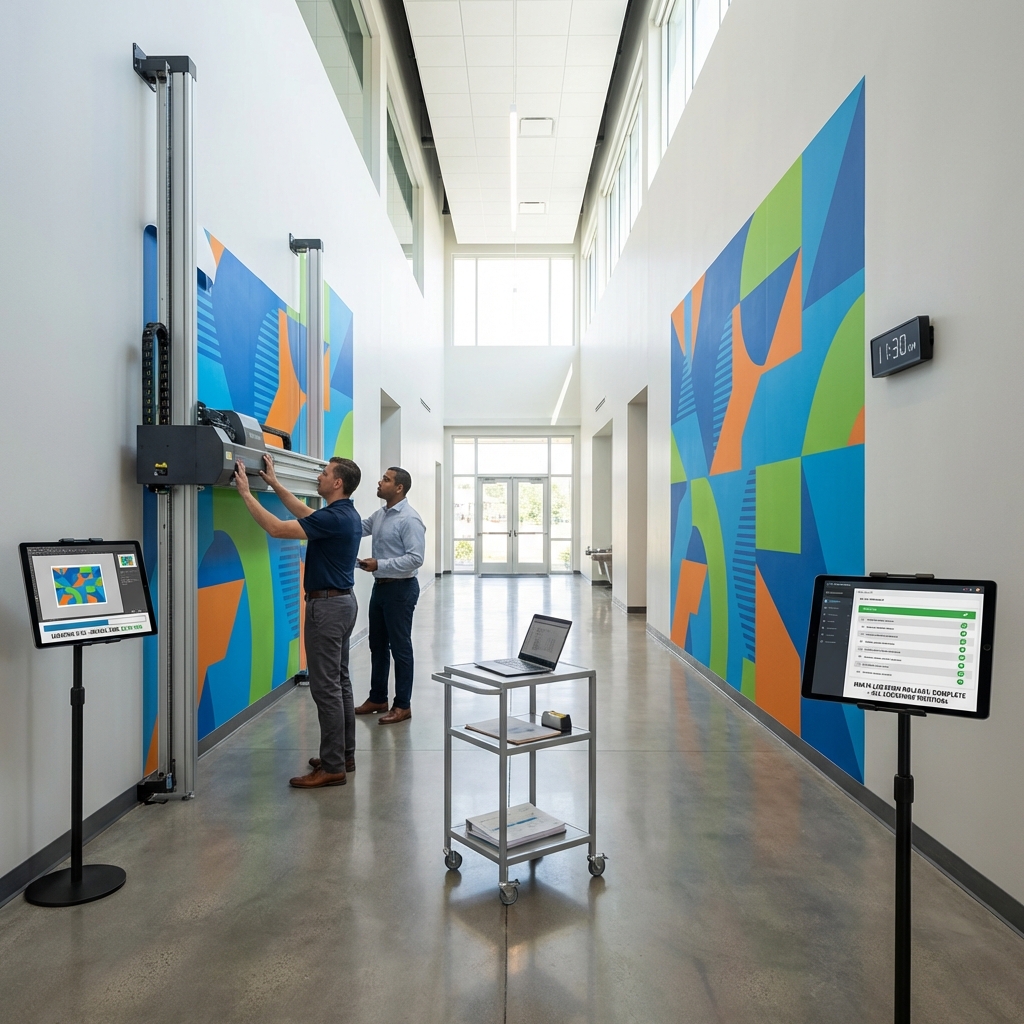
Our process starts with your approved design file. We optimize it for wall substrate (drywall, CMU, concrete, brick, finished surfaces), then print directly onto the wall surface using large-format inkjet technology calibrated to architectural specifications. Because we control the entire workflow from design review to final installation, we eliminate the variables that plague multi-location rollouts.
Here’s what that means in practice:
- No fabrication vendors. You’re not managing multiple suppliers, each with their own color space and equipment drift. We handle design-to-wall execution as one integrated team.
- Identical color and registration across all sites. Every mural matches your brand standards because we print from the same source file, using the same equipment logic, at every location.
- Substrate flexibility. Unlike vinyl, which demands pristine, smooth surfaces, our process accommodates real-world walls: textured drywall, concrete block, brick, even slightly weathered surfaces. You don’t need extensive wall prep or resurfacing before we arrive.
- Seam-free execution at architectural scale. We print edge-to-edge across large wall planes without visible seams, creating the illusion that the graphic is integrated into the architecture itself, not applied on top of it.
When you’re deploying the same visual identity across 20 hospitals, 50 classrooms, or 100 retail locations, this consistency becomes a competitive advantage. Your brand looks deliberate, professional, and integrated everywhere.
Installation Speed That Doesn’t Compromise Your Operating Schedule
Most facilities directors measure success in downtime avoided. We measure it the same way.
A typical multi-wall installation that would take 3-5 days with traditional methods completes in under 5 hours with our direct-to-wall process. That’s because we eliminate fabrication delays, reduce on-site assembly complexity, and work with minimal crew footprint. One or two technicians can handle most commercial murals; larger campus deployments scale horizontally with multiple crews, not vertically with extended timelines.
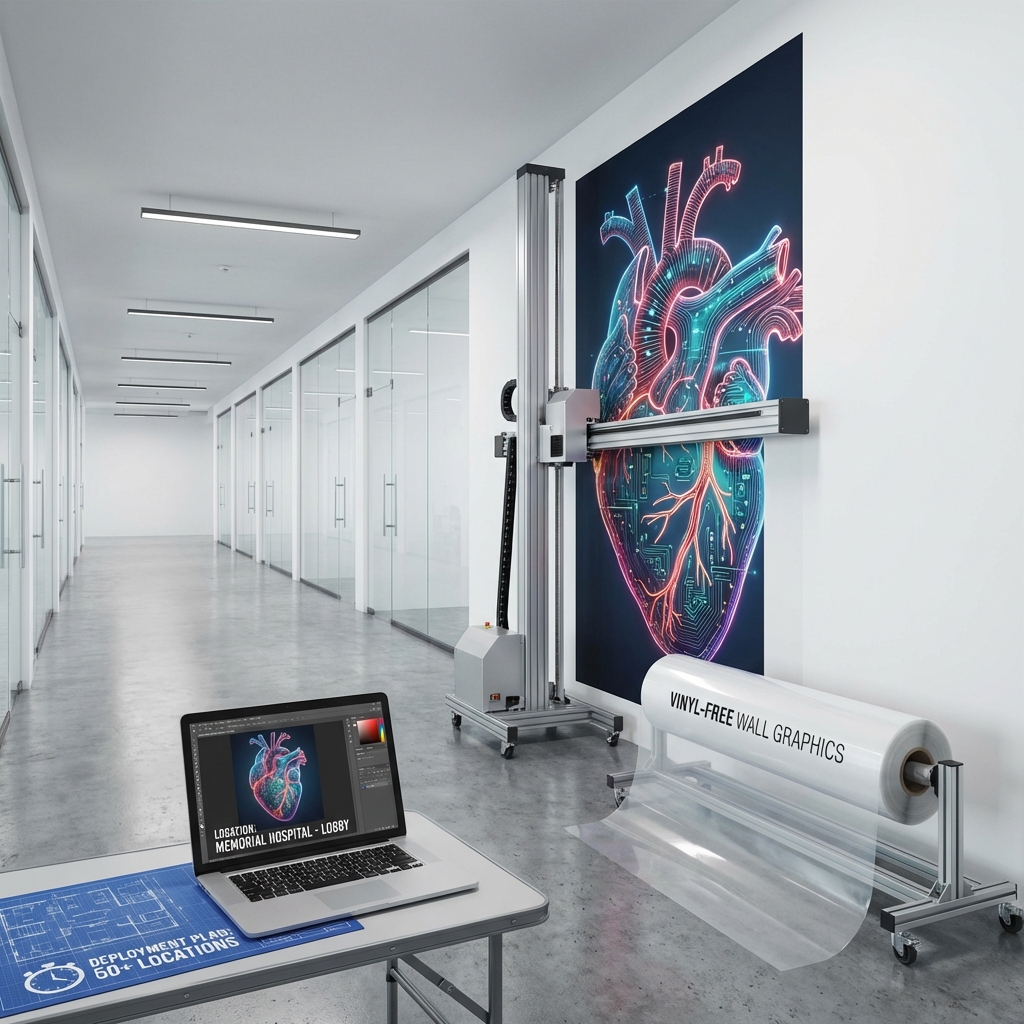
The speed advantage compounds across a rollout. Imagine a school district refreshing wayfinding and safety graphics across 12 buildings. With vinyl, you’re coordinating 12 separate multi-day installations, each requiring closure of hallways and disruption to daily operations. With us, you schedule 12 half-day installations staggered across weeks, with each school losing only a few hours of classroom access.
We’ve also engineered our workflow for occupied buildings. Minimal disruption installation is standard for us because we print during off-hours or shoulder hours, use contained work zones, and don’t generate the dust or chemical odor that traditional murals or vinyl applications create. Hospitals and schools particularly value this; patient care and instruction never pause.
What to do next: When you contact us about a multi-location project, share your calendar constraints first. That timeline often drives which walls we prioritize and which crews we allocate, so we can front-load your highest-impact spaces and compress your overall deployment window.
Durability and Cost Efficiency at the Enterprise Level
Direct-to-wall printing isn’t just faster. It’s more durable and costs less over its lifecycle.
Our inks cure into the wall surface itself rather than sitting on top as an adhesive layer. This means no peeling, bubbling, or edge failure like vinyl experiences. In high-traffic corridors, break rooms, and patient areas where walls take physical contact, this matters enormously. We’ve documented installations in healthcare facilities, schools, and corporate offices that remain visually and structurally intact after 7-10 years of daily wear.
The surface is also cleanable. You can wipe down our graphics with standard hospital-grade disinfectants, mild soap, or even light abrasion without degrading the image. Vinyl and wallpaper degrade rapidly under that kind of maintenance pressure; vinyl becomes tacky or cloudy, and wallpaper begins to separate at seams. Our finish is engineered for sanitation and durability in parallel.
Cost efficiency appears in three ways:
- Lower upfront spend. No fabrication markup from third-party vendors, no shipping costs, no waste from incorrect measurements or substrate issues. You pay for design, printing, and installation as a consolidated service.
- Minimal replacement cycles. Vinyl wraps typically last 3-5 years in commercial settings; our installations routinely reach 7-10 years. Fewer replacements mean lower total cost of ownership.
- Maintenance reduction. Because our graphics don’t bubble or peel, you avoid the mid-life patch repairs that plague vinyl installations. Your facilities team doesn’t manage a growing backlog of failing sections.
For a 50-location retail rollout, these advantages compound into savings of 30-40% over a ten-year period compared to vinyl alternatives.
From Design to Execution: Our Collaborative Deployment Process
We’ve learned that multi-location success depends on clarity, alignment, and built-in checkpoints.
Our process looks like this:
Phase 1: Design and Specifications (Week 1-2) You share design intent, brand guidelines, and wall dimensions for each location. We create mockups showing how the graphic will render on your actual wall surfaces (accounting for color, lighting, and substrate). You approve the design and we create location-specific files, accounting for any unique wall shapes or architectural features.
Phase 2: Substrate Assessment and Prep (Week 2-3) Our team visits or virtually assesses each wall to confirm substrate condition, measure precisely, and identify any prep work needed. Typically this includes cleaning, minor patching, and primer application on porous surfaces. We sequence these prep activities so they’re complete before our printing crews arrive.
Phase 3: Installation and Coordination (Weeks 4-8, staggered) We schedule installations in clusters by geography or facility type to optimize crew routing and efficiency. Each installation typically takes 2-5 hours of on-site work. We photograph completion at each location and share images with your team for verification.
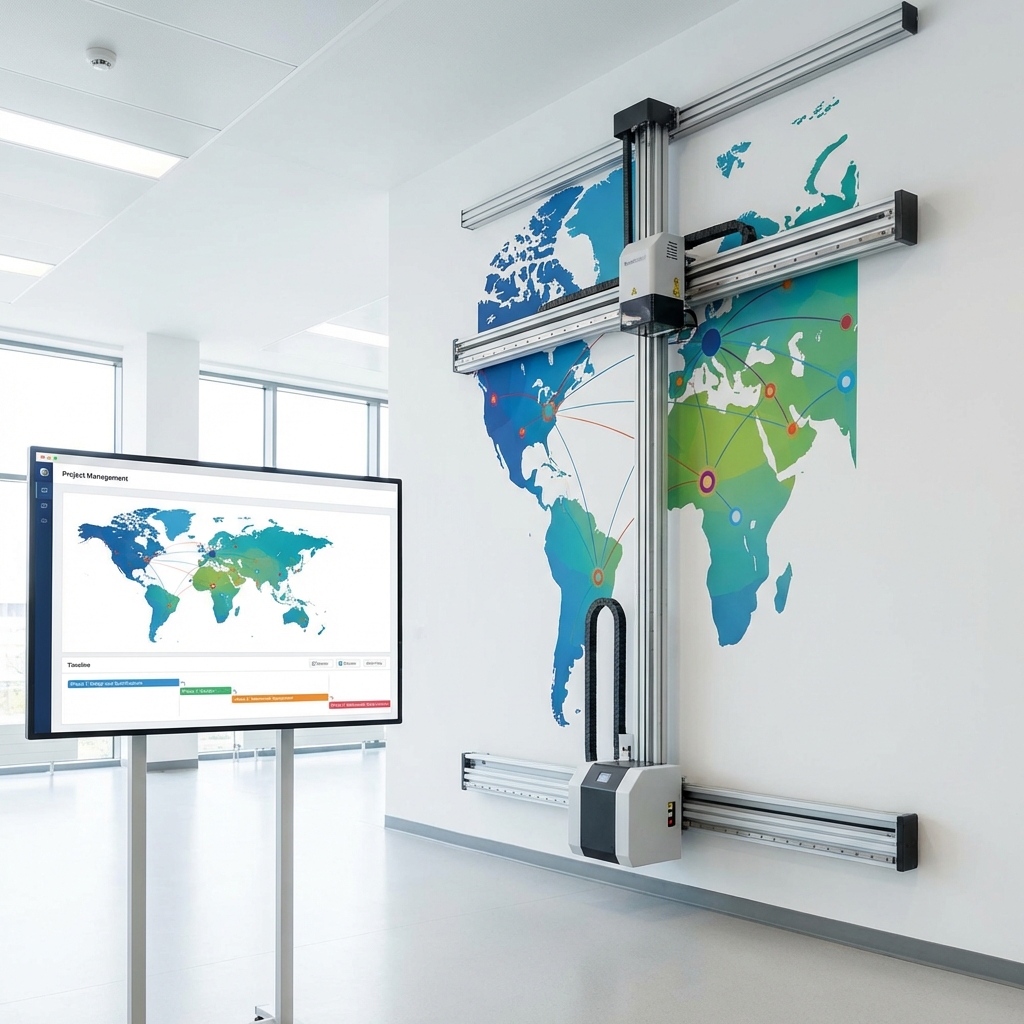
Phase 4: Final Walkthrough and Handoff (End of rollout) We conduct a final visual and structural inspection, document any notes for maintenance, and provide care instructions. We also provide your facilities team with digital asset files so future staff can reference the original design and specifications.
This structure ensures no location is forgotten, no substrate is incorrectly prepped, and no surprises emerge during the final week of the rollout.
Real-World Results: Schools, Healthcare Systems, and National Retailers
We’ve completed multi-location installations for over 150 organizations since launching our platform. Here’s what the results look like:
A Mid-Atlantic school district needed to refresh wayfinding and safety signage across 18 schools without disrupting the academic calendar. They had attempted vinyl in the past and dealt with peeling near classroom entrances. We designed a cohesive wayfinding system using our direct-to-wall process and deployed it across all 18 buildings in 14 weeks, with each installation completed in 4-6 hours during after-school and evening windows. The district reported zero maintenance issues two years post-installation and higher staff satisfaction with the visual clarity of the signage.
A national healthcare system upgraded patient wayfinding and therapeutic murals across 6 hospitals. Infection control was a critical requirement; they needed graphics that could withstand frequent cleaning with hospital-grade disinfectants. We delivered murals that maintained visual integrity and color fidelity even after weekly sanitization. The system also appreciated that our process generated no chemical odor or cure time, so the buildings remained fully operational during installation.
A 40-location specialty retail chain deployed branded environmental graphics across all stores in 12 weeks. Store closures were limited to 4-5 hours per location. Because we printed from a single master file, every location looked visually identical, reinforcing brand consistency that the marketing team had been struggling to achieve with multiple vinyl vendors.
In each case, the organizations cited three benefits they hadn’t anticipated: reduced disruption (installations fit into real operating schedules), design fidelity (no color drift between locations), and long-term reliability (no mid-life maintenance burden).
Sustainable Alternative to Vinyl Wraps and Wallpaper
Environmental responsibility is built into our model, not added as an afterthought.
Vinyl wall coverings and wallpaper both rely on adhesives and backing materials that don’t decompose easily. When you replace vinyl after 4-5 years, you’re disposing of rolls of plastic and chemical adhesive. Multiply that across 50 locations and you’re generating significant waste. Additionally, vinyl and wallpaper production is energy-intensive, and shipping bulky rolls to multiple sites adds transportation carbon.
Our process eliminates several of those burdens. We print directly onto your existing walls without adhesives or backing sheets. There’s no material waste from installation (no offcuts, no failed applications, no shipping damage requiring replacement rolls). The inks we use cure into the wall surface, creating a durable finish that lasts twice as long as vinyl, which means you replace graphics less frequently.
When a graphic does eventually need updating, we can paint over our finish or gently abrade the surface without damaging the underlying wall. The substrate remains intact and ready for future designs. No demolition, no hazardous waste streams.
For organizations with sustainability commitments or ESG reporting requirements, this distinction matters. You can document lower waste generation, reduced transportation emissions, and extended product lifecycle as measurable environmental benefits of the switch from vinyl to direct-to-wall printing.
Performance Guarantees and Lifecycle Advantages
We stand behind our work with performance guarantees that reflect our confidence in the durability of our process.
Our installations are guaranteed against:
- Peeling, bubbling, or separation from the wall surface for 5 years
- Color fading (using fade-resistant inks calibrated for interior light conditions) for 5 years
- Adhesion failure on properly prepared substrates for 5 years
If any of those issues occur under normal use and maintenance, we repair or replace the affected area at no cost to you.
Beyond the warranty, our designs are built for longevity. We work with you to create graphics that transcend trend cycles and support your operational needs for 7-10 years. That might mean avoiding heavily seasonal color palettes and favoring timeless brand assets. It also means designing wayfinding and instructional graphics that scale with organizational changes without requiring a full redeploy.
The lifecycle advantage compounds on large rollouts. If you’re managing 100 locations, a system that lasts 10 years instead of 5 dramatically reduces your capital refresh burden. You’re not planning a second rollout halfway through your five-year strategic plan.
Getting Started with Your Multi-Location Rollout
If you’re evaluating alternatives to vinyl and wallpaper for a multi-location project, we recommend starting with these steps:
- Document your current pain points. Are you dealing with peeling vinyl, inconsistent results across locations, or disruption during installation? Be specific; these become your success metrics.
- Share your design intent and location list. We’ll create 2-3 sample mockups showing how our process would render your graphics on your actual walls. This is free and typically takes 5-7 business days.
- Request a reference conversation. We’ll connect you with organizations similar to yours (healthcare, education, retail, corporate real estate) who’ve completed multi-location deployments. Hearing from peers about real-world experience is invaluable.
- Schedule a site assessment for your largest or highest-priority location. Our team will visit in person, assess substrate condition, photograph the space, and provide a detailed timeline and cost estimate for that first installation. This gives you confidence in our process before you commit to a full rollout.
Multi-location branding at scale doesn’t have to mean compromise on speed, consistency, or durability. We’ve built our platform to deliver all three. Reach out to our team today and let’s explore how direct-to-wall printing can accelerate your rollout while reducing your total cost of ownership.
Contact us to learn more
Frequently Asked Questions (FAQ)
How quickly can we install wall graphics across multiple locations without disrupting operations?
We typically complete installation in under 5 hours per location, which means we can work during off-hours or low-traffic periods without shutting down your facility. Our on-site direct-to-wall printing eliminates shipping delays and fabrication errors that slow down traditional vinyl or wallpaper projects. For multi-location rollouts, we coordinate staggered installations that fit your operational calendar, ensuring consistency across all sites while keeping business continuity intact.
What surfaces can we print directly onto, and will the graphics hold up in high-traffic environments?
We print on finished and unfinished surfaces including drywall, CMU, concrete, and brick, so you don’t need surface preparation or primers. Our prints create durable, cleanable surfaces rated for high-traffic spaces like hospitals, schools, and retail locations, and they’re designed to withstand regular cleaning without fading or deterioration. The finish is paint-over-ready, which means when your needs change, you can simply paint over the graphics rather than remove and replace them.
How do we ensure consistent execution when rolling out graphics across dozens or hundreds of locations?
We use collaborative digital tools and standardized on-site printing protocols to guarantee identical results at every location, eliminating the quality variation that happens with hand-painted or externally fabricated solutions. Our process captures your design specifications, color standards, and installation parameters once, then replicates them precisely across your entire portfolio. We also manage the full deployment timeline and coordinate with your facilities teams at each site to maintain accountability and schedule reliability.