The Environmental Impact of Traditional Commercial Wall Coverings
Traditional wall coverings—Type II vinyl wallpaper, laminated vinyl wraps, and panel systems—carry environmental costs that aren’t obvious at first glance. PVC-based films rely on chlorine chemistry and plasticizers, and many installations use solvent-based inks or primers that can contribute to VOC emissions and indoor air quality concerns. Even when labeled “low-VOC,” adhesives can still off-gas during and after install, forcing closures of conference rooms, corridors, or patient areas.
Material waste is baked into the process. Most commercial vinyl arrives in 54–60 inch widths, which means seams every few feet and trim waste that commonly reaches 10–15% on a typical corridor. Add in scrap from outlets, door frames, and misprints, and a single 100-foot hallway can produce multiple contractor bags of non-recyclable offcuts. When panels misalign or bubble, reprints and re-installs amplify the footprint.
Key impact points across the lifecycle include:
- Manufacturing: PVC production and solvent-based inks carry higher embodied carbon and can generate hazardous byproducts when incinerated improperly.
- Shipping and fabrication: Large, heavy rolls and panel crates add transport emissions; fabrication errors drive more deliveries and packaging.
- Installation and maintenance: Adhesives, primers, and seam sealers introduce chemicals and odors; peeling or damaged sections often require full-panel replacement.
- End-of-life: Vinyl wall coverings rarely meet recycling streams due to inks and adhesives, so most end up in landfills with long persistence.
In high-traffic spaces—schools, hospitals, and retail—routine cleaning and abrasion can shed microplastics from vinyl surfaces. Maintenance teams frequently report edge lifting and corner damage, triggering premature replacement cycles that increase cost and waste. For sustainability-minded facility leaders, these realities clash with goals for sustainable commercial interior design and healthy materials.
Organizations seeking eco-friendly office wall graphics now expect PVC-free wall graphics, non-toxic wall printing, and green building branding solutions that align with LEED and WELL priorities. EastCoast MuralPros replaces vinyl with direct-to-wall printing that uses no adhesives, minimizes shipping and fabrication waste through on-site execution, and delivers durable, cleanable finishes that are paint-over-ready at end-of-life—ideal for sustainable workplace branding. Explore their sustainable wall printing solutions for a data-driven, lifecycle-efficient alternative.
Transitioning to Sustainable Office Branding: The Rise of Direct-to-Wall Printing
Corporate and institutional teams are rethinking materials as they scale eco-friendly office wall graphics across portfolios. Direct-to-wall printing replaces vinyl films and wallpaper with an on-site, PVC-free approach that prints imagery directly onto prepared surfaces. The result is less waste, fewer shipping crates and panels, and no seams—delivering a cleaner aesthetic and a smaller footprint for sustainable commercial interior design.
Beyond materials, the process reduces disruption. EastCoast MuralPros can complete most installations in under five hours, even in occupied buildings, so facilities teams avoid closures and after-hours construction staffing. On-site execution also cuts shipping delays and fabrication errors, ensuring consistent outcomes across multi-location rollouts and full-campus wayfinding systems.
Lifecycle performance is where direct-to-wall methods stand out. Adhesive-free graphics won’t peel or bubble, and the durable, cleanable finish is designed for high-traffic corridors, healthcare environments, and student housing. When programs change or tenants turn, the paint-over-ready surface simplifies turnover, helping owners meet sustainability and cost-control goals without demolition or replacement cycles.
For organizations prioritizing green building branding solutions, adhesive-free printing reduces plastic use and avoids the off-gassing risks associated with PVC films. Teams can deploy photoreal, high-resolution imagery at architectural scale on drywall, CMU, concrete, and brick—ideal for galleries, museums, and branded workplaces. As more owners seek non-toxic wall printing options, the absence of vinyl and wet adhesives supports healthier, low-odor installations.
A practical transition plan can move you from pilot to portfolio:
- Audit wall conditions and traffic levels to prioritize high-impact zones.
- Launch a single-floor or department pilot to validate durability, cleaning, and stakeholder feedback.
- Set measurable KPIs: install time, waste reduction, lifecycle cost, and brand consistency across sites.
- Use subscription refreshes for seasonal campaigns or phased rebrands without construction.
- Centralize artwork and approvals; EastCoast MuralPros’ collaborative tools help digital artists scale across locations.
When you’re ready to standardize sustainable workplace branding, EastCoast MuralPros provides a performance-based alternative to wallpaper and vinyl—fast, repeatable, and built for institutional operations. For strategy ideas, see how environmental graphics enhance culture and wayfinding in the workplace in this guide: environmental graphics for workplace design.
Eliminating Vinyl Waste and Adhesives in Workplace Design
Vinyl wallcoverings and wraps create a surprising amount of waste in modern workplaces—from PVC offcuts and release liners to adhesive backers and removal debris. They’re hard to recycle, prone to bubbling and peeling, and often require harsh chemicals for installation and takedown. EastCoast MuralPros’ direct-to-wall process replaces all of that with PVC-free wall graphics printed right on the surface, delivering eco-friendly office wall graphics without vinyl or adhesives.
Because the graphics are produced on site, there’s no shipping of bulky rolls, no packaging waste, and no fabrication errors that trigger reprints. The printed finish is durable and cleanable for high-traffic environments and can be painted over when it’s time for a program or tenant change—no demo, scraping, or solvents. For a corporate office rebrand, for example, teams can update 30 conference rooms in a day and simply paint over the previous visuals during the next refresh, cutting material turnover and landfill trips.
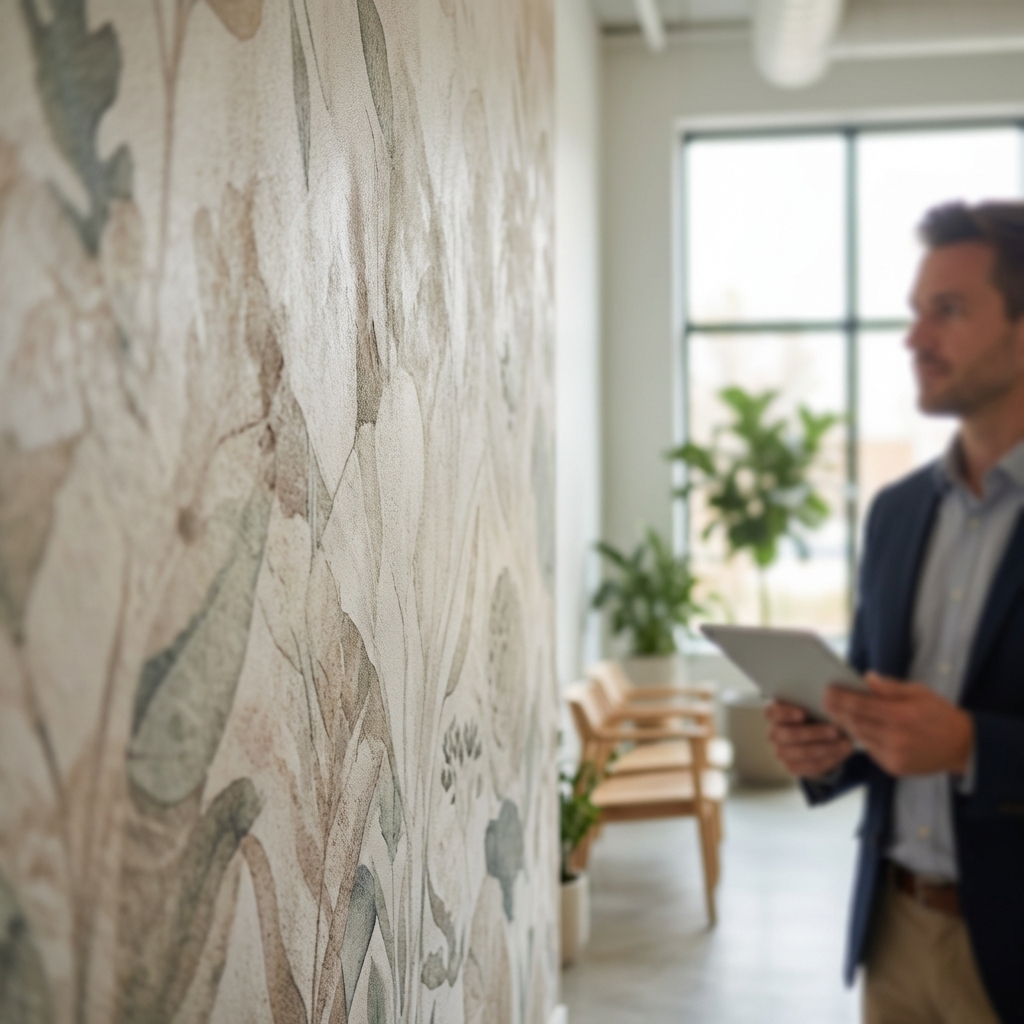
Choosing this method aligns with sustainable commercial interior design by eliminating common waste streams and chemicals associated with wallcoverings:
- No PVC film, release liners, or backing paper to discard
- No pressure-sensitive adhesives, primers, or removal chemicals
- No panel seams, overlap trims, or scribing waste at edges
- Minimal packaging and freight emissions due to on-site production
- Fewer replacements over the lifecycle thanks to durable, cleanable surfaces
- Paint-over-ready end-of-life that avoids demolition and landfill
The adhesive-free approach also supports indoor air quality goals by reducing the chemical load often introduced by vinyl and glue. For hospitals, schools, and offices pursuing green building branding solutions, it’s a pragmatic way to deliver integrated wayfinding and branded environments without signage clutter or added substrates. Teams focused on sustainable workplace branding and non-toxic wall printing practices gain schedule certainty—installs typically finish in under five hours—and consistent results across multi-location rollouts.
EastCoast MuralPros makes it simple to specify PVC-free wall graphics at architectural scale, including unfinished surfaces like CMU or brick. The subscription model enables seasonal or strategic refreshes without the waste of full replacement, helping organizations maintain eco-friendly office wall graphics as needs evolve.
Durability and Longevity: A Lifecycle Approach to Green Interiors
Durability is the most overlooked lever for sustainability. Eco-friendly office wall graphics that perform for years without peeling, bubbling, or seam failure reduce material turnover, maintenance calls, and landfill waste. Unlike vinyl wraps that often fail at joints and adhesives, direct-to-wall printing creates a continuous image with far fewer failure points, extending the useful life of your investment.
Because there’s no PVC film or adhesive layer, these are truly PVC-free wall graphics that align with sustainable commercial interior design standards. On-site, non-toxic wall printing with durable, low-odor inks is suitable for occupied buildings and sensitive environments. The result is a seamless, architectural finish on drywall, CMU, concrete, or brick—without panels, wallpaper, or complicated substrates.
Longevity also depends on how a surface ages day-to-day. Seam-free graphics don’t trap dust at edges, and the printed surfaces are designed to withstand routine cleaning in high-traffic areas like corridors, lobbies, clinics, and classrooms. When programs, tenants, or brand standards change, the paint-over-ready finish avoids the messy removal, solvent cleanup, and wall repairs associated with vinyl, supporting green building branding solutions across the asset lifecycle.
A lifecycle approach delivers measurable operational benefits:
- Fewer replacements mean less material consumption, packaging, and transport.
- On-site printing eliminates shipping delays and fabrication errors that lead to reprints.
- Installations often finished in under 5 hours minimize disruption and overtime labor.
- Consistent, repeatable output across locations reduces rework and quality variance.
- End-of-life is simple—paint and refresh—without sending PVC to landfill.
Consider a healthcare network updating wayfinding across clinics: direct-to-wall graphics can be printed after hours with minimal corridor closures, then cleaned daily without curling at edges. A university can deploy seasonal campaigns building-wide, then paint over during break without demolition or adhesive removal. For corporate workplaces, eco-friendly office wall graphics become a permanent, cleanable part of the envelope, not an applied layer that fails under wear.
EastCoast MuralPros helps teams adopt sustainable workplace branding at scale with direct-to-wall technology, consistent execution for multi-site rollouts, and a subscription model that supports planned refreshes without waste. Their in-studio printing for doors, tables, and standees extends systems across touchpoints, while on-site production ensures accuracy to the built conditions. It’s a durable, lifecycle-efficient alternative to wallpaper and vinyl that aligns design intent with operational reality.
Speed and Efficiency: Reducing Operational Footprint During Installation
Speed is a sustainability lever. By printing directly on the wall—without vinyl, adhesives, or panel fabrication—eco-friendly office wall graphics go from concept to completion with fewer steps, fewer materials, and far less downtime. EastCoast MuralPros typically completes installations in under five hours, which helps facilities keep spaces open, reduce overtime labor, and avoid the cascading impacts of prolonged closures that often accompany conventional wrap or wallpaper projects.
Traditional vinyl and wallpaper require panelization, lamination, shipping, staging, seam alignment, heat-gunning, and return visits for bubbles or edge failures. On-site, direct-to-wall printing compresses that multi-day workflow into a single, controlled session with predictable outcomes. For example, a 40-foot corridor mural can often be produced in one evening by a two-person crew with limited barricades, no dust, and no adhesive waste—ideal for hospitals, campuses, and high-traffic offices pursuing sustainable commercial interior design without disruption.
Operational efficiency compounds sustainability benefits:
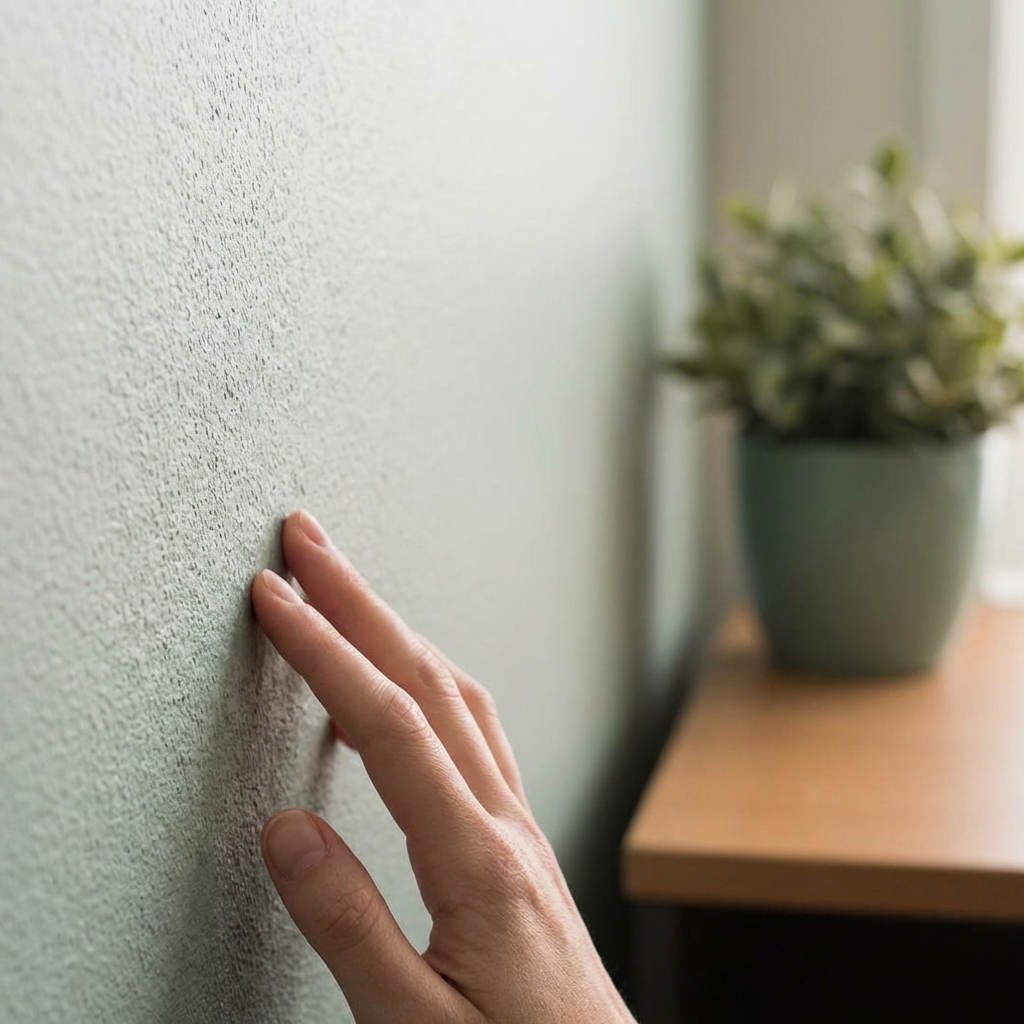
- Single mobilization with no crates or panels reduces packaging and transport emissions.
- Quiet, low-profile equipment minimizes noise and keeps adjacent areas operational.
- Seam-free output eliminates trimming at joints and reduces punch-list rework.
- Paint-over-ready finishes simplify end-of-lease transitions and future program changes.
- Consistent speeds across multi-site rollouts streamline scheduling and reduce overtime.
- Subscription batching of updates cuts truck rolls and rush shipments.
- Compatibility with drywall, CMU, concrete, and brick removes prep phases like skim coating.
For teams pursuing green building branding solutions and sustainable workplace branding, faster, PVC-free wall graphics avoid the embodied material of films while maintaining durability and cleanability in high-traffic environments. EastCoast MuralPros coordinates with facilities to print during nights or weekends, integrates wayfinding and instructional graphics without signage clutter, and delivers consistent execution across campuses and national portfolios. Organizations evaluating non-toxic wall printing alternatives to vinyl adhesives gain a low-disruption, lifecycle-efficient approach that keeps operations running and sustainability goals on track.
Enhancing Indoor Air Quality with Low-VOC Wall Graphics
Indoor air quality is a make-or-break factor in sustainable commercial interior design, especially for occupied workplaces, schools, and healthcare settings. Traditional vinyl wraps and wallpaper rely on PVC and solvent-based adhesives that can off-gas VOCs for weeks. Eco-friendly office wall graphics avoid these pitfalls by choosing PVC-free wall graphics and low-odor processes that support occupant comfort and facility standards.
Direct-to-wall printing further improves outcomes by eliminating adhesives entirely and reducing the number of materials introduced to a space. With EastCoast MuralPros, on-site, non-toxic wall printing is typically completed in under five hours with low disruption—ideal for clinics, classrooms, and corporate floors that can’t afford downtime. No seams and no panels mean fewer edges to trap dust and fewer failure points that lead to peeling and rework.
This approach also supports the operational side of green building branding solutions. Durable, cleanable finishes hold up to routine maintenance in high-traffic corridors without shedding or degrading, which helps facility teams maintain IAQ over time. In sensitive areas—like pediatric waiting rooms or university residence halls—adhesive-free graphics help reduce odors and potential irritants while delivering photoreal, wayfinding, and brand visuals at architectural scale.
For teams evaluating sustainable workplace branding, use this IAQ checklist when comparing options:
- Confirm low-VOC ink systems and curing methods appropriate for occupied spaces.
- Require PVC-free materials and the absence of solvent-based adhesives or plasticizers.
- Specify seam-free execution to reduce dust accumulation and cleaning friction.
- Favor on-site printing to avoid fabrication errors and additional coatings or tapes during install.
- Look for paint-over-ready finishes to prevent demolition dust and waste during future changes.
EastCoast MuralPros brings these IAQ advantages together with fast, consistent execution across multi-location rollouts. The result is a lifecycle-efficient alternative to vinyl that aligns with sustainable commercial interior design goals while delivering crisp, high-resolution branding, wayfinding, and safety graphics—without compromising the air your teams and visitors breathe.
Conclusion: Future-Proofing Corporate Spaces with Sustainable Graphics
Future-proofing interior environments means choosing systems that adapt as brands, tenants, and compliance needs evolve—without generating unnecessary waste. Eco-friendly office wall graphics created with direct-to-wall printing give teams the flexibility to refresh messages and aesthetics quickly while aligning with sustainable commercial interior design goals. By eliminating PVC films and pressure-sensitive adhesives, they deliver PVC-free wall graphics that function as green building branding solutions rather than disposable décor.
The operational upside is equally important. On-site production cuts shipping-related delays and fabrication errors, and most installations complete in under five hours with low disruption to occupied spaces. Seam-free, high-resolution imagery is durable and cleanable for high-traffic corridors, yet paint-over-ready when programs change—reducing demolition, landfill trips, and long-term maintenance cycles. At scale, standardized workflows ensure consistent execution across multi-location rollouts.
Consider a corporate workplace that needs a nationwide brand refresh over a single weekend: direct-to-wall printing enables large, crisply detailed murals across lobbies, cafes, and meeting zones without closing floors. A hospital can integrate wayfinding, safety icons, and instructional graphics directly on CMU or painted drywall to declutter corridors and support staff and visitors. A university can use a subscription model to rotate seasonal messages, donor recognition, or recruitment stories—an approach to sustainable workplace branding that avoids repeated vinyl removal and reapplication.
When evaluating partners and specifications, prioritize solutions that:
- Are PVC-free and adhesive-free for reduced waste and easier end-of-life
- Support non-toxic wall printing policies in line with your IAQ standards
- Provide seam-free, architectural-scale resolution for branding and wayfinding
- Offer paint-over-ready, cleanable finishes that endure high traffic
- Deliver rapid, on-site printing for schedule certainty with minimal disruption
- Prove consistency across campuses, healthcare networks, or retail fleets
- Work on finished and unfinished surfaces (drywall, CMU, concrete, brick)
- Include collaborative tools so digital artists and design teams can scale content
EastCoast MuralPros fits these criteria with a direct-to-wall platform designed for performance, speed, and sustainability. For teams seeking eco-friendly office wall graphics that reduce lifecycle costs and carbon-heavy waste, their adhesive-free method, on-site execution, and campus-wide capabilities provide a clear path to future-ready interiors.
Call to Action
Contact us to learn more