Table of Contents
- The Hidden Environmental Cost of Vinyl Walls and Wallpaper in Commercial Spaces
- Why Traditional Interior Branding Leaves Your Organization with Waste and Downtime
- How Our Direct-to-Wall Printing Technology Eliminates Adhesives and Reduces Lifecycle Waste
- Speed Meets Sustainability: Installing Premium Murals in Under Five Hours
- Scaling Sustainable Branding Across Multiple Locations Without Supply Chain Delays
- Durability Without Replacement Cycles: Long-Term Cost and Environmental Benefits
- Designed for Change: Paint-Over-Ready Graphics That Support Your Evolving Brand
- Why Facilities Teams Choose Direct-to-Wall Over Vinyl for High-Traffic Environments
- Wayfinding and Instructional Graphics Without the Signage Clutter or Waste
- Real-World Results: How Leading Institutions Deploy Sustainable Wall Branding at Scale
- Getting Started: From Concept to Installation Without Procurement Delays
- Frequently Asked Questions (FAQ)
The Hidden Environmental Cost of Vinyl Walls and Wallpaper in Commercial Spaces
Vinyl wall coverings and commercial wallpaper dominate institutional and corporate environments because they’re proven, familiar, and readily available. But beneath that surface appeal sits a real environmental problem that most facilities teams encounter only after installation: lifecycle waste.
Vinyl wallcoverings typically last 5-7 years in high-traffic spaces before they start peeling, bubbling, or discoloring. When replacement time comes, the entire installation—adhesive included—goes to the landfill. A 10,000-square-foot office tower might cycle through multiple vinyl applications over a 30-year lease, each one generating hundreds of pounds of waste material that cannot be recycled due to adhesive residue and substrate bonding.
Wallpaper, though often marketed as a design-forward option, carries similar or worse environmental baggage. Most commercial papers use PVC-based materials and solvent-based adhesives that emit volatile organic compounds (VOCs) during and after installation. The adhesive itself locks the material in place permanently, eliminating any reuse or recovery option.
The carbon footprint doesn’t stop at disposal. Vinyl and wallpaper manufacturing is energy-intensive and petroleum-dependent. Shipping rolls across supply chains adds transportation emissions, and installation labor often stretches across multiple days or weeks, keeping facilities teams coordinated and costly service providers on-site longer than necessary.
When you’re managing 50 locations or refreshing a healthcare campus every three to five years, the aggregate impact becomes substantial: tons of waste, months of cumulative downtime, and supply chain dependencies that can delay projects by weeks.
Why Traditional Interior Branding Leaves Your Organization with Waste and Downtime
Installation disruption is the shadow cost nobody budgets for. A vinyl wrap or wallpaper project typically requires 3-7 days of active work, sometimes longer if substrate prep reveals issues like old adhesive residue, uneven drywall, or moisture concerns. Your building is occupied. Staff are present. Tenants need access. Noise, dust, and chemical odors create friction.
We’ve seen procurement teams approve a “quick refresh” only to discover that the project actually demands wall blocking, humidity control, adhesive curing time, and HVAC adjustments. A hospital corridor project can’t run during patient care hours. A corporate office can’t endure strong solvent odors during business operations. Schools need work completed during breaks or summer breaks, which limits scheduling flexibility.
The supply chain adds another layer of uncertainty. Vinyl and wallpaper rolls must be printed, shipped, and inventoried before installation begins. If a design proof takes two rounds of revision, or if a print run reveals color inconsistency, you’re looking at reorders and further delays. Multi-location rollouts become a logistical chess game, coordinating shipments to dozens of sites and managing installation crews across regions.
When that material finally gets removed years later, disposal logistics add more cost and complexity. Hauling waste, confirming proper disposal, and cleaning adhesive residue from walls represents real operational overhead that many organizations only realize after the fact.
How Our Direct-to-Wall Printing Technology Eliminates Adhesives and Reduces Lifecycle Waste
We approach wall graphics differently. Our direct-to-wall printing technology applies high-resolution ink directly onto your existing wall surface, substrate by substrate, with zero adhesive, vinyl overlay, or intermediate material. The ink bonds to the substrate itself, whether drywall, concrete, brick, or CMU block. Nothing extra sits between the image and the wall.
That one shift eliminates multiple waste streams. There’s no vinyl to peel and discard. There’s no adhesive residue requiring chemical removal or wall repair. There’s no shipping of heavy rolls or inventory management of pre-printed materials. Our equipment arrives on your site, we assess your walls, we print on-site, and the installation is complete. The substrate becomes the final product.
Because we’re printing directly onto your existing surfaces, the wall itself remains unchanged. If your organization needs to repurpose that space in 10 years, your graphic can be painted over cleanly, without removal labor or adhesive recovery. The wall returns to blank canvas status instantly, ready for new imagery or new tenants.
The durability is built-in, not dependent on adhesive integrity. Our ink formulations cure chemically to the substrate, creating a surface that’s cleanable, resistant to scuffing in high-traffic zones, and stable across temperature and humidity fluctuations. We’ve deployed graphics in hospital corridors, school gymnasiums, and retail environments where foot traffic and frequent cleaning are non-negotiable. The finish holds up.
Actionable takeaway: Request a substrate assessment before committing to any vendor. Ask about removal and lifecycle costs, not just installation price. That’s where direct-to-wall economics separate clearly from vinyl alternatives.
Speed Meets Sustainability: Installing Premium Murals in Under Five Hours
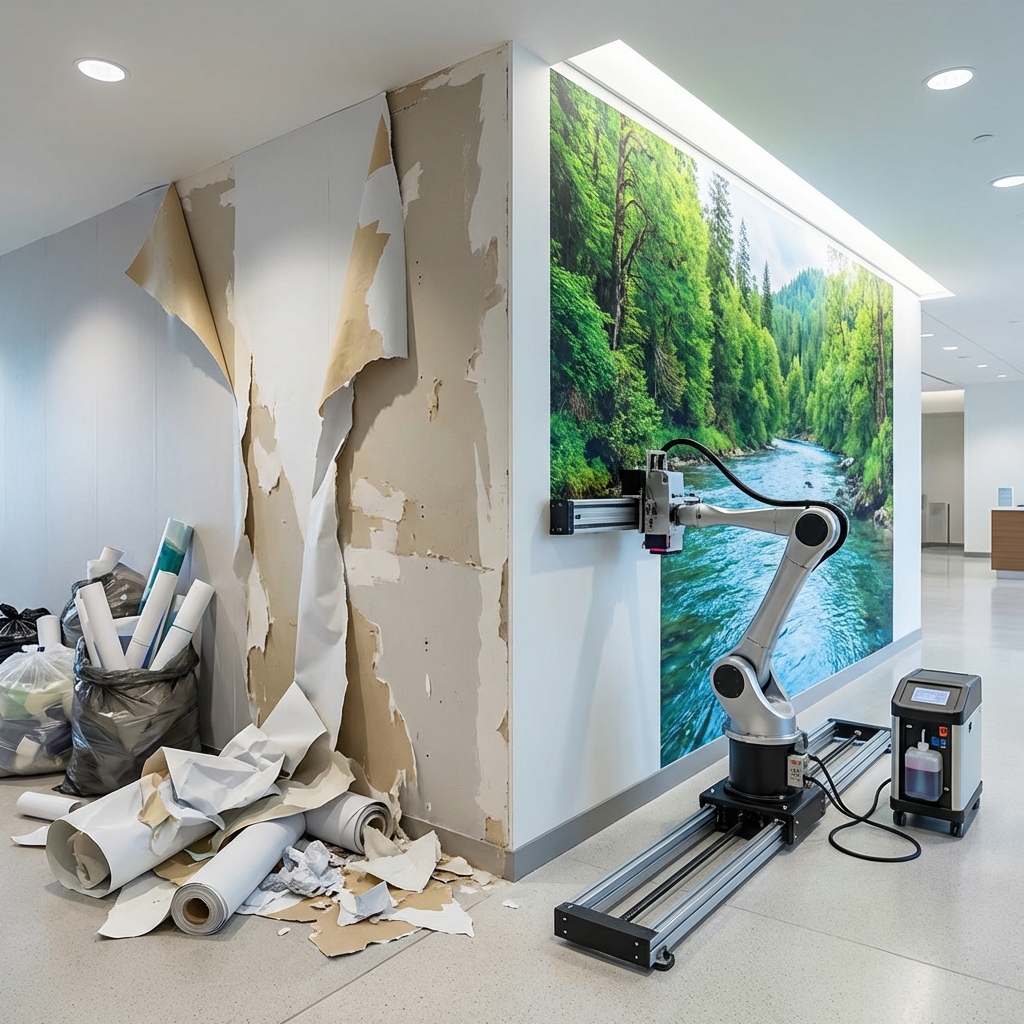
Most of our installations finish in under five hours from start to finish. That speed isn’t accidental; it’s the natural outcome of printing directly on-site without pre-fabrication, shipping, or multi-step adhesive curing.
Here’s how the timeline compresses. Your team provides the wall dimensions and environmental data (wall material, condition, temperature, humidity range). We design and proof the graphic digitally using collaborative tools, so revisions happen fast and cost nothing. On installation day, we prep the wall surface—usually 30-45 minutes for cleaning and light sanding, depending on condition—position our mobile printing platform, and begin printing. A typical 800-square-foot mural prints in 2-3 hours. Curing is immediate; your wall is ready for normal use within minutes of the final pass.
Contrast that to vinyl installation, which typically requires substrate prep over 1-2 days, then application over 2-4 days, then adhesive curing time before the wall can handle full traffic. We’ve worked with facilities teams who waited a full week before moving heavy furniture back against a newly wrapped wall. That’s downtime you don’t have.
Because we control the installation timeline directly and work on your site, we can schedule around your operations. Early mornings, after-hours, or weekend installations become logistically simple. There’s no coordination with external print vendors, no shipping window uncertainty, and no weather delays for shipment arrival. Your building remains operational, and the disruption footprint shrinks to hours, not days.
Scaling Sustainable Branding Across Multiple Locations Without Supply Chain Delays
Multi-location brand rollouts are where our approach gains the most momentum. If you’re refreshing 20 healthcare facilities, 50 retail locations, or a 12-campus university system, traditional vinyl or wallpaper projects demand parallel logistics: print jobs managed across vendors, shipments coordinated to multiple sites, installation crews scheduled sequentially or simultaneously, and backup inventory held in case of damage in transit.
We eliminate that fragmentation. Our mobile equipment can move from site to site. We print each location’s graphics on-demand, so there’s no pre-produced inventory sitting in a warehouse and no shipping damage risk. Design files travel instantly; physical materials don’t travel at all. If you need consistent branding across a national rollout, we ensure pixel-perfect consistency by printing from the same digital master file at each location.
This model is especially powerful for organizations with tight procurement windows. Schools must complete projects during summer breaks or approved maintenance windows. Hospitals need work done during off-peak hours or specific seasonal periods. Landlords turning lease-up spaces have narrow windows between tenant move-out and move-in. Our speed and scheduling flexibility—combined with no supply chain bottlenecks—let you meet those windows reliably.
We’ve deployed campus-wide solutions for universities where every building received new wayfinding and brand identity graphics within a single summer. The same approach works for healthcare systems coordinating patient experience upgrades across 15 facilities or retail chains rolling out seasonal or promotional graphics to dozens of locations simultaneously.
Durability Without Replacement Cycles: Long-Term Cost and Environmental Benefits
We’re confident enough in durability that we guarantee our surfaces against peeling, fading, and adhesion failure for the life of the application. In practice, our graphics last 10-15+ years in normal commercial and institutional environments, with zero maintenance beyond routine cleaning.
Compare that to vinyl’s typical 5-7 year lifecycle and wallpaper’s 5-8 year window. Over a 30-year building lease, you might replace vinyl three to four times. Each replacement generates disposal costs, reinstallation labor, potential wall damage and repair, and business disruption. Direct-to-wall graphics install once and remain stable for a decade or longer.
The financial math is straightforward. A typical 1,000-square-foot institutional mural costs approximately $8,000-$15,000 installed. Vinyl or wallpaper for the same area typically costs $4,000-$8,000 initially but requires replacement 2-3 times over 30 years, plus removal and disposal labor. The true lifecycle cost of vinyl or wallpaper often exceeds direct-to-wall, before accounting for downtime, disruption, and environmental impact.
For a healthcare system managing 15 major campuses, the cumulative savings compound quickly. Fewer installations mean fewer service requests, fewer occupied-building coordination headaches, and less waste shipped to landfills. Sustainability here isn’t separate from cost-effectiveness; it’s the same solution viewed from different angles.
Maintenance is minimal. Weekly or monthly cleaning with mild soap and water keeps the surface bright. In high-traffic areas like hospital corridors or school hallways, we recommend damp-cloth cleaning every 1-2 weeks. Scuffing is rare because our finish is chemically bonded, not a thin layer sitting on top of the substrate.
Designed for Change: Paint-Over-Ready Graphics That Support Your Evolving Brand
One of the most underestimated advantages of direct-to-wall printing is its end-of-life flexibility. When your organization is ready for a change—new tenant, new brand, new program—your graphic doesn’t lock you into removal labor or wall damage recovery.
Paint over it. Use standard interior paint over the cured graphic. The wall returns to blank canvas status in a single afternoon. No chemical solvents needed. No adhesive residue. No wall patching or refinishing. Your facilities team simply rolls a fresh coat of paint and moves forward.
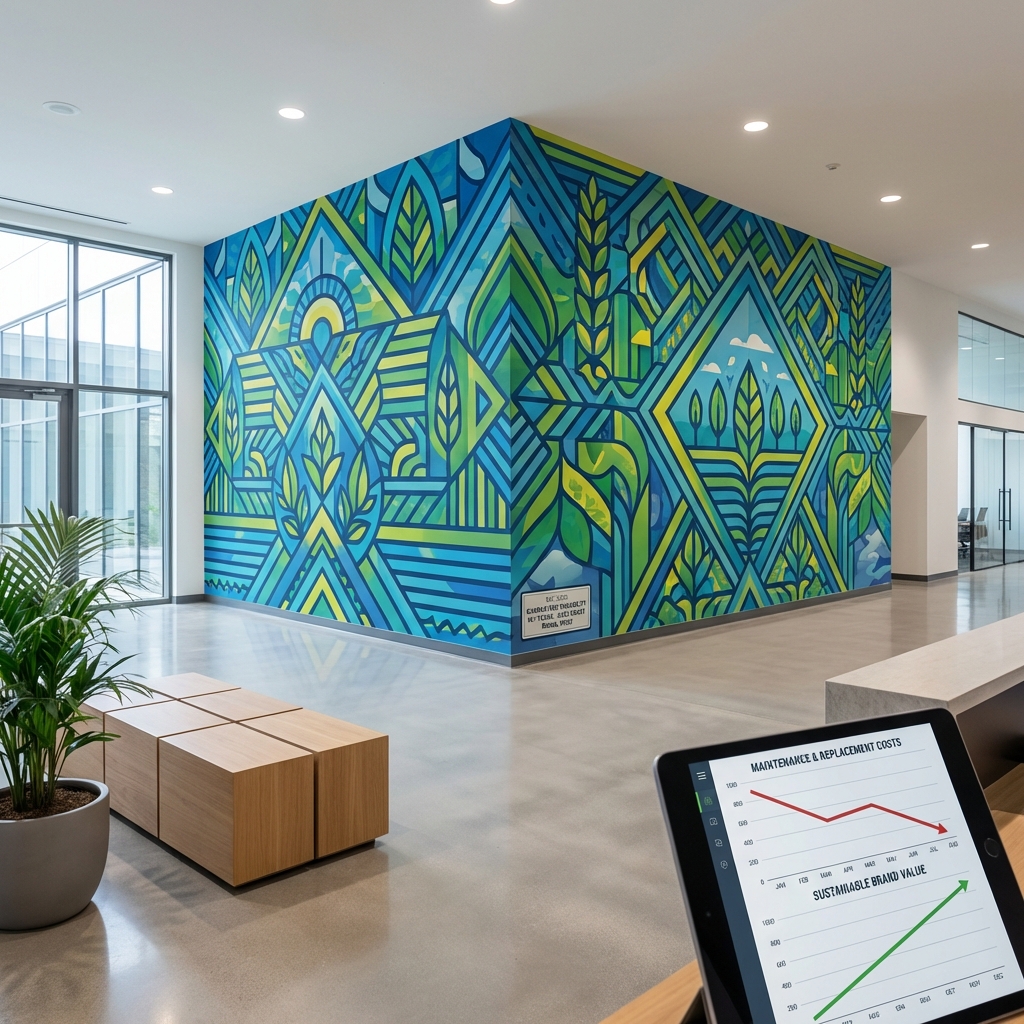
This is particularly valuable for institutions with unpredictable timelines. A school district can’t know what wayfinding updates will be needed in five years or which building will undergo the next renovation. A landlord can’t predict tenant requirements six years out. But with paint-over-ready graphics, the wall remains agnostic. Your branding serves its purpose, then exits cleanly when priorities shift.
For organizations managing pilot programs or testing new brand identities across a location before full rollout, this flexibility is enormous. You can deploy a graphic, measure its impact, and refresh without waste or cost recovery concerns.
Why Facilities Teams Choose Direct-to-Wall Over Vinyl for High-Traffic Environments
We work extensively with facilities directors at hospitals, schools, and corporate campuses where wall graphics face continuous physical stress. Vinyl and wallpaper simply don’t perform in these settings.
In hospital corridors, staff push equipment carts, gurneys, and heavy machinery past walls daily. Vinyl edges peel within months. Wallpaper scuffs and tears. Our direct-to-wall finish—chemically bonded to the substrate—resists that punishment. The surface is cleanable, so accidental marks or dirt wipe away without damage.
Schools present a similar challenge. High student traffic, PE classes near walls, occasional impacts from equipment or furniture movement, and weekly cleanings all stress surface integrity. Vinyl fails. Direct-to-wall survives, and facilities teams can schedule cleaning on the regular maintenance schedule without worrying about damage.
Retail environments add another demand: frequent restocking, display movement, and the occasional collision with a shopping cart. We’ve deployed graphics in retail corridors where weekly or daily cleaning occurs, and the surface remains flawless after years of service.
The practical difference is substrate bond versus surface adhesion. Vinyl sits on top of your wall, held by an adhesive layer that degrades over time or with physical contact. Our ink bonds into the wall material itself, becoming integral to the surface. It’s not something applied to the wall; it becomes part of the wall.
For facilities teams evaluating long-term performance, ask any vendor for high-traffic references. Call those institutions and ask about edge peeling, scuffing, cleanability, and maintenance frequency. The differences will clarify quickly.
Wayfinding and Instructional Graphics Without the Signage Clutter or Waste
Hospitals and large institutions face a perpetual wayfinding challenge: how do you help visitors navigate complex spaces without covering walls with plastic signage, framed posters, and directional decals?
We’ve developed a better approach using integrated wayfinding graphics. Instead of adding signs on top of walls, we print directional information, color-coding systems, floor maps, and instructional guidelines directly into your architecture as part of cohesive wall murals.
A hospital can print patient flow directions into a corridor mural. A university can layer building directories and room numbering into campus signage graphics. A medical facility can incorporate safety icons, infection control reminders, and equipment information into wall graphics that support operations without adding clutter.
This integration serves multiple goals simultaneously. Visitors find their way more easily because wayfinding is integrated into the environment rather than bolted onto it. Staff see daily reminders about protocols without message fatigue from separate signage. The overall aesthetic is unified, not fragmented. And you eliminate dozens of individual signs, decals, and maintenance tasks that would otherwise demand attention.
From an environmental perspective, this reduces signage waste substantially. Instead of printing hundreds of small signs over a building’s life and disposing of them as they yellow, crack, or become obsolete, you encode that information once into the wall graphic that lasts 10+ years. When that graphic eventually needs updating, a single paint-over refresh replaces all of it.
Real-World Results: How Leading Institutions Deploy Sustainable Wall Branding at Scale
We’ve partnered with major healthcare systems, university networks, and school districts to execute sustainable interior branding at institutional scale. The outcomes validate the approach consistently.
A mid-Atlantic health system upgraded wayfinding and brand identity across six hospitals. Timeline: completed all installations within 12 weeks, with minimal disruption to patient operations because each site required only 4-5 hours of active work. Sustainability impact: eliminated 3,000+ pounds of vinyl waste that would have accumulated from traditional replacement cycles over the next decade. Cost per location: approximately 12% lower than vinyl alternatives when factoring full lifecycle maintenance and removal.
A 10-campus university deployed new identity graphics across all main buildings in a single summer. Instead of coordinating multiple external vendors, managing shipments to 10 sites, and scheduling installation crews sequentially over months, we completed the rollout in six weeks with consistent, pixel-perfect results across every location. Wayfinding integration reduced physical signage by 40% while improving visitor navigation satisfaction in post-project surveys.
A pediatric hospital incorporated patient experience messaging and color-coded wayfinding directly into campus murals. The graphics made the environment more welcoming for anxious children and families while giving clinical staff environmental reinforcement of care protocols. The graphics have remained vibrant and clean after three years of intensive daily use and frequent cleaning.
These projects shared common features: defined timelines we could meet reliably, multi-location scale where our on-site printing advantage compounded, existing spaces where operational continuity mattered, and decision-makers who valued long-term sustainability alongside immediate visual impact.
Getting Started: From Concept to Installation Without Procurement Delays
If you’re evaluating sustainable interior branding solutions for your organization, here’s how to move forward practically.
Step 1: Assess your current walls. Take high-resolution photos of the spaces you want to refresh. Note wall material (drywall, concrete, brick, CMU), current condition, dimensions, and any environmental factors (humidity, temperature range, cleaning frequency). This assessment takes 30-45 minutes per location and determines installation feasibility.
Step 2: Define your scope and timeline. Are you refreshing a single corridor or multiple buildings? Do you have fixed windows (summer break, lease-up period) or flexibility? How much branding or wayfinding information needs to be integrated? Clear scope prevents surprises and lets us provide reliable timelines.
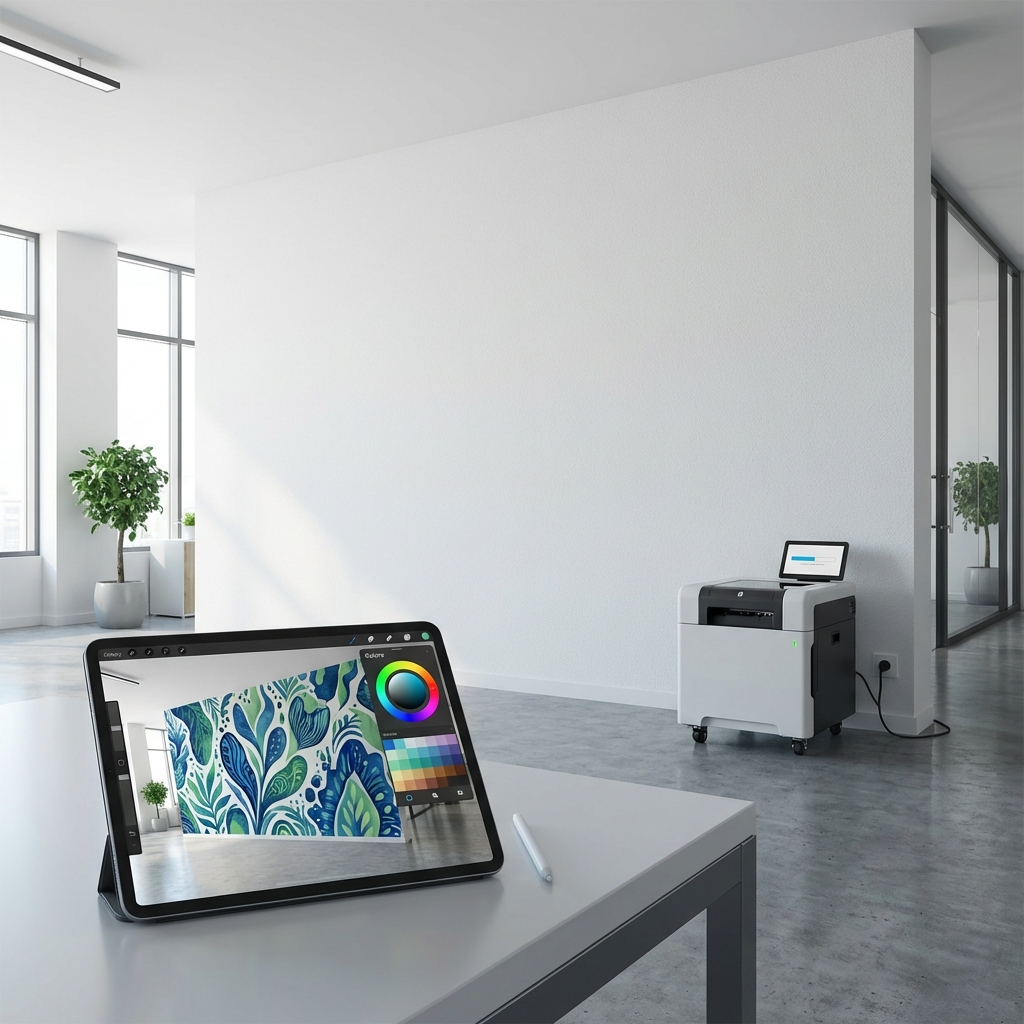
Step 3: Develop design concepts collaboratively. We work with your creative team or internal designers using cloud-based collaborative tools. Digital proofs move fast, revisions are costless, and approvals happen without printing plates or physical samples to ship. Most organizations go from concept to final approval in 2-3 weeks.
Step 4: Execute. We schedule installation around your operational needs, handle all substrate prep and printing on-site, and complete the work in hours, not days. Your team receives project documentation and maintenance guidance so you can extend the lifecycle through smart cleaning and care.
Throughout this process, we partner with your facilities team, procurement department, and design stakeholders. We understand that your decision involves operational continuity, budget certainty, and sustainability accountability. We’re transparent about timeline, cost, durability, and long-term environmental impact.
We’ve also published detailed comparisons of direct-to-wall printing versus vinyl alternatives and guidance on project management for occupied facilities that dive deeper into performance specifics and scheduling logistics.
Contact us to schedule a conversation about your specific project. We’ll assess your spaces, answer technical questions, and help you understand whether direct-to-wall printing is the right fit for your timeline, budget, and sustainability goals.
Contact us to learn more
Frequently Asked Questions (FAQ)
How does your direct-to-wall printing process compare to vinyl wraps in terms of environmental impact?
We print graphics directly onto your walls using advanced printing technology that requires no adhesives, solvents, or synthetic materials. Traditional vinyl wraps generate significant waste during installation, removal, and replacement cycles, whereas our process produces zero adhesive byproducts and eliminates the need for future tear-out and disposal. When your space evolves, you simply paint over our graphics—no hazardous waste, no shipping delays, and no landfill contribution.
Can we install your murals in our facility without shutting down operations?
We complete most installations in under five hours with minimal disruption to your daily operations. Our on-site printing eliminates fabrication delays and shipping risks, and our low-disruption installation approach works seamlessly in occupied buildings like hospitals, schools, and corporate offices. We coordinate timing with your facilities team to ensure the installation fits your schedule, not the other way around.
What happens when we need to refresh or rebrand our graphics in the future?
Our finishes are paint-over-ready, which means you can simply apply new paint and install updated graphics whenever your brand or program changes. This approach eliminates costly removal processes, reduces waste, and gives you complete flexibility to evolve your space without relying on replacement cycles or disposal logistics. We’ve designed our solution to support your organization’s long-term growth and change.