Introduction: The Evolution of Commercial Wall Branding Solutions
Commercial interiors have moved far beyond paint chips and poster frames. Over the past two decades, vinyl wall coverings and large-format wraps gave facilities and brand teams a fast way to add color, messaging, and experiential elements at scale. Now a new phase is here: advanced, on-site wall printing that delivers photoreal imagery directly to architectural surfaces without adhesives or panels. The question many organizations are now asking is straightforward—wall printing versus vinyl—which approach delivers better performance for modern commercial environments?
The shift is driven by three realities. First, experience-led interiors now require seamless visuals and integrated wayfinding that look “built in,” not applied after the fact. Second, business operations can’t afford downtime for lengthy installs, rework, or maintenance. Third, sustainability goals are reshaping procurement—teams want lifecycle-efficient, low-waste interior branding solutions that still meet schedule and budget.
EastCoast MuralPros has leaned into this evolution with direct-to-wall printing technology that brings high-resolution imaging, fast on-site execution, and durable, cleanable finishes to commercial landlords, corporate workplaces, hospitals, schools, cultural institutions, and multi-location brands. This article compares traditional vinyl wall coverings with direct-to-wall printing across performance, cost, and sustainability so facilities leaders, architects, and brand teams can make confident decisions for single sites and national rollouts.
Understanding Traditional Vinyl Wall Coverings: Capabilities and Limitations
Vinyl set the standard for quick-turn wall graphics. It enabled full-color murals, branded corridors, and temporary promotions at scale, and could be replaced as programs evolved. For years, it delivered predictable results across many substrates when installed by experienced crews and supported by well-managed logistics.
Vinyl’s strengths include:
- Broad availability and known procurement paths
- A range of finishes and textures
- Good print quality and color saturation
- Familiar installation and removal processes
However, facility teams consistently encounter limitations that matter over multi-year lifecycles:
- Seams and panelization: Large walls require panel seams that can telegraph visually and collect dust. Over time, seams become points of failure, especially in high-traffic zones or areas of frequent cleaning.
- Adhesive behavior: Temperature swings, humidity, outgassing paints, and textured substrates can cause edge lifting, bubbling, or uneven adhesion. On challenging surfaces—CMU, brick, raw concrete—performance becomes less predictable or calls for heavy surface prep.
- Maintenance realities: Routine cleaning and sanitation, essential in healthcare, education, and hospitality, can accelerate wear. Vinyl edges can catch, and printed faces can scuff under repeated contact.
- Installation and disruption: Production, shipping, staging, and multi-day installs are common for large areas. If panels arrive damaged or misprinted, schedules slip and costs rise.
- Waste and end-of-life: PVC materials, liners, and spent adhesive backings create notable waste streams. Removal typically sends used graphics to landfill.
For teams under pressure to minimize downtime and align with sustainability targets, these constraints prompt the search for vinyl wall covering alternatives that don’t sacrifice visual impact or brand fidelity.
Direct-to-Wall Printing Technology: How It Works and Key Advantages
Direct-to-wall printing unifies high-resolution output with on-site execution. Instead of fabricating vinyl panels, a mobile printer moves along the wall surface, jetting UV-curable inks that are instantly cured with LED lamps. There’s no adhesive, no carrier film, and no panel seams. The finish integrates with the wall—creating a crisp, architectural result that reads as part of the building rather than a layer on top of it.
How it works in practice:
- Site readiness: A quick assessment confirms substrate type (drywall, CMU, concrete, brick), finish level, and access. Most finished and many unfinished surfaces are compatible.
- Color and file prep: Artwork is preflighted for resolution, color profiles, and scale. Brand colors are managed with ICC profiles, spot-color targets, and controlled proofs.
- On-site printing: Technicians align the printer to the wall, set image boundaries, and print at high resolution. UV-LED curing creates a durable, cleanable surface that’s ready for light touch shortly after printing.
- Wrap-up and turnover: Because there are no panels or adhesives, there’s minimal masking, no off-site fabrication waste, and fewer points of failure.
Key advantages for commercial and institutional settings:
- Seam-free imagery at architectural scale, even across very wide spans
- Rapid installation—many walls complete in under five hours—minimizing operational disruption
- Durable, cleanable finishes appropriate for high-traffic zones
- Paint-over-ready surface that simplifies future tenant or program changes
- Consistency across locations because on-site printing eliminates shipping delays and panel variability
- Compatibility with finished and unfinished surfaces, including drywall, CMU, concrete, and many brick walls
- Integrated wayfinding, safety, and instructional graphics without adding sign clutter
EastCoast MuralPros also supports in-studio printing on doors, tables, and standees for cohesive campaigns, along with collaborative tools that help digital artists scale their work across campuses and national portfolios.
Durability and Longevity: Performance Comparison Across High-Traffic Environments
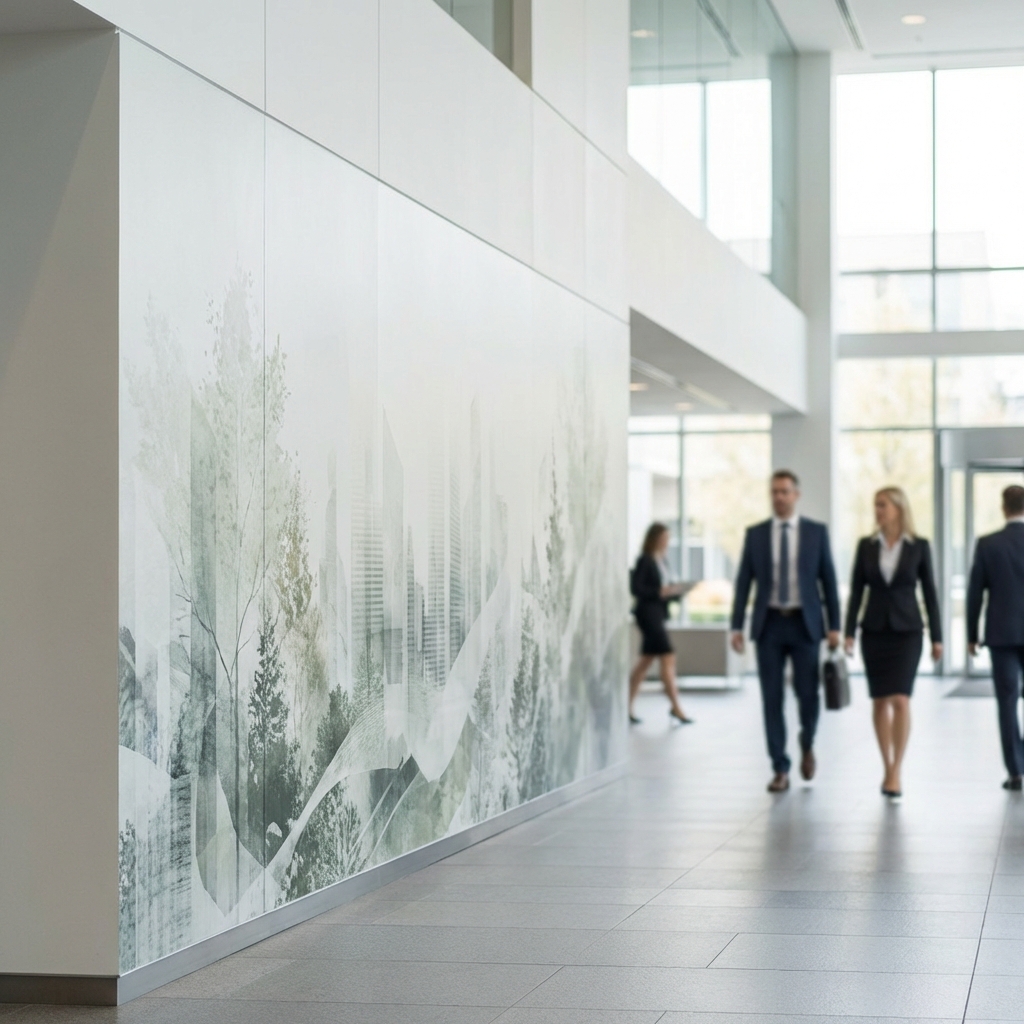
When evaluating commercial wall graphics durability, the daily realities of corridors, lobbies, cafés, patient areas, and classrooms matter more than lab specs. In these zones, frequent contact, rolling carts, occasional impacts, and regular cleaning are the norm.
Vinyl’s weakness typically starts at the edges and seams. Adhesive-backed materials are vulnerable to:
- Edge lifting from mechanical contact, cleaning, or humidity
- Seam creep under thermal cycling
- Surface bubbling where substrates outgas or aren’t perfectly smooth
- Patch repairs that rarely blend well over time
Direct-to-wall printing avoids these failure modes by eliminating adhesives and seams. UV-LED cured inks form a thin, tough film that bonds to the wall finish. In high-traffic environments, facilities teams see practical gains:
- Better resistance to incidental scuffs because there are no edges or panels to catch
- Stable appearance under regular wipedown with standard non-abrasive cleaners
- Reduced risk of delamination, since the image is integrated with the surface
For long corridors and public areas, seam-free graphics avoid the “zipper effect” that becomes more visible as panels age. In humid conditions or spaces with frequent temperature swings—common in vestibules or near exterior doors—direct-on-wall imagery maintains uniform appearance without adhesive creep.
Maintenance planning is also simpler. For cleaning:
- Use soft cloths or microfiber with mild, non-abrasive cleaners
- Avoid harsh solvents and aggressive scouring pads
- For repairs, localized touch-ups are feasible, and future program changes are as straightforward as priming and repainting
Hospitals and schools, in particular, value finishes that are durable, cleanable, and predictable across many wall conditions. By sidestepping the vulnerable components of vinyl systems (adhesives and seams), direct-to-wall printing establishes a longer, more stable service life in real-world use.
Installation Speed and Operational Disruption: Timeline and Business Impact Considerations
Time on site is one of the most immediate points of contrast. With vinyl, large projects require measuring, off-site printing, shipping, staging, wall prep, panel alignment, trimming, and rolling post-heat or pressure finishing. Any misprints or transit damage introduce rework, pushing schedules out and extending interruptions to occupants.
Direct-to-wall printing condenses this chain. Because printing happens on the wall:
- There is no panel staging or field trimming at scale
- Artwork alignment is set digitally, and output begins promptly
- Typical walls are completed in under five hours, enabling night or weekend work and same-day turnover
For occupied buildings, this matters. Facilities can maintain business-as-usual while sections are completed in phases. Noise is low, dust is minimal, and there are no adhesives with strong odors. For multi-floor or multi-building campuses, teams can phase work by zone—one wing per evening, for example—without relocating staff or shutting down corridors.
The business impact is measurable:
- Fewer closed areas and detours for staff, patients, guests, or students
- Reduced security coordination because gear and materials are contained
- Lower risk of missed launch dates for brand rollouts or seasonal refreshes
- Minimal punch-list items compared to panel seams or misalignments
EastCoast MuralPros frequently coordinates full-campus solutions for schools and hospitals by sequencing work in low-traffic windows, minimizing disruption while maintaining a clear, predictable schedule. On multi-location retail or hospitality programs, consistent execution across sites keeps brand timelines synchronized without the variability of cross-country shipping.
Cost Analysis: Lifecycle Expenses and Long-Term Value for Multi-Location Deployments
A fair evaluation of wall printing versus vinyl looks beyond the first install ticket. Procurement teams and facilities directors increasingly model total cost of ownership (TCO): production + logistics + installation + disruption + maintenance + refresh or end-of-life.
Typical cost drivers with vinyl:
- Multi-step fabrication and panel lamination
- Freight, crating, and insurance
- On-site staging area requirements and crew time for panel alignment
- Rework from damaged shipments or misprints
- Longer install windows that may require off-hours premiums
- Earlier refresh cycles due to seam or edge failures
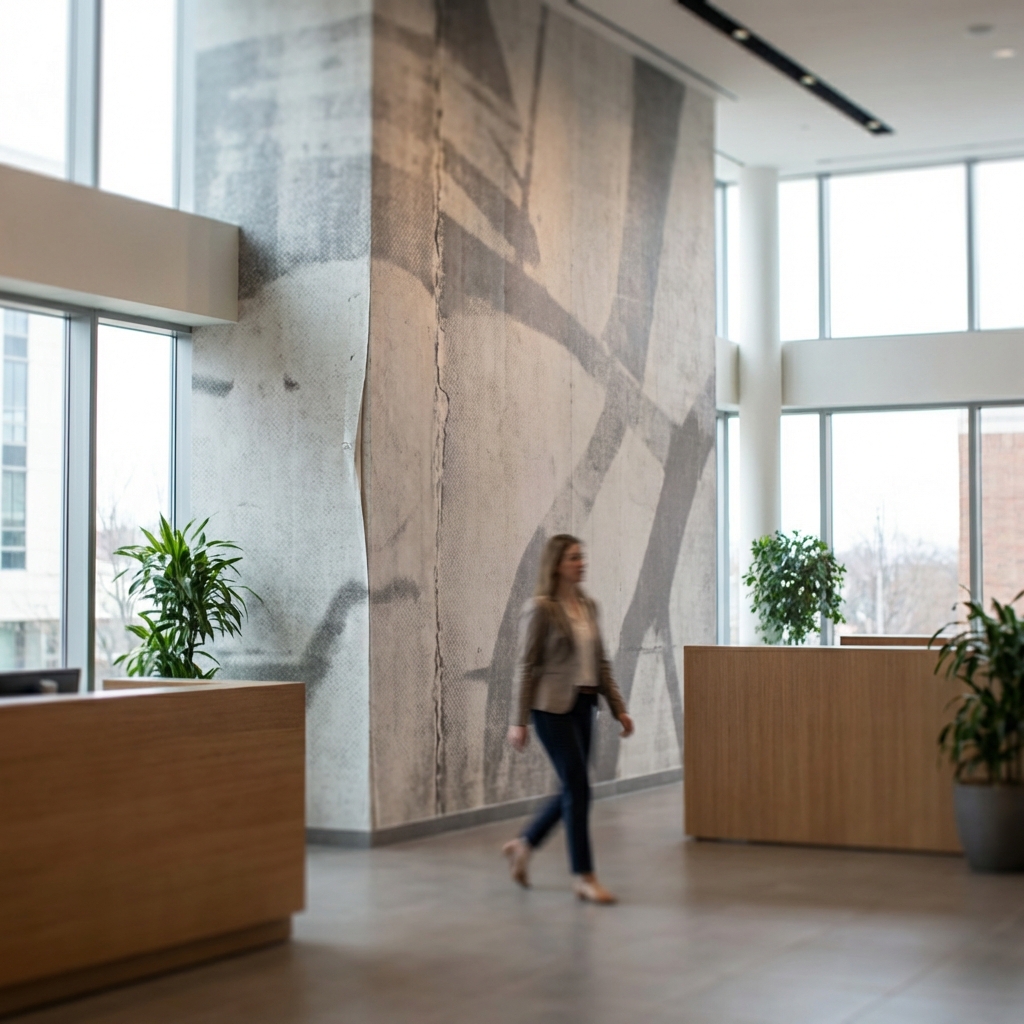
Direct-to-wall printing reshapes the cost profile:
- No panel fabrication or freight for the wall surface
- Compressed onsite time—many walls completed in a single session
- Lower probability of rework from transit or adhesion issues
- Extended service life due to seam-free, integrated imagery
- Lower disposal costs and simpler end-of-life (paint over rather than remove-and-landfill)
For multi-location brands and institutional owners, the consistency of on-site execution reduces variance. Predictable schedules reduce business downtime, which translates into real savings—whether that’s clinical throughput, guest services, retail hours, or student access.
Practical budgeting tips:
- Compare three-year or five-year TCO, not just day-one price
- Factor labor premiums for after-hours work required by vinyl installations
- Include soft costs: area closures, detours, and punch-list fixes
- Consider a subscription model for seasonal or strategic refreshes to smooth budgets and lock in capacity during peak periods
EastCoast MuralPros supports national and regional rollouts with standardized workflows, enabling procurement and capital projects teams to forecast expenses clearly, reduce shipping-related contingencies, and maintain brand fidelity across sites. The lifecycle-efficient approach often delivers superior long-term value where scale and schedule certainty matter most.
Design Quality and Customization: Achieving Seam-Free, High-Resolution Results at Architectural Scale
Great interior branding must read as intentional architecture, not applied decor. Direct-to-wall printing’s most visible advantage is uninterrupted imagery—no panel seams, no overlaps, no alignment drift across long runs. This matters for photoreal scenes, brand photography, typography, and detailed wayfinding that would otherwise traverse multiple vinyl panels.
Design and production capabilities that stand out:
- Photoreal, high-resolution imagery at architectural scale with crisp linework and legible small type
- Precise placement around fixtures, switches, doorframes, and artwork—without panel seams to negotiate
- Reliable brand color reproduction via calibrated profiles and spot-color strategies
- Integrated wayfinding and instructional elements to reduce sign clutter in corridors and lobbies
Customization can go further when printing occurs in situ. Designers can respond to as-built conditions that are hard to predict in shop drawings—subtle undulations in brick, field-located signage, or dimensional lettering added late in construction. The output can be tailored on the spot to align with exact sightlines and occupant flow.
Beyond walls, EastCoast MuralPros offers in-studio printing on doors, tables, and standees to create cohesive campaigns. This is useful for:
- Lobby activations that extend wall narratives onto fixtures
- Temporary messaging or event-specific elements executed at the same fidelity
- Sponsor recognition or donor features that accompany permanent wall art
For content-heavy environments like museums, cultural institutions, and higher education, direct-to-wall printing supports versionable overlays—room names, exhibit details, or floor-specific messaging—without introducing a patchwork of sign plates. The result is a seam-free visual system that feels designed into the building from the start.
Sustainability and Environmental Impact: Comparing Material Waste and Maintenance Requirements
Sustainability is no longer a side note; it’s a procurement requirement. Traditional vinyl systems carry material and end-of-life burdens: PVC content, release liners, adhesive waste, and the near-certain trip to landfill at removal. Frequent refresh cycles for worn or bubbling panels add to the waste stream and embodied carbon of repeat fabrication and freight.
Direct-to-wall printing minimizes these impacts by eliminating the substrate. The consumables are inks and limited masking materials, drastically reducing solid waste compared with sheeted vinyl. Additional sustainability gains include:
- Fewer replacements because there are no seams or adhesives to fail
- Reduced shipping (and related emissions) by printing on site
- Paint-over-ready end-of-life—no large-format material headed to landfill
- Lower risk of installation errors that prompt reprints and additional freight
For teams seeking vinyl wall covering alternatives that align with ESG goals, direct-to-wall is a practical lever. Lifecycle-efficient planning—fewer replacements, less freight, and minimized site disruption—supports both sustainability reporting and operational budgets.
For a deeper look at waste profiles and procurement considerations, see EastCoast MuralPros’ analysis of direct-to-wall vs vinyl. It outlines how sustainable wall printing methods can meet brand standards without the material overhead of traditional coverings.
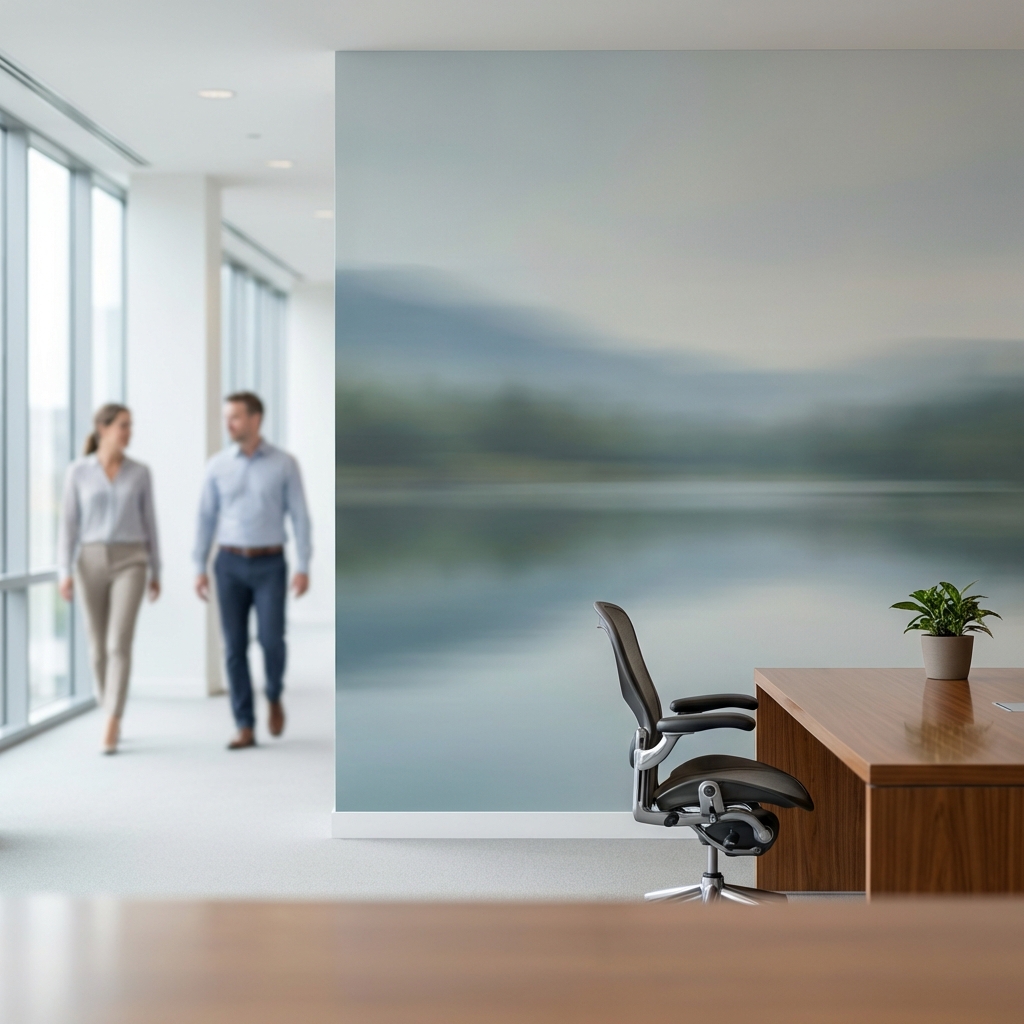
Real-World Applications: Use Cases in Healthcare, Education, Hospitality, and Retail
Different sectors share similar needs—durability, easy cleaning, and schedule certainty—but the best applications vary by program.
Healthcare
- Wayfinding and care instructions become part of the wall, reducing sign clutter and improving sightline clarity.
- Durable, cleanable finishes align with routine sanitation in public corridors and family areas.
- Pediatric and wellness imagery can be scaled across long runs without seams, creating calming, legible environments.
For common safety and cleanability questions, see EastCoast MuralPros’ guide on wall printing in healthcare environments.
Education
- K–12 and higher ed campuses benefit from full-building branding: house systems, mascot corridors, STEM labs, and athletics facilities.
- Direct-to-wall supports summer or intersession timelines with fast, phased installs.
- Paint-over-ready finishes simplify future program changes and tenant improvements in shared facilities.
Hospitality
- Seasonal and promotional refreshes are supported through subscription models, letting brands keep experiences current without heavy construction.
- Guest corridors, elevators, and lobbies gain immersive visuals that stand up to luggage, carts, and routine cleaning.
- Localized storytelling and art can be executed with museum-grade detail at architectural scale.
Retail and Multi-Location Brands
- National rollouts maintain consistent quality across stores by reducing panel variability and shipping-related delays.
- On-site printing enables localized messaging—regional campaigns, store-specific overlays—without creating a patchwork of panels.
- Back-of-house wayfinding and safety graphics are integrated without adding hardware or obstructions.
Museums and Cultural Institutions
- Photoreal exhibits, timeline graphics, and donor recognition walls read as part of the architecture rather than applied signage.
- High-resolution imagery retains fine detail across expansive installations, supporting curatorial intent.
- Temporary exhibitions can be refreshed on predictable schedules with less waste and downtime.
Corporate Real Estate and Landlords
- Lease-up periods benefit from speed—empty suites transform quickly for tours with brand-forward visuals.
- Common areas and amenities gain durable, cleanable branding that resists wear until the next repositioning.
- Program changes are straightforward: prime and paint for a clean slate, without demolition or panel removal.
Across all of these use cases, EastCoast MuralPros focuses on low-disruption installations suitable for occupied buildings, compatibility with finished and unfinished surfaces, and consistent execution for multi-site portfolios.
Conclusion: Choosing the Right Wall Solution for Your Organization’s Needs
Selecting between wall printing versus vinyl comes down to performance in your operational reality. If you need seam-free imagery that reads as architectural, faster installations with minimal disruption, a durable and cleanable finish, and a more sustainable lifecycle, direct-to-wall printing technology presents clear advantages. For organizations managing multiple sites, the predictability of on-site execution—no panels, no shipping risk—makes schedule and budget planning more reliable.
There are cases where vinyl can still fit: very short-term campaigns that require repositionable films, or highly specialized textures that demand a prefabricated material. But for most commercial interiors—healthcare, education, hospitality, retail, museums, workplaces, and property portfolios—direct-to-wall is a performance-based alternative to vinyl wall coverings and wallpaper that reduces waste and extends service life.
As you assess options, consider:
- Lifecycle cost and refresh cadence, not just first-day spend
- Occupant experience during installation—noise, odor, access, and downtime
- Durability under your actual cleaning protocols and traffic loads
- Visual goals at architectural scale—seams, legibility, and color fidelity
- Sustainability targets and end-of-life pathways
EastCoast MuralPros helps facilities, architects, and brand teams plan, prototype, and deliver interior branding solutions that scale across walls, floors, and locations. If your team is evaluating vinyl wall covering alternatives for a rollout or campus-wide upgrade, explore whether direct-to-wall printing can compress schedules, elevate design quality, and improve total cost of ownership for your next program.
Contact us to learn more