
Introduction: The Critical Role of Wall Surfaces in Healthcare Hygiene
In healthcare, walls are among the largest environmental surfaces and directly influence how easily a facility can be cleaned and kept compliant. Bioaerosols, splashes, and everyday abrasion all land on vertical surfaces, and Environmental Services (EVS) teams rely on quats, bleach, and hydrogen-peroxide disinfectants that can quickly damage delicate finishes. When wall systems fail, they create micro-gaps and edges that trap soil and moisture—precisely the conditions infection prevention teams work to eliminate.
Traditional vinyl wraps and wallpaper introduce seams, overlaps, and adhesive layers that invite peeling under aggressive cleaning. Oxidizers and frequent wipe-downs degrade films and glues, creating small lift points that harbor contaminants and require ongoing patching. Even when new, these layers add texture that is harder to sanitize than a smooth, integrated surface. Facilities seeking vinyl wall wrap alternatives are looking for finishes that perform like paint but deliver photographic quality at scale.
Direct-to-wall healthcare wall printing technology addresses these issues by producing high-resolution graphics directly on prepared substrates like drywall, CMU, and sealed concrete—no vinyl, seams, or adhesive failure points. EastCoast MuralPros prints on site with low-disruption setups typically completed in under five hours, minimizing closures in occupied units and eliminating shipping or fabrication delays. The result is hygienic mural printing that supports hospital interior branding and wayfinding while preserving a smooth, cleanable surface.
Practical applications range from durable corridor murals and nurse station back walls to imaging suite corridors, pediatric play areas, and family waiting zones. Infection control wall graphics—such as isolation protocols, PPE reminders, and directional cues—can be integrated into the architecture to reduce sign clutter and improve compliance. When programs change, paint-over-ready finishes make updates simple without demolition or wall panel removal, and subscription refreshes keep messaging current. Where antimicrobial wall surfaces are specified, the printed layer can be paired with approved facility topcoats and cleaning chemistries in accordance with infection prevention standards.
- Seam-free, edge-free graphics reduce harborage points for soil and moisture
- Designed to withstand daily cleaning with bleach, peroxide, and quats
- Rapid, low-noise installation suitable for occupied inpatient areas
- Consistent execution across departments, campuses, and multi-state networks
- Lifecycle-efficient: fewer replacements, easy paint-over when programs evolve
Because the system is vinyl-free and printed in place, it supports both hygiene goals and sustainability initiatives. Learn how EastCoast MuralPros delivers sustainable vinyl-free wall surfaces that perform in high-acuity environments.
The Risks of Vinyl: Why Adhesives and Seams Compromise Infection Control
Infection prevention depends on intact, easily cleanable surfaces. Vinyl wall coverings introduce seams and adhesive layers—precisely the places where moisture, soil, and biofilm accumulate and evade routine disinfection. For facilities teams evaluating healthcare wall printing technology, these weak points turn attractive graphics into persistent hygiene liabilities.
Common vinyl risks that complicate infection control include:
- Seams and overlaps that trap debris and body fluids, requiring edge-detail cleaning to achieve coverage.
- Edge lift and bubbling as adhesives age or encounter humidity, creating micro-cavities where pathogens can persist.
- Chemical incompatibility, as hospital disinfectants (e.g., quats, bleach, hydrogen peroxide) can soften or break down adhesives, accelerating failure.
- Microcracking and scuffs on high-traffic corners, leading to non-intact, noncompliant surfaces that are harder to disinfect quickly.
- Substrate mismatch on CMU, concrete, or brick, where texture prevents full bond, worsening harborage at edges and mortar joints.
- “Antimicrobial” additives that may not address the core issue: seams and damaged edges remain difficult to sanitize.
Consider a high-traffic ED corridor. Nightly wipe-downs with hospital-grade disinfectants gradually degrade adhesive along doorway returns and handrail terminations. Within months, lifted edges appear, forcing environmental services to spend extra time detailing seams—or prompting replacement orders—when the goal is fast, consistent disinfection across shifts.
Direct-to-wall, seam-free printing eliminates these high-risk interfaces. EastCoast MuralPros deposits high-resolution imagery directly onto the wall—no vinyl, no adhesive layer, and no overlaps—creating a smooth, durable surface designed for frequent cleaning in high-traffic environments. This approach reduces harborage points, speeds EVS workflows, and maintains a clean, architectural finish for hospital interior branding and wayfinding. For teams seeking hygienic mural printing and true vinyl wall wrap alternatives, EastCoast MuralPros delivers consistent results across finished and unfinished substrates while remaining paint-over-ready for future program changes.
If your standard requires cleanable, integrated infection control wall graphics without the maintenance burden of seams and adhesives, explore EastCoast MuralPros’ professional direct-to-wall printing services. This is healthcare wall printing technology aligned with durability, schedule certainty, and lifecycle performance—without relying on antimicrobial wall surfaces to compensate for design limitations.
Direct-to-Wall Printing: A Seamless Solution for Clinical Environments
Clinical spaces demand finishes that clean fast, resist wear, and don’t create harborage points. Modern healthcare wall printing technology produces a seamless, adhesive-free graphic layer directly on drywall, CMU, concrete, or brick—eliminating seams and lifting edges common with vinyl. The result is hygienic mural printing that looks integrated with the architecture and stands up to daily protocols. For teams evaluating vinyl wall wrap alternatives, direct-to-wall delivers the same high-resolution visuals without the long-term maintenance headaches.
Infection control wall graphics must survive frequent disinfection. Because the print is applied directly to the substrate, there are no tapes, films, or joints that can trap debris or moisture. The cured surface is durable and cleanable with standard hospital-grade disinfectants per facility procedures, and it can be specified on top of compatible paints and coatings, including walls finished with antimicrobial wall surfaces.
Speed and low disruption matter on active units. On-site printing means most rooms or corridors can be completed in under five hours with minimal staging, no shipping delays, and fewer fabrication errors. When protocols, branding, or service lines change, the surface is paint-over-ready, allowing facilities to update content without demolition or costly replacement cycles.
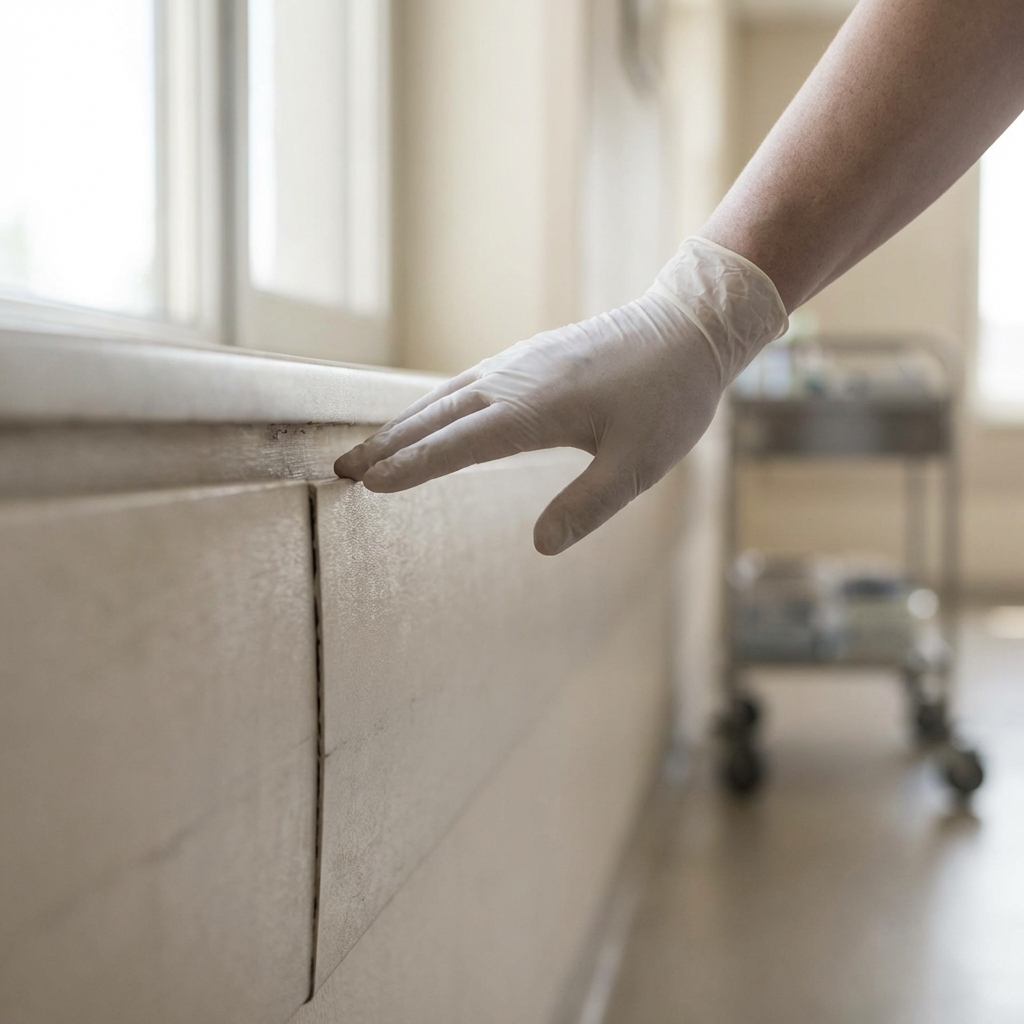
Common clinical applications include:
- Pediatrics and family areas: calming biophilic scenes and wayfinding icons that withstand frequent wipe-downs.
- ED and inpatient corridors: clear line-of-travel markers and safety reminders integrated into walls to reduce signage clutter.
- Imaging suites and prep areas: step-by-step instructions and radiation safety cues printed at eye level for faster patient comprehension.
- Lobbies, cafes, and staff spaces: hospital interior branding and donor recognition at architectural scale without panels or seams.
- Stairwells and back-of-house paths: durable directionals on unfinished CMU to improve flow and staff efficiency.
EastCoast MuralPros helps health systems deploy this approach across single facilities or entire campuses with consistent execution. Their on-site process is engineered for occupied buildings, delivers photoreal detail at scale, and supports integrated wayfinding and instructional graphics. For facilities, procurement, and design teams seeking reliable vinyl wall wrap alternatives that align with infection control priorities, EastCoast MuralPros provides a lifecycle-efficient path to cleaner, clearer environments.
Durability and Cleanability: Maintaining Sterile Standards Over Time
In clinical environments, surfaces are cleaned more often and more aggressively than anywhere else. Modern healthcare wall printing technology bonds high-resolution graphics directly to the wall, creating a seamless, monolithic surface with no vinyl seams, bubbles, or adhesives to fail under daily disinfection. That means fewer places for soil to accumulate and fewer maintenance calls over the life of the space.
Daily EVS protocols typically involve quaternary ammonium sprays, diluted bleach, and hydrogen peroxide wipes—chemistries that notoriously yellow or lift vinyl. Direct-to-wall prints are engineered to withstand repeated spray-and-wipe cycles without peeling or edge creep, preserving legibility for wayfinding and clinical instructions. Because the graphic is integrated into the architectural surface, it remains stable in high-traffic areas like ED corridors, nurse stations, patient rooms, and imaging suites.
For facilities teams, the cleaning process stays simple and compliant with existing SOPs. Surfaces can be treated like a high-performance painted wall—no panel removal, no heat guns, and no special cleaners required. This makes hygienic mural printing practical for sterile-adjacent zones and support spaces where downtime is costly.
What to look for when specifying durable, cleanable prints:
- Seam-free execution over long runs to eliminate microbial harborage
- Compatibility with hospital-grade disinfectants (quats, bleach per your protocol, hydrogen peroxide)
- Abrasion and stain resistance that preserves color and contrast under frequent scrubbing
- Low-gloss, low-reflectance finishes to reduce glare and improve readability
- Paint-over-ready topcoats for future program or tenant changes
Over time, these properties translate into fewer replacements and reduced wall prep compared with vinyl, which can leave adhesive residue and damage substrates. As vinyl wall wrap alternatives, direct-to-wall solutions curb waste, shorten room turnover, and minimize disruption—key advantages in occupied hospitals and clinics. They also support hospital interior branding by maintaining crisp, photoreal imagery that holds up under constant cleaning.
If your infection prevention team requires it, antimicrobial wall surfaces can be addressed with specified topcoats or additives in accordance with facility standards. EastCoast MuralPros delivers these performance attributes at scale, producing integrated infection control wall graphics on finished or unfinished substrates and installing on-site—often in under five hours—so your spaces stay operational while you upgrade.
Minimizing Disruption: Fast Installation in Active Medical Facilities
Active hospitals can’t afford shutdowns for décor upgrades. With modern healthcare wall printing technology, entire corridors, nurse stations, or family waiting areas can be transformed between shifts, often in under five hours per zone. Because the system prints directly to the wall—no vinyl, adhesives, panels, or demolition—egress routes stay open and patient care continues uninterrupted. It’s a clean, precision process designed for occupied environments.
Planning is built around patient flow. Teams schedule work during low-census windows, after hours, or on weekends, and on-site printing eliminates shipping delays and last-minute fabrication errors. The compact setup requires minimal staging and is compatible with finished and unfinished substrates found in medical buildings, including drywall, CMU, concrete, and brick. Complex campuses can phase work floor by floor with predictable milestones and clear daily handoffs.
This approach also supports infection control priorities. Seam-free, integrated graphics reduce edges and lift points associated with films, making surfaces easier to wipe down and keep in-spec with hospital cleaning protocols. As a form of hygienic mural printing, the finish is durable and cleanable; facilities can optionally pair specified areas with facility-approved antimicrobial wall surfaces or topcoats when required by policy. The result is infection control wall graphics that look architectural and maintainable, without adding signage clutter.
What a low-disruption install looks like in practice:
- Pre-install survey to map traffic patterns, sensitive areas, and environmental constraints
- Artwork preflight for scale, legibility, and wayfinding compliance before crews arrive
- Phased, room-by-room execution with clear containment and corridor clearance maintained
- Coordination with facilities and EVS for cleaning verification and sign-off at turnover
EastCoast MuralPros brings this discipline to hospital interior branding and integrated wayfinding at scale. As one of the leading vinyl wall wrap alternatives, the team delivers consistent execution across multi-site health systems, with durable, cleanable finishes that are paint-over-ready when units change programs. For capital and procurement teams, it’s a lifecycle-efficient method that minimizes disruption today and reduces maintenance tomorrow.
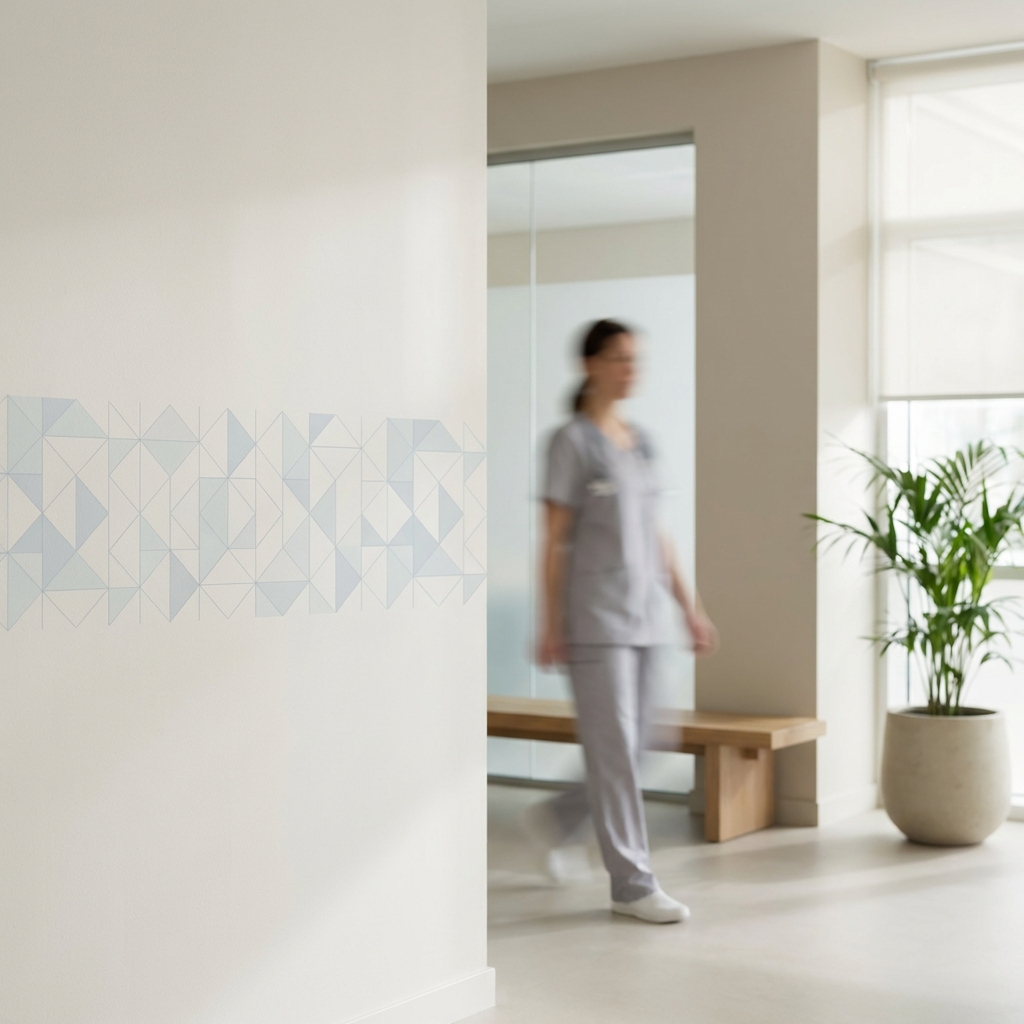
Long-Term Maintenance and Sustainable Upgrades for Healthcare Systems
Healthcare environments demand surfaces that survive constant cleaning, audits, and frequent updates without disrupting patient care. Direct-to-wall printing provides a durable, lifecycle-efficient path that avoids adhesives, seams, and panels that fail under routine disinfecting. EastCoast MuralPros deploys healthcare wall printing technology that integrates graphics into the architecture, delivering high-resolution visuals that are easy to maintain over years of use.
Because the print is applied directly to the substrate, there are no vinyl seams or edges to peel, bubble, or trap soil—common failure points that undermine infection control protocols. These hygienic mural printing systems are designed to be wiped down by EVS teams using standard, EPA-registered hospital disinfectants without ghosting or delamination. The result is infection control wall graphics that look new longer and maintain compliance with minimal oversight.
Maintenance is straightforward and predictable. Surfaces are cleanable and scuff-resistant, supporting daily wipe-downs in corridors, waiting rooms, nurse stations, and pediatric units. For facilities that require added protection, projects can be specified to accept approved antimicrobial topcoats, creating antimicrobial wall surfaces without introducing separate panels or films. When programs change, finishes are paint-over-ready, so upgrades happen with a roller rather than demolition.
Compared to wallpaper and wraps, lifecycle costs drop significantly. Traditional graphics often require removal, substrate repair, and reinstallation—plus added waste and downtime. Direct-to-wall printing is a proven vinyl wall wrap alternative that eliminates adhesives, reduces material consumption, and minimizes replacement cycles. On-site production also cuts shipping delays and fabrication errors, keeping projects on schedule.
For system-wide initiatives, EastCoast MuralPros enables consistent execution across multiple facilities, from wayfinding to hospital interior branding. Subscription options make seasonal campaigns, donor recognition, or safety messaging easy to refresh without re-permitting or re-fabrication. Integrated wayfinding and instructional graphics reduce the need for protruding signs that clutter corridors and complicate cleaning.
Long-term advantages for healthcare facilities include:
- Cleanability that supports routine disinfection without image degradation
- Seam-free installations that reduce failure points and harborages
- Paint-over-ready surfaces for fast tenant or program turnover
- Reduced material waste and fewer replacement cycles
- Low-disruption installs completed in hours, not days
- Consistent results across campuses, floors, and expansions
Conclusion: Enhancing Patient Care Through Advanced Surface Technology
Direct-to-wall printing has matured into a healthcare wall printing technology that supports infection prevention while improving the patient environment. By eliminating seams, edges, and adhesives, it reduces the micro-gaps where soils and moisture can accumulate—common failure points with wraps and wallpaper. The result is a smooth, integrated image layer that’s durable, cleanable, and aligned with facilities’ preference for nonporous, easy-to-sanitize surfaces.
The operational gains are just as important. Installations can be completed in hours with minimal room downtime, allowing teams to refresh corridors, nurses’ stations, and patient areas without disrupting care. Wayfinding and behavioral prompts become part of the wall—high-contrast, photoreal infection control wall graphics that guide visitors, reinforce hand hygiene, and declutter spaces compared with traditional signs.
From a hygiene perspective, these systems are designed for frequent cleaning with hospital-grade products, including quaternary ammonium, bleach dilutions, and alcohol-based disinfectants, when used per manufacturer guidance. Where policy requires it, finishes can be paired with antimicrobial wall surfaces via approved topcoats to add an extra layer of protection; always verify chemical compatibility and documentation before deployment. To standardize evaluation across sites, healthcare facilities can use a simple checklist:
- Seam and edge count per wall (target: zero)
- Confirmed resistance to quats, bleach, and alcohol; validated cleaning protocol
- Low-profile surface texture for rapid soil removal
- Repairability and paint-over readiness for future program changes
- Lifecycle cost and failure-risk comparison to vinyl wall wrap alternatives
Beyond hygiene, hygienic mural printing supports hospital interior branding that calms, informs, and humanizes clinical spaces. On-site production eliminates shipping and panel fit errors, and the absence of vinyl reduces waste and replacement cycles. This delivers a performance-based alternative to wallpaper and wraps that aligns with procurement goals for reliability, cost control, and sustainability.
EastCoast MuralPros brings these advantages to scale with fast, low-disruption installs, durable cleanable finishes, and consistent execution across campuses. Their approach integrates wayfinding, safety, and instructional content into the architecture, making it a practical choice for infection control wall graphics in high-traffic environments. For teams piloting a unit or planning a system-wide refresh, they provide a predictable path from mockup to rollout with measurable hygiene and operational benefits.
Call to Action
Contact us to learn more